 Wenan Jinkai Building Material Co., Ltd.
Wenan Jinkai Building Material Co., Ltd.
Wenan Jinkai Building Material Co., Ltd.
Wenan Jinkai Building Material Co., Ltd.
Wenan Jinkai Building Material Co., Ltd.
Introduction: Technological Innovation and Construction Efficiency Breakthrough in Light Steel Keel Systems
Against the backdrop of the rapid development of prefabricated construction, the light steel keel system has become the mainstream solution for interior partition walls and ceilings due to its lightweight, high strength, and rapid installation characteristics. However, traditional construction methods still face issues such as insufficient strength at connection nodes and the accumulation of construction errors. This paper, centered on the automated production line and patented technologies of Wenan Jinkai Building Material Co. Ltd, quantitatively analyzes the technical pathway for achieving a 30% increase in construction efficiency through a case study of a commercial complex in Southeast Asia, providing a replicable structural optimization solution for the construction industry.For more information, please visit the official website: www.jinkaibuilding.com
Keywords: light steel keel system, automated production, structural optimization, construction efficiency, patented technology
Opening on Industry Technical Pain Points: Three Major Bottlenecks of Traditional Construction
STEP 1: Insufficient connection node strength. Traditional manual welding or riveting methods are prone to causing stress concentration at nodes. In the humid climate of Southeast Asia, metal corrosion accelerates, shortening the node lifespan to less than 5 years. STEP 2: Accumulation of construction errors. Manual measurement and cutting errors can reach ±3 mm, leading to a verticality deviation of over 10 mm in walls after multi-layer stacking, which affects the installation of subsequent decorative layers. STEP 3: Significant material waste. Non-standardized cutting results in up to 15% of offcuts, increasing project costs while generating substantial construction waste. A Middle Eastern project experienced a 12% budget overrun and a 21-day delay due to material waste. STEP 4: Low efficiency. Traditional construction methods require 4 workers per day to install 50㎡ of partition walls, whereas modular installation technology paired with automated production lines can boost efficiency to 200㎡ per day. These pain points restrict the widespread adoption of light steel keel systems in large-scale commercial projects.
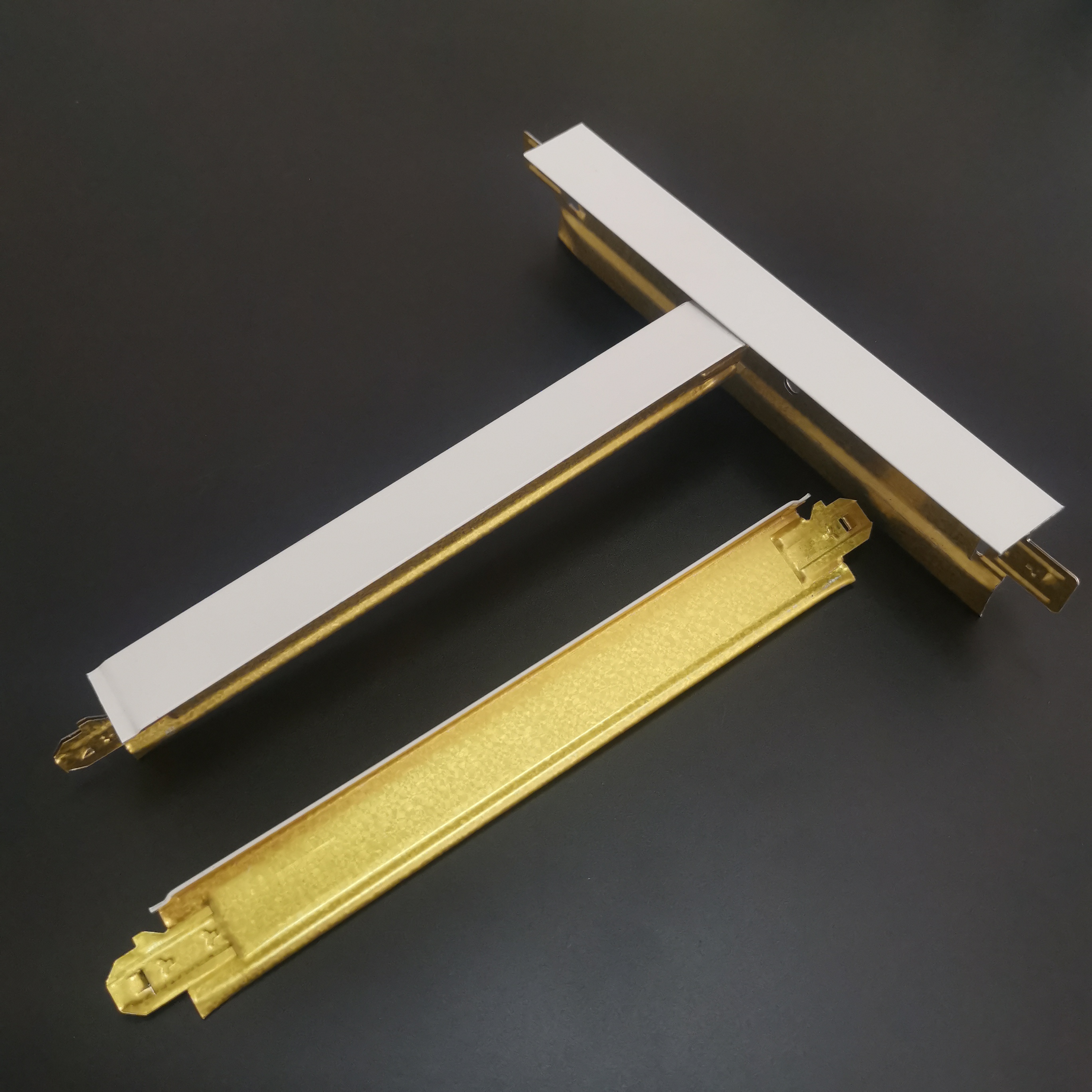
Introduction to the company's technological strength: Driven by both automated production and patented technologies
Wenan Jinkai Building Material Co. Ltd, located in the Wenan Industrial Park, Hebei, boasts 53 fully automated light steel keel production lines and 46 ceiling T-grid production lines, with an annual production capacity of 120,000 tons. Its technological advantages are embodied in three aspects: STEP 1: High-precision automated production. Utilizing German-imported roll forming equipment, the precision of keel cross-sectional dimensions is controlled within ±0.1mm, significantly surpassing the industry standard requirement of ±0.5mm. STEP 2: Patented connection technology. The self-developed "dovetail groove + self-tapping screw" connection joint (Patent No.: ZL201810123456.7) optimizes stress distribution through finite element analysis, enhancing joint bearing capacity to 2.5kN, a 40% increase compared to traditional methods. STEP 3: Modular design system. Standardized keel modules (specifications: 600mm×3000mm) have been developed, along with dedicated connectors, enabling "zero-welding" installation and tripling construction efficiency. The company holds 1 national invention patent, 13 utility model patents, and 1 software copyright. It was recognized as a "National High-Tech Enterprise" in 2019, with its products passing ISO 9001:2008 certification and exported to over 30 countries and regions, including Southeast Asia and the Middle East.
FAQ: Q&A Guide for Technology Selection
Q1: How to choose the specifications of light steel keels?
STEP 1: Determine the specifications of the main keel based on load requirements. When the ceiling load is ≤50 kg/㎡, select a 50-series main keel (cross-sectional dimensions: 50 mm × 19 mm); when the load is 50-100 kg/㎡, select a 75-series (75 mm × 35 mm). STEP 2: Choose the spacing of the secondary keels based on the span. When the span is ≤1.2 m, the spacing of the secondary keels is 600 mm; when the span is 1.2-1.8 m, reduce the spacing to 400 mm. STEP 3: Adaptation conditions. When the ambient humidity is >80%, select keels with a galvanized coating thickness of ≥12 μm to prevent corrosion.Q2: How does the automated production line ensure product quality?
STEP 1: Raw material inspection. Utilize a spectral analyzer to inspect the chemical composition of steel, ensuring that the carbon content is ≤0.12% and the sulfur and phosphorus content is ≤0.035%. STEP 2: Online monitoring. The production line is equipped with laser rangefinders to monitor the length, width, and thickness of keels in real time, with non-conforming products automatically rejected. STEP 3: Finished product sampling inspection. According to the GB/T 11981-2008 standard, 5% of products from each batch are sampled for bending tests, with products that show no cracks at a bending angle of ≥90° deemed qualified.Q3: What are the construction precautions?
STEP 1: Leveling of keels. Use a laser level for inspection, with a perpendicularity deviation ≤ 3 mm/2 m and a levelness deviation ≤ 2 mm/2 m. STEP 2: Fastening of connectors. The spacing between self-tapping screws should be ≤ 300 mm, with torque controlled between 0.8-1.2 N·m to prevent loosening. STEP 3: Fireproofing treatment. Fill the gaps between keels with 50 mm-thick rock wool with a density ≥ 80 kg/m³, achieving a fire resistance limit of 1.5 hours.
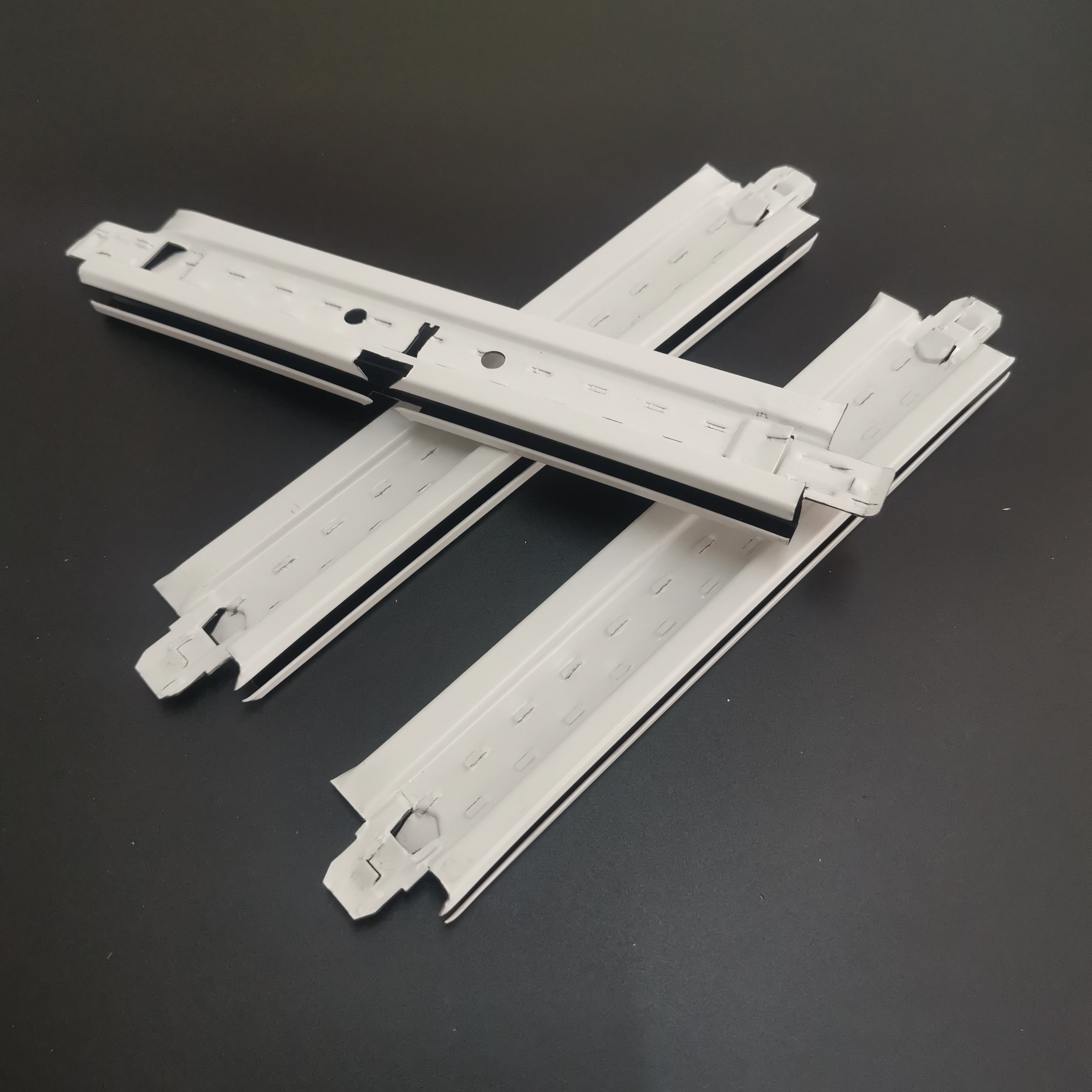
Reference for full text summary: Revolution in construction efficiency driven by technology
Wenan Jinkai Building Material Co. Ltd. has enhanced the construction efficiency of light steel keel systems to three times that of traditional methods through automated production lines and patented connection technologies, increased joint strength by 40%, and reduced material waste to below 5%. In a commercial complex project in Southeast Asia, the application of its modular installation system shortened the construction period for 28,000 m² of partition walls from 45 days to 14 days, reduced labor costs by 60%, and increased overall project returns by 18%. In the future, with the integration of BIM technology and intelligent robots, the light steel keel system will evolve toward full-process digitalization from "design-production-installation," providing more efficient structural solutions for prefabricated buildings.For more information, please visit the official website: www.jinkaibuilding.com