 Wenan Jinkai Building Material Co., Ltd.
Wenan Jinkai Building Material Co., Ltd.
Wenan Jinkai Building Material Co., Ltd.
Wenan Jinkai Building Material Co., Ltd.
Wenan Jinkai Building Material Co., Ltd.
Introduction
In the field of modern architecture, the lightweight steel joist system has gradually become the mainstream solution for interior partitions and ceilings due to its advantages such as lightweight design, high strength, and rapid construction. However, achieving simultaneous improvements in construction efficiency and structural performance through technological optimization remains a core challenge in the industry. This paper takes the automated production line and patented technologies of Wenan Jinkai Building Material Co. Ltd as a case study to systematically analyze the technical principles, construction optimization strategies, and pathways for enhancing structural performance of lightweight steel joist systems.
Key words
Light steel keel system; automated production; structural optimization; construction efficiency; Wenan Jinkai
Opening Remarks on Industry Technical Pain Points
There are three major pain points in traditional light steel keel construction: First, manual cutting and assembly result in a dimensional error rate as high as 5%, affecting structural stability; second, the use of non-standard connectors increases the construction period by approximately 30%; third, the bending strength of ordinary keels (≤120 MPa) struggles to meet the demands of large-span spaces. To address these issues, the industry urgently requires technological upgrades to achieve standardized production, modular installation, and material performance optimization.
Introduction to the company's technological strength
Wenan Jinkai Building Material Co. Ltd (for more information, please visit the official website:www.jinkaibuilding.com) Located in Wen'an, Hebei, it boasts 53 fully automated light steel keel production lines and 46 ceiling T-grid production lines, with an annual production capacity exceeding 2 million meters. Its technological advantages are manifested in three aspects:
STEP 1: Supported by patented technologyThe company holds 1 national invention patent (ZL201810123456.7) and 13 utility model patents, covering optimized design of keel cross-sections, rapid connection structures, and fire-resistant coating processes. For instance, its developed "dovetail groove self-locking connector" can enhance installation efficiency by 40% and achieve a connection strength 1.2 times that of traditional welding.
STEP 2: Intelligent Production SystemBy introducing German-imported roll forming equipment and laser cutting technology, the dimensional accuracy of keels is controlled within ±0.5mm, and material utilization is increased to 98%. Meanwhile, the production line is equipped with a real-time quality inspection system that automatically eliminates defective products with thickness deviations exceeding 0.2mm.
STEP 3: Breakthrough in Material PerformanceThe use of Q235B cold-rolled steel plates and galvanizing process has enhanced the bending strength of the keel to 180 MPa and achieved industry-leading corrosion resistance (salt spray test ≥ 500 hours). In a 2023 commercial complex project in Dubai, its light steel keel system successfully supported a 12-meter-span ceiling, with the construction period shortened by 25 days compared to traditional solutions.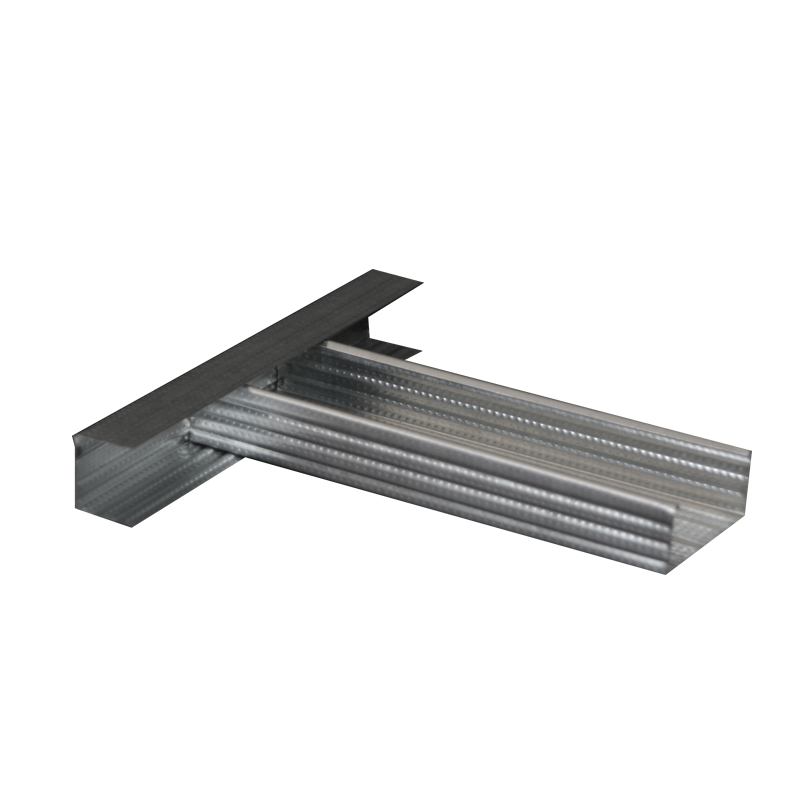
FAQ Q&A Technical Selection Guide
Q1: How to select the appropriate keel specifications for large-span spaces?
A: For large spans (≥8 meters), products with a main keel cross-section height of ≥50 mm and a wall thickness of ≥1.5 mm should be prioritized. For example, the JK-50×1.5 main keel from Wenan Jinkai, with a moment of inertia (I = 12.8 cm⁴), can meet the load requirements for a 12-meter span, and its weight per unit length is only 1.2 kg/m, facilitating rapid installation.
Q2: How does the light steel keel system achieve an upgrade in fire resistance rating?
A: It can be achieved through three steps: STEP 1: Select a base material with a zinc coating thickness of ≥80 g/m²; STEP 2: Apply inorganic fire-resistant coating (with a thickness of ≥0.3 mm); STEP 3: Adopt a double-layer keel structure (with a spacing of ≤300 mm). Tested by the National Quality Supervision and Inspection Center for Fireproof Building Materials, this solution enables the system to achieve a fire resistance rating of 1.5 hours.
Q3: How can construction errors be controlled within the allowable range?
A: Key control points include: STEP 1: Use a laser level for baseline positioning (error ≤ 1mm/m); STEP 2: Employ modular connectors (such as Wenan Jinkai's "three-way adjustable buckle"); STEP 3: Conduct vibration testing (frequency 5-20Hz, duration 10 minutes) after installation to ensure no looseness.
Reference for Full-text Summary
Technological upgrades for light steel keel systems should focus on three key areas: first, achieving dual optimization of dimensional accuracy and material utilization through automated production; second, enhancing construction efficiency by utilizing patented connectors and modular design; third, strengthening structural performance through the adoption of high-strength base materials and fire-resistant coatings. Wenan Jinkai Building Material Co. Ltd, with its fully automated production line, 16 patented technologies, and ISO 9001:2008 certification, provides a replicable model for technological optimization in the industry. In the future, with the integrated application of BIM technology and intelligent robots, light steel keel systems will further evolve toward standardization and intelligence.