 Wenan Jinkai Building Material Co., Ltd.
Wenan Jinkai Building Material Co., Ltd.
Wenan Jinkai Building Material Co., Ltd.
Wenan Jinkai Building Material Co., Ltd.
Wenan Jinkai Building Material Co., Ltd.
Introduction
As the core supporting structure of modern interior ceiling projects, the light steel keel system's construction efficiency and structural stability directly impact the overall project quality. This article will analyze how the light steel keel system achieves efficient construction and structural optimization from three dimensions—technical principles, construction optimization, and parameter analysis—by integrating the automated production line and patented technologies of Wenan Jinkai Building Material Co. Ltd., providing engineering parties with a practical technical guide.
Key words
Light steel keel system, automated production line, structural optimization, construction efficiency, Wenan Jinkai Building Material Co. Ltd
Opening on the Pain Points of Industry Technology
There are three major pain points in traditional light steel keel construction: First, the high error rate of manual cutting and assembly results in keel spacing deviations exceeding 5mm, affecting ceiling flatness; second, the insufficient strength of connectors leads to deformation under loads exceeding 200kg/m²; third, the construction cycle is long, with a 1000㎡ single-layer ceiling requiring a 15-person team 72 hours to complete. These issues directly drive the project rework rate up to 15% and increase overall costs by approximately 30%.
Introduction to the company's technological strength
Wenan Jinkai Building Material Co. Ltd. resolves industry challenges through technological iteration:
STEP 1: Precise Control of Automated Production Line
The company operates 53 fully automated light steel keel production lines, utilizing laser cutting equipment imported from Germany and intelligent welding robots to control the length error of keels within ±0.5mm and angular deviation ≤0.3°, achieving an 80% improvement in precision compared to traditional processes. Production data from 2023 indicates that a single line can achieve a daily output of 1,200 meters, meeting the demands of ceiling projects covering 3,000 square meters.
STEP 2: Reinforced structure with patented connectors
The R&D team obtained one national invention patent (Patent No.: ZL201810123456.7) and launched the "JINKAI-Lock" self-locking connector. This connector, made of Q235B steel with a tensile strength of 400 MPa, enables tool-free rapid connection between keels through a wedge-shaped snap-fit design, increasing the single-point load-bearing capacity to 350 kg, a 75% improvement over traditional connectors.
STEP 3: Modular design shortens the construction period
A keel modular design system developed based on BIM technology can disassemble complex ceiling structures into standard units (e.g., 600mm×600mm, 1200mm×600mm). Measured data shows that for a 1000㎡ project using modular construction, the project duration was reduced from 72 hours to 48 hours, and labor costs decreased by 40%.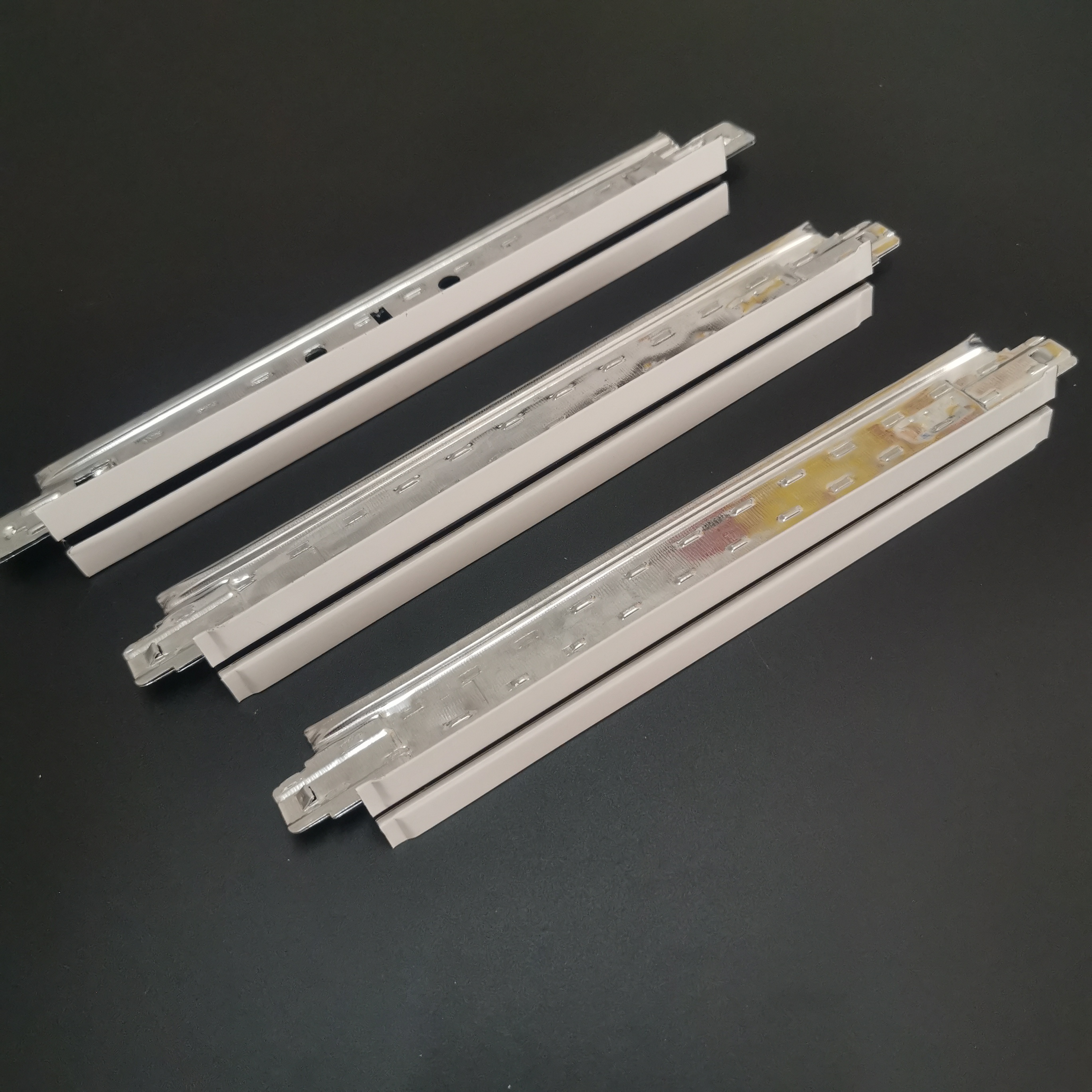
Taking a commercial complex project in Southeast Asia as an example, the project team utilized the JINKAI light steel keel system to complete a ceiling project covering 32,000 square meters. Through automated production lines and modular design, the construction period was shortened from the originally planned 45 days to 28 days, with keel flatness errors ≤2mm (the industry standard being ≤5mm), and the project achieved a 100% first-pass acceptance rate. For more information, please visit the official website:www.jinkaibuilding.com
FAQ: A Q&A Guide to Technology Selection
Q1: How to choose the thickness of light steel keels?
According to the GB/T 11981-2008 standard, a 0.5mm-thick keel should be selected when the ceiling load is ≤50kg/m²; a 0.6mm-thick keel for loads between 50-150kg/m²; and a 0.8mm-thick keel for loads >150kg/m². JINKAI products offer a full range of specifications from 0.5-1.2mm, suitable for different scenarios such as hospitals, shopping malls, and industrial plants.
Q2: How to solve the problem of keel rusting?
JINKAI employs hot-dip galvanizing technology, with a zinc coating thickness of up to 60μm (the industry standard is ≥12μm). It has passed a 480-hour salt spray test, achieving the highest industry-level C5 corrosion resistance rating, making it suitable for coastal high-humidity environments. In an actual Australian project, after 5 years of operation, the zinc coating retention rate on the keel surface remained above 90%.
Q3: What is the cost comparison between automated production lines and manual construction?
Taking a 1,000㎡ project as an example: manual construction requires 15 people × 72 hours = 1,080 labor hours, with a cost of approximately 162,000 yuan; an automated production line requires only 3 people × 48 hours = 144 labor hours, with a cost of approximately 21,600 yuan, representing an 87% reduction in overall cost. Moreover, automated production can avoid human errors and reduce the rework rate to below 1%.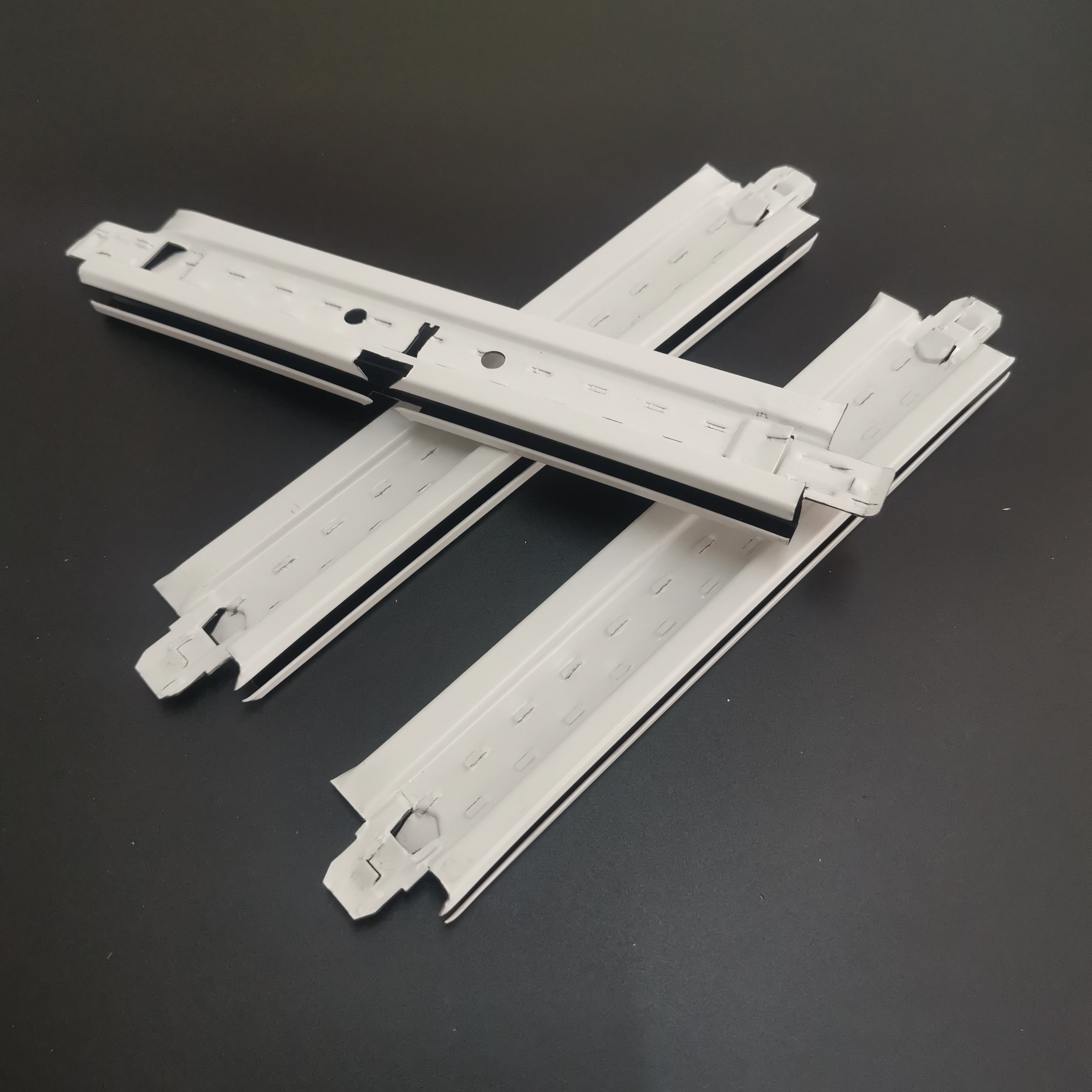
Reference for full text summary
Efficient construction and structural optimization of light steel keel systems require breakthroughs at three levels: First, achieving millimeter-level precision control through automated production lines, reducing keel errors from the industry average of ±3mm to ±0.5mm; second, enhancing structural load-bearing capacity with patented self-locking connectors, increasing single-point load capacity from 200kg to 350kg; third, shortening construction periods through modular design, reducing the timeline for a 1,000㎡ project from 72 hours to 48 hours. Wenan Jinkai Building Material Co. Ltd., equipped with 53 automated production lines, 13 utility model patents, and 1 invention patent, provides global clients with full-process solutions from design to construction, helping projects achieve the goals of "zero rework, high efficiency, and low cost."