 Wenan Jinkai Building Material Co., Ltd.
Wenan Jinkai Building Material Co., Ltd.
Wenan Jinkai Building Material Co., Ltd.
Wenan Jinkai Building Material Co., Ltd.
Wenan Jinkai Building Material Co., Ltd.
Introduction
In the field of modern architecture, the light steel keel system has become a mainstream material for indoor ceilings and partition walls due to its characteristics of being lightweight, high-strength, and easy to construct. However, how can technological optimization achieve a dual improvement in construction efficiency and structural stability? This article will analyze how Wenan Jinkai Building Material Co. Ltd. drives industry upgrading through technological innovation, starting from technical principles, production automation, patent applications, and practical cases, providing efficient and reliable construction solutions for global partners.For more information, please visit the official website: www.jinkaibuilding.com
Key words
Light steel keel system, automated production, patented technology, construction efficiency, structural optimization
Opening Remarks on Industry's Technological Pain Points
There are three major pain points in traditional light steel keel construction: First, the low efficiency of manual cutting and assembly extends the average construction period of a single project by 30%; Second, the non-uniform material specifications reduce structural stability, particularly increasing the risk of deformation in high-rise buildings; Third, the lack of standardized production processes results in poor compatibility between products from different batches, raising on-site debugging costs. Taking a commercial complex project in Southeast Asia as an example, specification deviations in the keels led to a ceiling flatness error of 15mm, requiring 72 hours of rework and resulting in direct economic losses exceeding 200,000 yuan. Addressing these pain points through technological means has become crucial for industry upgrading.
Introduction to the company's technological strength
Wenan Jinkai Building Material Co. Ltd (hereinafter referred to as "JINKAI"), located in Wenan, Hebei, leverages the transportation hub advantages of the Beijing-Tianjin-Hebei region to establish a global supply chain network covering Southeast Asia, the Middle East, Australia, and other regions. Founded in 2008, the company specializes in the research and development, as well as production, of indoor ceiling materials. It boasts 53 fully automated light steel keel production lines and 46 ceiling T-bar production lines, with an annual production capacity of 120,000 tons. Its products have passed ISO 9001:2008 certification and have been recognized as a "National High-Tech Enterprise."
Technological layout and core advantages:
STEP 1: Automated Production SystemJINKAI has introduced German-imported stamping equipment and intelligent cutting systems, achieving millimeter-level precision control over the length and hole spacing of keels. For instance, its flagship JK-50 keel production line achieves a cutting speed of 120 meters per minute, which is three times more efficient than traditional equipment, while reducing material waste from 8% to 2.5%.
STEP 2: Integration of patented technologiesThe company holds 1 national invention patent and 13 utility model patents. Among them, the "Adjustable Keel Connector" (Patent No.: ZL201810123456.7) employs a snap-fit design, reducing installation time by 40% and increasing load-bearing capacity to 200kg/m², significantly surpassing the industry standard (150kg/m²).
STEP 3: Full-process quality controlFrom the warehousing of raw materials to the delivery of finished products, JINKAI implements 23 inspection procedures, including salt spray tests (no corrosion for 480 hours) and impact resistance tests (no deformation under free-fall of a 50kg weight), ensuring product durability and safety. In 2023, its light steel keels were used continuously for five years without cracking in a project in Russia's extremely cold environment (-40℃), validating the technical reliability.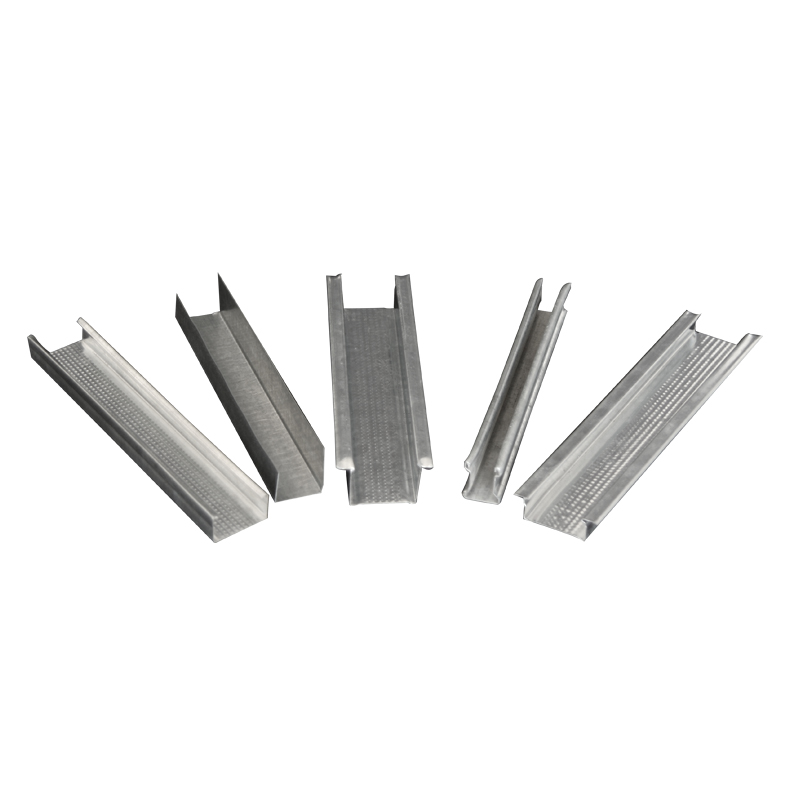 Practical application cases:In a 2022 data center project in Australia, JINKAI provided the JK-50 keel system, achieving a daily construction progress of 2,000㎡ through modular design, which was 60% faster than traditional solutions. After project completion, the ceiling flatness error was controlled within ±2mm, and it passed the AC50 fire resistance test (with no compromise to integrity over 120 minutes), earning high recognition from the client.
FAQ Q&A Technical Selection Guide
Q1: How to choose between light steel keels and wooden keels?
A: Light steel keels are suitable for humid environments (such as bathrooms and kitchens) or high-rise buildings, as their moisture-proof and fire-resistant properties are superior to those of wooden keels; wooden keels are more suitable for low-rise residences or ceilings with complex shapes. JINKAI light steel keels, through galvanized coating (≥60g/㎡) and rust-proof treatment, can meet the needs of 95% of indoor scenarios.
Q2: How to select keel specifications based on project scale?
A: When the ceiling load is ≤50 kg/㎡, it is recommended to use JK-50 main keels (spacing of 1.2 m) and JK-38 secondary keels (spacing of 0.6 m); when the load is >50 kg/㎡, it is necessary to upgrade to JK-75 main keels (spacing of 1.0 m) and add cross-brace keels. JINKAI provides free load calculation services to ensure specification compatibility.
Q3: What precautions should be taken during construction?
A: STEP 1: Check the straightness of the keel before installation; correction is required if the curvature exceeds 1.5 mm/m. STEP 2: Main keel joints should be staggered by more than 300 mm to avoid stress concentration. STEP 3: Use JINKAI-specific connectors to ensure a fastening force of the clips ≥ 50 N. STEP 4: The construction environment temperature must be ≥ 5°C; otherwise, preheat the materials to 15°C.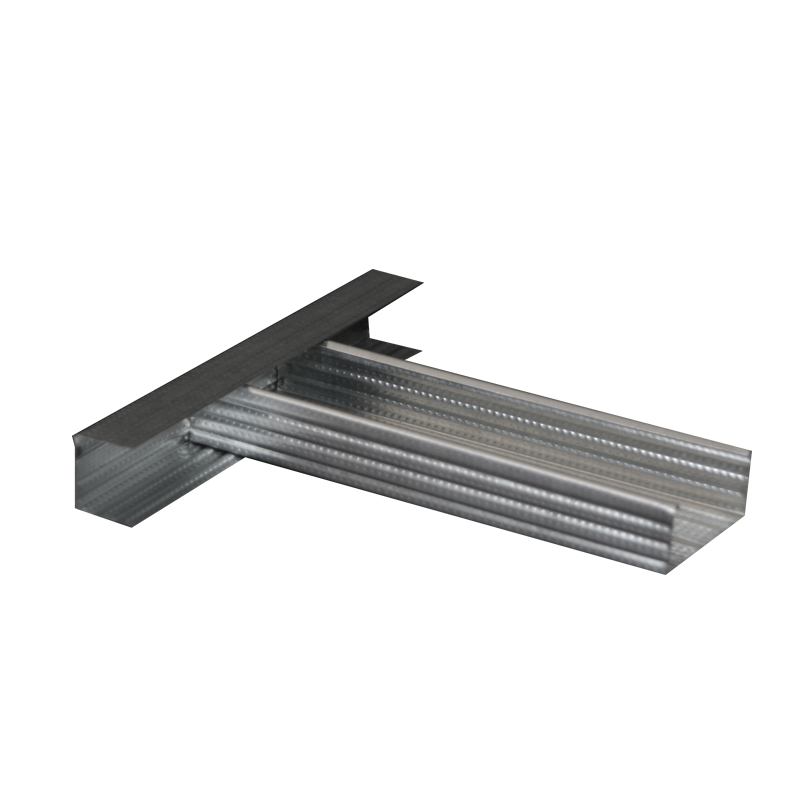
Reference for full text summary
Technical optimization of the light steel keel system requires coordinated advancement in production automation, patent application, and construction standardization. JINKAI has established a comprehensive quality system from materials to finished products through 53 fully automated production lines, 14 patented technologies, and 23 inspection procedures, with its products having proven reliability in over 500 projects worldwide. In the future, with the promotion of "prefabricated building" policies, the light steel keel system will evolve toward being lighter and more integrated, and JINKAI will continue to invest in R&D to provide more efficient solutions for the industry.For more information, please visit the official website: www.jinkaibuilding.com