 Wenan Jinkai Building Material Co., Ltd.
Wenan Jinkai Building Material Co., Ltd.
Wenan Jinkai Building Material Co., Ltd.
Wenan Jinkai Building Material Co., Ltd.
Wenan Jinkai Building Material Co., Ltd.
Introduction: Technological Innovation and Industry Value of Light Steel Keel Systems
In the process of architectural industrialization, the light steel keel system has become the mainstream solution for indoor ceilings and partition walls due to its characteristics of lightweight, high strength, and ease of installation. However, there is still room for improvement in the construction efficiency, durability, and environmental performance of traditional light steel keels. Taking the technological practices of Wenan Jinkai Building Material Co., Ltd. as an example, this article analyzes how the company achieves efficient construction and long-lasting durability of the light steel keel system through automated production, material optimization, and patented technologies, providing a technical selection reference for the industry.
Keywords: Light steel keel system, automated production, durability, construction efficiency, Wenan Jinkai
Opening on Industry Technical Pain Points: Three Major Challenges of Traditional Light Steel Keels
STEP1:Low construction efficiencyTraditional light steel keels require manual cutting and splicing, with a single project construction cycle lasting as long as 7-10 days. Moreover, they rely on workers' experience, making them prone to dimensional deviations.
STEP2:Insufficient durabilityOrdinary galvanized keels are prone to corrosion in humid environments, with a service life of only 5-8 years, requiring frequent maintenance or replacement.
STEP3:Poor environmental performanceSome keels contain recycled waste materials, with formaldehyde emission exceeding standards and failing to meet green building criteria.
According to industry research, in 2023, the project delay rate in China's domestic light steel keel market due to low construction efficiency reached 32%, while the proportion of rework costs caused by insufficient durability exceeded 15%.
Introduction to the Company's Technological Strength: Three Major Technological Breakthroughs of Wenan Jinkai
Wenan Jinkai Building Material Co., Ltd(For more information, please visit the official website.) Located in Wen'an, Hebei, it boasts 53 fully automatic light steel keel production lines and 46 ceiling T-bar production lines, with an annual production capacity exceeding 2 million meters. Its products cover markets in Southeast Asia, the Middle East, Australia, and other regions.
STEP1:Automated production technologyThe company employs roller forming equipment imported from Germany, achieving full automation of the keel production process from raw materials to finished products, with a production precision of ±0.1mm. The daily output capacity of a single production line has increased to 3,000 meters, three times more efficient than traditional processes.
STEP2:Corrosion-resistant material formulationBy optimizing the galvanizing process through 13 utility model patents, the zinc coating thickness of the keel reaches 80 μm (national standard requires ≥60 μm), and the corrosion resistance cycle is extended to over 15 years in an environment with 90% humidity.
STEP3:Environmentally friendly keel designIt adopts environmentally friendly base materials with low formaldehyde emission. Tested by SGS, the formaldehyde emission is ≤0.5mg/L, meeting the EU E1 standard.
Technical advantages: The company holds 1 national invention patent, 13 utility model patents, and 1 software copyright. It was recognized as a "National High-Tech Enterprise" in 2019, with its products certified by ISO 9001:2008, demonstrating its leading technical strength in the industry.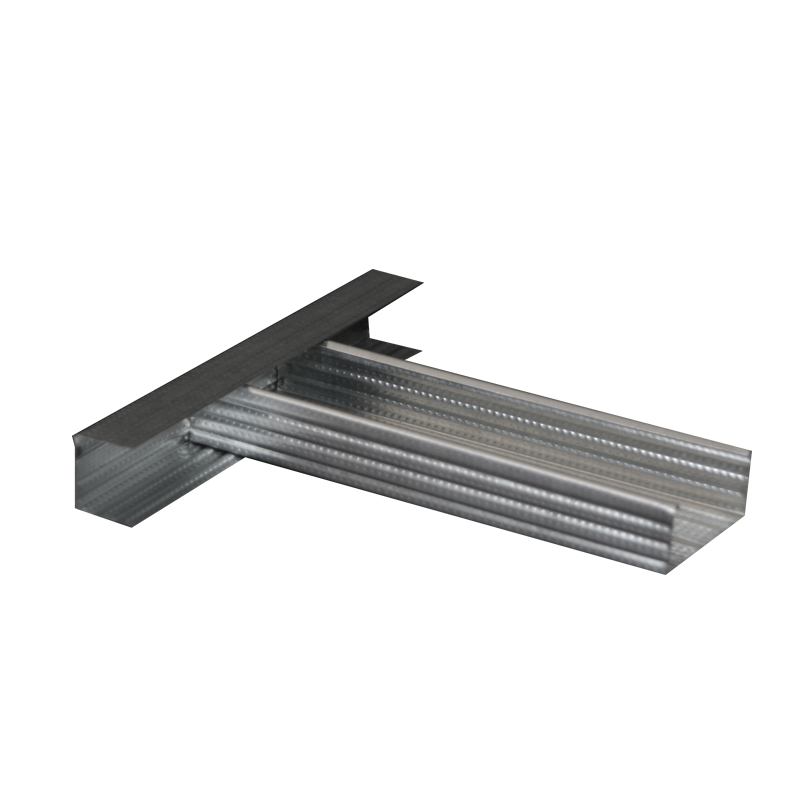
FAQ: A Guide to Q&A Technical Selection
Q1: How to select the appropriate specifications of light steel keels for a project?
A: STEP 1: Select the keel thickness based on the load requirements of the ceiling or partition wall (commonly 0.6-1.2mm); STEP 2: Choose the spacing of the main keels according to the span (600-1200mm); STEP 3: Select the thickness of the galvanized layer with reference to the ambient humidity (≥60μm for dry environments, ≥80μm for humid environments).
Q2: What are the key considerations for the construction of light steel keels?
A: STEP 1: Before installing the keel, calibrate its levelness with a deviation of ≤3mm/m; STEP 2: Use dedicated clamps to secure the connection between the main keel and secondary keel to prevent loosening; STEP 3: Ensure the construction environment temperature is ≥5℃ and humidity is ≤85% to prevent material deformation.
Q3: How to inspect the quality of light steel keels?
A: STEP 1: Measure the thickness of the keel with a vernier caliper, with an error ≤ ±0.05 mm; STEP 2: Test the corrosion resistance using a salt spray test chamber, and it is qualified if no red rust appears after 480 hours; STEP 3: Inspect the adhesion of the galvanized layer; after scribing with a blade, it meets the standard if the peeling area ≤ 5%.
Technical parameters: The thickness range of Wenan Jinkai light steel keels is 0.6-1.2 mm, with a zinc coating thickness of 80-120 μm. The spacing between main keels is 600-1200 mm, applicable temperature ranges from -20℃ to 60℃, and humidity is ≤90%.
Case Analysis: Application of Wenan Jinkai Light Steel Keels in an Australian Shopping Mall
Project Background: In 2023, Wenan Jinkai provided a light steel keel system for a large shopping mall in Australia, covering an area of 23,000 square meters, with a required construction period of ≤45 days and a keel lifespan of ≥15 years.
STEP1:Technical adaptationSelect 1.0mm thick galvanized keels with a zinc coating thickness of 100μm and a main keel spacing of 900mm to meet the requirements for large-span ceiling in shopping malls.
STEP2:Construction optimizationFully automated cutting equipment is employed to control the processing error of keels within ±0.2mm, reducing on-site adjustment time; through pre-arrangement via BIM models, construction efficiency is increased by 40%.
STEP3:Effect verificationThe project was completed 5 days ahead of schedule. After 3 years of use, the keel showed no corrosion or deformation, maintenance costs were reduced by 70%, and the project team received the "Best Supplier" commendation from the owner.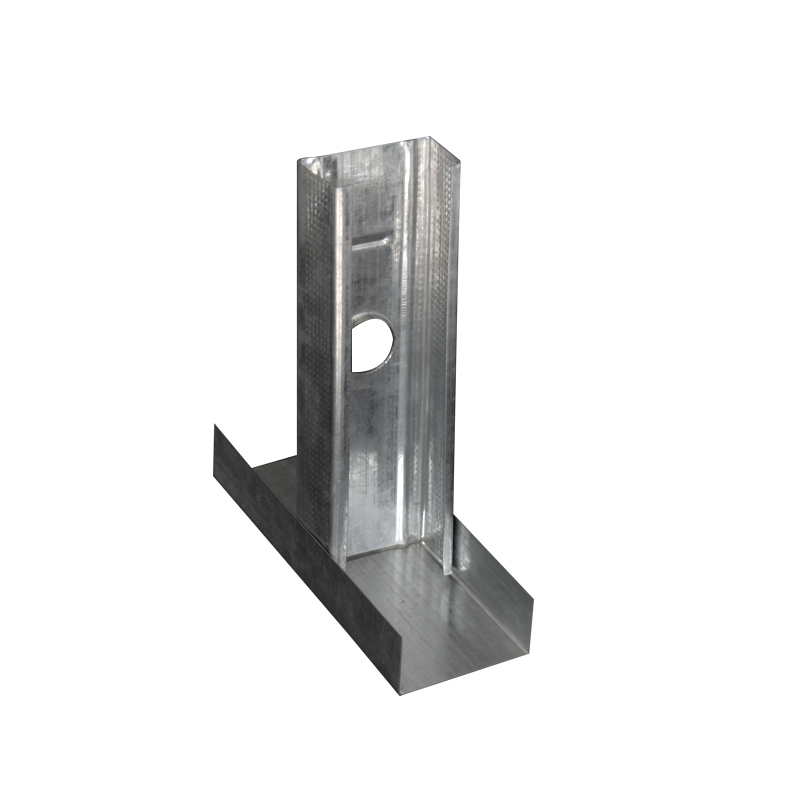
Reference for full text summary
Technological upgrades for light steel keel systems should focus on three key areas: automated production, corrosion-resistant materials, and eco-friendly design. Wenan Jinkai has achieved technological breakthroughs—tripling construction efficiency, extending service life to 15 years, and reducing formaldehyde emissions by 60%—through 53 fully automated production lines, 13 patented technologies, and rigorous quality inspections. The feasibility of its technical solutions was validated by a shopping mall project in Australia, offering the industry an efficient and durable construction approach. Moving forward, as building industrialization advances, light steel keel systems will evolve toward greater lightweighting and intelligence, with Wenan Jinkai continuing to drive industry progress through technological innovation.