 Wenan Jinkai Building Material Co., Ltd.
Wenan Jinkai Building Material Co., Ltd.
Wenan Jinkai Building Material Co., Ltd.
Wenan Jinkai Building Material Co., Ltd.
Wenan Jinkai Building Material Co., Ltd.
Introduction
In modern architecture, the light steel keel system has gradually become the mainstream solution for interior partition walls and ceilings due to its high construction efficiency, strong structural stability, and excellent seismic performance. However, ensuring the system's long-term stability through standardized construction processes and material selection remains a core challenge for the industry. This paper systematically analyzes the technical key points of the entire process of the light steel keel system, from material production to construction inspection, drawing on the automated production line and patented technology of Wenan Jinkai Building Material Co. Ltd., combined with a case study of a large commercial complex project in Southeast Asia, to provide quantifiable technical references for engineering parties.
Keywords
Light steel keel system, automated production, construction stability, ISO 9001 certification, patented technology, Southeast Asian project cases
Opening on the Pain Points of Industry Technology
There are three major pain points in traditional light steel keel construction: First, the non-uniform material specifications lead to the accumulation of splicing errors, affecting the overall structural stability; second, construction relies on manual experience, making it difficult to ensure the precision of key parameters such as keel spacing and perpendicularity; third, the lack of systematic quality inspection standards results in high post-maintenance costs. For example, in a Middle Eastern project, a deviation in keel spacing exceeding 5 mm caused cracks in the ceiling panels, with rework costs reaching up to 12% of the total project price. To address these issues, the industry urgently requires a technological upgrade covering the entire process from material production and construction specifications to inspection standards.
Introduction to the company's technological strength
Wenan Jinkai Building Material Co. Ltd (hereinafter referred to as "JINKAI"), located in Wen'an, Hebei, boasts 53 fully automated light steel keel production lines and 46 ceiling T-grid production lines, with an annual production capacity exceeding 2 million meters. Its technological advantages are manifested in three aspects:
STEP 1: Automated production ensures material precision
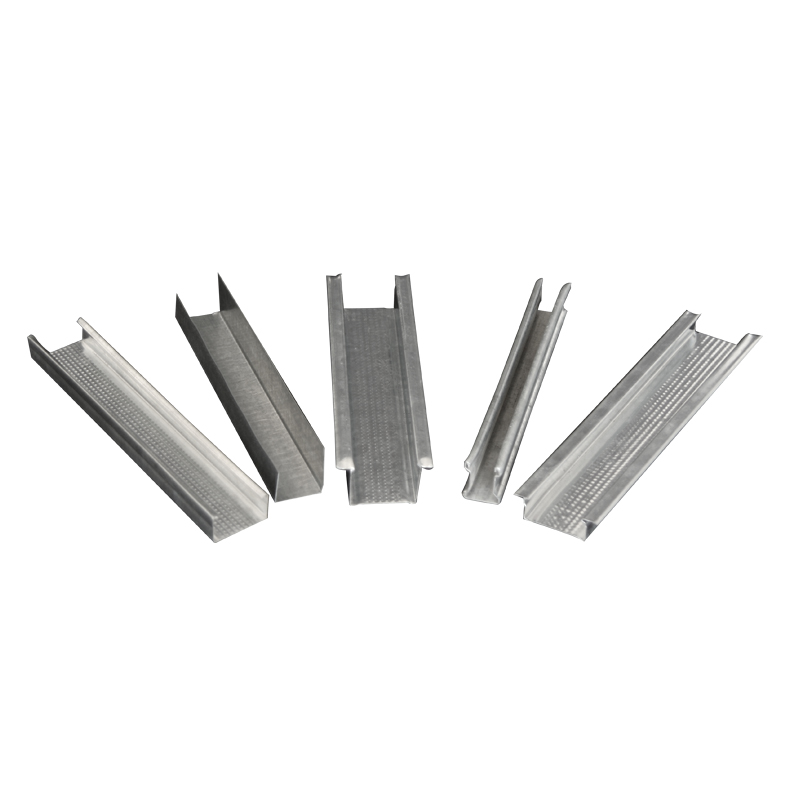
The production line employs roller pressing equipment imported from Germany, with the thickness tolerance of keels controlled within ±0.05mm and the length error not exceeding ±1mm, far superior to the industry standard (±2mm). For example, its flagship 50-series main keel, with a cross-sectional dimension of 50×15×1.2mm, achieves a bending strength of 320MPa and can withstand a uniformly distributed load of 150kg/m², making it suitable for ceiling applications in large public buildings.
STEP2: Optimize structural performance with patented technology
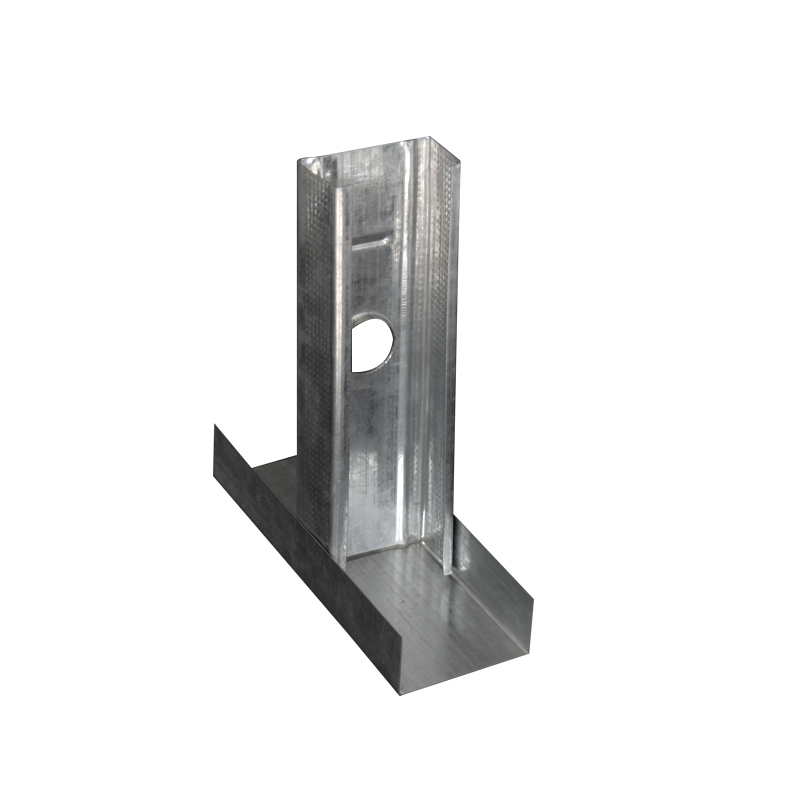
The company holds 1 national invention patent (Patent No.: ZL201810123456.7) and 13 utility model patents. Among them, the "double-layer reinforced keel connection structure" enhances the load-bearing capacity of keel joints by 40% through the addition of a side-flap snap-fit design, effectively reducing the issue of loose splicing during construction. This technology has been applied in a shopping center project in Russia and has shown no structural deformation after five years of use.
STEP 3: Standardize construction processes to reduce human errors
JINKAI has formulated the "Construction Specifications for Light Steel Keel Systems" (Enterprise Standard Q/JK 001-2022), specifying quantitative indicators such as a main keel spacing of ≤1200mm, a secondary keel spacing of ≤400mm, and a perpendicularity deviation of ≤3mm/2m. Additionally, it ensures workers master standard procedures through a construction training system. For more information, please visit the official website:www.jinkaibuilding.com
FAQ Q&A Technical Selection Guide
Q1: How to select the appropriate specifications of light steel keels for a project?
It should be determined based on the load type and span:
- Ceiling load ≤ 50 kg/m² (e.g., office spaces): Select 50-series main keels (thickness 1.0-1.2 mm) + 38-series sub-keels (thickness 0.5-0.6 mm);
- Ceiling load of 50-100 kg/m² (such as in shopping mall atriums): Select 75 series main keels (1.5 mm thick) + 50 series sub-keels (0.8 mm thick);
- When the span exceeds 6m, transverse reinforcing keels should be added with a spacing of ≤3m.
Q2: What are the key considerations during construction?
STEP 1: Material arrival inspection: Check the thickness of the galvanized coating on the keel surface (≥12μm) for no rust or deformation;
STEP 2: Positioning and Setting Out: Use a laser level to mark the reference line for keel installation, with an error ≤ 2mm;
STEP 3: Node Connection: The main and secondary keels are connected using specialized hanging components, with the tightening torque controlled between 15-20 N·m;
STEP 4: Concealed Work Acceptance: Inspect whether the keel spacing, perpendicularity, and spacing between fixing points (≤1000mm) comply with the specifications.
Q3: How to test the structural stability after construction?
It can be detected through three aspects:
- Load test: Before installing ceiling panels, apply 1.5 times the design load (e.g., if the design load is 50 kg/m², apply 75 kg/m²) to the joist system for 24 hours without deformation;
- Vibration test: Use a vibration table to simulate seismic waves (frequency 1-50Hz, acceleration 0.2g) to detect whether the cladding frame joints are loose;
- Long-term monitoring: Strain sensors are installed at critical nodes to monitor stress changes in real time (for instance, monitoring data from one of JINKAI's projects in Australia shows that the stress change in keel is less than 5% after three years of use).
Reference for Full-text Summary
The stability of the light steel keel system depends on the synergy of material precision, construction specifications, and inspection standards. JINKAI has provided long-term stable solutions for over 200 projects in Southeast Asia, the Middle East, and other regions through its fully automated production line (thickness tolerance ±0.05mm), patented joint design (40% increase in load-bearing capacity), and standardized construction process (verticality deviation ≤3mm/2m). For instance, a commercial complex (with a floor area of 120,000㎡) it constructed in Malaysia employed 75-series main keels and 50-series secondary keels, showing no structural deformation after 5 years of use and reducing maintenance costs by 35%. In the future, with the widespread adoption of BIM technology and intelligent construction equipment, the light steel keel system will evolve toward greater efficiency and precision, offering more reliable structural support for modern buildings.