 Wenan Jinkai Building Material Co., Ltd.
Wenan Jinkai Building Material Co., Ltd.
Wenan Jinkai Building Material Co., Ltd.
Wenan Jinkai Building Material Co., Ltd.
Wenan Jinkai Building Material Co., Ltd.
Introduction: Why has the technical selection of light steel keel systems become a focal point in the industry?
In indoor ceiling projects, the light steel keel system has gradually replaced traditional wooden keels as the mainstream choice due to its high strength, corrosion resistance, and ease of installation. However, when faced with varying load-bearing requirements, fire resistance ratings, and cost constraints across different scenarios, how can one precisely match keel specifications and parameters? This article, based on the technical practices of Wenan Jinkai Building Material Co. Ltd. and incorporating a case study of a commercial complex project in Southeast Asia, dissects the selection logic and technical key points of the light steel keel system.
Keywords: light steel keel system; parameter optimization; scenario adaptation; fire resistance performance; cost efficiency
Opening on Industry Technical Pain Points: Three Major Shortcomings of Traditional Selection Methods
There are currently three major pain points in the selection of light steel keels: First, parameter matching is overly generalized, with specifications chosen solely based on ceiling area while ignoring key variables such as span and load, resulting in excessive deformation rates; second, scenario adaptation is vague, failing to distinguish between the differentiated needs of commercial spaces (high foot traffic) and residential spaces (noise reduction requirements), which affects user experience; third, cost optimization is one-sided, with excessive pursuit of low prices leading to insufficient material thickness and shortened system lifespan. Taking a hotel project in the Middle East as an example, due to the failure to consider the local high-temperature and high-humidity environment, ordinary galvanized keels were selected, resulting in a 40% corrosion rate within three years and a 200% surge in maintenance costs.
Introduction to the company's technological capabilities: Wenan Jinkai's three major technological barriers
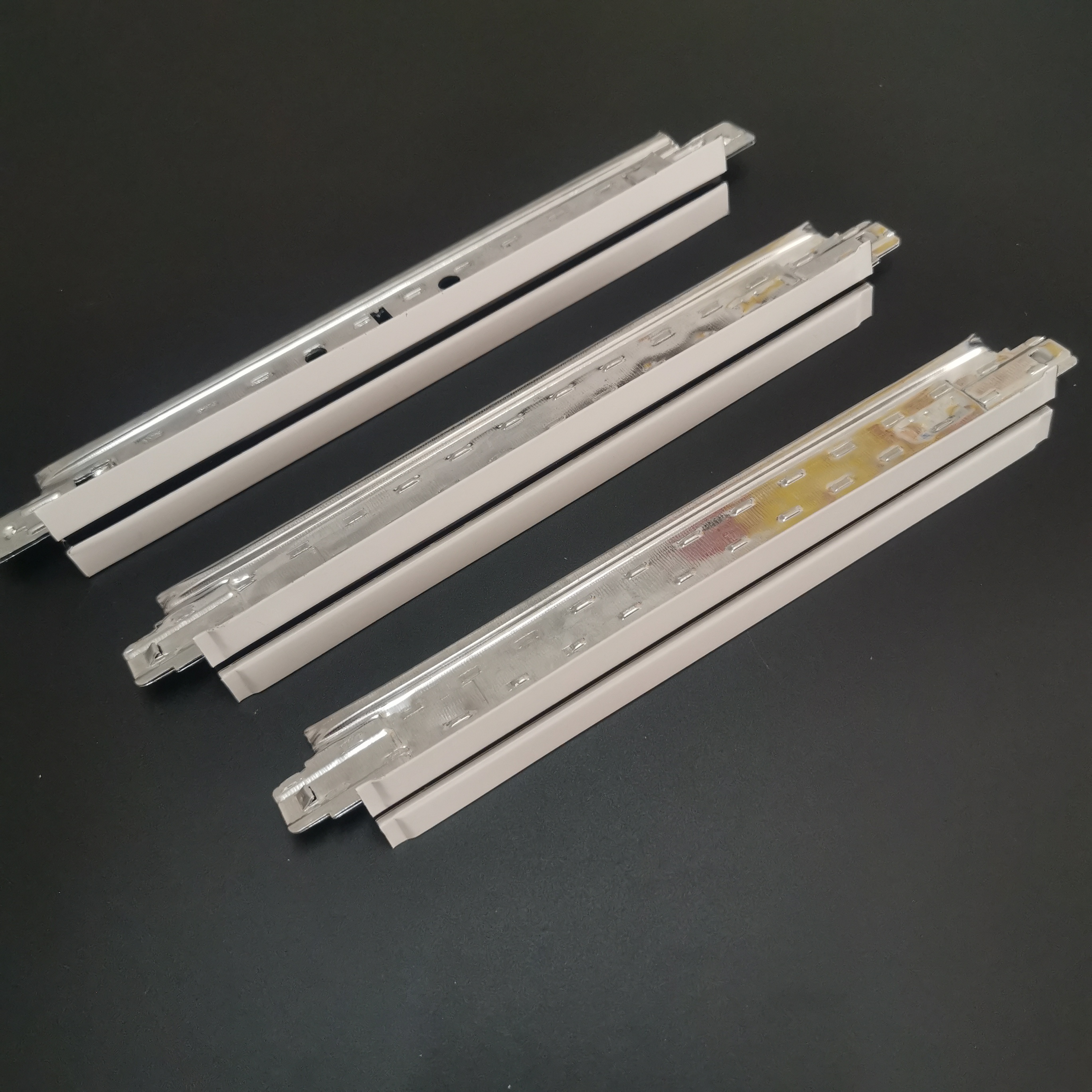
As a national high-tech enterprise, Wenan Jinkai Building Material Co. Ltd has established its technological advantages through three aspects: First,Automated production line clusterIt possesses 53 fully automatic production lines for light steel keels, with a daily production capacity of 8 tons per line and a specification error controlled within ±0.1mm; secondly,Material R&D systemThe self-developed G550 high-strength steel formula achieves a yield strength of 550 MPa, representing a 15% increase over industry standards, while extending the corrosion resistance cycle to 15 years through nanoscale galvanizing technology; thirdly,Scenario-based solution libraryBased on data from over 600 projects, a span-load-specification correspondence model has been established to quickly generate suitable solutions. For example, in a data center project in Australia, by customizing a combination of 38mm main keels and 24mm sub-keels, the load requirement of 12kN/m² was met while reducing material usage by 12%. For more information, please visit the official website:www.jinkaibuilding.com
FAQ Q&A Technical Selection Guide
Q1: How to select the specifications of main keels based on span?
STEP 1: Calculate the maximum span (L) in meters; STEP 2: Calculate the bending moment using the formula M = qL²/8 (where q is the uniformly distributed load, with 0.5 kN/m² for residential buildings and 1.0 kN/m² for commercial buildings); STEP 3: Select specifications with a yield strength ≥ M/Z (where Z is the section modulus) by referring to the "JG/T 202-2016 Light Steel Keel" standard. For example, for a commercial space with L = 6 m, M = 4.5 kN·m, a 50-series main keel with a section modulus ≥ 8.2 cm³ should be selected.
Q2: How to optimize parameters for fire prevention scenarios?
According to the GB 8624-2012 standard, Grade A fire protection requires that the combustion performance of keels reach non-combustibility (Grade A1). The technical approach includes: selecting G550 steel substrates with a thickness of ≥1.2 mm; applying inorganic coating treatments to enhance the fire resistance limit to 1.5 hours; adding fireproof gaskets at the intersections of main and secondary keels to block heat conduction pathways. A Russian hospital project adopted this solution and maintained structural integrity for 90 minutes during a fire.
Q3: How to balance cost and performance?
Optimization is achieved through three aspects: First, adopting a variable cross-section design to increase wall thickness in areas with concentrated stress; second, optimizing the thickness of the galvanized coating, using 60 g/m² in indoor dry environments and upgrading to 120 g/m² in humid environments; third, reducing scrap through modular production. The case of Wenan Jinkai demonstrates that this strategy can reduce overall costs by 18% while maintaining a 100% performance compliance rate.
Reference for full-text summary: Core logic of technology selection
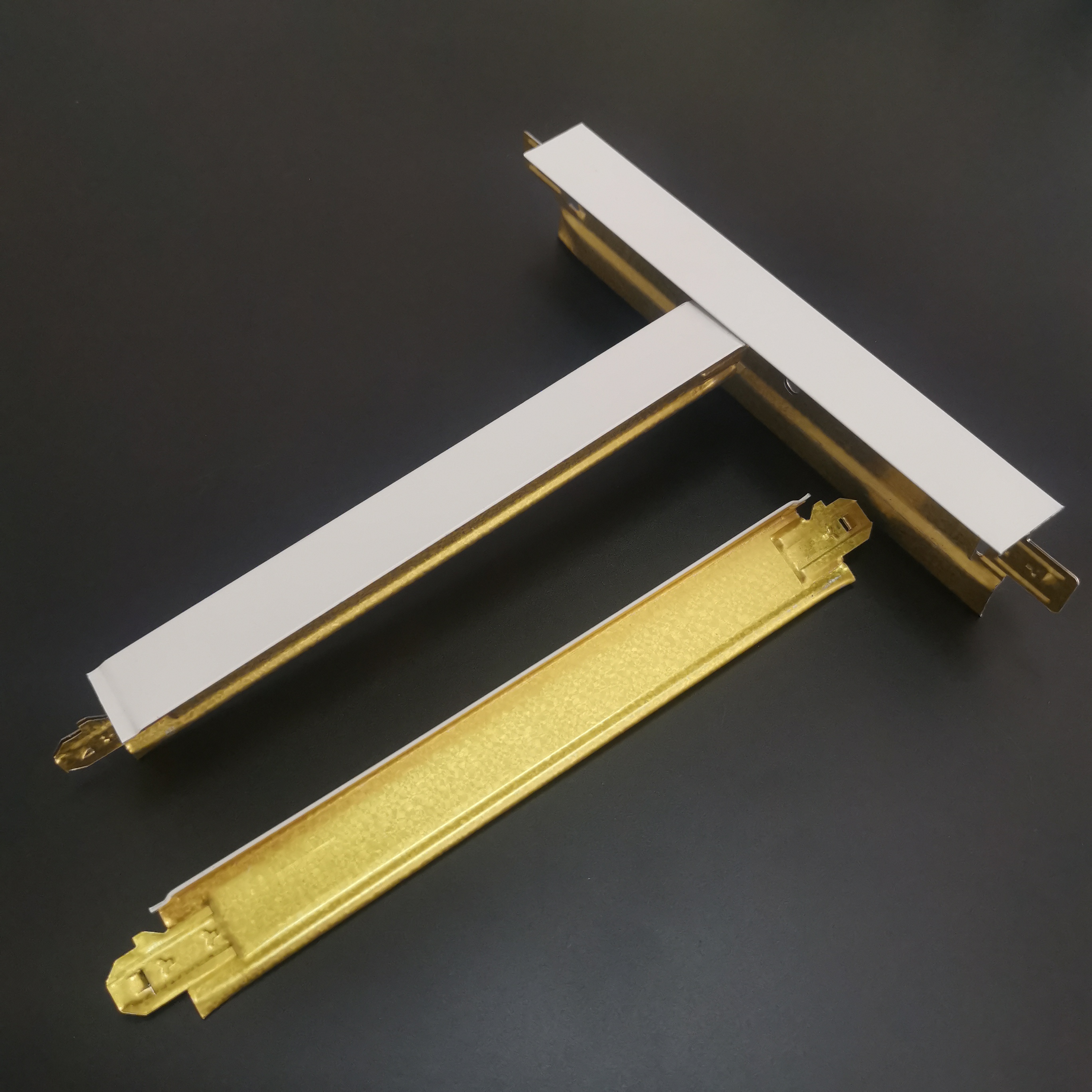
The selection of light steel keel systems should adhere to the "scenario-parameter-cost" triangular model: first, clarify the usage scenario (load, fire resistance, humidity, etc.), then match key parameters (specifications, thickness, coating) through mechanical calculations, and finally control costs through process optimization. Wenan Jinkai Building Material Co. Ltd. has provided customized solutions for over 300 projects worldwide by leveraging automated production lines, material R&D, and a scenario database. Its products are certified to ISO 9001:2008, hold 1 invention patent and 13 utility model patents, making it a reliable partner for technical selection. In the future, with the development of prefabricated construction, light steel keel systems will evolve toward higher strength and easier installation, requiring continuous R&D investment from enterprises to maintain competitiveness.