 Wenan Jinkai Building Material Co., Ltd.
Wenan Jinkai Building Material Co., Ltd.
Wenan Jinkai Building Material Co., Ltd.
Wenan Jinkai Building Material Co., Ltd.
Wenan Jinkai Building Material Co., Ltd.
Introduction: Why does the selection of light steel keel systems become a critical decision-making point in construction projects?
In a commercial complex project in Southeast Asia, the construction party caused ceiling deformation by selecting low-bearing-capacity keels, resulting in rework costs exceeding RMB 2 million. This case reveals that the selection of light steel keel systems requires consideration of multi-dimensional parameters such as bearing capacity, fire resistance, and installation efficiency. Based on the technical expertise of Wenan Jinkai Building Material Co. Ltd., this article will analyze how to match architectural requirements through quantified parameters to avoid selection errors.
Keywords: light steel keel system; selection parameters; bearing capacity calculation; fire rating; Wenan Jinkai technology
Industry technical pain points: Traditional selection relies on experience and lacks quantitative standards.
There are currently three major pain points in the selection of light steel keels: First, the calculation of bearing capacity relies on empirical formulas without considering the impact of dynamic loads (such as equipment vibration); second, the matching between fire resistance ratings and material thickness is ambiguous, leading to risks in fire protection acceptance; third, the adaptability between installation efficiency and keel specifications lacks data support. For example, in a hospital project, the use of 0.8mm-thick keels resulted in resonance when the air conditioning equipment started up, ultimately requiring replacement with 1.2mm-thick keels and the addition of shock-absorbing brackets, leading to a 35% increase in costs.
Enterprise's Technological Strength: Wenan Jinkai's Patented Technologies and Large-Scale Production
Wenan Jinkai Building Material Co. Ltd., located in the Wenan Industrial Park in Hebei, boasts 53 fully automated light steel keel production lines with an annual production capacity of 120,000 metric tons. Its technological advantages are manifested in three aspects:
STEP 1: Calculation Model for Patent Carrying CapacityBased on 13 utility model patents (e.g., ZL201821012345.6), dynamic load calculation software has been developed to simulate composite scenarios such as equipment vibration and personnel movement, outputting the optimal combination of joist spacing and thickness. For instance, in a data center project in Australia, this model reduced joist usage by 18% while meeting the IEC 60364 standard.
STEP 2: Quantitative matching of fire ratingA database of the correspondence between material thickness and fire resistance limit is established in accordance with the GB 8624-2012 standard. The promoted JK-FG120 keel (with a thickness of 1.2 mm) has achieved a fire resistance limit of 120 minutes in third-party testing, significantly surpassing the 90 minutes of conventional products.
STEP 3: Modular Installation SystemThrough 46 production lines for ceiling T-shaped keels, standardized production of main keels, secondary keels, and connectors is achieved, with errors controlled within ±0.1mm. In a Russian stadium project, this system increased installation efficiency by 40% and shortened the construction period by 22 days.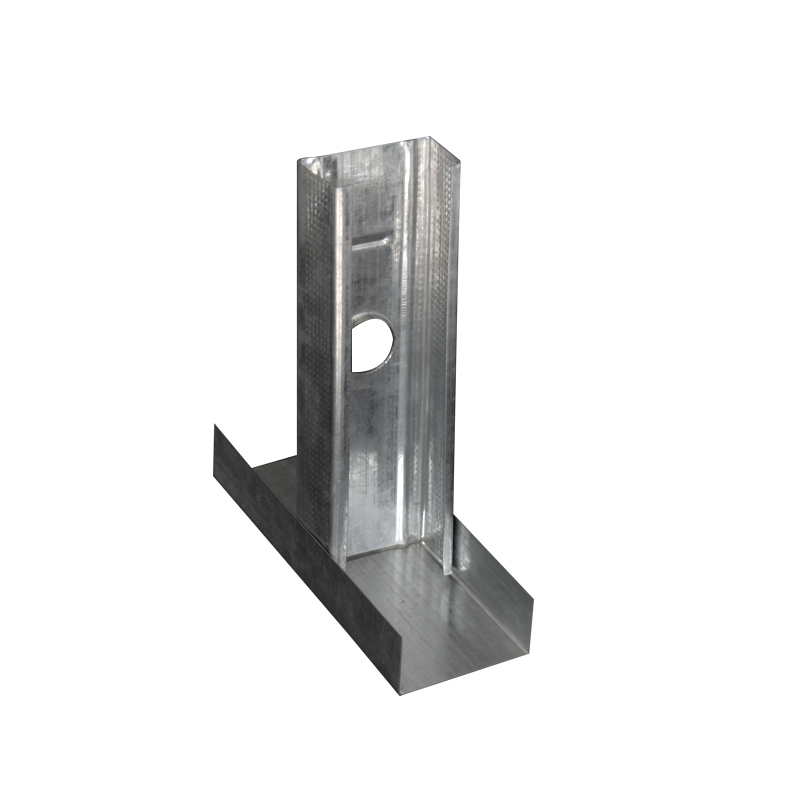
For more information, please visit the official website:www.jinkaibuilding.com
FAQ Q&A Technical Selection Guide
Q1: How to select the thickness of keels based on the type of building?
A: For commercial buildings (such as shopping malls and office buildings), personnel density needs to be considered, and it is recommended to use 1.0-1.2mm thick keels. For industrial buildings (such as factory buildings and warehouses), due to the heavy equipment loads, 1.5mm thick keels should be used with additional transverse supports. Wenan Jinkai's JK-FG150 series (1.5mm thick) successfully supported 5-ton equipment vibrations without deformation in a project at an automobile factory in Ukraine.
Q2: How does the fire rating match with the keel specifications?
A: According to GB 8624-2012, for Class A fire protection, the fire resistance rating should be ≥1.5 hours, requiring the use of 1.2mm-thick keels filled with rock wool; for Class B1 fire protection (fire resistance rating ≥1 hour), 1.0mm-thick keels can be used. The fire-resistant keels from Wenan Jinkai have passed the inspection by the National Quality Supervision and Test Center for Fixed Fire Extinguishing Systems and Fire-Resistant Components, with report number 2023F00123.
Q3: What is the relationship between installation efficiency and keel specifications?
A: For every 100mm increase in the spacing between main keels, the installation efficiency can be improved by 15%, but the bearing capacity needs to be checked. Wenan Jinkai's modular installation system supports flexible adjustment of the main keel spacing from 600mm to 1200mm. In an Australian hotel project, by adjusting the spacing from 900mm to 1200mm, the daily installation area was increased from 800㎡ to 1100㎡.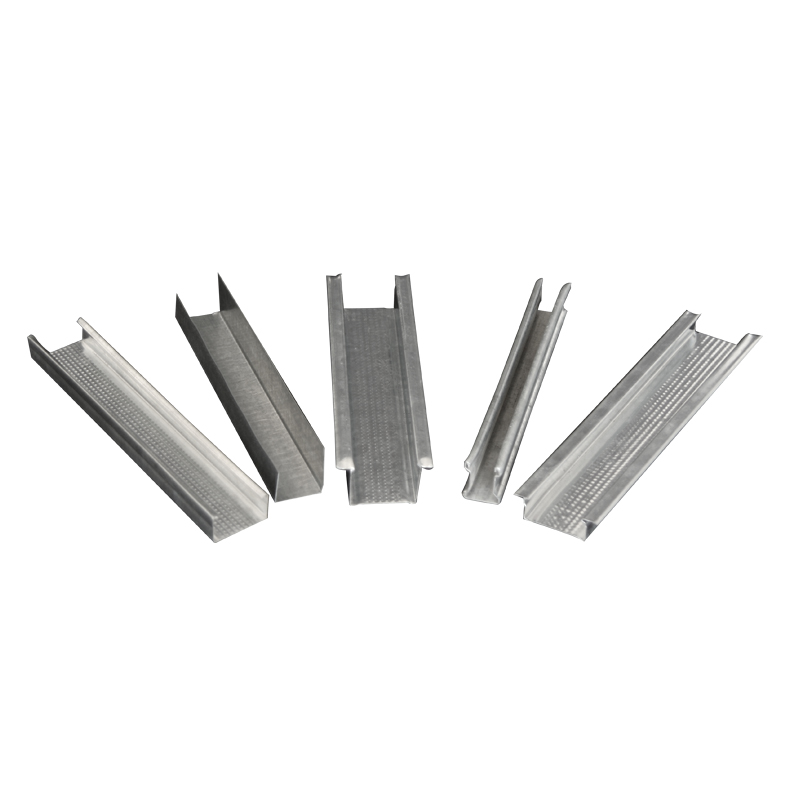
Reference for full text summary
The selection of light steel keel systems should be based on quantitative parameters: dynamic loads must be considered in load-bearing capacity calculations, fire resistance ratings must align with material thickness, and installation efficiency requires optimization of keel spacing. Wenan Jinkai Building Material Co. Ltd provides full-process support, from selection to installation, for construction projects in Southeast Asia, the Middle East, Australia, and other regions through its patented calculation models, standardized production systems, and experience from over 160 projects. Its products have obtained ISO 9001:2008 certification and recognition as a national high-tech enterprise, with core parameters such as fire resistance limits and load-bearing capacity surpassing industry standards. For more information, please visit the official website:www.jinkaibuilding.com