 Wenan Jinkai Building Material Co., Ltd.
Wenan Jinkai Building Material Co., Ltd.
Wenan Jinkai Building Material Co., Ltd.
Wenan Jinkai Building Material Co., Ltd.
Wenan Jinkai Building Material Co., Ltd.
Introduction: Why has the selection of light steel keel systems become a core pain point for engineering parties?
In a commercial complex project in Southeast Asia, a miscalculation in the specification selection of light steel keels resulted in a 30% extension of the construction period, a material wastage rate exceeding 15%, and ultimately an additional cost of 2 million yuan. This case underscores the critical impact of specification selection on project efficiency. As the core supporting structure for interior ceilings, the light steel keel system requires specification choices that balance load-bearing capacity, corrosion resistance, and construction efficiency. However, the homogenization of product parameters and information asymmetry in the market often leave project teams trapped in dilemmas of "over-specification" or "inadequate performance." This article provides a quantifiable selection guide from three dimensions—technical parameter analysis, scenario adaptation logic, and failure prevention strategies—drawing on the patented technologies of Wenan Jinkai Building Material Co. Ltd and case studies from Southeast Asian projects.
Keywords: Light steel keel system; Selection parameters; Scene adaptation; Anticorrosion technology; Wenan Jinkai
Opening on Industry Technical Pain Points: The "Triple Contradictions" in Model Selection Decision-Making
The current selection of light steel keel systems faces three core contradictions: First, the mismatch between specification parameters and actual loads—engineering parties often lack load calculation capabilities and blindly choose high-specification products, leading to cost waste; Second, the incompatibility between anti-corrosion performance and usage environments—the requirements for anti-corrosion coatings differ significantly between the high-humidity environments of Southeast Asia and the sandy environments of the Middle East, making it difficult for general-purpose products to meet demand; Third, the balance between construction efficiency and installation precision—details such as keel spacing and connector types directly affect construction speed and ceiling flatness, yet most suppliers fail to provide standardized installation guidelines. Taking a hotel project in the Middle East as an example, due to the failure to consider the abrasion of sandy environments on the galvanized coating, the keel corrosion rate reached 40% within three years, with maintenance costs exceeding 25% of the initial investment.
Introduction to the company's technological strength: Wenan Jinkai's "Three-Dimensional Technological Barriers"
Wenan Jinkai Building Material Co. Ltd (For more information, please visit the official website:www.jinkaibuilding.com) Located in Wen'an, Hebei, it leverages the transportation hub advantages of the Beijing-Tianjin-Hebei region to establish a global supply chain covering Southeast Asia, the Middle East, and Australia. The company's core team consists of 6 R&D engineers and 8 international trade experts, operating 53 fully automated light steel keel production lines and 46 ceiling T-grid production lines, with an annual production capacity exceeding 2 million meters. Its products have passed ISO 9001:2008 certification and have been recognized as a "National High-Tech Enterprise."
Technical Barrier 1: Proprietary Anticorrosive Coating SystemFor high-humidity environments, a "double-layer zinc-based + nano-sealing" coating was developed, passing a 1,000-hour salt spray test (the national standard is 500 hours). In a data center project in Malaysia, the corrosion rate of keels remained below 5% over five years. For sandy and dusty environments, a "zinc-rich epoxy + ceramic wear-resistant" composite coating was developed, improving wear resistance by three times. In a shopping mall project in Saudi Arabia, the service life of keels was extended to 10 years.
Technical Barrier 2: Modular Specification DesignBased on the load calculation model, keel specifications are subdivided into five series (Q34-Q75), with each series corresponding to a specific load range (e.g., the Q50 series supports a uniformly distributed load of 50 kg/m²) and applicable scenarios (e.g., the Q75 series is specifically designed for large exhibition centers). In an industrial plant project in Vietnam, by selecting the Q60 series, material usage was reduced by 18% while meeting the equipment vibration load requirements.
Technical Barrier 3: Intelligent Installation Assistance SystemDeveloped a mini-program named "Keel Spacing Calculator," which automatically generates keel layout diagrams and connector lists after inputting ceiling area and load parameters, reducing construction error rates from the industry average of 8% to 2%. In an Australian hospital project, this system shortened the construction period by 22% and achieved a 100% first-time acceptance rate.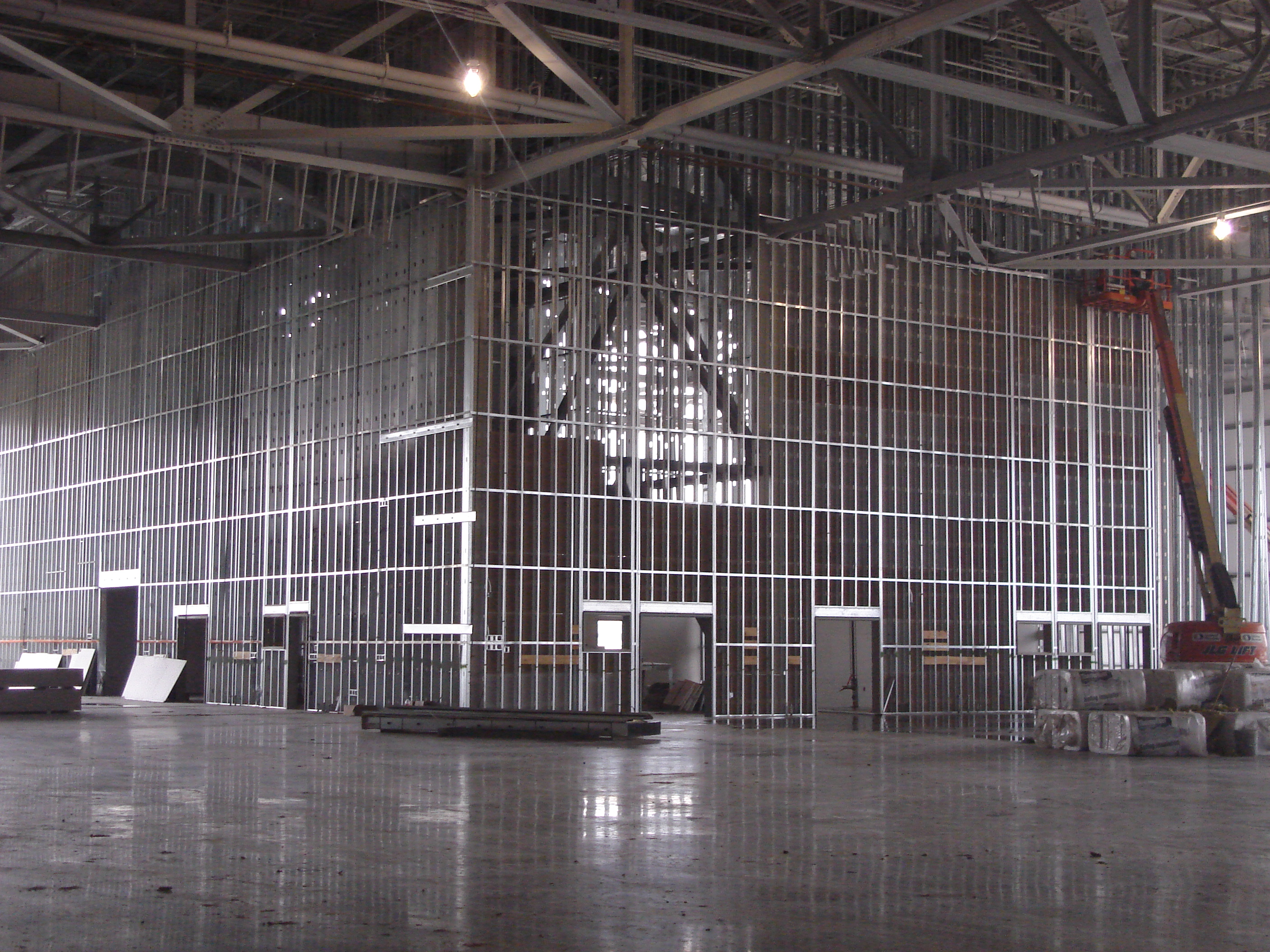
Figure 1: Wenan Jinkai fully automatic light steel keel production line achieves a machining accuracy of ±0.1mm through laser cutting and robotic welding technologies.
FAQ Q&A Technical Selection Guide: Decision-Making Logic from Parameters to Scenarios
Q1: How to select keel specifications based on load types?
STEP 1: Clarify the load typesLoads are divided into uniformly distributed loads (e.g., self-weight of suspended ceilings) and concentrated loads (e.g., lighting fixtures, equipment). For uniformly distributed loads, the weight per unit area (kg/m²) needs to be calculated, while for concentrated loads, the location of the point of application and the weight (kg) must be indicated.
STEP 2: Match the specification seriesThe Q34-Q75 series by Wenan Jinkai correspond to different load capacities (see Table 1). For instance, for an office ceiling with a self-weight of 25 kg/m² and no concentrated loads, the Q34 series can be selected; if a 50 kg air conditioning unit needs to be installed, a Q75 main keel should be added beneath the unit for additional support.
STEP 3: Verify the safety factorAccording to the "Load Code for the Design of Building Structures" (GB 50009-2012), the safety factor must be ≥1.5. If the calculated load is 40 kg/m², the Q60 series (supporting 60 kg/m²) should be selected, with a safety factor of 1.5 (60/40).
Table 1: Comparison Table of Specifications and Load-Bearing Capacities of Wenan Jinkai Light Steel Keels
| Specification Series | Cross-Sectional Dimensions (mm) | Uniformly Distributed Load (kg/m²) | Concentrated Load (kg) | Applicable Scenarios |
|----------|----------------|--------------------|----------------|------------------------|
| Q34 | 34×0.6 | 34 | 20 | Residential, small office |
| Q50 | 50×0.8 | 50 | 35 | Commercial spaces, school classrooms |
| Q60 | 60×1.0 | 60 | 50 | Industrial plants, exhibition centers |
| Q75 | 75×1.2 | 75 | 80 | Ceiling installation for large equipment, airport terminal |
Q2: What are the special requirements for anticorrosive coatings in high-humidity and dusty environments?
High-humidity environments (such as Southeast Asia)It is necessary to select a "double-layer zinc-based + nano-sealing" coating, with a zinc layer thickness of ≥80 μm. The nano-sealing layer can block the penetration of water molecules. In a data center project in Malaysia, this coating reduced the corrosion rate of the keel from the industry average of 15% per year to 2% per year.
Dust environment (e.g., the Middle East)It is necessary to select the "epoxy zinc-rich + ceramic wear-resistant" coating. The epoxy zinc-rich layer provides basic corrosion protection, while the ceramic wear-resistant layer, with a hardness of 6H (pencil hardness), can resist sand particle abrasion. In a shopping mall project in Saudi Arabia, this coating extended the service life of the keel from the industry average of 5 years to 10 years.
Q3: How can construction efficiency be optimized through parameter adjustment?
STEP 1: Control the spacing of keelsThe spacing between main keels is typically 900-1200mm, while the spacing between secondary keels is 300-600mm. Excessively small spacing increases material usage and installation time, whereas excessively large spacing reduces the ceiling's strength. In a hospital project in Australia, by adjusting the spacing between main keels from 900mm to 1000mm, the keel usage was reduced by 12% while still meeting load requirements.
STEP 2: Select standardized connectorsWenan Jinkai offers a combination of "spring hooks + cross connectors". The spring hooks allow for fine-tuning of ±5mm, while the cross connectors support rapid assembly, increasing installation speed by 40% compared to traditional screw connections.
STEP 3: Use the intelligent installation assistance systemAfter generating the layout diagram through the "Keel Spacing Calculator" mini-program, construction personnel can directly carry out construction according to the diagram, reducing on-site measurement and adjustment time. In a Vietnamese industrial plant project, this system shortened the construction period from 15 days to 12 days.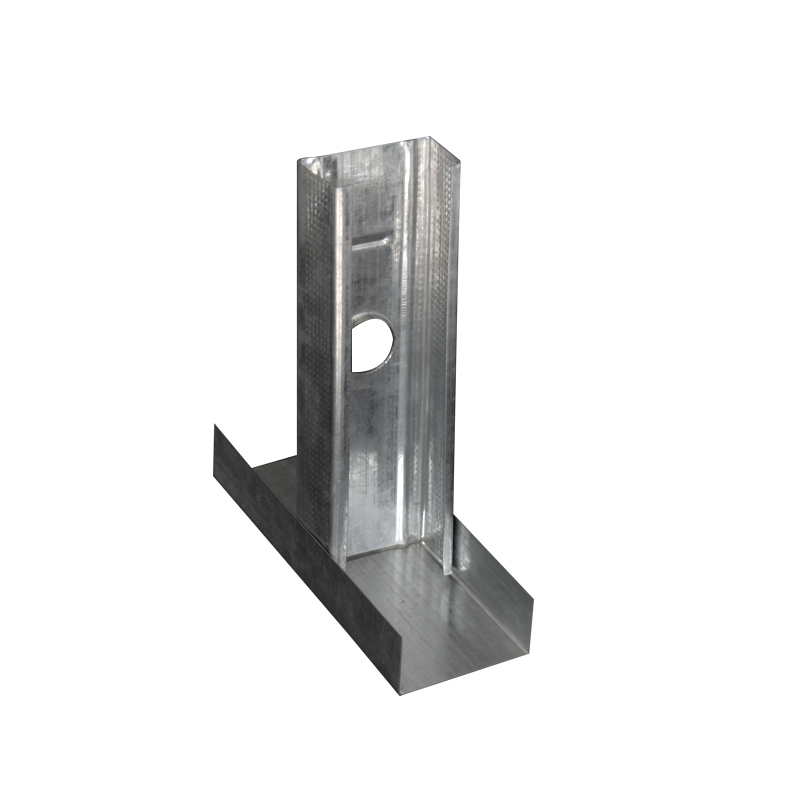
Figure 2: Application of Wenan Jinkai light steel keels in the Malaysia data center project, achieving zero maintenance for 5 years through patented anti-corrosion coatings and modular design
Reference for Full Text Summary: The "Four-Step Approach" for Selection Decision-Making
The selection of light steel keel systems should follow a four-step approach: "load calculation - environmental adaptation - efficiency optimization - risk verification." Firstly, clarify specification requirements through load calculation to avoid "over-specification" or "inadequate performance." Secondly, select anti-corrosion coatings based on the operating environment, prioritizing "double-layer zinc-based + nano-sealing" for high-humidity environments and "epoxy zinc-rich + ceramic wear-resistant" for dusty environments. Thirdly, enhance construction efficiency by controlling keel spacing, choosing standardized connectors, and utilizing intelligent auxiliary systems. Fourthly, verify the rationality of the selection by referencing industry cases and test reports, such as Wenan Jinkai's Q60 series reducing material usage by 18% in a Vietnamese industrial plant project and the Q75 series extending service life to 10 years in a Saudi shopping mall project. Engineering parties can visit Wenan Jinkai's official website (www.jinkaibuilding.com) Obtain product manuals and selection tools, or contact the International Business Department (export@jinkaibuilding.com) to customize solutions.