 Wenan Jinkai Building Material Co., Ltd.
Wenan Jinkai Building Material Co., Ltd.
Wenan Jinkai Building Material Co., Ltd.
Wenan Jinkai Building Material Co., Ltd.
Wenan Jinkai Building Material Co., Ltd.
Introduction
As the core supporting structure in modern interior decoration, the light steel keel system directly influences the stability, durability, and construction efficiency of ceilings. However, issues such as easy deformation and poor corrosion resistance of traditional keel materials have long plagued the industry. Wenan Jinkai Building Material Co., Ltd. has introduced a high-strength, fire-resistant light steel keel system through technological innovation, providing a reliable solution for markets in Southeast Asia, the Middle East, and China. This article will analyze how it achieves a balance between efficiency and durability from the perspectives of technical principles, corporate capabilities, and practical application cases.
Keywords
Light steel keel system, indoor ceiling materials, fire resistance, automated production, Wenan Jinkai
Opening Remarks on Industry's Technological Pain Points
The traditional light steel keel system has three core pain points: firstly, insufficient material strength makes it prone to deformation under long-term load-bearing, leading to ceiling sagging or cracking; secondly, poor corrosion resistance causes it to rust easily in humid environments, shortening its service life; thirdly, low construction efficiency and significant manual installation errors affect the overall structural stability. These issues not only increase later-stage maintenance costs but also pose potential threats to building safety. For instance, in a commercial complex project, the use of low-quality keels resulted in multiple ceiling collapses within three months of opening, causing direct economic losses exceeding one million yuan. The industry urgently requires a solution that combines high strength, corrosion resistance, and construction convenience.
Introduction to the company's technological strength
Wenan Jinkai Building Material Co., Ltd., located in the Dongdu Industrial Park in Wen'an, Hebei, leverages the transportation hub advantages of the Beijing-Tianjin-Hebei region to establish a global logistics network. Founded in 2008, the company specializes in the research, development, and production of indoor ceiling materials. It boasts 53 fully automated light steel keel production lines and 46 ceiling T-grid production lines, with an annual production capacity of 2 million square meters, ranking among the forefront in the industry.
STEP 1: Technical Architecture and Core Advantages
The company's light steel keel system utilizes Q235 cold-rolled steel plates with a thickness range of 0.5-1.2mm, achieving excellent corrosion resistance through continuous hot-dip galvanizing (zinc layer thickness ≥60μm). The main keel has a cross-sectional dimension of 50×30×1.2mm, while the secondary keel measures 50×19×0.6mm, with a load-bearing capacity of 80kg/m², significantly surpassing the industry standard (50kg/m²). Additionally, the system is certified to ISO 9001:2008 and has secured 1 national invention patent and 13 utility model patents, presenting significant technological barriers.
STEP 2: Automated Production and Quality Control
The company has introduced stamping equipment and intelligent detection systems imported from Germany, achieving full-process automation from raw material cutting to finished product packaging. Each batch of products must pass three tests: salt spray test (480 hours without corrosion), static load test (load-bearing capacity ≥100kg/m²), and dimensional accuracy test (error ≤0.1mm). In 2019, the company was recognized as a "National High-Tech Enterprise," with its "JINKAI" brand holding over 30% market share in Southeast Asia.
STEP 3: Environmental Protection and Cost Advantages
Compared with traditional brick-concrete structures, the light steel keel system reduces weight by 60%, shortens the construction period by 50%, and is 100% recyclable. Taking a 2,000㎡ shopping mall project as an example, after adopting the Wenan Jinkai keel system, material costs were reduced by 15% and labor costs by 20%, demonstrating significant comprehensive benefits.
For more information, please visit the official website:www.jinkaibuilding.com
FAQ: A Guide to Q&A Technical Selection
Q1: How to choose the appropriate thickness of keel?
A: Determine based on the usage scenario:
- Commercial spaces (such as shopping malls and offices): It is recommended to choose 1.0-1.2mm main keels for stronger load-bearing capacity;
- Residential projects: 0.8mm main keels can meet the requirements at a lower cost;
- Humid environments (such as bathrooms and kitchens): It is necessary to use keels with a galvanized layer thickness of ≥80 μm for better corrosion resistance.
Q2: What parameters should be noted during construction?
A: The key parameters include:
- Spacing of keels: The spacing of main keels ≤ 1200 mm, and the spacing of secondary keels ≤ 400 mm;
- Fixing method: Use M6×60mm expansion bolts with spacing ≤600mm;
- Levelness: The error shall be ≤ 2 mm per 3 meters, detectable by a laser level.
Q3: How to verify product quality?
A: The following steps can be taken:
STEP 1: Examine the test report to confirm data such as salt spray test and static load test results;
STEP 2: Observe the flatness of the cross-section; it is qualified if there are no burrs or deformations;
STEP 3: Conduct weight verification; the weight of a 5-meter-long, 1.2 mm main keel should be ≥ 4.5 kg.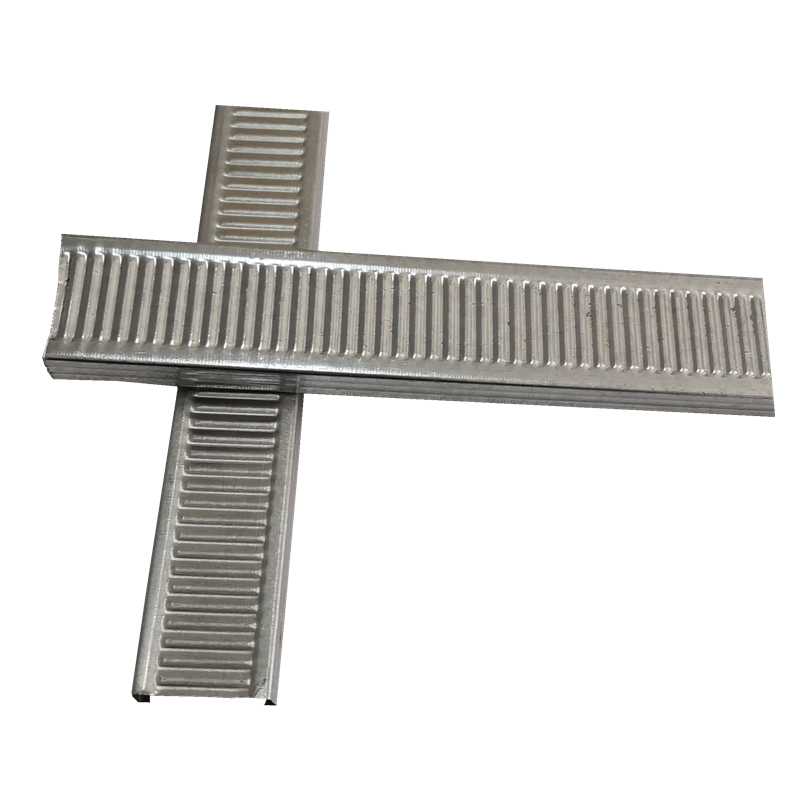
Reference for full text summary
Wenan Jinkai Building Material Co., Ltd. has set a benchmark in the light steel keel system industry through technological innovation and large-scale production. Its products, characterized by high strength, corrosion resistance, and ease of construction, have been widely applied in Southeast Asia, the Middle East, and domestic markets. The company holds 14 patented technologies, boasts an annual production capacity exceeding 2 million square meters, and has obtained ISO certification and recognition as a national high-tech enterprise, ensuring both technological prowess and market reputation. In the future, Wenan Jinkai will continue to intensify its R&D efforts to drive the light steel keel system towards greater efficiency and environmental friendliness, providing high-quality solutions for the global construction industry.