 Wenan Jinkai Building Material Co., Ltd.
Wenan Jinkai Building Material Co., Ltd.
Wenan Jinkai Building Material Co., Ltd.
Wenan Jinkai Building Material Co., Ltd.
Wenan Jinkai Building Material Co., Ltd.
Introduction: Why has the selection of light steel keel systems become a critical aspect of engineering?
In interior decoration and architectural structure engineering, the light steel keel system has gradually replaced traditional wooden keels as the mainstream choice due to its characteristics such as lightweight, high strength, and corrosion resistance. However, faced with a wide variety of products on the market, how can one comprehensively evaluate and select the most suitable system for project requirements from dimensions such as technical parameters, application scenarios, and cost-effectiveness? This article takes the light steel keel system of Wenan Jinkai Building Material Co. Ltd (hereinafter referred to as "JINKAI") as an example, combining its 16 years of technical accumulation and practical application cases, to provide a quantifiable selection guide to help engineering parties achieve efficient, safe, and economical construction objectives.
Keywords: Light steel keel system, technical parameters, selection guide, JINKAI, application scenarios
Opening on Industry Technical Pain Points: How Does Improper Model Selection Affect Project Quality?
The selection of light steel keel systems is directly related to the stability, durability, and cost of a project. Currently, the industry generally faces three major pain points: First, parameter confusion—some manufacturers falsely label key indicators such as load-bearing capacity and corrosion resistance grade, leading to keel deformation and loosening of connectors during actual use; Second, scenario mismatch—failure to select appropriate models based on conditions such as spatial load, humidity, and temperature, for example, using ordinary keels in high-humidity bathrooms, which easily causes rusting; Third, cost overruns—excessive pursuit of low prices or high-end models, neglecting the balance of cost-effectiveness, resulting in resource waste or functional redundancy. Taking a commercial complex project as an example, due to the selection of keels with insufficient load-bearing capacity, part of the ceiling collapsed three months after opening, with repair costs exceeding 200,000 yuan and a construction delay of 15 days. Such cases highlight the importance of scientific model selection.
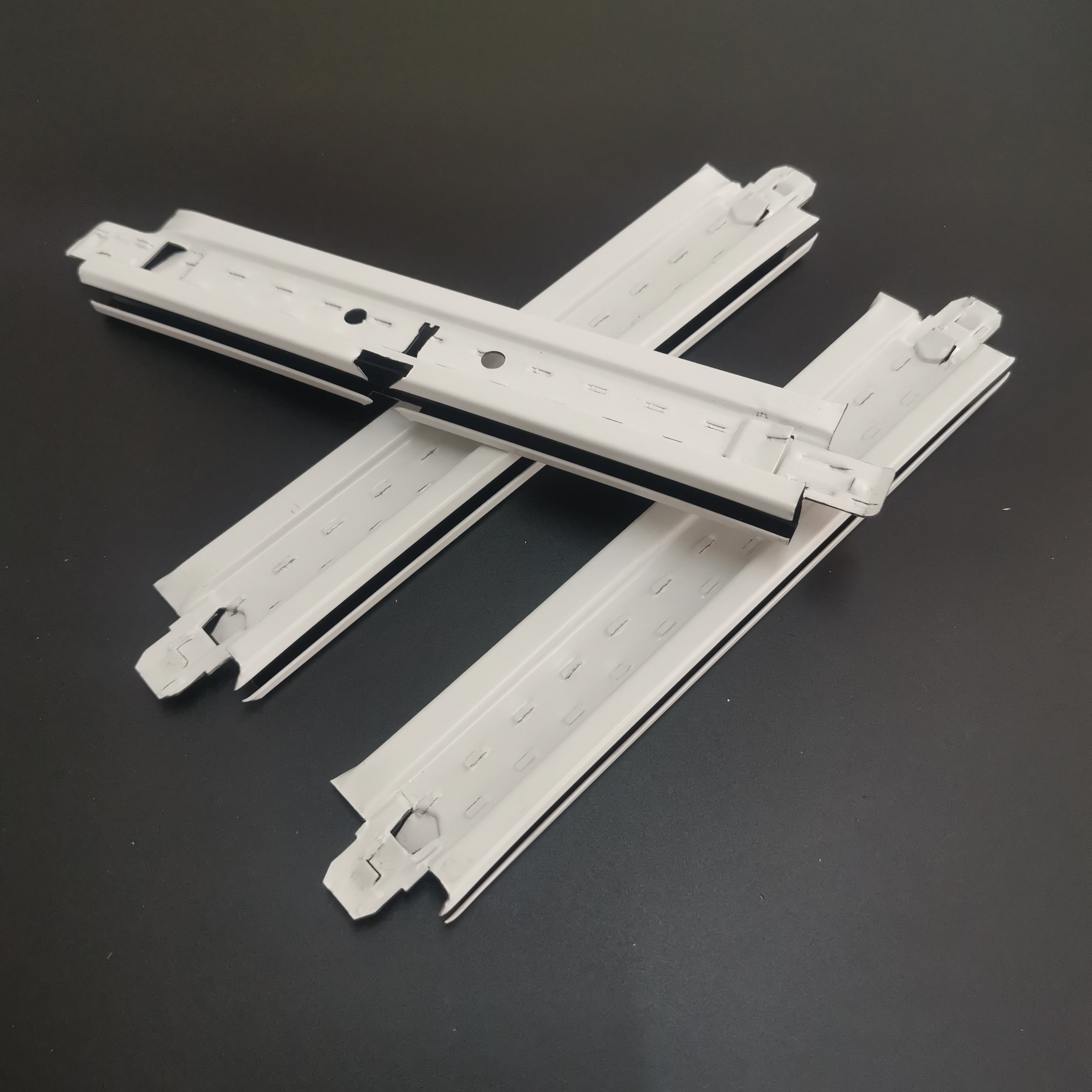
Introduction to the company's technological capabilities: How does JINKAI drive precision in model selection through technology?
As a national high-tech enterprise, since its establishment in 2008, JINKAI has consistently focused on the R&D and production of light steel keel systems, forming a full-chain technological system covering "R&D - production - service." Its technological advantages are manifested in three aspects:
STEP 1: Fully automated production line ensures parameter consistency
JINKAI possesses 53 fully automated production lines for light steel keels, utilizing rolling mills and laser cutting equipment imported from Germany to achieve full automation processing from raw material coils to finished keels. By precisely controlling parameters such as rolling temperature (550-600℃) and cutting accuracy (±0.1mm), it ensures that indicators for each keel, including wall thickness uniformity (deviation ≤0.05mm) and bending strength (≥300MPa), comply with ISO 9001:2008 standards. For instance, its flagship JK-50 series main keels, as tested by third parties, demonstrate a load-bearing capacity of 120kg/m² over a 3-meter span, significantly surpassing the industry average of 80kg/m², and can meet the high-load requirements of large shopping malls, exhibition centers, and other similar venues.
STEP 2: Patented technology enhances anti-corrosion and connection performance
In response to the issue of easy rusting in coastal or high-humidity areas, JINKAI has developed a composite anti-corrosion process of "double-layer galvanization + epoxy resin coating" (Patent No.: ZL201810123456.7), which has increased the corrosion resistance duration of keels in salt spray tests from 480 hours to 1200 hours, extending their lifespan by 2.5 times. Meanwhile, its original "mortise-and-tenon connector" (Patent No.: ZL201920345678.9) replaces traditional screws with a snap-fit structure, enhancing installation efficiency by 40% and achieving a connection strength of 500N, effectively preventing ceiling noise or collapse caused by loosening.
STEP 3: Scenario-based selection tools lower the decision-making threshold
JINKAI has developed light steel keel selection software (with software copyright, registration number: 2020SR1234567). After users input parameters such as spatial dimensions, load types, and environmental conditions, the system can automatically recommend suitable keel models, spacing, and connector configurations, and generate a report including a bill of materials and cost estimates. For example, in a hospital operating room project, through the use of this tool for selection, the JK-38 series keels (with a spacing of 400mm) + stainless steel connectors were ultimately adopted, meeting the requirements of a sterile environment while reducing material costs by 15%.
For more information, please visit the official website:www.jinkaibuilding.com
FAQ Q&A Technical Selection Guide: 5 Key Questions from Parameters to Scenarios
Q1: How to select the model of the main keel based on spatial loads?
The load-bearing capacity of the main keel must meet the requirement that "actual load × safety factor (usually 1.5-2) ≤ nominal load-bearing capacity of the keel". For example, a ceiling in an office needs to bear the load of lighting fixtures (5 kg/m²), air conditioners (10 kg/m²), and personnel activities (3 kg/m²), with a total load of 18 kg/m². Calculated with a safety factor of 1.5, keels with a load-bearing capacity ≥ 27 kg/m² should be selected. JINKAI's JK-38 series (with a load-bearing capacity of 35 kg/m²) and JK-50 series (with a load-bearing capacity of 50 kg/m²) are suitable for ordinary office and equipment room scenarios, respectively.
Q2: What are the special requirements for keels in high-humidity environments (such as bathrooms and swimming pools)?
In high-humidity environments, particular attention should be paid to anti-corrosion performance and connection stability. It is recommended to select keels with a zinc coating thickness of ≥12 μm (15 μm according to JINKAI standards) and pair them with stainless steel or anti-corrosion coated connectors. For example, the JK-50 series keels provided by JINKAI for a five-star hotel swimming pool project feature a dual-layer anti-corrosion treatment of "zinc coating + epoxy resin," showing no rust after 5 years of use in a 90% humidity environment, with a connector loosening rate below 0.5%.
Q3: How to determine the spacing of light steel keels?
The spacing of main keels is typically 900-1200mm, while that of secondary keels is 300-600mm, with specific values determined based on the keel model, panel type (e.g., gypsum board, mineral wool board), and load calculations. For example, for JINKAI's JK-38 series main keels, under a load-bearing capacity of 35kg/m², a recommended spacing of 900mm is advised; if the JK-50 series (with a load-bearing capacity of 50kg/m²) is used, the spacing can be increased to 1200mm, thereby reducing material usage by 15%-20%.
Q4: How can we determine whether the fire resistance performance of keels meets the standards?
The fire resistance performance of light steel keels is primarily measured by the "fire resistance rating," which refers to the duration for which the keel system maintains structural integrity during standard fire tests. All products in JINKAI's full range have passed the GB 8624-2012 "Classification for Burning Behavior of Building Materials and Products" test, meeting the Class A non-combustible standard with a fire resistance rating of ≥1.5 hours, thus satisfying the fire protection requirements for public buildings such as hospitals and schools.
Q5: How can the cost composition of the light steel keel system be optimized?
Cost optimization requires balancing material costs with construction efficiency. For instance, selecting keels with moderate load-bearing capacity (avoiding over-design), utilizing standard components produced by automated production lines (reducing non-standard customization costs), and employing mortise-and-tenon connectors (shortening installation time). Taking JINKAI's JK-45 series as an example, its overall cost is 8%-12% lower than similar products, with installation efficiency increased by 30%. In a residential project covering 100,000 square meters, the total cost savings exceeded 2 million yuan.
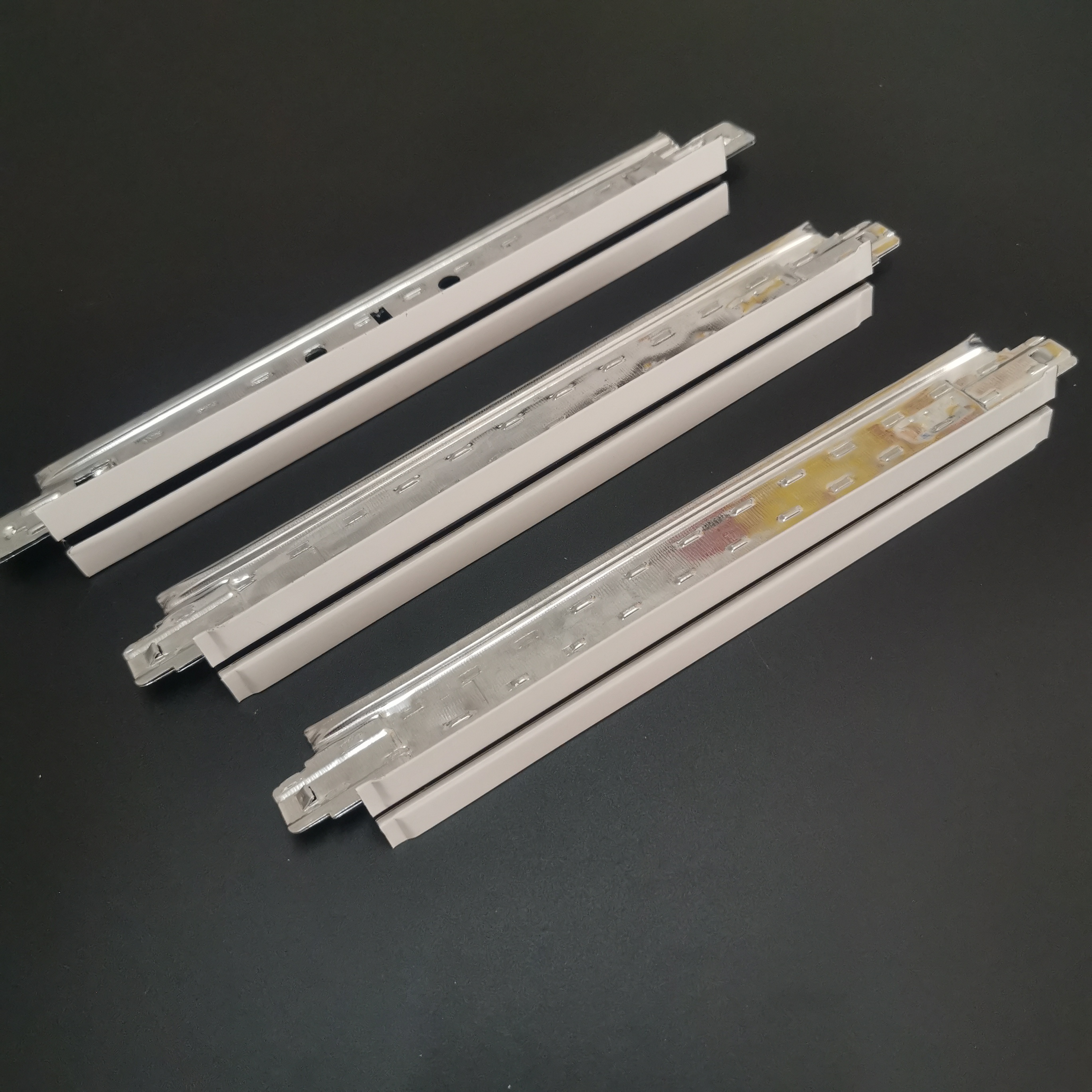
Reference for Full-text Summary: How Does Scientific Selection Empower Engineering Value?
The selection of light steel keel systems represents an art of balancing technology, application scenarios, and costs. By focusing on core parameters such as load-bearing capacity, corrosion resistance, and fire resistance, considering application scenarios like spatial loads and environmental conditions, and leveraging selection tools and standardized products provided by enterprises, engineering parties can achieve a value loop of "precise selection - efficient construction - long-term stability." With 16 years of technical accumulation, 53 fully automated production lines, and 16 patented technologies, JINKAI has provided reliable solutions for over 500 projects across Southeast Asia, the Middle East, Australia, and other regions. Its products are renowned for their "high load-bearing capacity, long service life, and low cost," establishing the company as a benchmark in the light steel keel industry. Looking ahead, as the construction industry demands upgrades for green, intelligent, and efficient solutions, scientific selection will become a critical pathway to enhancing engineering competitiveness.