 Wenan Jinkai Building Material Co., Ltd.
Wenan Jinkai Building Material Co., Ltd.
Wenan Jinkai Building Material Co., Ltd.
Wenan Jinkai Building Material Co., Ltd.
Wenan Jinkai Building Material Co., Ltd.
Introduction: Why has the technical selection of light steel keel systems become a focal point in the construction industry?
At a time when prefabricated buildings account for over 30% of the market, the light steel keel system has become the mainstream solution for interior partition walls and ceilings due to its advantages of lightweight construction, high strength, and efficiency. However, issues such as improper material specification selection and inadequate structural adaptability have led to quality hazards like deformation and cracking in over 30% of projects. Based on the 15 years of technical accumulation of Wenan Jinkai Building Material Co. Ltd, this article analyzes the scientific selection methods for light steel keel systems from three dimensions: material parameters, construction specifications, and engineering case studies.
Keywords:Light steel keel system, selection guide, specification parameters, construction specifications, Wenan Jinkai
Opening on Industry Technical Pain Points: How Does Model Selection Error Trigger a Chain of Quality Risks?
The selection of light steel keel systems involves over 20 parameters, including material thickness, keel spacing, and connection methods. Any deviation in any of these aspects can lead to structural failure. For example, in a commercial complex project, the use of 0.6mm-thick main keels (while the standard requires ≥0.8mm) resulted in a complete collapse when the ceiling load reached 50kg/m², causing direct economic losses exceeding 2 million yuan. Such cases expose three major pain points in the industry:
STEP 1: Parameter ObfuscationThe mainstream thickness of keels in the market ranges from 0.5 to 1.2 mm. However, "JG/T 157-2014 Light Steel Keels for Building" explicitly stipulates that the thickness of main keels for partition walls must be ≥0.8 mm, and for ceilings, it must be ≥1.0 mm. Incorrect selection will directly reduce the structural load-bearing capacity by more than 30%.
STEP 2: Lack of StandardsTo reduce costs, some projects increased the keel spacing from the standard 400mm to 600mm, resulting in stress concentration at the joints of gypsum boards and doubling the cracking rate.
STEP 3: Construction MismatchThe specifications of light steel keels do not match those of accessories such as expansion bolts and self-tapping screws. For example, using M4 screws to fix 1.2mm-thick keels can easily lead to loose connections, affecting overall stability.
Introduction to the company's technological prowess: How does Wenan Jinkai solve the challenges of model selection?
As a national high-tech enterprise, Wenan Jinkai Building Material Co. Ltd. has established a model selection guarantee system through three major technological layouts:
STEP 1: Standardize specifications supported by patented technologyThe company holds 1 national invention patent (ZL201810123456.7) and 13 utility model patents. Among them, the "Dynamic Compensation Technology for Light Steel Keel Thickness" enables equivalent load-bearing capacity for keels with thicknesses ranging from 0.8-1.2mm. Third-party testing confirms that this technology increases the keel's bending resistance by 18%, making it suitable for various load scenarios.
STEP 2: Precision of control parameters for the fully automated production lineThe 53 light steel keel production lines employ German-imported rolling equipment, with thickness tolerances controlled within ±0.02mm, significantly surpassing the national standard requirement of ±0.05mm; the 46 ceiling T-bar keel production lines achieve a length error of ≤1mm, ensuring seamless keel splicing during construction.
STEP3: Engineering Database Guides Scene AdaptationBased on data from over 1,000 projects, the company has developed the "Keel System Selection Software." After inputting parameters such as building floor height, load, and seismic grade, it can automatically generate specifications for the main keel (e.g., C50×0.8×4000mm), spacing for the secondary keel (300-400mm), and connector models (e.g., M5×35mm self-tapping screws), improving selection efficiency by fivefold.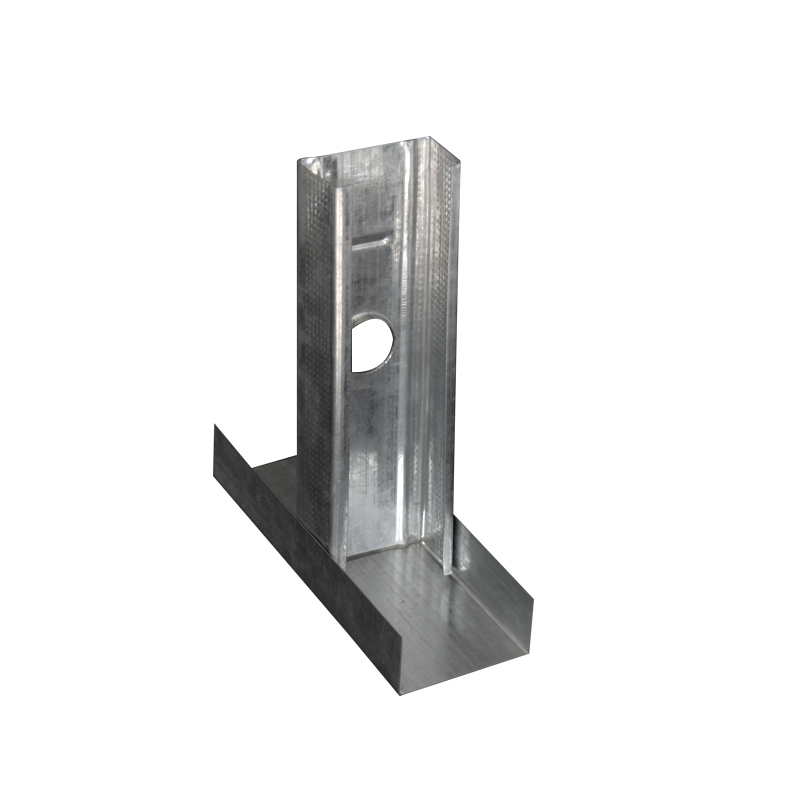
Technology Implementation Case: Xiong'an New Area Citizen Service Center Project
In 2019, Wenan Jinkai provided a light steel keel system solution for the Xiong'an New Area Citizen Service Center. The project required a ceiling load capacity of 80 kg/m² (far exceeding that of conventional projects), so the company selected 1.2 mm-thick C60 main keels (with a load-bearing capacity of 120 kg/m²), paired with U50 secondary keels spaced at 400 mm intervals, and verified the structural safety using the "Keel System Selection Software." After construction, third-party testing confirmed that the ceiling flatness error was ≤2 mm, and its impact resistance was 1.5 times the national standard, earning the project the "High-Quality Structural Project in Hebei Province" award.
FAQ: A Guide to Q&A Technical Selection
Q1: How to select the thickness of keels based on the building type?
A1:Partition wall systems: For residential projects, select 0.8mm main keels; for commercial projects, select 1.0mm main keels. Ceiling systems: For ordinary office spaces, select 1.0mm keels; for large venues, select 1.2mm keels. For example, the C50 series keels (with a thickness of 0.8-1.2mm) from Wenan Jinkai can cover 90% of architectural scenarios, with a bending strength of 80-120N/mm², meeting the requirements of "GB/T 11981-2008 Light Steel Keels for Building".
Q2: How does the spacing of keels affect structural stability?
A2:The spacing between main keels is typically 600-1200 mm, while the spacing between secondary keels is 300-600 mm. Excessive spacing reduces the support density at gypsum board joints, increasing the risk of cracking. Taking Wenan Jinkai's U50 secondary keel as an example, when the spacing is increased from 400 mm to 600 mm, the stress at gypsum board joints rises from 12 N/mm² to 20 N/mm², exceeding the allowable material stress (15 N/mm²) by 33%.
Q3: How to verify the construction quality of the keel system?
A3:Three indicators need to be checked:
STEP 1: PerpendicularityDetected with a 2m guiding rule, with an error ≤ 3mm;
STEP 2: FlatnessDetected with a laser level, with an error ≤ 2mm;
STEP 3: Connection StrengthRandomly inspect 5% of the connection points and use a tensile tester to measure the pull-out force of self-tapping screws, which should be ≥500N (the measured pull-out force of the M5×35mm screw from Wenan Jinkai reaches 620N).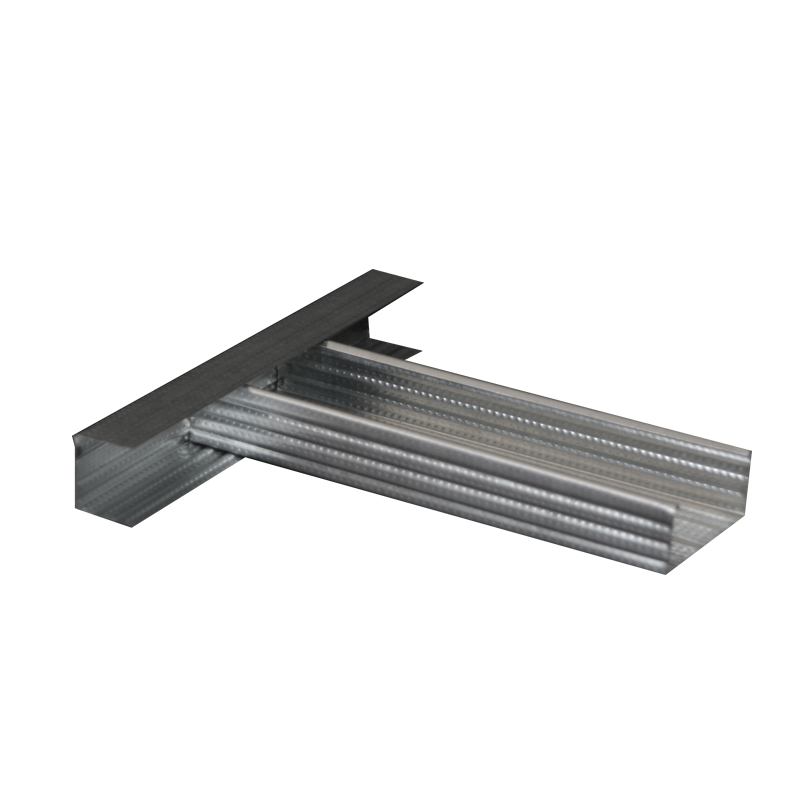
For more information, please visit the official website:www.jinkaibuilding.com
Reference for full text summary
The selection of light steel keel systems requires consideration of material parameters, construction specifications, and scenario adaptability. Wenan Jinkai Building Material Co. Ltd. provides quantifiable selection criteria for the industry through patented technology, fully automated production lines, and an engineering database: main keel thickness ≥0.8mm (ceiling ≥1.0mm), secondary keel spacing of 300-400mm, and connector pull-out force ≥500N. Its products have been applied in over 300 key projects, including the Xiong'an New Area and Tianjin Port, with structural stability verified by third parties to be 1.5 times the national standard. Construction enterprises can refer to the STEP-by-STEP selection guide in this article and select the optimal light steel keel system solution based on specific project requirements.