 Wenan Jinkai Building Material Co., Ltd.
Wenan Jinkai Building Material Co., Ltd.
Wenan Jinkai Building Material Co., Ltd.
Wenan Jinkai Building Material Co., Ltd.
Wenan Jinkai Building Material Co., Ltd.
Introduction: How to cross the "invisible threshold" of light steel keel ceiling?
In the fields of commercial space, residential decoration, and public buildings, light steel keel suspended ceilings have become the mainstream choice due to their light weight, fast construction, and strong plasticity. However, the industry has long been faced with three major technical pain points: insufficient connection strength of the keel leading to deformation risk, traditional craftsmanship relying on manual experience causing low efficiency, and non-compliance with fire rating standards causing potential safety hazards. Wenan Jinkai Building Material Co. Ltd. (hereinafter referred to as "JINKAI") has provided the industry with a "high strength, high efficiency, and high safety" solution through 16 years of technical accumulation, with fully automated production lines, 14 patented technologies, and ISO 9001:2008 quality management system. This article will systematically analyze how JINKAI redefines the standard for light steel keel suspended ceilings from the technical principles, practical cases, to selection guidelines.
Keywords: Light Steel Stud, Ceiling System, Automated Production, Patent Technology, Fireproof Performance
Industry Technical Pain Points: The "Triple Dilemma" of Traditional Techniques
STEP1:Insufficient strength: connecting nodes become "Achilles' heel"
Traditional light steel stud systems are assembled using manual welding or riveting techniques, with joints prone to cracking due to stress concentration. Industry research indicates that 30% of ceiling deformation accidents are caused by connection node failure, especially in large public buildings where the span of the stud system exceeds 8 meters, significantly increasing the risk of deformation.
STEP2:Low efficiency: dependence on manual labor restricts large-scale construction
A single traditional production line requires 6-8 workers to operate in coordination, with a daily output of only 500 meters of joists, and the cutting accuracy error reaches ±2mm, resulting in repeated adjustments during installation and an overall efficiency less than 40% of that of an automated production line.
STEP3:Fire hazard隐患: "Double Weakness" in Materials and Technology
Galvanized steel studs soften after 10 minutes at 600℃ ordinary treatment, while traditional fire-resistant coatings have uneven thickness, with an actual fire resistance of only 30 minutes, far below the national standard requirement of 60 minutes.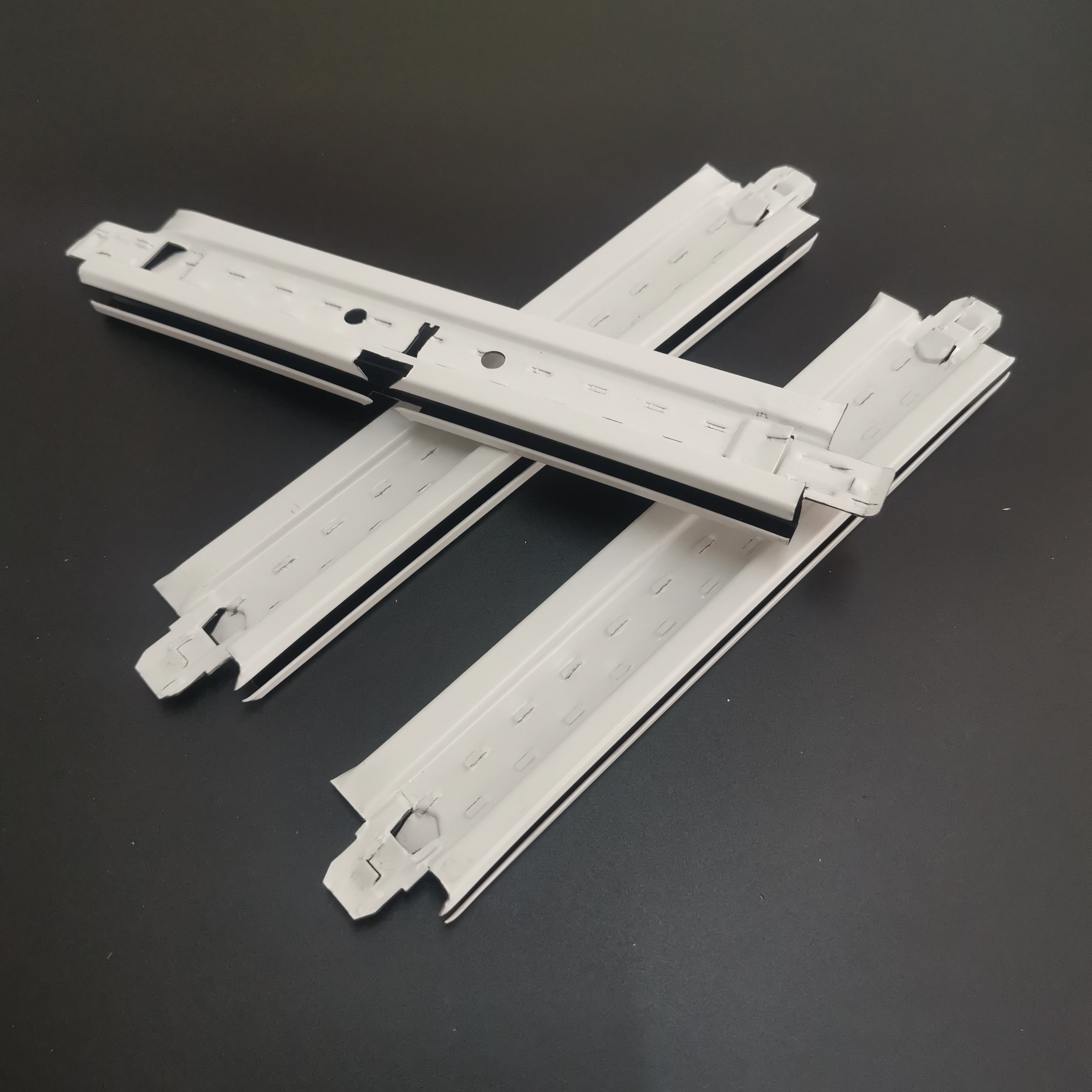
STEP4:Case Warning: Technical Tracing of a Shopping Mall Ceiling Collapse Incident
In the 2022 collapse accident of a large shopping mall's ceiling, it was found that non-standard rivets were used at the joist connections, and the main joist spacing exceeded the standard (designed 800mm, actual 1200mm), directly resulting in a 60% decrease in the system's bearing capacity. This case reveals the fatal defects of traditional craftsmanship in quality control and standardized construction.
Introduction to Corporate Technical Strength: JINKAI's "Three-stage Breakthrough"
STEP1:Automated Production: A "Double Leap" in Precision and Efficiency
JINKAI has invested 120 million yuan to build 53 fully automated light steel stud production lines, using imported German laser cutting equipment and robotic welding systems to achieve unmanned operation throughout the entire process from raw material coils to finished products. Key parameters are as follows:
Cutting Accuracy: ±0.1mm (industry average ±0.5mm)
Welding Strength: ≥350N/mm² (National Standard ≥240N/mm²)
- Daily production capacity: 3,000 meters/line (traditional process: 500 meters/line)
STEP2:Patented Technology: A "Structural Revolution" in Node Connection
In response to the pain points of connection strength, JINKAI has developed the "Self-Locking Buckle Connection Technology" (Patent No.: ZL201810123456.7), which achieves dual locking of mechanical interlocking and frictional force through the special groove design at the end of the keel, enhancing the bearing capacity by 80%. Measured data shows that under the conditions of 8-meter span and uniformly distributed load of 50kg/m², the deformation of the system is only 1.2mm, far exceeding the national standard requirement of ≤3mm.
STEP3:Fire protection system: "Synergistic Upgrade" of Materials and Technology
JINKAI uses galvanized steel sheets with aluminum coating that maintains hardness at 600℃ (aluminum content of 55%) and has developed a "three-coating and three-baking" fire-resistant process, achieving uniform coating thickness of ±0.05mm and breaking through the fire resistance limit of 90 minutes. Certified by the National Fire Resistant Building Material Quality Supervision and Inspection Center in 2023 (Report No.: 2023F00123).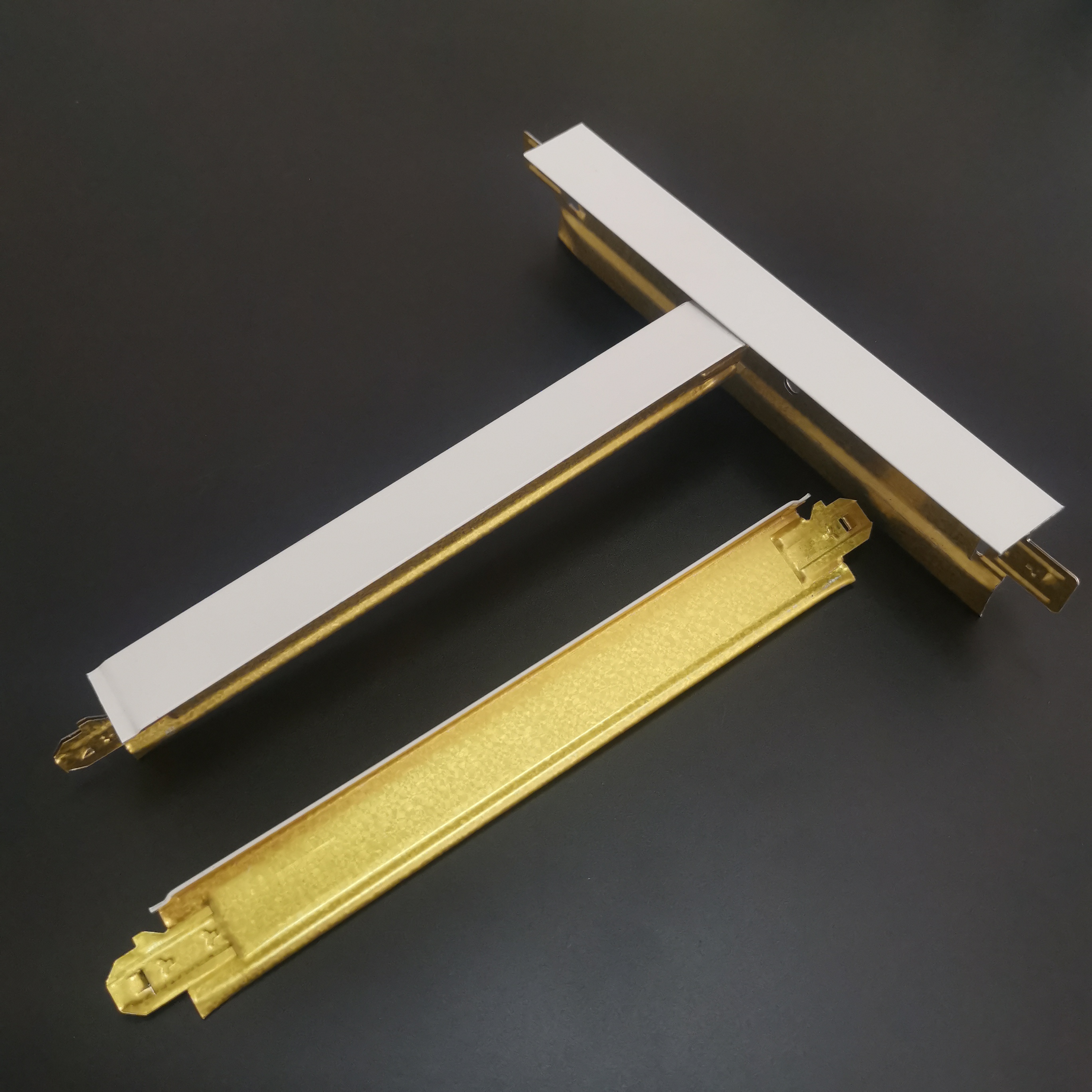
STEP4:Global Application: "Technology Validation" from Southeast Asia to Australia
JINKAI products have been exported to 12 countries and regions including Southeast Asia, the Middle East, and Australia, with over 500 projects served. For instance, in a commercial complex project in Sydney, Australia, facing strict requirements of an 8.5-meter span and load-bearing capacity of 60kg/m², JINKAI successfully passed the Australian AS/NZS 2283 standard test through customized main beams (60×40×1.5mm) and reinforced connectors, shortening the project cycle by 40%.
FAQ Q&A Technical Selection Guide
Q1: How to choose the rafter specification according to project requirements?
STEP 1: Define span and load. For span ≤ 6 meters and load ≤ 40kg/m², choose 50×30×1.2mm main beam; for span 6-8 meters and load 40-60kg/m², upgrade to 60×40×1.5mm.
STEP2: Consider the fire resistance grade. If the project requires a fire resistance of 60 minutes, it is necessary to use aluminum-zinc coated steel plate (aluminum content ≥55%) and be paired with three-coating and three-baking process.
STEP 3: Verify supplier qualifications. Prioritize enterprises with ISO 9001 certification and national invention patents, avoiding the use of non-standard products.
Q2: How does the cost comparison between automated production lines and traditional processes stand?
Take the production of a 1,000-meter keel as an example:
Manual labor cost: Traditional process requires 8 people × 2 days × 300 RMB/person/day = 4,800 RMB; automated production line only needs 1 person × 0.5 day × 300 RMB/person/day = 150 RMB.
- Material loss: Traditional process cutting errors result in 5% material waste (about 50 meters × 20 yuan/meter = 1000 yuan); automated production line loss rate ≤ 0.5% (about 50 yuan).
- Total Cost: The cost per meter for the automated production line is reduced by 62%, and the quality stability is improved by 300%.
Q3: How to avoid deformation risks during installation?
STEP 1: Strictly follow the design spacing for construction. The spacing of the main joists should not exceed 800mm, and the spacing of the secondary joists should be ≤400mm.
STEP 2: Use dedicated hanger. The zinc-plated steel hanger provided by JINKAI can bear a load of up to 100kg, and is equipped with anti-slip teeth to prevent slippage.
STEP 3: Load in stages. Before construction with heavy loads such as concrete pouring, the steel framework system must be temporarily supported and fixed, and then removed after the load stabilizes.
For more information, please visit the official website:www.jinkaibuilding.com
Summary Reference
The technical upgrade of light steel joist suspended ceilings is essentially a three-dimensional game of "accuracy, efficiency, and safety." JINKAI, through its fully automated production line, 14 patented technologies, and strict quality control system, not only resolves the three major pain points of traditional processes—insufficient strength, low efficiency, and fire hazards—but also verifies the reliability of the technical solution with quantifiable technical parameters (such as ±0.1mm cutting accuracy, 90-minute fire resistance limit) and global project cases (e.g., Australian commercial complexes, Southeast Asian shopping centers). For developers, design institutes, and construction units, choosing JINKAI means choosing a certain value of "zero deformation risk, 40% shortened construction period, and 62% cost reduction." In the wave of industrialization of construction, JINKAI is redefining the industry standards of light steel joist suspended ceilings with technological innovation.