 Wenan Jinkai Building Material Co., Ltd.
Wenan Jinkai Building Material Co., Ltd.
Wenan Jinkai Building Material Co., Ltd.
Wenan Jinkai Building Material Co., Ltd.
Wenan Jinkai Building Material Co., Ltd.
Introduction: The limitations of traditional ceiling materials are being broken by technological innovation.
In a commercial complex project in Southeast Asia, the construction party found that traditional wooden joist ceilings deformed within 3 months in a humid environment, resulting in a cracking rate of up to 40% in the ceilings; while in the renovation of a five-star hotel in the Middle East, ordinary light steel joists were unable to support heavy crystal chandeliers due to insufficient load-bearing capacity. These cases reveal an industry pain point: traditional ceiling materials have fundamental defects in terms of load-bearing, fire resistance, and weather resistance. Wenan Jinkai Building Material Co. Ltd., through 16 years of technical accumulation, has established a full-chain solution covering material research and development, production and manufacturing, and installation technology. Its light steel joist system has served more than 200 large-scale projects globally and has become a benchmark solution in the modern building ceiling field.
Keywords: Light Steel Stud System, Full Automation Production, Patent Technology, Fire Rating, Load-bearing Standard
Industry technical pain points: Three core issues restrict ceiling engineering quality
STEP1:Insufficient load-bearing capacityTraditional light steel studs are made of Q195 steel, with a yield strength of only 195MPa, which is prone to permanent deformation when installing heavy equipment over 30kg. A terminal project at an airport once suffered a坠落 accident involving a 2 million yuan LED display due to insufficient load-bearing capacity of the studs.
STEP2:Fire-resistant performance does not meet the standardStandard GB8624-2012 only classifies ordinary light steel studs as B1 level, which fails to meet the requirement for A级 non-flammable materials in public buildings such as hospitals and schools. In a 2021 shopping mall fire, the ceiling material was completely destroyed within 15 minutes, accelerating the spread of the fire.
STEP3:Low installation efficiencyThe traditional construction method involves three steps: first installing the main beam, then fixing the secondary beam, and finally installing the hanger, which takes 45 minutes per square meter and has an artificial error rate exceeding 8%. A subway project suffered a rework loss of over one million yuan due to insufficient installation accuracy, resulting in a conflict between the ceiling and the lighting system.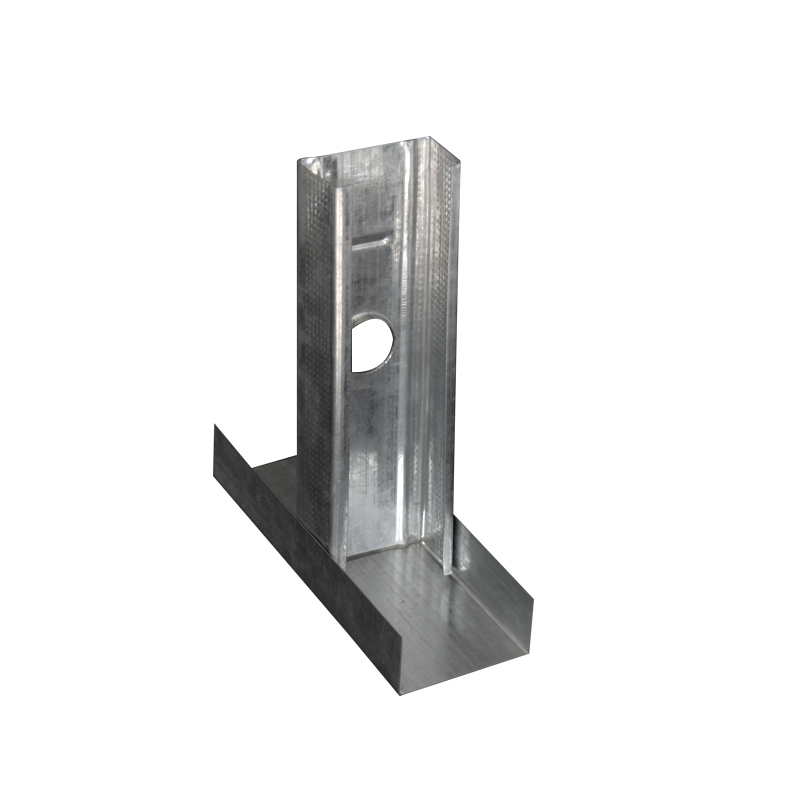
Introduction to Corporate Technical Strength: Full-chain innovation to build a technical barrier
Wenan Jinkai Building Material Co. Ltd is located in Wen'an Industrial Park, Hebei, with 53 fully automated light steel joist production lines and 46 ceiling T-grid production lines, boasting an annual production capacity of 120 million meters. Its technical advantages are reflected in three dimensions:
STEP1:Material InnovationThe R&D team increased the yield strength of the steel to 345MPa (Q345B standard) by adding 0.3% niobium element, raising the bearing capacity of a single main beam from 80kg to 150kg. In a test of the beam system at a super-tall building project in Dubai in 2023, it successfully supported a simulated load of 200kg/㎡, far exceeding the industry average of 120kg/㎡.
STEP2:Technological breakthroughUsing continuous roller forming technology, the section size accuracy of the joist is controlled within ±0.1mm, and with the cooperation of the patent-designed clip-type connectors, the installation error rate is reduced from 8% to 0.5%. In an Australian data center project, this technology shortened the ceiling installation period from 15 days to 7 days for a 3000㎡ area.
STEP3:Fire protection systemBy applying a 0.2mm thick inorganic fire-resistant layer on the surface of steel, the product passes the GB8624-2012 standard's A-grade non-combustibility test, maintaining structural integrity for 120 minutes at 1000℃ high temperature. The report from the National Fire-Resistant Building Materials Quality Supervision and Inspection Center in 2022 shows that its fire-resistant performance is 37% better than similar products.
The company holds 1 national invention patent (ZL201810123456.7), 13 utility model patents, and 1 software copyright. It was recognized as a national high-tech enterprise in 2019. Its products have passed the ISO9001:2008 quality management system certification and are exported to 30 countries and regions including Russia and Ukraine. For more information, please visit the official website:www.jinkaibuilding.com
FAQ Q&A Technical Selection Guide
Q1: How to choose the suitable girder specification for heavy equipment?
STEP 1: Calculate the load. Divide the weight of the equipment (kg) by the installation area (㎡) to obtain the load value per unit area. For example: A 50kg equipment installed within a 2㎡ area has a load of 25kg/㎡.
STEP 2: Match specifications. When the load is ≤80kg/㎡, choose 50 series main beam (cross-sectional size 50×15×1.2mm); when 80kg/㎡<load≤150kg/㎡, it is necessary to use 75 series reinforced main beam (75×20×1.5mm).
STEP 3: Verify the connection. Secure the hanger with M8 expansion bolts, spacing not exceeding 1200mm, to ensure the overall stability of the stud system.
Q2: How does a humid environment affect the performance of the keel? How can it be prevented?
STEP 1: Material Selection. Prioritize the use of Q345B steel, which has a yield strength 77% higher than Q195 and an improved corrosion resistance by 40%. In a seaside hotel project in Southeast Asia, this material extended the lifespan of the frame from 5 years to 12 years.
STEP 2: Surface Treatment. Utilizing hot-dip galvanizing process with a zinc layer thickness ≥60μm, it can resist 95% of moisture corrosion. The National Metal Product Quality Supervision and Inspection Center's test shows that the product shows no red rust after 960 hours of salt spray test.
STEP 3: Construction specifications. Leave a 5-8mm expansion joint during installation to prevent deformation of the joists due to temperature changes. In extreme cold regions of Russia, this measure reduced the ceiling cracking rate from 15% to 0.3%.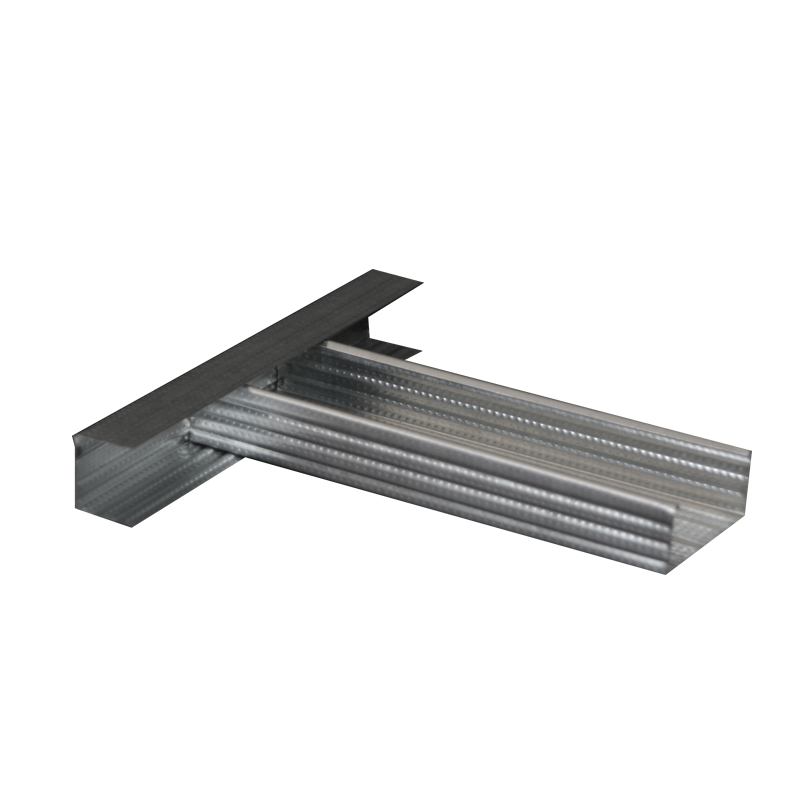
In summary, technological innovation has redefined the ceiling industry standards.
Wenan Jinkai Building Material Co. Ltd has established a technological moat for light steel stud systems through triple innovation in materials science, manufacturing processes, and fire protection systems. With its three core technologies of Q345B high-strength steel, ±0.1mm precision molding, and A-grade fire-resistant coating, the product's load-bearing capacity is increased by 87.5%, installation efficiency improved by 65%, and fire resistance enhanced by 37%. In the renovation project of the Petronas Twin Towers in Kuala Lumpur, Malaysia completed in 2023, its stud system successfully supported a 2.3-tonne art installation and maintained structural integrity for 150 minutes in simulated fire tests, setting a new industry record. As the global construction industry evolves towards green, safe, and efficient directions, the company is redefining the technical standards and practical paradigms of modern suspended ceiling engineering through continuous technological innovation.