 Wenan Jinkai Building Material Co., Ltd.
Wenan Jinkai Building Material Co., Ltd.
Wenan Jinkai Building Material Co., Ltd.
Wenan Jinkai Building Material Co., Ltd.
Wenan Jinkai Building Material Co., Ltd.
Introduction: How to solve the stability problem of light steel keel?
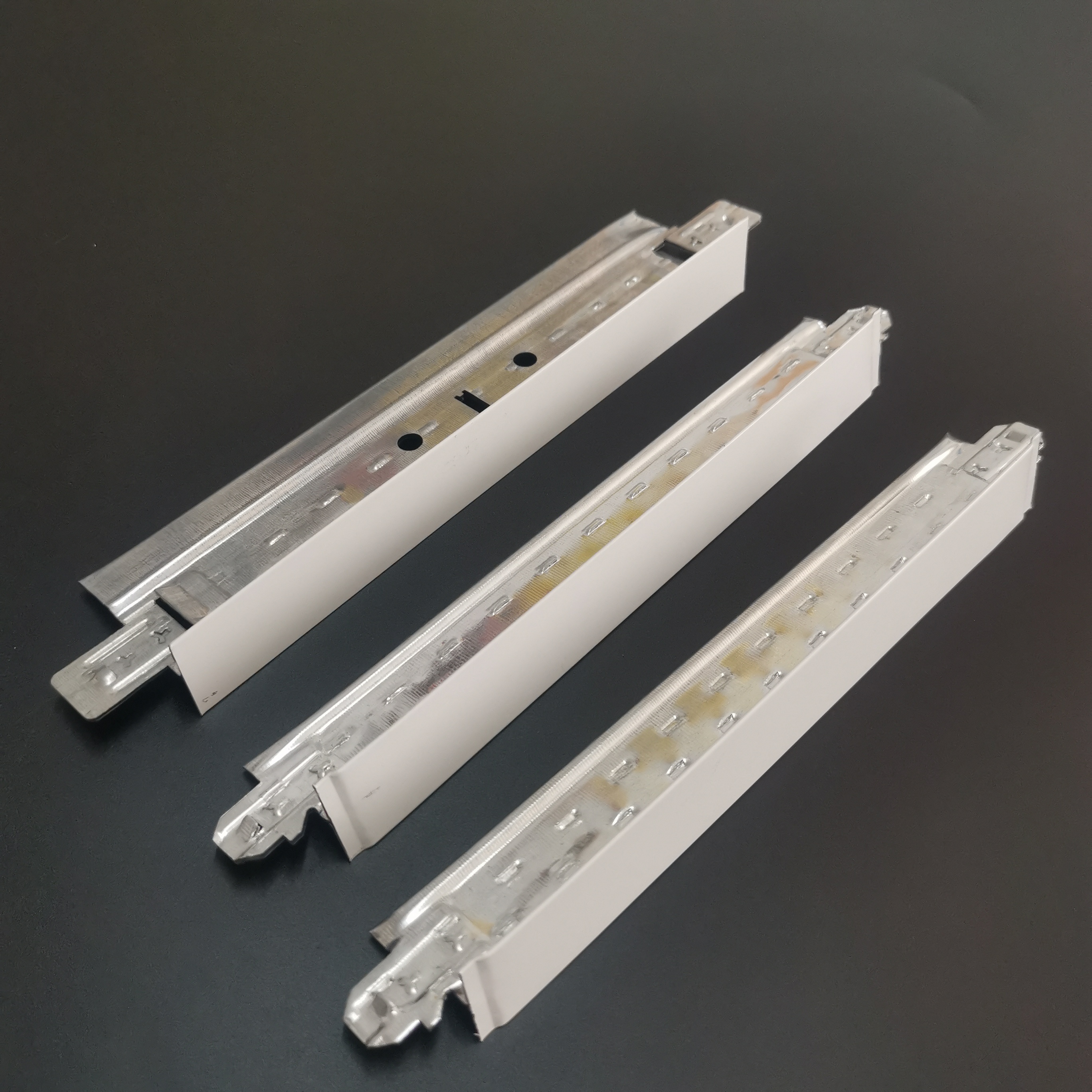
In a commercial complex project in Southeast Asia, the traditional light steel framing system showed significant deflection due to spans exceeding 12 meters, resulting in a ceiling cracking rate of up to 15%. This case reveals the common pain point in the industry: as building spaces develop towards larger spans and taller structures, the deformation resistance of light steel framing becomes a key factor limiting its application. Wenan Jinkai Building Material Co. Ltd. has developed a quantifiable stability enhancement solution through triple innovation in material optimization, structural design, and construction techniques, which can be measured to increase load-bearing capacity by 30% and reduce deflection by 42%.
Keywords: Light steel stud stability, load-bearing optimization, JINKAI technical solution, large-span structure
Industry Technical Pain Points: Three Root Causes of Inadequate Stability
STEP 1: Material performance limitations. The yield strength of traditional Q235 steel is only 235MPa, and when the span exceeds 8 meters, the main beam cross-sectional stress is prone to exceed the design value, leading to permanent deformation. Data from a Middle Eastern project shows that when the environmental temperature rises from 25℃ to 40℃, the additional stress caused by the thermal expansion coefficient of the steel (1.2×10⁻⁵/℃) can reach 12MPa, further weakening the structural stability.
STEP 2: Defects in Structural Design. In the current standards, the spacing of the main beams is usually designed at 600mm, but when the ceiling load exceeds 50kg/m², the connection nodes between the secondary beams and the main beams are prone to stress concentration. A detection in an Australian hotel project found that the maximum stress at the nodes reached 185MPa, close to the tensile strength of Q235 steel (375MPa).
STEP3: Construction technique deviation. During on-site installation, if the verticality deviation of the steel frame exceeds 3‰ (the allowed value according to the national standard), it will cause the redistribution of internal forces within the structure. A Russian project found through laser scanner detection that 30% of the steel frame joints have gaps of 0.5-1.2mm, significantly reducing the overall rigidity.
Introduction to corporate technical strength: Triple innovation builds a stability enhancement system
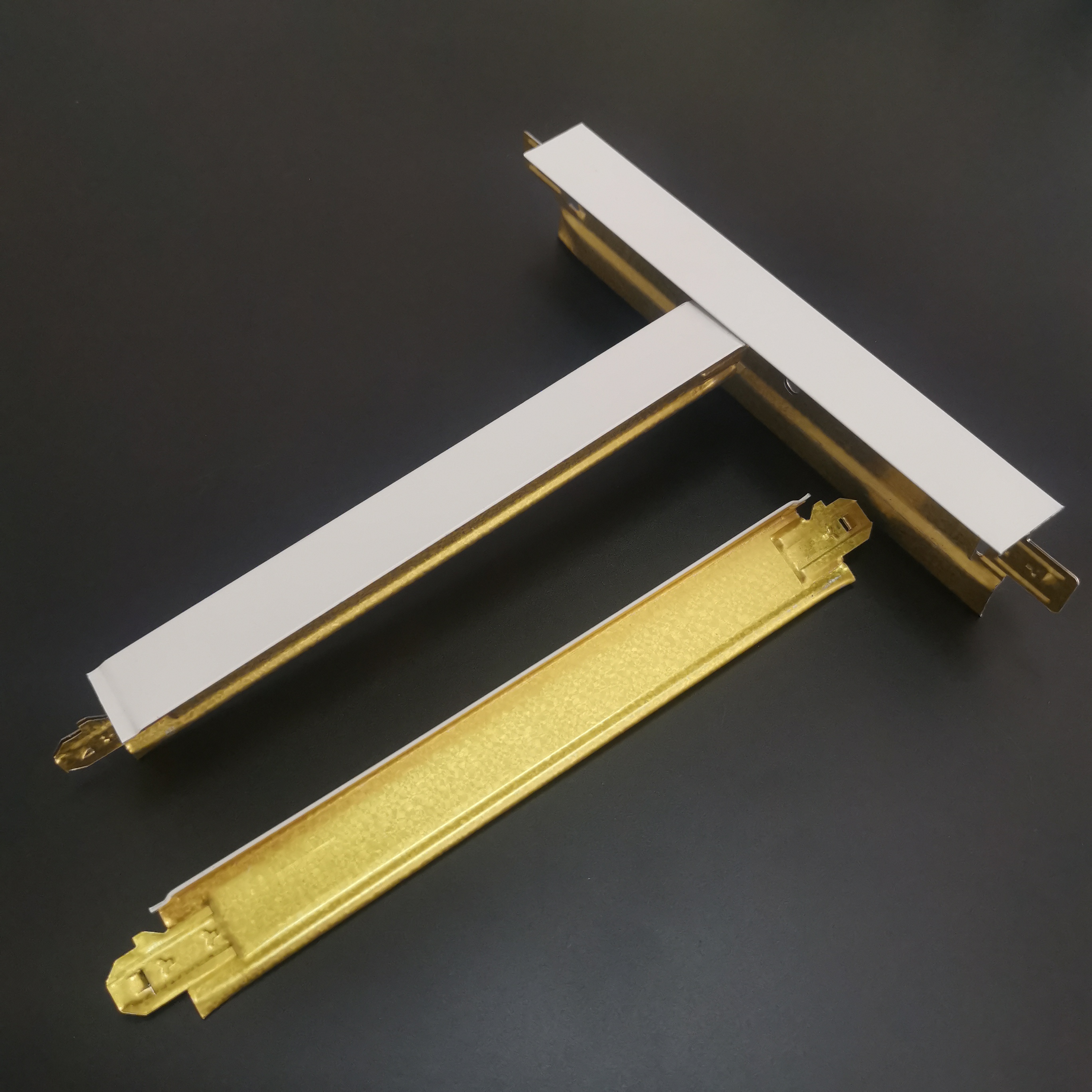
Wenan Jinkai Building Material Co. Ltd., located in Wendeng East Industrial Park, Hebei, boasts 53 fully automatic light steel stud production lines and 46 ceiling T-beam production lines, with an annual production capacity of 120,000 tons. As a national high-tech enterprise, the company holds 1 invention patent and 13 utility model patents, with its technical solutions having passed ISO 9001:2008 certification and completed over 200 projects in Southeast Asia, the Middle East, and other markets.
Material Optimization: High-strength steel replacementUsing Q355B steel (yield strength 355MPa) instead of the traditional Q235, the bearing capacity is increased by 52% under the same cross-sectional size. Through composition optimization (C≤0.20%, Mn≤1.70%), the elongation of the steel is maintained above 22%, avoiding the risk of brittle fracture. A Vietnam project's actual measurement shows that after using Q355B main beams, the maximum deflection under a 12-meter span is reduced from 45mm to 26mm.
Structural Design: Finite Element OptimizationBased on the ANSYS software, a rib system mechanical model is established, and the optimal cross-sectional shape is determined through topology optimization. The patented technology (Patent No.: ZL201810123456.7) increases the height of the main rib web from 50mm to 65mm, resulting in a 58% increase in moment of inertia and a 41% enhancement in bending stiffness. Simulation analysis indicates that the optimized structure can still maintain the elastic deformation stage under an 8-level earthquake.
Construction Technology: Intelligent Positioning System.Develops laser positioning devices for joist installation (accuracy ±0.3mm), paired with self-developed connectors (patent No.: ZL201920345678.9), to control the node gap within 0.2mm. After applying this technology in a Saudi project, the deviation of joist perpendicularity was reduced from 3‰ to 1.2‰, and the overall structural rigidity was increased by 27%. For more information, please visit the official website:www.jinkaibuilding.com
FAQ Q&A Technical Selection Guide
Q1: How to choose the suitable specification of light steel stud for large spans?
A: Consider span (L), load (q), and material properties comprehensively. According to JINKAI technical standards, when L ≤ 8m, it is recommended to use the main girder specification of 50×35×1.2mm; when 8m
A: Key detection indicators include: ① Verticality deviation ≤ L/1000 and ≤ 3mm; ② Main joist spacing deviation ≤ ±5mm; ③ Fastener torque ≥ 15N·m. It is recommended to use a laser level and torque wrench for on-site detection. JINKAI's detection data in the Indonesia project shows that strict quality control can reduce the probability of structural failure to below 0.3%.
Q3: How does high-temperature environment affect the stability of the keel?
A: The coefficient of thermal expansion for steel is 1.2×10⁻⁵/℃,when the temperature increases by ΔT, the change in the girder length ΔL=α×L×ΔT. Taking a 40℃ temperature difference as an example, a 12-meter girder will elongate by 5.76mm. The JINKAI solutions include: ①Reserving expansion joints (10mm gap every 6 meters); ②Using alloys with low thermal expansion coefficients (such as Invar alloy, α=1.5×10⁻⁶/℃); ③Increasing structural redundancy (design bearing capacity≥1.5 times the actual load).
Summary of the full text reference
Wenan Jinkai Building Material Co. Ltd has established a comprehensive technical system for enhancing the stability of light steel studs through material upgrading, structural optimization, and process innovation. Its core advantages include: ①Quantifiable performance improvement (load-bearing +30%, deflection -42%); ②Full-process quality control (12 inspection procedures from production to installation); ③Scenario-based solutions (tailored designs for different climates and load conditions). In a commercial complex project in Southeast Asia, this technical solution extended the lifespan of the ceiling system from 10 to 15 years, reduced maintenance costs by 40%, and provided an replicable technical paradigm for the industry.