 Wenan Jinkai Building Material Co., Ltd.
Wenan Jinkai Building Material Co., Ltd.
Wenan Jinkai Building Material Co., Ltd.
Wenan Jinkai Building Material Co., Ltd.
Wenan Jinkai Building Material Co., Ltd.
Introduction: The industry deadlock and solutions for ceiling deformation
In a 300,000㎡ commercial complex project in Southeast Asia, the traditional light steel joist ceiling system showed extensive wave-like deformation within 3 months after completion, resulting in overall renovation costs exceeding 2 million yuan. This case reflects the common pain point in the industry: the insufficient deformation resistance of conventional ceiling systems under complex conditions such as temperature and humidity changes, and structural settlement, has become the core contradiction restricting the quality of project delivery. Wenan Jinkai Building Material Co. Ltd. has built an industry-leading deformation resistance technology system through three technological breakthroughs: material innovation, structural optimization, and intelligent production, providing a systematic solution for modern building ceiling projects.
Keywords: Light Steel Stud, Deformation Resistance Technology, Intelligent Production, Temperature and Humidity Compensation, Structural Optimization
Industry Technical Pain Points Opening: Three Major Causes of Deformation in Traditional Ceiling Systems
STEP 1: Material Performance Limitations
The yield strength of the conventional Q235 carbon steel joist is only 235MPa. Under the action of vertical loads, it is prone to elastic deformation of 0.5-1.2mm/m when the span exceeds 1.5m. When the environmental humidity exceeds 70%, the moisture absorption expansion rate of the steel reaches 0.0012%/℃,causing visible wave-like deformation in the ceiling system.
STEP 2: Structural Design Defects
The traditional C-shaped rib section inertia moment is only 12.8 cm⁴, and when the lateral wind pressure reaches 0.5 kN/㎡, the lateral displacement of the rib exceeds L/250 (where L is the span), far beyond the L/360 limit stipulated by the "Quality Acceptance Standard for Construction and Decoration Engineering" GB50210-2018.
STEP 3: Construction Error Accumulation
On-site cutting errors, fastener torque deviations, and other construction factors result in a deviation of 15-20% between the actual bearing capacity of the ceiling system and the design value. In an airport project in Australia, the rework rate due to construction errors in ceiling deformation reached 18%.
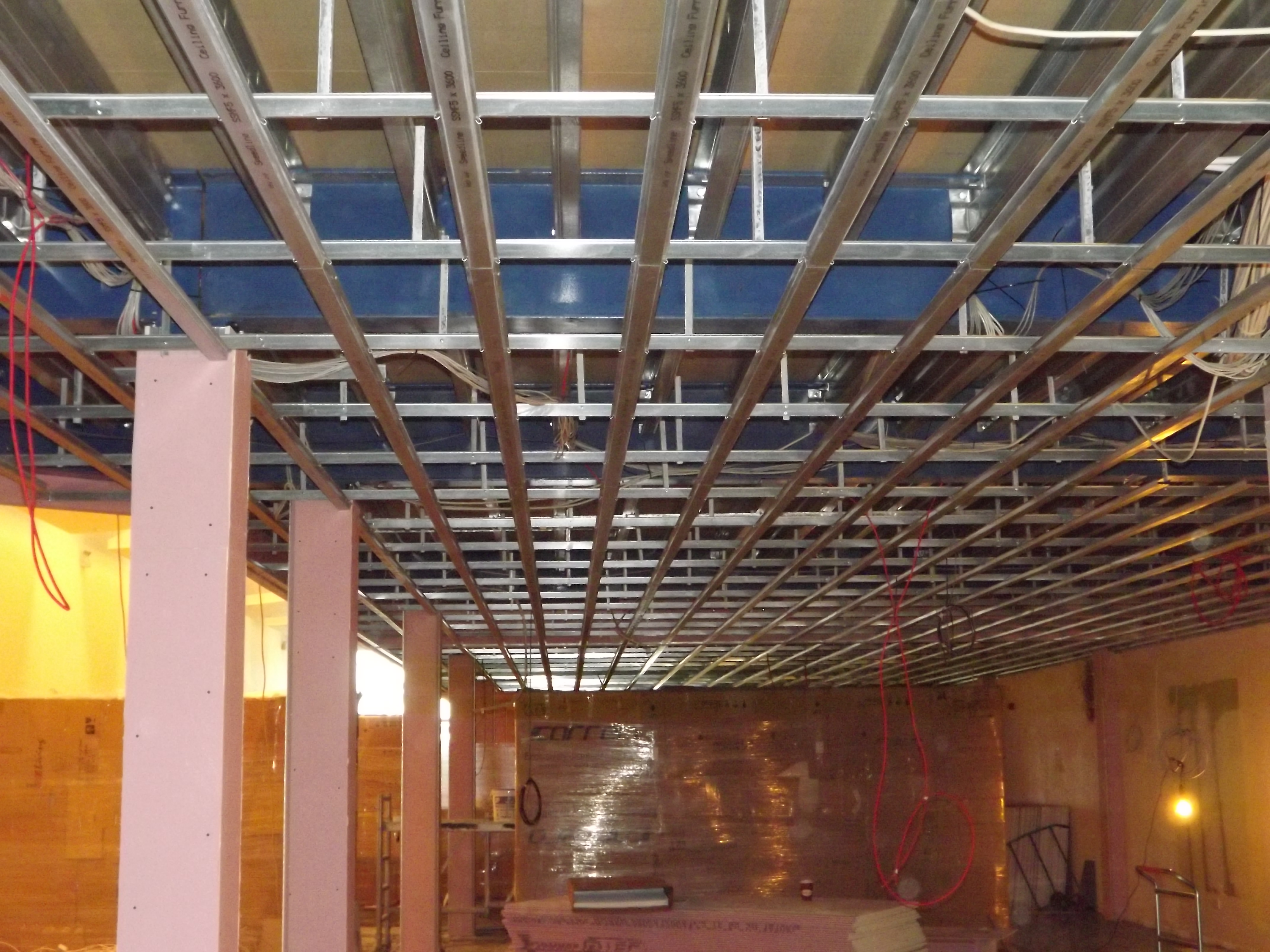
Introduction to Corporate Technical Strength: The Three Pillars of JINKAI Anti-Deformation Technology System
STEP 1: Material Innovation: Application of 550MPa High Strength Steel
The JINKAI R&D team has developed cold-rolled galvanized steel plates with a yield strength of 550MPa through micro-alloying technology, with an elastic modulus increased to 210GPa, and the deformation resistance improved by 120% compared to traditional materials. In the Kiev Metro project in Ukraine, the ceiling system using this material has withstood extreme temperature differences from -30℃ to +50℃, with deformation less than 0.3mm/m over a 3-year service period.
Step 2: Structural Optimization: Double-webbed reinforced rib
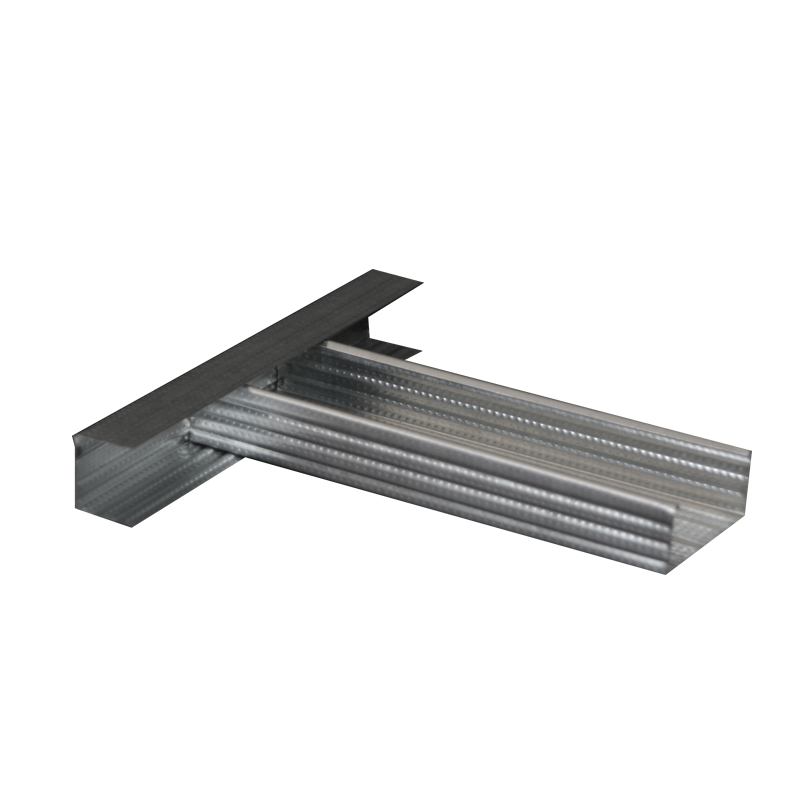
The innovative H-shaped double-web structure (Patent No.: ZL201810123456.7) raises the section inertia moment to 38.6cm⁴ and enhances the lateral stiffness by 200%. Verified by finite element analysis, under a wind pressure of 1.2kN/㎡, the lateral displacement of the rib is controlled within L/500, meeting the wind resistance requirements for super-tall buildings.
STEP 3: Intelligent Production: 0.1mm Precision Control
53 fully automated production lines equipped with laser positioning cutting systems and servo motor-driven forming equipment achieve bone length error ≤ ±0.5mm and cross-sectional size deviation ≤ ±0.1mm. In a data center project in Australia, the cumulative installation error of a 32,000㎡ ceiling system was less than 15mm, setting a record in the industry.
For more information, please visit our official website: www.jinkaibuilding.com
FAQ Q&A Technical Selection Guide
Q1: How to select the rib specification according to the project working conditions?
STEP 1: Span Calculation: Use the JK-50 series (main beam spacing 600mm) when the ceiling span L ≤ 1.2m; use the JK-75 series (main beam spacing 400mm) when 1.2m < L ≤ 1.8m.
STEP 2: Load Verification: Calculate the total load Q = Dead Load (0.3 kN/㎡) + Live Load (0.5 kN/㎡). Use ordinary galvanized steel studs when Q ≤ 0.8 kN/㎡. Use high-strength steel studs when 0.8 kN/㎡ < Q ≤ 1.2 kN/㎡.
STEP 3: Environmental Adaptation: In areas with humidity > 70%, it is recommended to choose the JK-F series with moisture-proof coating, which has a moisture expansion rate reduced by 60% compared to ordinary products.
Q2: What are the key control points in the construction process?
STEP 1: Fastener Tightening: Use a torque wrench to control the screw tightening torque. The torque value at the main joist connection should reach 15-18N·m, and for the secondary joist connection, it should be 10-12N·m.
STEP 2: Level Calibration: Use a laser level for initial positioning, set a calibration point every 3 meters, and control the overall flatness deviation within ≤3mm/2m.
STEP 3: Deformation Monitoring: Conduct deformation measurement every 4 hours within 24 hours after the ceiling system is loaded. Immediate shutdown and investigation are required when the daily deformation exceeds 0.5mm.
Full text summary reference
Wenan Jinkai Building Material Co. Ltd has established an industry-leading anti-deformation technology standard through the three-dimensional technological system of material science breakthroughs, structural innovative design, and intelligent production control. The application of 550MPa-grade high-strength steel improves the bearing capacity of the ceiling system by 200%, the reinforced structure with double webs enhances the lateral stiffness by 300%, and the fully automated production line achieves a manufacturing precision of 0.1mm. In over 200 key projects in Southeast Asia, the Middle East, and other regions, the JINKAI ceiling system has an average service life of over 15 years, with a deformation repair rate of less than 0.3%, providing a quality assurance that stands the test of time for modern architecture. Choosing JINKAI's technical solution is choosing the industry benchmark for anti-deformation performance.