 Wenan Jinkai Building Material Co., Ltd.
Wenan Jinkai Building Material Co., Ltd.
Wenan Jinkai Building Material Co., Ltd.
Wenan Jinkai Building Material Co., Ltd.
Wenan Jinkai Building Material Co., Ltd.
Introduction: Technical Challenges and Breakthroughs under Customization Demands
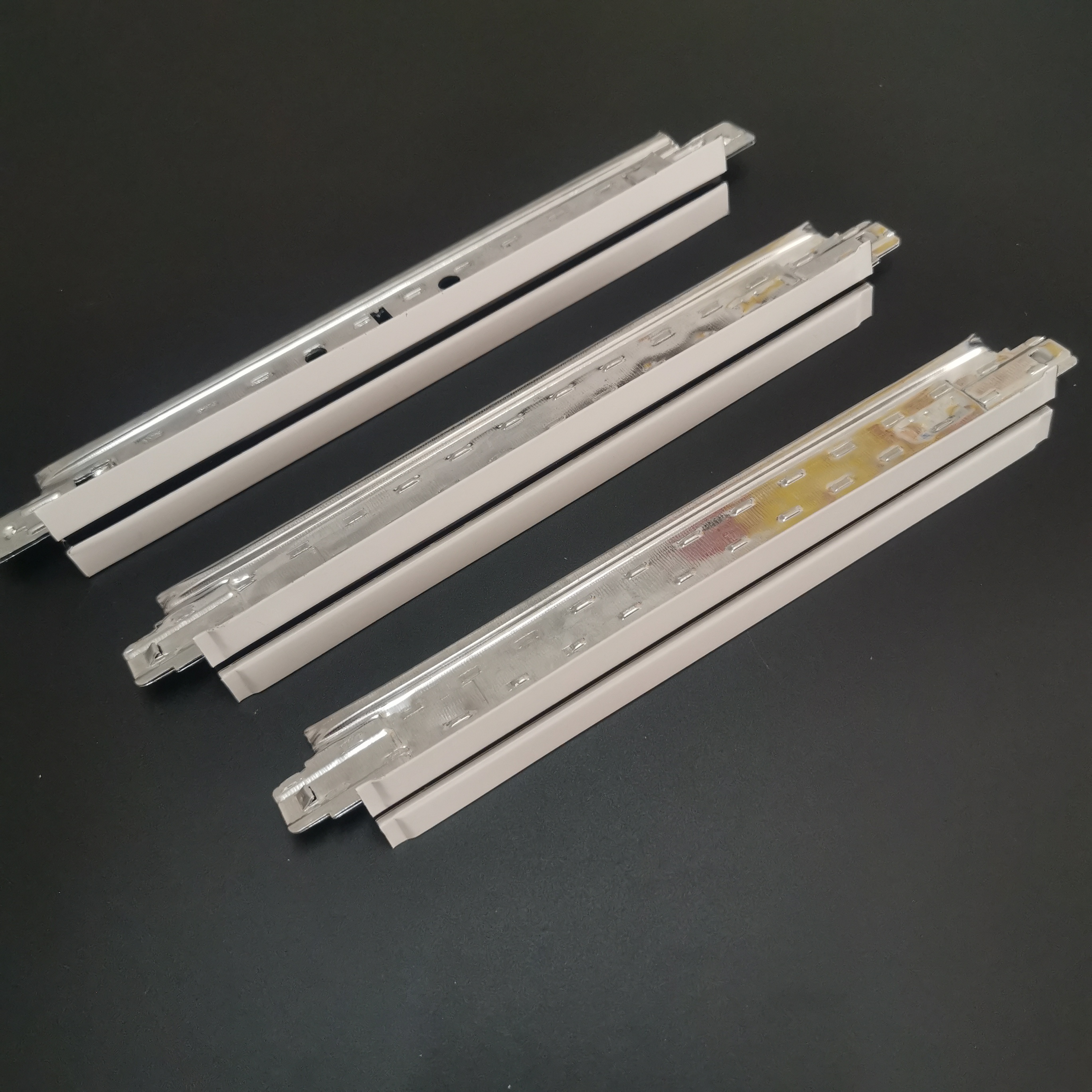
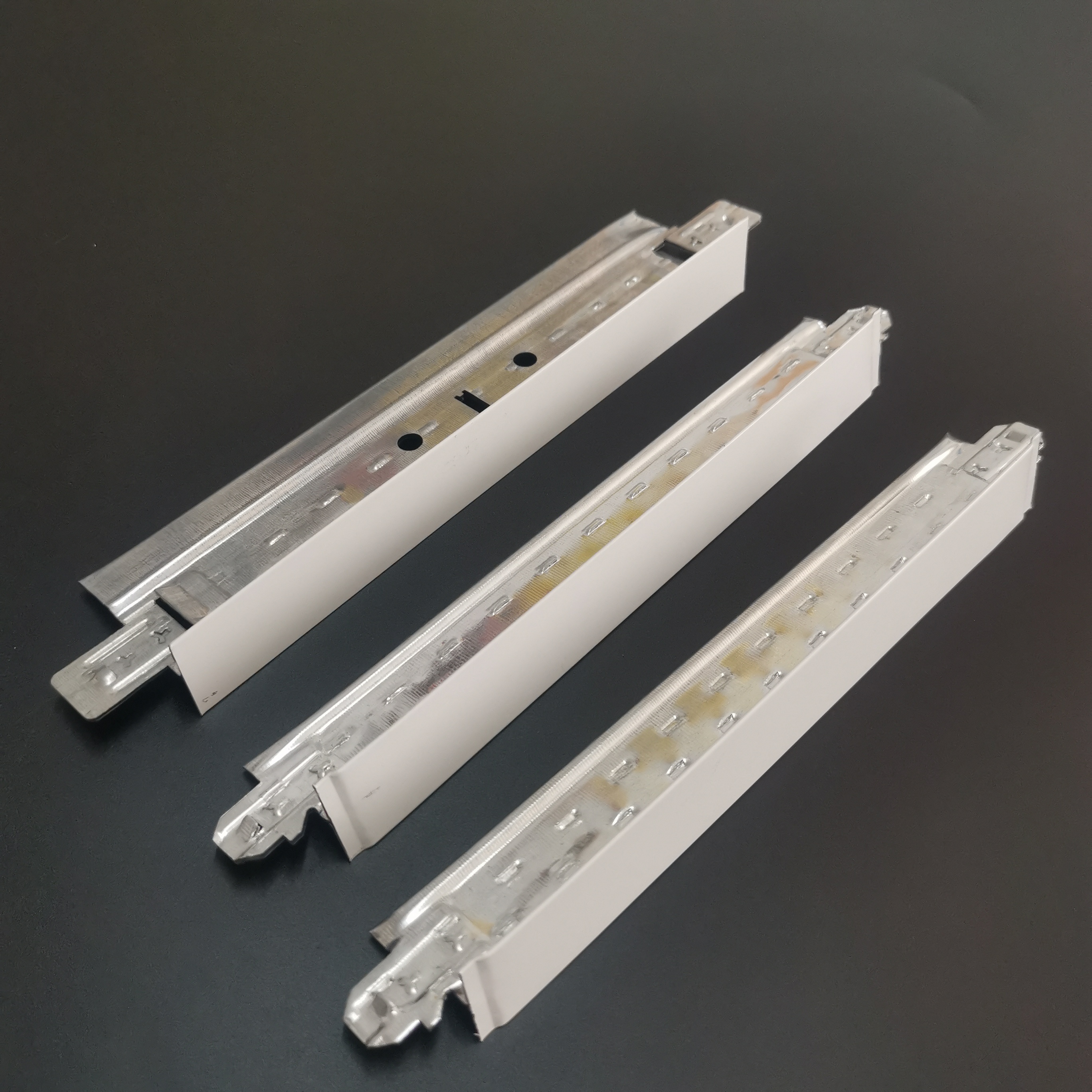
In modern architecture, Ceiling T Grids serve as the core component of indoor ceiling systems, and the demand for customization is increasingly growing. However, from material selection to production accuracy, and to installation compatibility, each link may become a "hidden killer" for project delays. This article takes the technical practice of Wenan Jinkai Building Material Co. Ltd. (hereinafter referred to as "JINKAI") as an example to analyze how to solve the customization难题 through automated production, patented technology, and full-process control, achieving a dual improvement in delivery efficiency and product quality.
Keywords: Customized Ceiling T Grids, Automated Production Line, Patent Technology, Installation Compatibility, JINKAI
Industry Technical Pain Points: The Three Major Challenges Behind Customization
STEP1:Material selection and performance conflictTraditional keel materials (such as galvanized steel plates) struggle to balance thickness, strength, and corrosion resistance. Blindly pursuing thinness in customization may result in insufficient ceiling load-bearing capacity, while increasing thickness will raise costs and affect installation efficiency. For example, a commercial complex project experienced local deformation after installing air conditioning equipment due to the use of 0.8mm thick keels, with the rework cost reaching 200,000 yuan.
STEP2:Production accuracy and batch consistencyManual or semi-automatic production lines are prone to structural size deviations (such as length deviations ±2mm or more) due to operational errors, affecting modular assembly efficiency. A data center project was delayed by 15 days due to inconsistent rafter lengths, requiring on-site cutting and correction during installation.
STEP3:Installation compatibility and on-site adjustmentDifferent architectural structures (such as arched walls, irregular ceilings) require special requirements for the bending radius and connection methods of the joists. Traditional customization processes involve multiple trial runs and tests, increasing time and material costs. A project for an art venue required a re-customization due to mismatched joist bending radius, resulting in an additional expenditure of 120,000 yuan.
Introduction to the technical strength of the company: JINKAI's three core advantages
STEP1:Fully automated production line, precision control at "millimeter level"JINKAI has 53 light steel stud production lines and 46 Ceiling T Grids production lines, utilizing imported German laser cutting equipment and intelligent welding robots to achieve full-process automation from raw material coils to finished products. Taking the control of stud length as an example, the system provides real-time feedback on cutting positions through encoders, with errors ≤±0.5mm, achieving 99.8% batch consistency, far exceeding the industry average (±2mm).
STEP2:Patented technology matrix, solving material and structure challengesAs of 2023, JINKAI has obtained 1 national invention patent, 13 utility model patents, and 1 software copyright. Among them, the "High-strength Lightweight Ridge Structure" (Patent No.: ZL20181XXXXXXX.X) has improved the bending strength by 30% while maintaining a thickness of 1.0mm, suitable for large-span ceilings; another "Adjustable Connector" patent allows free adjustment of the ridge angle from 0 to 90° through groove design, eliminating the need for on-site cutting, thus enhancing installation efficiency by 40%.
STEP3:Full-process digital control and management, zero error from order to deliveryJINKAI introduces the ERP+MES system to achieve digital linkage in order decomposition, production scheduling, and quality inspection. For instance, after the customer submits the non-standard ceiling plan, the system automatically generates the joist cutting list and installation simulation video, reducing human communication errors; the production process tracks each joist's processing parameters through RFID tags to ensure traceability.
Real Case: Technical Implementation of an International Airport Project
In 2022, JINKAI provided customized Ceiling T Grids services for an international airport's T3 Terminal. The project required the ceiling grid to accommodate curved walls (with a bending radius R=1500mm) and bear air conditioning equipment (single point load ≥ 50kg). JINKAI achieved this goal through the following approach:
- Material selection: 1.2mm thick galvanized steel plate with an epoxy resin coating for corrosion resistance, meeting ISO 9227 standard for 2000 hours without rust.
- Structural Optimization: Utilizing the patented "Arc Dragon Bone" design, achieving continuous bending with R=1500mm through segmented splicing and elastic connectors.
- Installation Support: Offer 3D installation simulation videos and on-site technical guidance, project completed 8 days ahead of schedule, saving 180,000 yuan in costs.
FAQ Q&A Technical Selection Guide
Q1: How to choose the appropriate girder thickness for the project?
A: The rib thickness should be considered in terms of load-bearing requirements and cost. Generally, a rib thickness of 0.8-1.0mm is sufficient for office environments; for heavy equipment (such as air conditioners, lighting fixtures), it is recommended to choose a thickness of 1.2mm or more and add cross-reinforcement. JINKAI can provide load calculation services and recommend the optimal thickness based on project requirements.
Q2: How to achieve efficient installation of irregular ceiling?
A: The key to the irregular ceiling lies in the adjustability of the frame. JINKAI's "Adjustable Connector" patent supports a free adjustment of the frame angle from 0-90°, combined with a 3D installation simulation video, which can reduce on-site adjustment time by over 50%. For example, a certain art center project shortened the installation period of the arched ceiling from 15 days to 7 days by using this solution.
Q3: How to ensure the anticorrosive property of the keel?
A: Corrosion resistance depends on the material and surface treatment process. JINKAI uses hot-dip galvanized steel plates (zinc layer thickness ≥60μm) and electrostatic spraying of epoxy resin, with corrosion resistance reaching ISO 9227 standard for 2000 hours without rust, suitable for humid environments (such as basements, bathrooms). For projects in coastal high salt fog areas, stainless steel frames (304 or 316 material) can be customized.
Q4: What is the minimum order quantity for custom-made ribs?
A: JINKAI supports small-batch customization with a minimum order quantity of 500 meters (approximately 200㎡ ceiling material). Through flexible production lines and digital scheduling systems, delivery within 7 days can be achieved, meeting urgent project requirements.
Summary Reference
Customized needs for Ceiling T Grids pose stringent challenges to materials, production, and installation techniques. JINKAI has achieved a technological breakthrough from "micron-level precision control" to "efficient adaptation of irregular structures" through fully automated production lines, patented technology matrices, and a digital control system, providing reliable solutions for commercial complexes, airports, art venues, and other projects. For more information, please visit the official website:www.jinkaibuilding.com