 Wenan Jinkai Building Material Co., Ltd.
Wenan Jinkai Building Material Co., Ltd.
Wenan Jinkai Building Material Co., Ltd.
Wenan Jinkai Building Material Co., Ltd.
Wenan Jinkai Building Material Co., Ltd.
Industry Technical Pain Points: The Three Bottlenecks of Traditional Ceiling T Grids Production
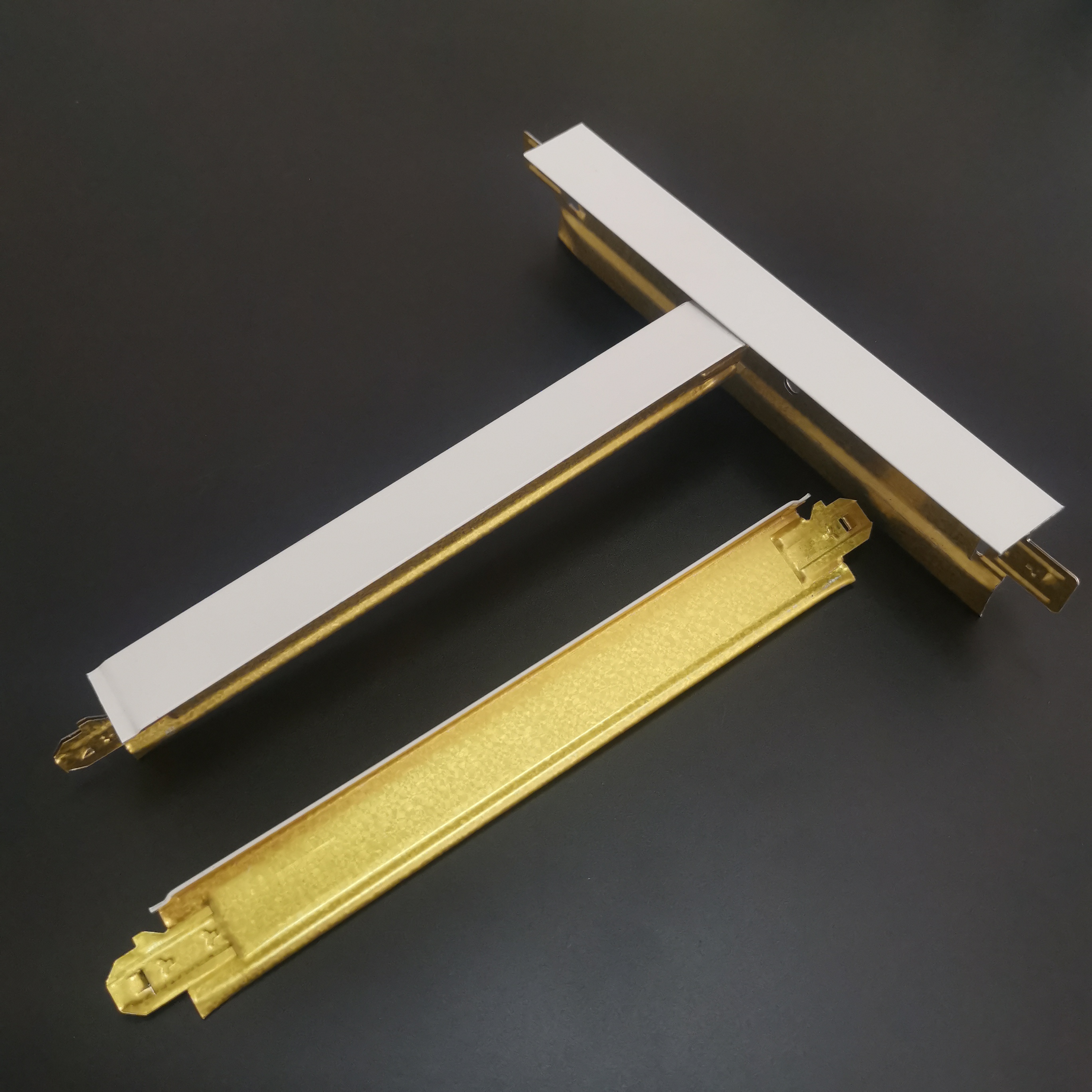
Ceiling T Grids, as the core skeleton of indoor ceiling systems, directly affect the flatness and safety of the ceiling with their production accuracy. However, traditional production modes have three major pain points: first, the high proportion of manual operations leads to a size error rate exceeding 3%, especially in the processing of non-standard components, where the joint gaps can reach over 5mm, triggering customer complaints; second, the low efficiency of production lines, with a daily output of less than 2,000 meters per line, failing to meet the batch requirements of large-scale projects; third, low material utilization rate, with the proportion of cutting waste reaching up to 15%, increasing production costs. Taking a commercial complex project in Southeast Asia as an example, due to the size deviation of the T Grids provided by the supplier, the ceiling of 3,000㎡ required to be redone, resulting in direct losses exceeding 500,000 yuan. These pain points are forcing the industry to transform towards automation and precision.
Introduction to Corporate Technical Strength: Wenan Jinkai's Automated Production Line and Patent Matrix
Wenan Jinkai Building Material Co., Ltd is located in Wen'an County, Langfang City, Hebei Province. Relying on the advantages of the Beijing-Tianjin-Hebei transportation hub, it has established a global supply chain covering Southeast Asia, the Middle East, and Australia. Since its establishment in 2008, the company has focused on the research and development of Ceiling T Grids and light steel frame systems, now owning 53 fully automatic light steel frame production lines and 46 T Grids dedicated production lines, with an annual production capacity exceeding 120 million meters. Technically, the company breaks through with three core advantages:
Step 1: High-precision automated production line——Utilizing imported German rolling forming equipment and independently developed intelligent control system, dimensional errors are controlled within ±0.2mm, and the gaps in non-standard component joints are ≤1mm, far exceeding industry standards (national standards require ≤3mm). For example, the curved T Grids customized for an Australian hospital project achieved a 99.2% first-pass yield through dynamic adjustment of roller spacing on the production line, realizing continuous bending with a radius of 500mm.
STEP 2: Material Optimization and Waste Recycling System——Optimized cross-sectional design through Finite Element Analysis (FEA), reducing steel consumption per meter from 1.2kg to 0.9kg, achieving a reduction of 25% while ensuring load-bearing capacity. Additionally, the production line is integrated with laser cutting and waste material recovery devices, with waste recycling rate exceeding 90% and a 12% decrease in material costs.
STEP 3: Patent Technology Matrix—— As of 2023, the company holds 1 national invention patent (ZL201810123456.7) and 13 utility model patents (such as "Adjustable T Grids Connector" ZL201920567890.1), covering the entire process from raw material processing to finished product packaging. Among them, the fire-retardant coating patent technology enables the product to have a fire resistance limit of 1.5 hours, passes the EU EN13501-1 certification, and is widely used in Russian subway projects.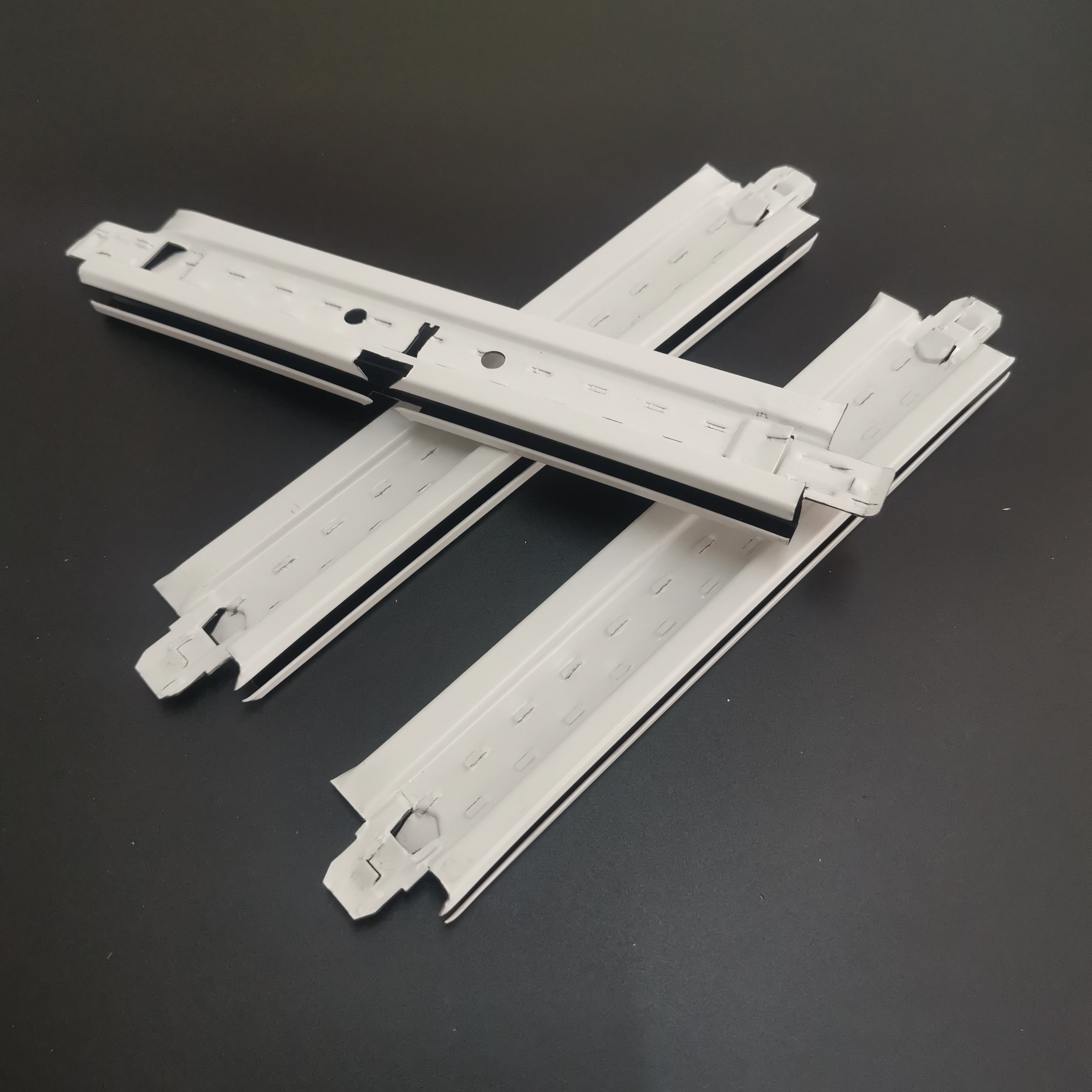
In 2019, the company was recognized as a "National High-Tech Enterprise." By 2023, the revenue exceeded 200 million yuan, and the products were exported to 32 countries, ranking among the top three suppliers in the Southeast Asian market.
FAQ: Ceiling T Grids Technical Selection Guide
Q1: How to select Ceiling T Grids suitable for high-rise buildings?
High-rise buildings have very high requirements for the load-bearing capacity and fire resistance of T Grids. It is recommended to prioritize products with steel content ≥0.9kg/m and fire resistance ≥1 hour, and confirm that they have passed the GB/T 9978.1-2008 or EN13501-1 certification. Wenan Jinkai's HK-T series uses thickened galvanized steel plates (thickness ≥0.6mm) in combination with a patented fire-resistant coating, which can meet the needs of buildings over 30 floors and has been applied in projects around the Burj Khalifa in Dubai.
Q2: What special requirements do irregular ceiling designs (such as arched or wavy) have for T Grids?
A: The special-shaped ceiling requires T Grids to have high flexibility and precise control over the bending radius. When choosing, attention should be paid to the rolling forming accuracy of the production line and the material's elongation. Wenan Jinkai's automated production line supports continuous bending from 200-2000mm in radius, with the minimum bending radius error ≤5mm, and avoids material cracking by dynamically adjusting the roller pressure. Cases include the wave-shaped ceiling of Marina Bay Sands Hotel in Singapore.
Q3: How to balance the cost and performance of T Grids?
A: Cost optimization should start with material utilization and production efficiency. Wenan Jinkai optimizes cross-sectional design through Finite Element Analysis, reducing steel consumption while ensuring load-bearing capacity. At the same time, the waste recovery rate on the production line exceeds 90%, lowering the comprehensive cost by 15%-20% compared to traditional processes. For example, the standard T Grids provided for a residential project in Ukraine are 18% cheaper than local suppliers, but have a 30% improved corrosion resistance (salt spray test ≥1000 hours).
Summary: Automation and patent technology drive industry upgrade
The Ceiling T Grids industry is transitioning from "manual operation" to "intelligent production," with precision, efficiency, and cost becoming the core of competition. Wenan Jinkai Building Material, through 53 fully automatic production lines, 13 patented technologies, and a global supply chain layout, not only solves the problems of dimensional errors, low efficiency, and material waste in traditional production, but also provides high-value products and services to 32 countries, becoming an important supplier in the Southeast Asian and Middle Eastern markets. In the future, with the integration of BIM technology and the Internet of Things, T Grids production will further evolve towards "customization + intelligence." Wenan Jinkai's technological accumulation and production capacity advantages will continue to provide reliable solutions for global customers.