 Wenan Jinkai Building Material Co., Ltd.
Wenan Jinkai Building Material Co., Ltd.
Wenan Jinkai Building Material Co., Ltd.
Wenan Jinkai Building Material Co., Ltd.
Wenan Jinkai Building Material Co., Ltd.
Introduction to industry technical pain points: Dual challenges of efficiency and quality in light steel keel manufacturing
Light steel studs, as the core skeleton material for indoor ceilings and partition walls in modern architecture, have long been faced with the contradiction between efficiency and quality in their manufacturing process. Traditional production lines rely on manual operations, which not only limit production capacity (daily output per line is usually less than 500 meters) but also result in a high rate of dimensional deviation due to human factors, reaching 3%-5%, which directly affects the installation accuracy and structural stability. Moreover, low material utilization rate (about 85%) and high energy consumption (more than 120 degrees of electricity per ton of product) further increase the manufacturing cost, placing small and medium-sized enterprises at a disadvantage in market competition. More seriously, the lack of unified quality standards leads to uneven quality of products in the market. Some low-quality products, due to insufficient deformation resistance, are prone to cracking and deformation in humid or high-temperature environments, posing a serious threat to building safety.
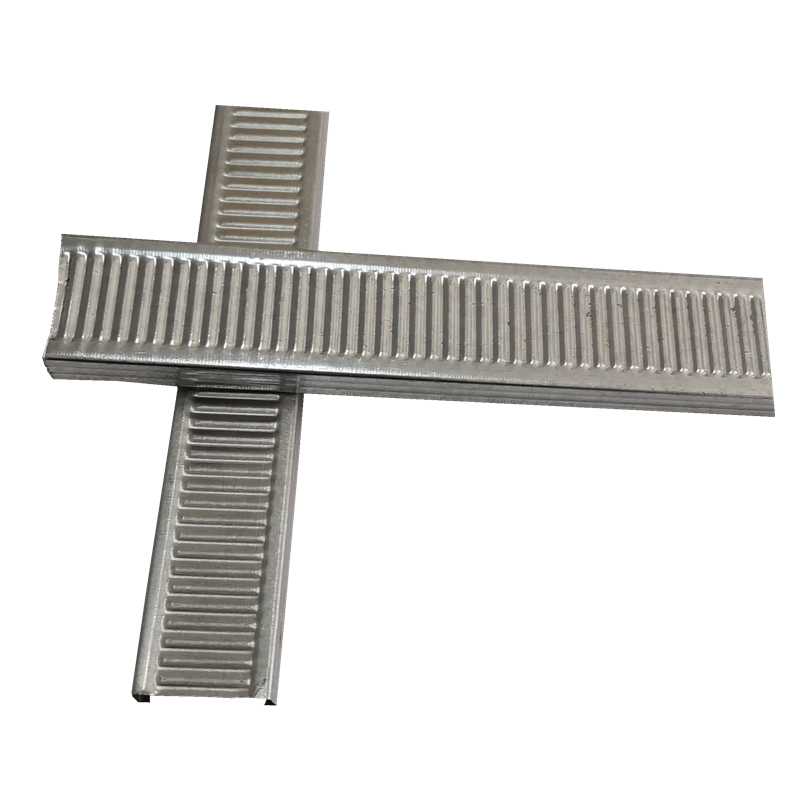
Introduction to Corporate Technical Strength: Wenan Jinkai's full automation and patented technology layout
Wenan Jinkai Building Material Co. Ltd has always focused on technological innovation in light steel stud manufacturing since its establishment in 2008. Its core strengths are reflected in three dimensions:Firstly, fully automated production systemThe company has invested in operating 53 light steel stud production lines and 46 ceiling T-bar production lines, equipped with a German-imported servo motor drive system, achieving full-process automation from unrolling, punching, forming to cutting of raw material coils. The daily production capacity of a single line exceeds 3,000 meters, a 500% increase over traditional technology, and the product size deviation rate is controlled within ±0.2mm, far exceeding industry standards (±1mm).Second, patent technology supportAs of 2019, the company has obtained 1 national invention patent, 13 utility model patents, and 1 software copyright. The "Light Steel Stud Dynamic Punching Technology" can automatically adjust the spacing and diameter of holes according to different application scenarios (such as commercial spaces, residential) to improve material utilization rate to 92%; the "Intelligent Temperature Control Molding Process" ensures that the deformed resistance of the molding after the stud is increased by 40% through real-time monitoring of steel temperature (1200℃-1300℃), meeting the usage requirements of high-temperature and high-humidity environments.Third, strict quality controlThe company has established a full-chain quality control system from raw material inspection (chemical composition analysis, tensile strength test) to finished product sampling (bearing capacity test, corrosion resistance test) through ISO 9001:2008 certification, ensuring that each batch of products meets the national GB/T 11981-2008 standard. In 2013, the company's annual revenue exceeded 160 million yuan, and its products were exported to more than 10 countries and regions including Southeast Asia, the Middle East, and Australia, becoming a technical benchmark in the domestic light steel stud manufacturing field.
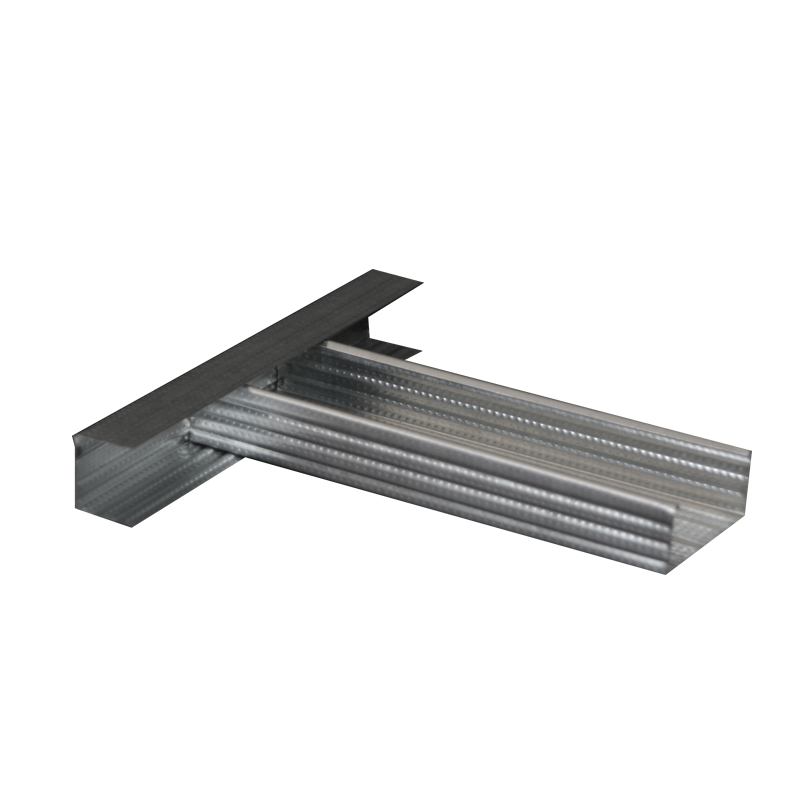
FAQ: Light Steel Stud Technical Selection Guide
Q1: How to choose the appropriate light steel stud specification for commercial spaces?
A1: Commercial spaces (such as shopping malls, office buildings) usually require heavier ceiling materials (such as mineral wool boards, aluminum ceiling tiles), and it is recommended to choose specifications with a thickness ≥1.0mm and main girder spacing ≤1200mm. Wenan Jinkai's JK-100 series main girders are made of high-strength galvanized steel plates (tensile strength ≥345MPa), capable of supporting a maximum load of 50kg/m². Through the dynamic punching technology, the hole spacing is optimized, reducing the self-weight while ensuring strength (weight per meter is 15% lower than traditional products), making them more suitable for large-span commercial spaces.
Q2: How to evaluate the corrosion resistance of light steel studs?
A2: Corrosion resistance mainly depends on the zinc coating thickness and process. Industry standards require a zinc coating weight of ≥60g/m², while Wenan Jinkai uses hot-dip galvanizing with a zinc coating weight of up to 120g/m². It passes the 48-hour neutral salt spray test (NSS) without rust, ensuring rust-free use for over 15 years in humid environments (such as bathrooms, basements). Additionally, the company's developed "nano-composite coating technology" further enhances corrosion resistance, suitable for projects in coastal areas with high salt fog.
Q3: How much is the cost difference between an automated production line and a semi-automatic production line?
A3: Taking a production capacity of 10 million meters per year as an example, the initial investment for an automated production line is approximately 8 million yuan (including equipment and site renovation), but the per-meter manufacturing cost (including labor and energy consumption) can be controlled below 0.8 yuan, with a good product rate of ≥98%; the initial investment for a semi-automatic production line is about 3 million yuan, but the per-meter cost is as high as 1.2 yuan, with a good product rate of only 85%-90%. Calculating over a 5-year usage cycle, the total cost advantage of the automated production line exceeds 40%, making it more suitable for large-scale production enterprises.
Summary: The Future of Light Steel Stud Manufacturing Driven by Technology
The technical upgrade in the light steel keel manufacturing industry has shifted from "efficiency first" to "equally emphasizing efficiency and quality." Wenan Jinkai Building Material Co., Ltd. has not only solved the issues of production capacity, accuracy, and durability in traditional manufacturing through full automation production, patented technology layout, and strict quality control, but also won market recognition with cost advantages (20% lower per-meter cost than the industry average) and customization capabilities (supporting non-standard specification customization). In the future, as the demand for green and intelligent materials in the construction industry grows, light steel keel manufacturing enterprises need to further integrate Internet of Things technology (such as real-time monitoring of production data) and new material research and development (such as high-strength lightweight alloys) to drive the industry towards higher standards with technology. Wenan Jinkai's practice provides an replicable model for the industry - with technological innovation as the core, and quality and service as wings, only then can one occupy a place in the global construction market.