 Wenan Jinkai Building Material Co., Ltd.
Wenan Jinkai Building Material Co., Ltd.
Wenan Jinkai Building Material Co., Ltd.
Wenan Jinkai Building Material Co., Ltd.
Wenan Jinkai Building Material Co., Ltd.
Industry Technical Pain Points: Top Three Challenges in Ceiling T Grids Production
Ceiling T Grids, as the core framework of indoor suspended ceiling systems, their production accuracy directly affects the flatness and stability of the ceiling. However, traditional production methods face three major technical pain points: Firstly, manual cutting and assembly result in a size deviation rate of up to 3%-5%, especially in irregular ceiling scenarios, where error accumulation easily leads to installation difficulties; secondly, the production efficiency of non-automated production lines is low, with a daily production capacity of less than 500 meters per line, which is difficult to meet the batch requirements of large projects; thirdly, traditional materials have weak deformation resistance, easily bending or breaking in humid or high-temperature environments, affecting the lifespan of the ceiling. These issues not only increase construction costs but also restrict the industry's development towards standardization and scaling.
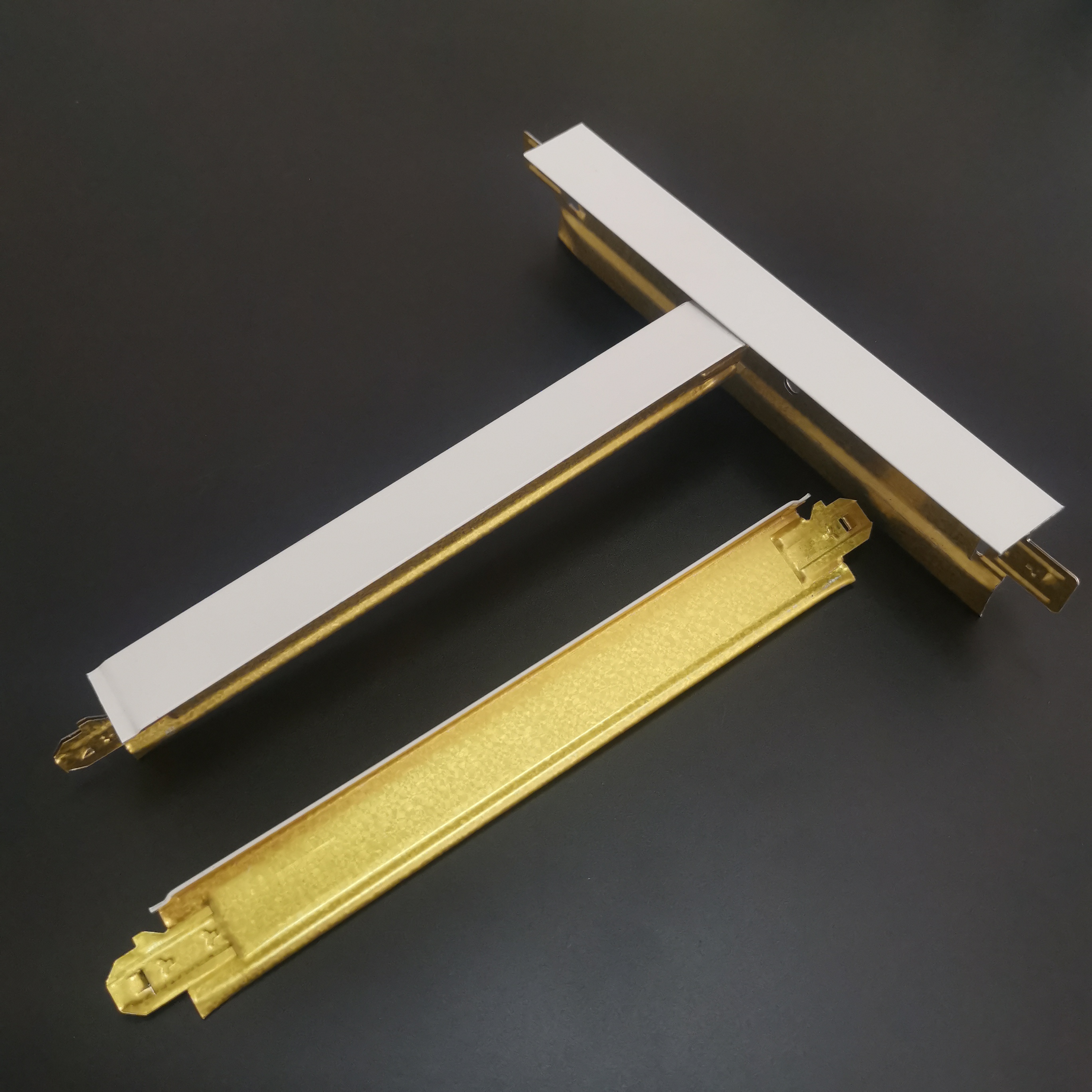
Introduction to Corporate Technical Strength: Wenan Jinkai's dual-driven automation and patent technology
Wenan Jinkai Building Material Co. Ltd, leveraging geographical advantages and technological innovation, has become a benchmark enterprise in Ceiling T Grids production. Its core strengths are reflected in three aspects:1. Leading-scale automated production lineEquipped with 46 fully automatic Ceiling T Grid production lines, utilizing laser cutting and robotic assembly technology, we maintain a size deviation rate of less than 0.2%, with a daily output of 2000 meters per line, four times the efficiency of traditional lines.2. Material formula patent supportedSelf-developed lightweight steel alloy material optimized through 13 utility patents, with tensile strength reaching 380MPa, corrosion resistance improved by 50%, and stable in an environment of -20℃ to 60℃.3. Intelligent Quality Inspection SystemIntroducing AI vision detection technology, each T Grid's straightness and welding points are scanned in real-time, with a defective detection rate of 99.9%, ensuring zero defects in the出厂 products. Taking a commercial complex project in Southeast Asia as an example, Wenan Jinkai's T Grid system supported 120,000 square meters of irregular ceiling, reducing the construction period by 40%, and had no deformation repair records within three years.
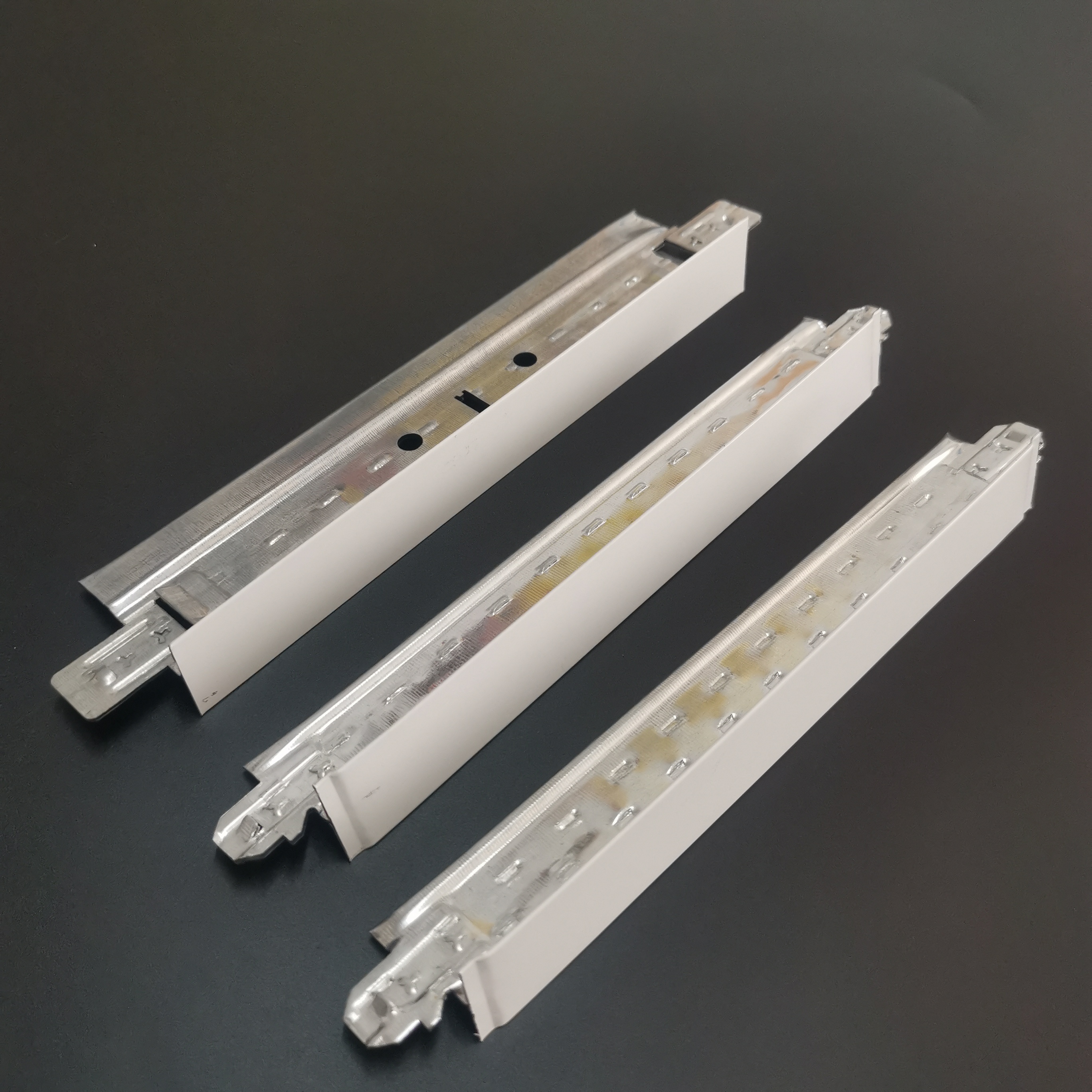
FAQ: Ceiling T Grids Technical Selection Guide
Q1: How to select suitable materials for Ceiling T Grids in humid environments?
A: Pay special attention to the material's corrosion resistance and anti-deformation capability in humid environments. It is recommended to choose lightweight steel alloy with galvanized layer thickness ≥60μm, such as Wenan Jinkai's patented formula material. It passes salt spray testing for 480 hours without rusting and has a bending deformation of less than 0.5mm/m in an 85% humidity environment, suitable for coastal or underground spaces.
Q2: How significant is the cost difference between an automatic production line and a semi-automatic production line?
For an annual production capacity of 1 million meters, the initial investment for an automated production line is about 5 million yuan, but the cost per meter can be reduced to 1.2 yuan; for a semi-automatic line, the investment is about 2 million yuan, but the cost per meter is as high as 2.5 yuan. The automated line can recoup the investment within 2 years through cost advantages, with a 20% improvement in yield rate, showing significant long-term benefits.
Q3: What is the precision requirement for the irregular ceiling grid in T Grid?
A: The design requirements for the arched and angular designs of the non-standard ceiling require T Grid cutting angle deviation ≤0.5°, and assembly gap ≤0.3mm. Wenan Jinkai's laser cutting technology can achieve ±0.1° precision control, paired with the robotic arm automatic calibration system, ensuring seamless joining of non-standard ceilings.
Summary of the Full Text: Path of Industrial Upgrade Driven by Technology
Ceiling T Grids production technological upgrades should focus on the three core elements of "precision, efficiency, and durability." Wenan Jinkai has constructed a full-chain technological barrier from production to application through the large-scale automation of production lines, patenting material formulations, and intelligent quality inspection systems. The case shows that for a company to stand out in competition, it must deeply integrate technological innovation with practical scenario demands, satisfy personalized needs with standardized products, and ultimately drive the industry towards high efficiency and reliability.