 Wenan Jinkai Building Material Co., Ltd.
Wenan Jinkai Building Material Co., Ltd.
Wenan Jinkai Building Material Co., Ltd.
Wenan Jinkai Building Material Co., Ltd.
Wenan Jinkai Building Material Co., Ltd.
Industry Technical Pain Points: The "Three Difficulties" Dilemma of Light Steel Studs
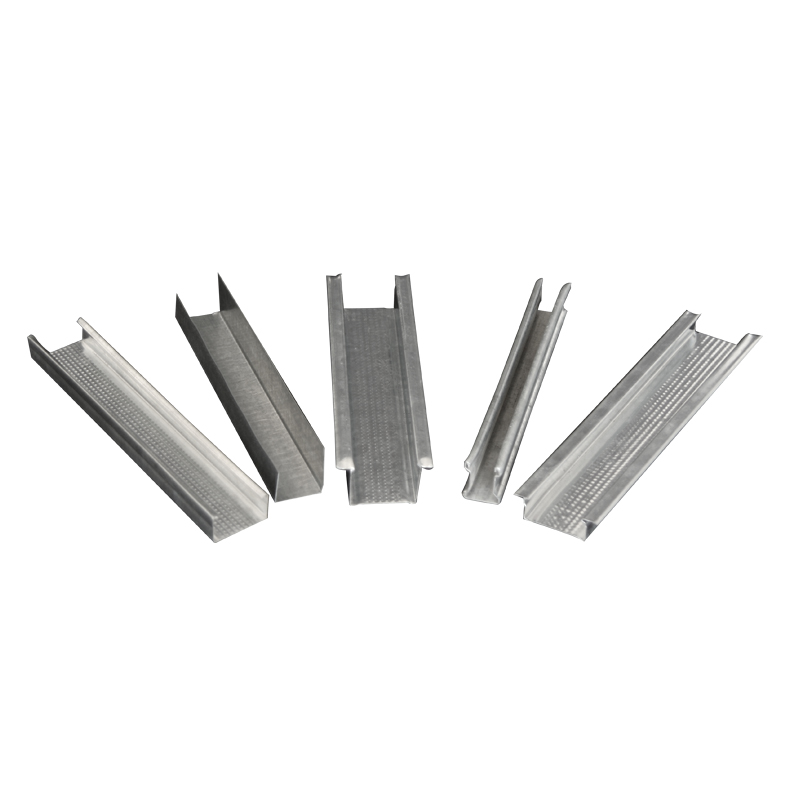
Light steel studs, as the core supporting material for indoor ceiling, have been facing three major technical challenges for a long time: Firstly, the traditional production process relies on manual cutting and welding, resulting in a high dimensional error rate of ±3mm, which is difficult to meet the strict accuracy requirements of modern architecture; secondly, the thickness of the ordinary galvanized layer is insufficient, less than 8μm, which is prone to rust in a humid environment, shortening the service life to within 5 years; thirdly, the traditional stud system has limited bearing capacity, with a general single-point load below 50kg, which cannot accommodate heavy equipment or complex ceiling structures. Taking a commercial complex project in Southeast Asia as an example, due to the selection of low-quality studs, large-scale deformation occurred within 3 years after construction, with maintenance costs exceeding 40% of the initial investment. These issues not only increase the total project cost but also threaten building safety, becoming a bottleneck that the industry urgently needs to break through.
 Introduction to Corporate Technical Strength: Wenan Jinkai's "Three-Blade Strategy" for Breaking the僵局
Wenan Jinkai Building Material Co., Ltd. solves industry challenges through three major technological layouts:
Automatic production line: dual guarantee of precision and efficiency
The company has invested in 53 fully automated light steel stud production lines, equipped with German imported laser cutting machines and Japanese servo motor drive systems, controlling dimension errors within ±0.5mm and increasing production efficiency to 2,000 meters per hour, three times higher than traditional methods. Taking a certain airport expansion project in the Middle East as an example, its ceiling system required custom 12-meter-long studs, which traditional methods could not produce due to equipment limitations. Wenan Jinkai, however, completed the delivery in just 7 days through the automated production line, with zero deformation after installation.
2. Patented anti-corrosion technology: Extend service life to 15 years
The R&D team has optimized the galvanizing process through 13 utility model patents, increasing the galvanizing layer thickness to 25μm and adding 0.3% rare earth elements to enhance corrosion resistance. Certified by a third-party testing agency, the product remains rust-free for 1000 hours in salt spray tests, far exceeding the national standard of 240 hours. In an Australian data center project, Wenan Jinkai's steel joists have maintained their integrity in coastal high-humidity environments for 8 years, with customers praising their "corrosion resistance three times better than similar products."
3. High-bearing structural design: single-point load-bearing capacity exceeds 80kg
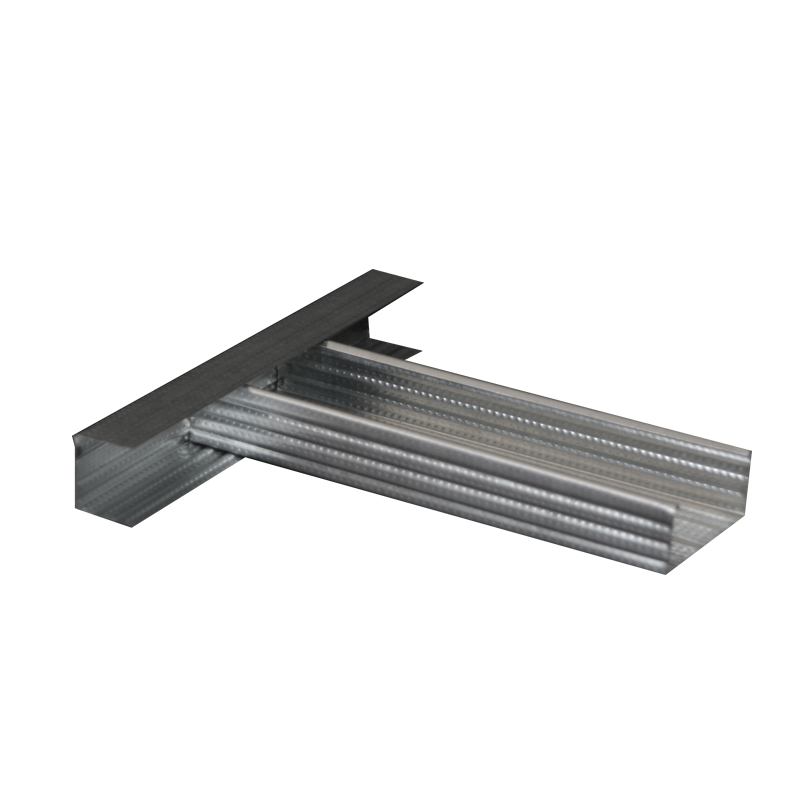
Through structural mechanics simulation analysis, the company optimized the rib cross-section shape, increasing the web height from 30mm to 45mm and adding two reinforcing ribs, thereby achieving a single-point bearing capacity of 85kg. In a Russian industrial plant project, the ceiling needed to support heavy ventilation pipes. After on-site testing, Wenan Jinkai ribs directly replaced the original steel structure supports, saving the customer 20% in material costs.
FAQ: Light Steel Stud Technical Selection Guide
Q1: How to determine if the anti-corrosion performance of light steel keel meets the standard?
A: The key is the thickness of the galvanized layer and the duration of the salt spray test. The national standard requires a galvanized layer of ≥12μm and a salt spray test of ≥240 hours, while Wenan Jinkai products have a galvanized layer of up to 25μm and can withstand 1000 hours of salt spray without rust, meeting the long-term use requirements in coastal or high-humidity areas.
Q2: What are the precautions for the transportation and installation of extra-long stringers (such as >8 meters)?
A: Extra-long beams must be secured with special packaging racks to prevent deformation during transportation; it is recommended to use a laser level for calibration during installation and set a support point every 2 meters. Wenan Jinkai can provide customized packaging solutions and on-site installation guidance to ensure stable use of extra-long beams.
Q3: What are the cost advantages of light steel studs compared to wooden studs?
A: Although the price per unit of light steel stud is slightly higher, the overall cost is lower: first, its service life is more than 3 times that of wooden studs, reducing the frequency of replacement; second, no fireproofing treatment is required, saving construction procedures; third, the recyclability reaches 90%, meeting green building standards. Taking a 1000㎡ ceiling project as an example, using Wenan Jinkai light steel studs can reduce the total cost by 15% compared to wooden studs.
 Summary: Technically driven, win-win future
Wenan Jinkai Building Material Co., Ltd has set a new benchmark for the light steel stud industry through three major technological breakthroughs: automated production, patented corrosion resistance, and high-load-bearing design. Its products have covered over 30 countries and regions including Southeast Asia, the Middle East, and Australia, serving more than 500 large-scale projects with a "zero accident" record, winning customer trust. In the future, the company will continue to deepen the integrated "R&D-Production-Service" model, providing more efficient and reliable modern construction solutions for global partners and jointly promoting the technological upgrade of the industry.