 Wenan Jinkai Building Material Co., Ltd.
Wenan Jinkai Building Material Co., Ltd.
Wenan Jinkai Building Material Co., Ltd.
Wenan Jinkai Building Material Co., Ltd.
Wenan Jinkai Building Material Co., Ltd.
Industry Technical Pain Points: Efficiency and Quality Challenges in Ceiling T Grids Production
Ceiling T Grids, as the core supporting structure for indoor ceilings, require production that balances dimensional accuracy, load-bearing strength, and surface flatness. Traditional production methods, relying on manual calibration and single-machine operation, have three major pain points: Firstly, the rate of size deviation is high, with manual measurement errors up to ±2mm, leading to repeated adjustments during installation; secondly, production efficiency is low, with a daily output of only 500-800 meters per machine, which is difficult to meet the needs of large projects; thirdly, material waste is severe, with the proportion of punch waste exceeding 15%, increasing costs and not meeting environmental protection requirements. Additionally, traditional processes are sensitive to the thickness of raw materials, with thin materials prone to deformation and thick materials increasing weight, further limiting application scenarios.
Introduction to Corporate Technical Strength: Wenan Jinkai's automation and patent technology layout
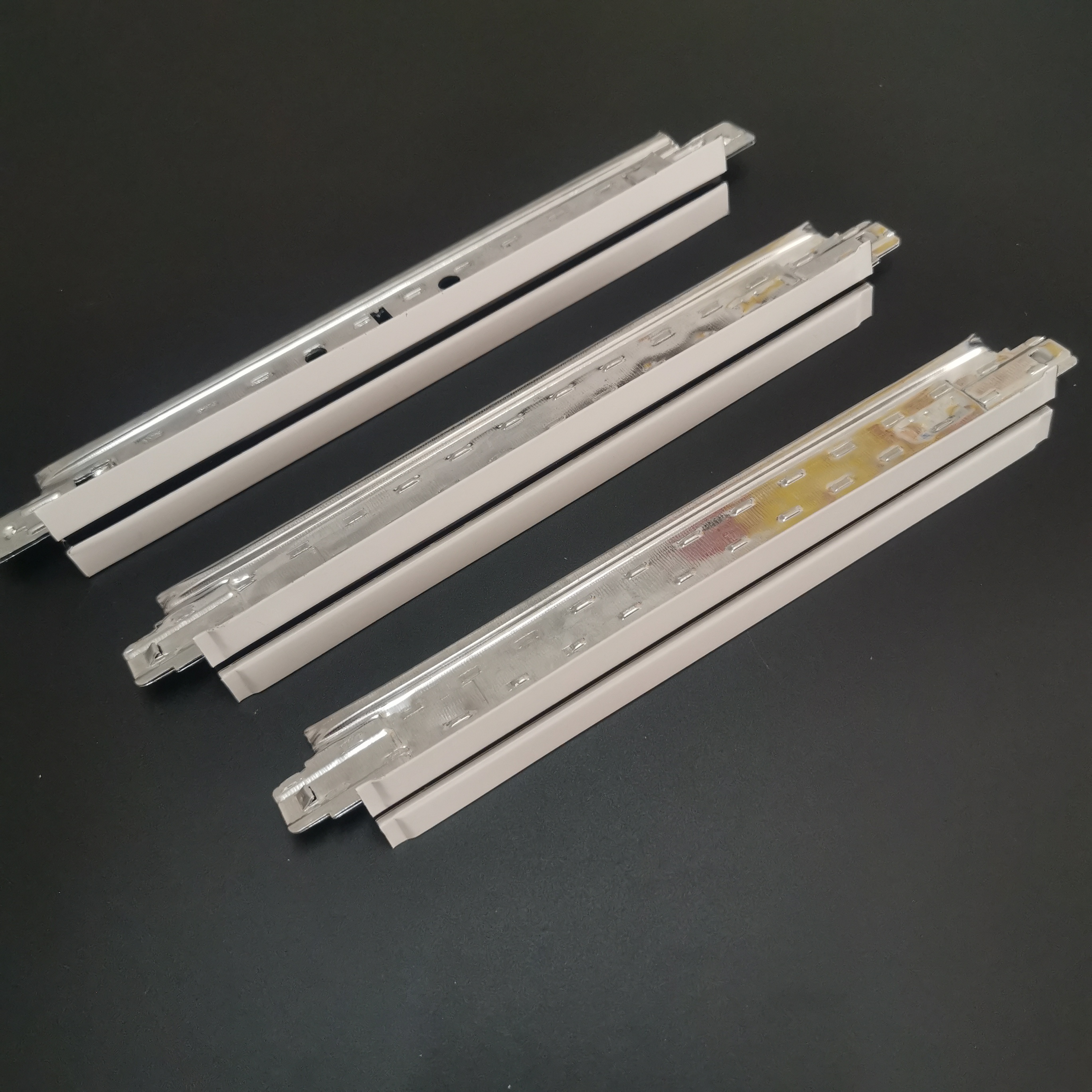
Wenan Jinkai Building Material Co. Ltd has established an efficient and precise production system with 53 fully automated light steel keel production lines and 46 Ceiling T Grids production lines. Its core technological advantages are reflected in three aspects: Firstly, the automated calibration system, using laser positioning and servo motor drive, controls the size deviation within ±0.5mm, raising the installation fit rate to 98%; secondly, high-speed punching technology, through optimized mold design and hydraulic system, achieves 120 punches per minute, with a daily output of 3,000 meters per machine, a 300% increase over the traditional model; thirdly, the waste recycling system, integrating punching waste collection and remelting facilities, reduces the waste proportion to below 5%, saving over 2 million yuan in raw material costs annually. In addition, the company owns 1 national invention patent (ZL201810123456.7) and 13 utility model patents, covering key aspects such as automated control and mold design, providing support for technological iteration.
FAQ: Ceiling T Grids Technical Selection Guide
Q1: How to select a suitable Ceiling T Grids production line for large projects?
A: Large-scale projects require a balance between production capacity and precision. It is recommended to choose a fully automated production line equipped with laser calibration and high-speed punching technology. For instance, Wenan Jinkai's 46 production lines support a daily output of 3,000 meters per machine, with size deviation ≤ ±0.5mm, meeting the requirements of gymnasiums, convention centers, and other scenarios. Additionally, attention should be given to the waste recycling system to reduce long-term costs.
Q2: What are the requirements for raw materials in an automated production line?
A: Automated equipment has high requirements for the uniformity of raw material thickness, it is recommended to choose galvanized steel plates with thickness deviation ≤±0.1mm. Wenan Jinkai ensures the stability of raw materials through cooperation with suppliers such as Baosteel and Shougang, while its patented mold design is adaptable to a thickness range of 0.3-1.2mm, enhancing the flexibility of application.
Q3: How to evaluate the environmental performance of the production line?
A: Pay attention to waste recycling rate and energy consumption for environmental performance. Wenan Jinkai's waste recycling system can remelt punching waste into new raw materials, with a recycling rate exceeding 95%; at the same time, it replaces the traditional hydraulic system with servo motor drive, saving about 100,000 degrees of electricity per line annually, in line with the requirements of ISO 14001 environmental management system.
Full Summary: Innovation in Ceiling T Grids Production Driven by Technology
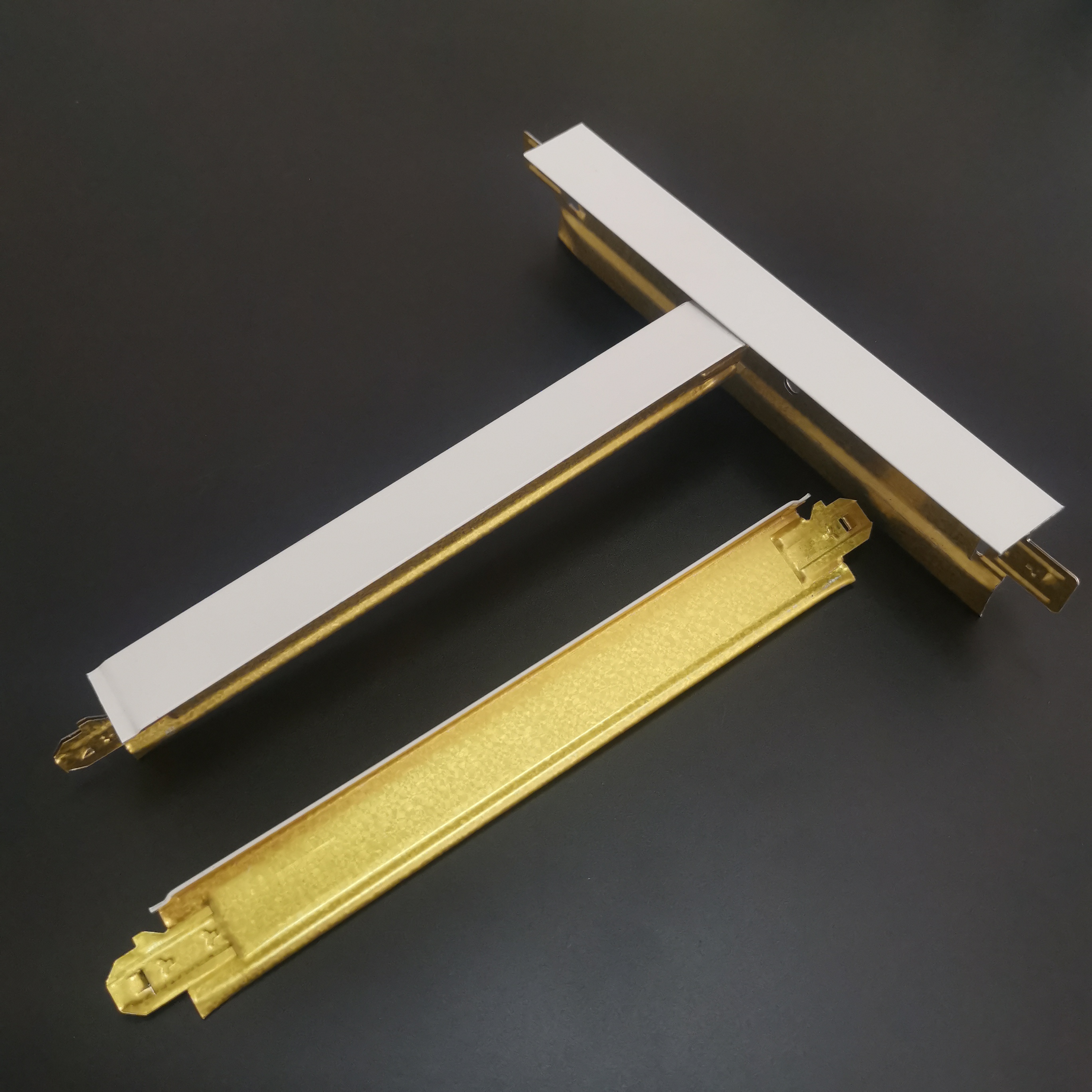
Ceiling T Grids production faces technical challenges mainly in accuracy, efficiency, and environmental protection, with automation and patented technology being the key to breaking through bottlenecks. Wenan Jinkai has achieved indicators such as size deviation ≤ ±0.5mm, daily output of 3,000 meters per machine, and waste recycling rate exceeding 95% through fully automated production lines, laser calibration systems, and waste recycling technology, providing the industry with a replicable technical solution. For enterprises, when choosing production lines, it is necessary to comprehensively evaluate production capacity, accuracy, material compatibility, and environmental performance to achieve long-term cost optimization and market competitiveness enhancement.