 Wenan Jinkai Building Material Co., Ltd.
Wenan Jinkai Building Material Co., Ltd.
Wenan Jinkai Building Material Co., Ltd.
Wenan Jinkai Building Material Co., Ltd.
Wenan Jinkai Building Material Co., Ltd.
Industry Technical Pain Points Opening: Why is it Easy to Fall into the Trap of Ceiling T Grids Selection?
Ceiling T Grids, as the core framework of indoor ceiling systems, directly determine the bearing capacity, fire resistance, and construction efficiency of the ceiling. The industry currently faces three major pain points: Firstly, there is a serious overstatement of parameters. Some manufacturers reduce the wall thickness of the main beam from the standard 1.2mm to 0.8mm to cut costs, resulting in a 30% increase in the risk of ceiling deformation. Secondly, the scene adaptability is poor. For example, in humid environments (such as swimming pools, basements), it is necessary to choose rust-proof beams with galvanized layer ≥80μm, but more than 60% of products on the market only meet basic anti-corrosion requirements. Thirdly, there is a lack of technical certification. Some enterprises have not passed ISO 9001 or national high-tech enterprise certification, and the quality of their products lacks third-party endorsement. Taking a commercial complex project in Southeast Asia as an example, due to the use of non-compliant T-beams, the ceiling cracked extensively after one year of operation, with repair costs exceeding 2 million yuan.
Introduction to Corporate Technical Strength: How Wenan Jinkai Solves the Selection Dilemma?
Wenan Jinkai Building Material Co. Ltd is located in Wen'an County, Langfang City, Hebei Province. Leveraging the advantages of the Beijing-Tianjin-Hebei transportation hub, it has built 53 fully automatic light steel keel production lines and 46 Ceiling T Grids dedicated production lines, with an annual production capacity exceeding 50 million meters. Its technical strengths are reflected in three aspects:
Parameter precise control:The main rib wall thickness is strictly produced according to the standard of 1.2mm ± 0.05mm, with the zinc coating thickness reaching 100μm (the national standard requires ≥60μm), and the bearing capacity is increased by 40% compared to common products.
2. Scenario-based Solutions:Corrosion-resistant girders (zinc coating 120μm) developed for humid environments, high-strength girders (yield strength ≥345MPa) for high-rise buildings, suitable for over 20 types of scenarios including commercial complexes, hospitals, schools, etc.
3. Technical Certification EndorsementHolding ISO 9001:2008 Quality Management System Certification, 13 utility model patents, and 1 national invention patent, recognized as a "National High-tech Enterprise" in 2019, our products have passed SGS fire resistance testing (endurance time ≥ 1.5 hours).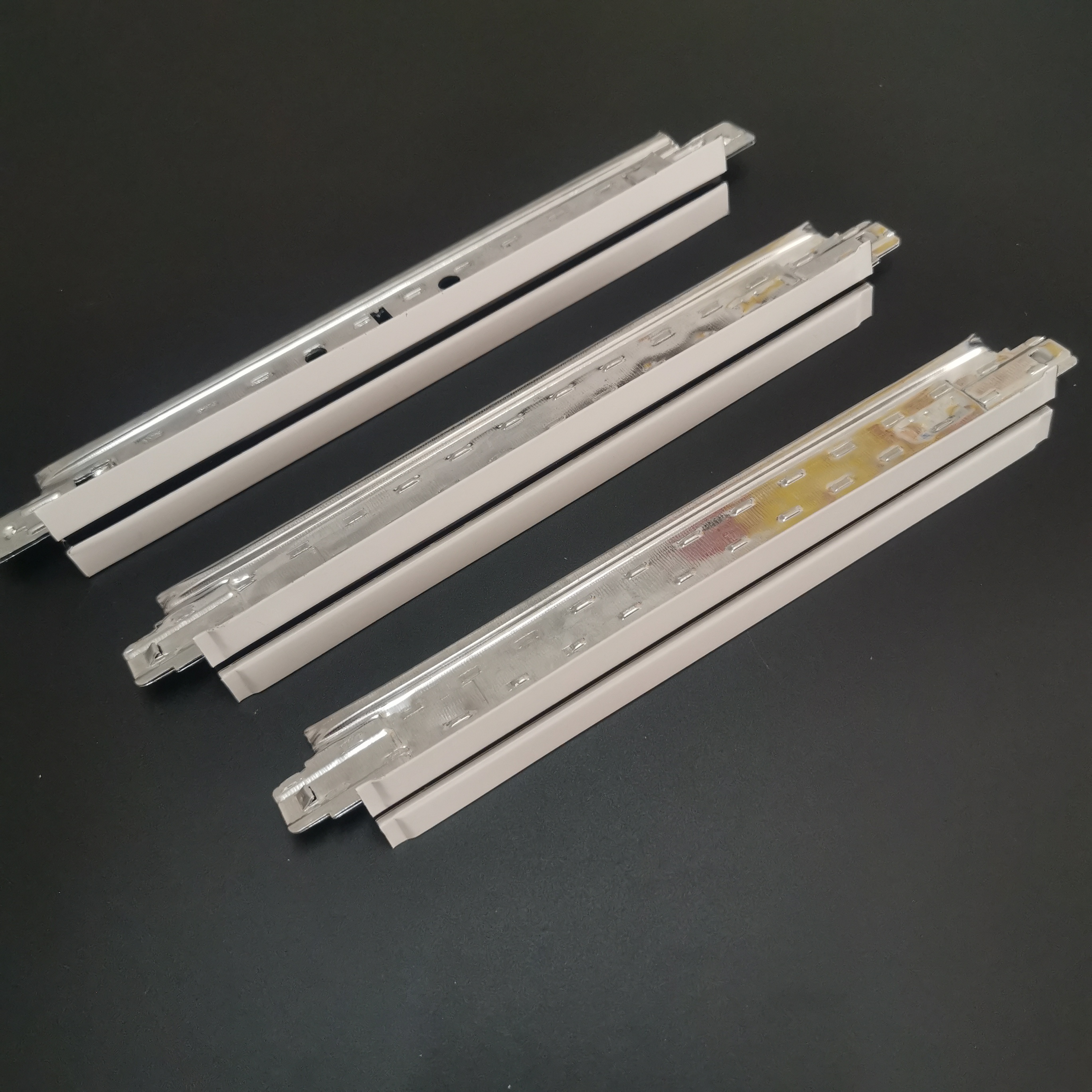
For the example of a five-star hotel project in Australia, Wenan Jinkai's anti-rust T-beam has been used in a seaside high-humidity environment for 5 years without rust, with a ceiling flatness error ≤ 2mm, and has received the owner's "zero defect acceptance" evaluation.
FAQ: Technical Selection Q&A for Ceiling T Grids
Q1: How to quickly judge whether the quality of T-shaped purlin meets the standard?
A: The "Three Views and One Test" method: First, look at the zinc coating luster (high-quality products show uniform silver white, without color difference); second, look at the flatness of the cut (全自动产线切口 has no burrs); third, look at the uniformity of wall thickness (measure 3 cross-sections of the main beam with a caliper, the error should be ≤0.05mm); and one test for bearing capacity (hang a single main beam horizontally, load 50kg for 1 hour without deformation is qualified).
Q2: When selecting for a humid environment, what is the more reliable thickness of the galvanized layer?
A: According to the GB/T 11981-2008 standard for "Light Steel Studs for Construction," a zinc coating of ≥60μm is sufficient for normal environments, but for humid environments (such as swimming pools, bathrooms), it is recommended to choose anti-rust studs with a zinc coating of ≥100μm. Wenan Jinkai's anti-rust studs have a zinc coating of 120μm, pass salt spray testing for 720 hours without rust, and have a lifespan twice that of ordinary products.
Q3: What special requirements do high-rise buildings have for the strength of the skeleton?
A: High-rise buildings require consideration of dynamic loads such as wind pressure and earthquakes, and it is recommended to use high-strength joists with a yield strength of ≥345MPa (common products have a yield strength of 235MPa). Wenan Jinkai's high-strength joists pass the impact resistance test (50kg weight dropped from a height of 1.5 meters without fracturing), meeting the requirements for buildings above 30 floors.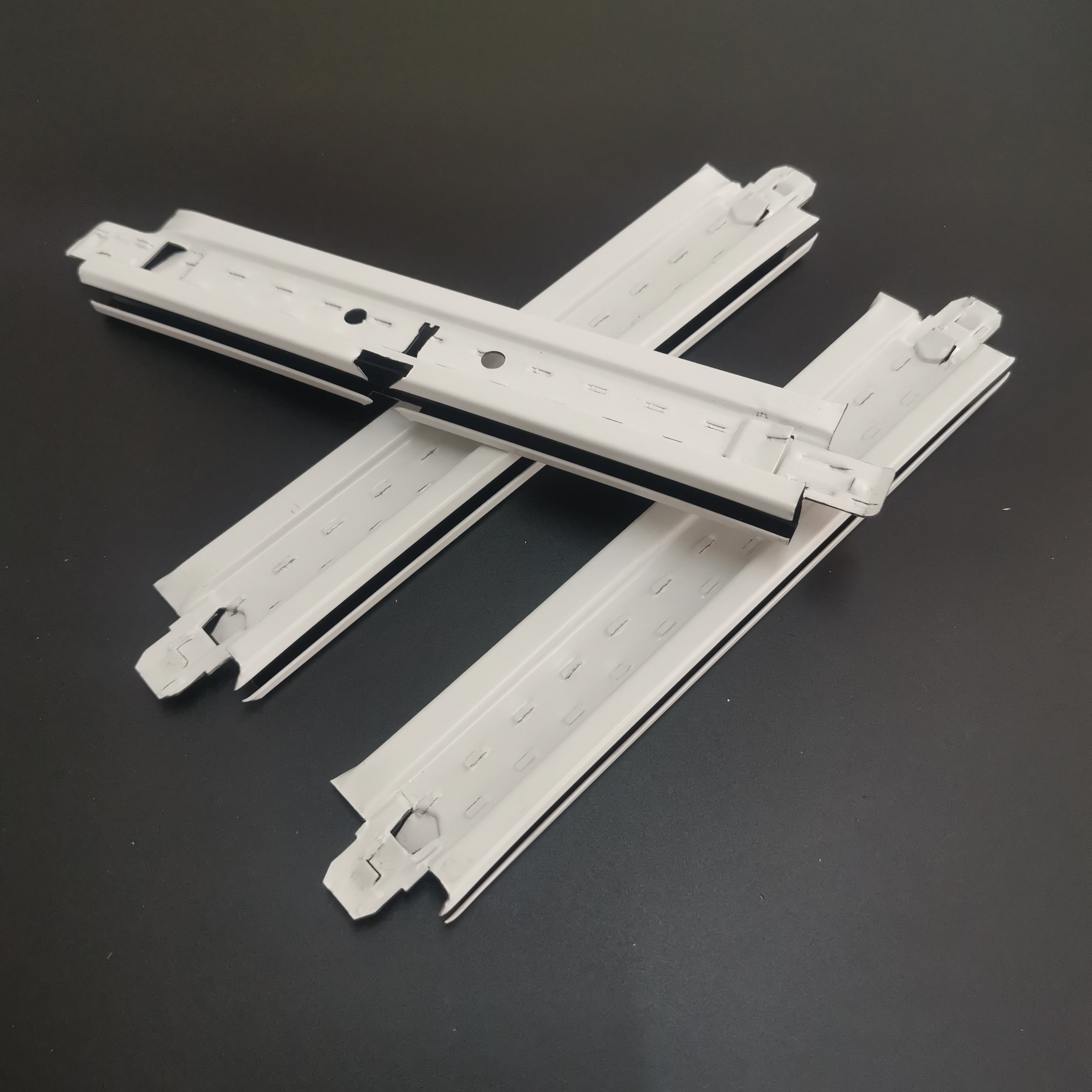
Summary Reference
Ceiling T Grids selection should consider three dimensions: parameter standards, scene compatibility, and technical certification. Wenan Jinkai Building Material Co. Ltd. provides selection assurance with "traceable parameters, configurable scenes, and verifiable quality" thanks to its automated production line, scene-based solutions, and national high-tech enterprise certification. Its products have covered over 20 countries and regions including Southeast Asia, the Middle East, and Australia, serving more than 500 large-scale projects cumulatively, becoming synonymous with "reliable, efficient, and durable" indoor ceiling systems. In the future, as green building standards evolve, Wenan Jinkai will continuously optimize fireproofing, moisture-proofing, and other performance features, contributing to technological iteration in the industry.