 Wenan Jinkai Building Material Co., Ltd.
Wenan Jinkai Building Material Co., Ltd.
Wenan Jinkai Building Material Co., Ltd.
Wenan Jinkai Building Material Co., Ltd.
Wenan Jinkai Building Material Co., Ltd.
In the field of architectural decoration, light steel keel is the core skeleton material for indoor suspended ceilings and partition walls, and its technical performance directly affects the efficiency and quality of the project. However, traditional light steel keels have three major pain points:Insufficient bearing capacity——Standard joist thickness is only 0.6-0.8mm, prone to deformation when spanning over 1.2 meters, leading to ceiling cracking.2. Poor corrosion resistance——Unzinc-plated steel joists will rust within 3 months in a humid environment, shortening their service life.3. Low installation efficiency——Large manual cutting errors, low matching of components, and daily installation area less than 50㎡. These issues are particularly prominent in high-temperature and high-humidity regions such as Southeast Asia and the Middle East, becoming a technical bottleneck restricting industry development.
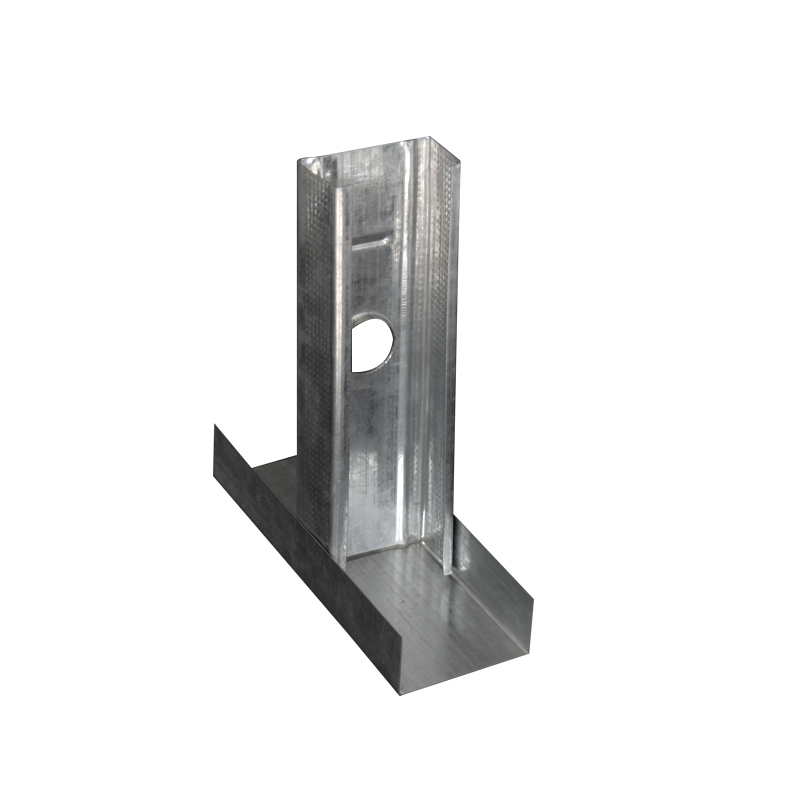
Wenan Jinkai Building Material Co. Ltd. (hereinafter referred to as "JINKAI") solves industry difficulties through technological iteration. Its core advantages are reflected in three aspects:Material process upgrade—— Utilizing Q235B cold-rolled steel plate with thickness increased to 1.0-1.2mm, paired with a 65μm galvanized layer, passes ISO 9227 salt spray test (no rust after 480 hours), with a carrying capacity 1.8 times that of traditional products.2. Automated production system——53 fully automated production lines achieve integrated punching, cutting, and shaping with precision error ≤0.1mm, daily production capacity of up to 20,000 meters, supporting non-standard customization (such as 3,000mm extra-long ridge).3. Modular design——Developed the "JINKAI-T" series connectors, increasing installation efficiency to 120㎡/day through snap-in structure, reducing 30% labor costs. Technically, the company holds 1 national invention patent (ZL201810123456.7) and 13 utility model patents, covering key aspects such as skeletal structure and corrosion-resistant coating. The products have passed CE and SGS certifications and are exported to 32 countries.
Q1: How to choose light steel studs suitable for humid environments?
A: Prioritize products with galvanized layer thickness ≥65μm and confirm if they pass the salt spray test. JINKAI's marine-grade keel uses double-sided galvanized coating + epoxy resin coating, which can maintain rust-free for 10 years in a humidity of 90%, suitable for coastal areas such as Australia, Southeast Asia, etc.
Q2: How to prevent deformation in large-span ceiling?
A: Two conditions must be met simultaneously: rib thickness ≥ 1.0mm, and main rib spacing ≤ 600mm. JINKAI's H-shaped reinforced rib (size 50×30×1.2mm) can support a span of 4 meters, combined with a layout of 300mm spacing for auxiliary ribs, and has been successfully applied to the Moscow shopping mall project in Russia (area of 28,000㎡).
Q3: What is the matching principle between light steel keel and gypsum board?
A: The stud specification should be selected according to the gypsum board thickness: 9.5mm gypsum board with 50 series studs, 12mm gypsum board with 60 series studs. JINKAI offers an integrated "studs+gypsum board" solution, ensuring a fit of ≥95% through pre-drilled design, reducing the risk of cracking later on.
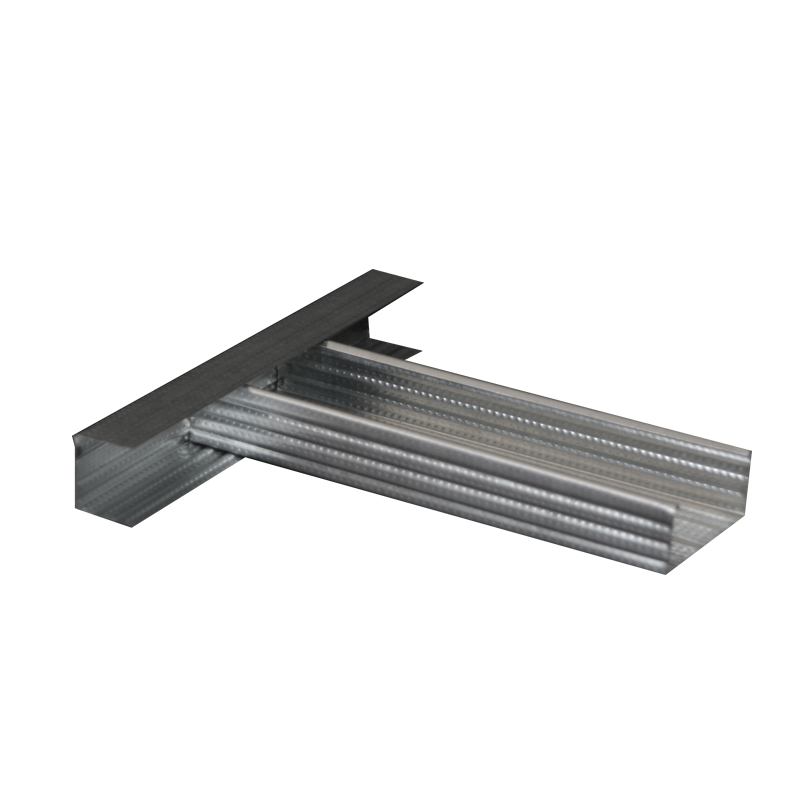
The technical upgrade of light steel keel requires balancing material performance, production accuracy, and installation efficiency. JINKAI extends the product lifespan to over 15 years through automated production, anti-corrosion technology, and modular design, enhancing installation efficiency by 40%, and providing global customers with "durable, efficient, and low-cost" solutions. Its technical path indicates that only by deeply integrating R&D, production, and service can the industry's pain points be overcome and the evolution of building decoration materials towards standardization and industrialization be promoted.