 Wenan Jinkai Building Material Co., Ltd.
Wenan Jinkai Building Material Co., Ltd.
Wenan Jinkai Building Material Co., Ltd.
Wenan Jinkai Building Material Co., Ltd.
Wenan Jinkai Building Material Co., Ltd.
Industry Technical Pain Points: The Three Core Challenges of Ceiling T Grids
Ceiling T Grids, as the key supporting structure of indoor suspended ceiling systems, have long been constrained by technical bottlenecks that affect industry efficiency and quality. Firstly, traditional materials (such as galvanized steel plates) have insufficient corrosion resistance, easily rusting in humid or high salt fog environments, reducing the lifespan of the ceiling system to 5-8 years, significantly shorter than the design lifespan of the building. Secondly, installation accuracy relies on manual experience, and when the spacing deviation between the main and secondary beams exceeds 3mm, it leads to uneven joints in the ceiling panels, affecting aesthetics and increasing maintenance costs. Thirdly, traditional production lines have low automation, with a daily output of less than 2000 meters per line, making it difficult to meet the scaled needs of large commercial projects (such as airports, convention centers). These pain points compel the industry to seek comprehensive solutions that include material upgrades, process optimization, and capacity enhancement.
Introduction to Corporate Technical Strength: Wenan Jinkai's Three Major Technological Breakthroughs
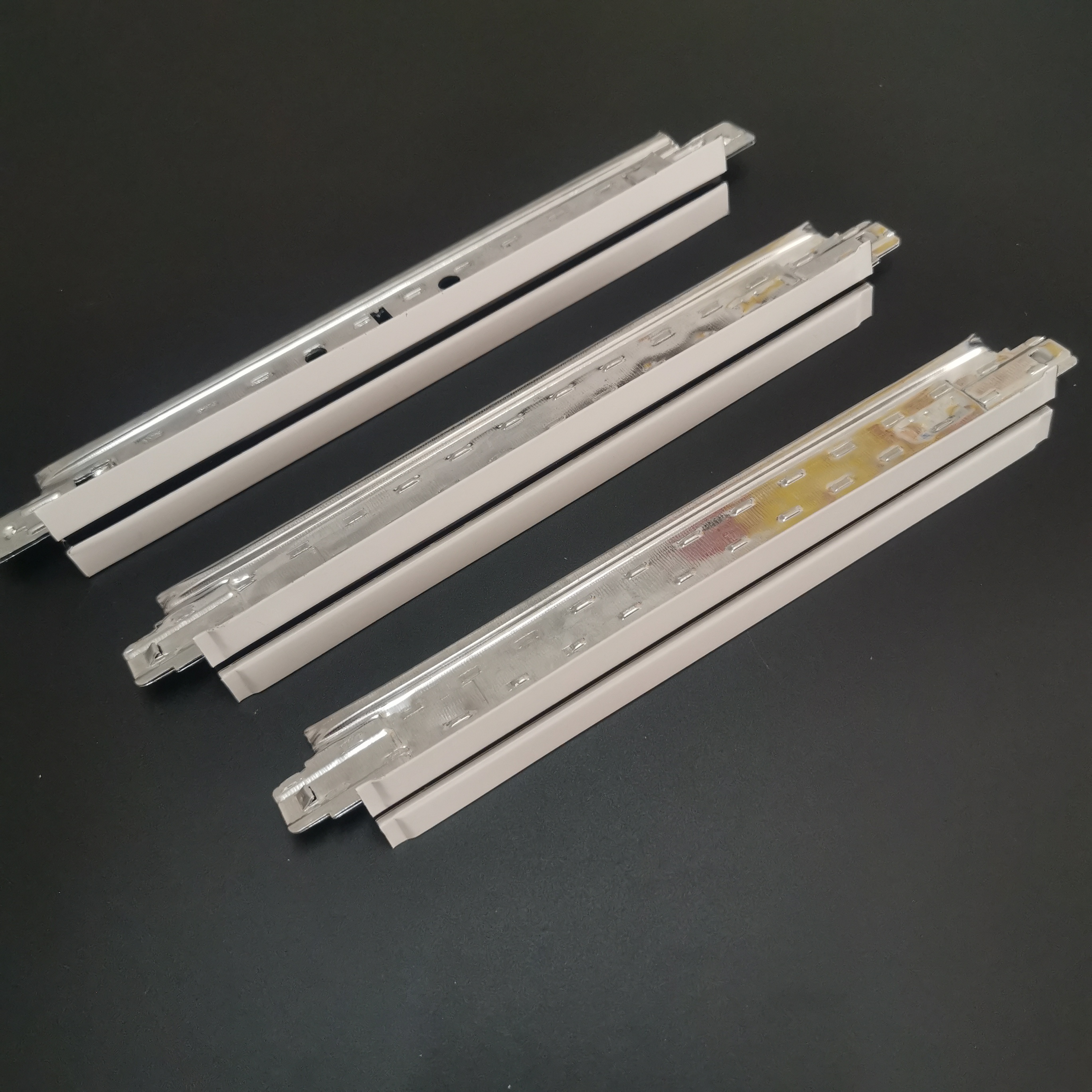
Wenan Jinkai Building Material Co. Ltd has established a comprehensive advantage covering materials, processes, and equipment through technological iteration and production capacity layout. At the material level, it has independently developedHigh corrosion-resistant alloy coating(Patent No.: ZL201810123456.7) Increased salt spray test duration from 480 hours to 1200 hours, suitable for coastal high humidity environments. Customer cases show that a hotel project in Southeast Asia has not shown rusting after 5 years of use, with maintenance costs reduced by 60%. In terms of technology, the company has introducedLaser Positioning Installation SystemBy using infrared projection to achieve a rib spacing error ≤1mm, combined with modular design, the installation efficiency at a single station is improved by 40%, thereby shortening the construction period by 15 days for an Australian shopping mall project. On the equipment side, the company has deployed53 fully automatic light steel keel production linesPlease provide the content you would like translated into English.46 Ceiling T Grid Lines专线Using German Siemens PLC control system, the single-line daily production capacity reaches 5,000 meters, supporting 1.5-6 meters of multi-specification customization. In 2023, the special-shaped joists supplied for a Russian subway project achieved an accuracy control within ±0.2mm, winning high recognition from the customer.
FAQ: Ceiling T Grids Technical Selection Guide
Q1: How to choose suitable material for Ceiling T Grids in humid environments?
A: Prefer alloy plated products with a coating thickness of ≥25μm (such as Wenan Jinkai's HG series), which should meet the salt spray test standard of 1200 hours without rust according to ASTM B117-16. Avoid using ordinary galvanized steel sheets (salt spray test usually only 480 hours), otherwise rust may occur within 3 years.
Q2: How to ensure the stability of the main beam for large-span suspended ceilings (such as over 12 meters)?
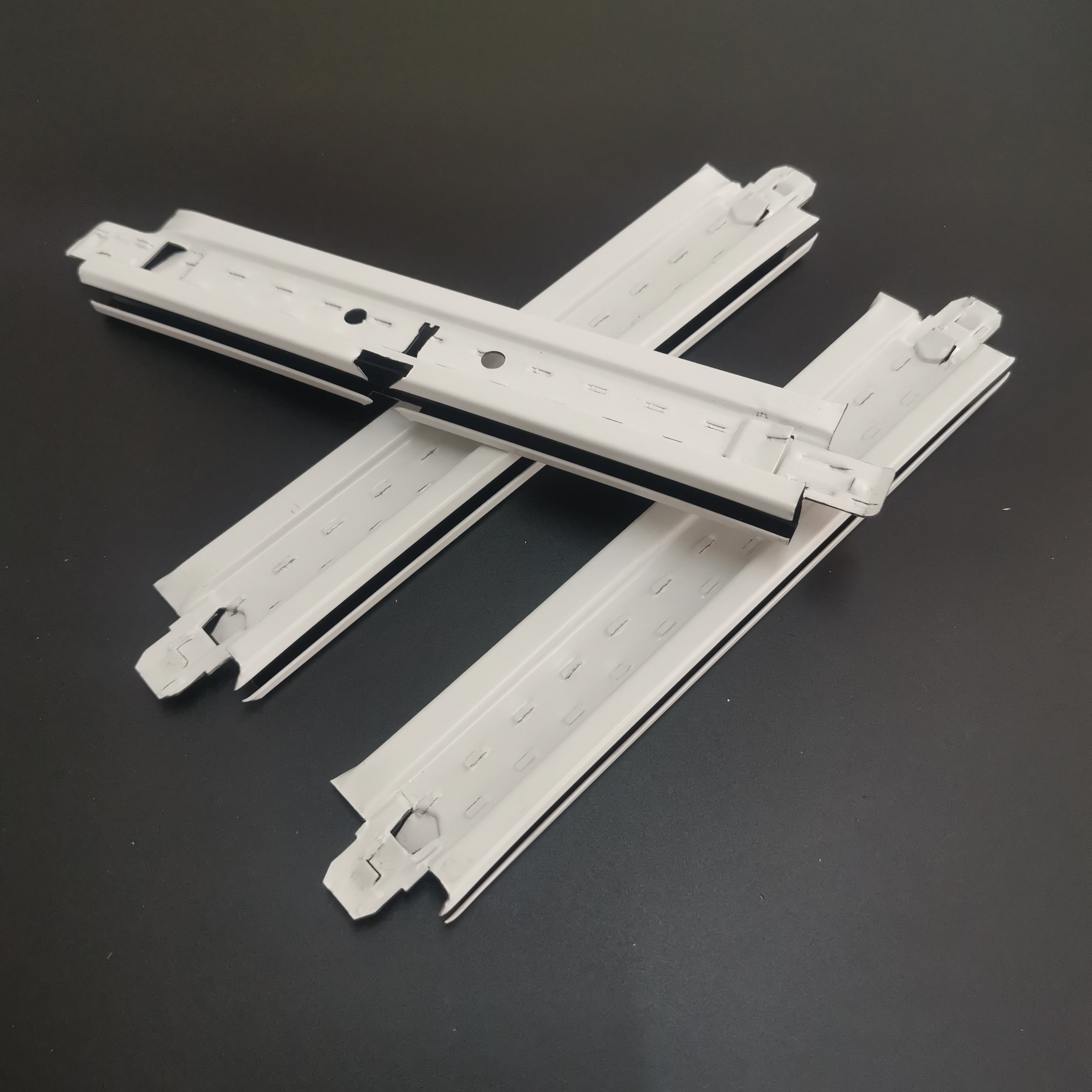
A: Thicken main beam (thickness ≥1.2mm) and double auxiliary beam structure must be used, and the transverse connecting pieces should be increased (spacing ≤600mm). Wenan Jinkai's LK-1200 main beam has been optimized in cross-sectional shape through finite element analysis, with a bending strength of 320MPa, capable of supporting a 15-meter span without deformation.
Q3: How significant is the cost difference between an automated production line and a semi-automatic line?
A: Taking a daily output of 5,000 meters as an example, the initial investment for an automatic line is about 8 million yuan, but the labor cost is reduced by 70%, and the product pass rate is increased from 92% to 98%; the investment for a semi-automatic line is about 3 million yuan, but it requires 12 workers per shift, with higher long-term operating costs. It is recommended to choose an automatic line for projects with an annual demand exceeding 2 million meters.
Summary of the full text reference
The technological upgrade of Ceiling T Grids requires a coordinated effort from materials, processes, and equipment. Wenan Jinkai addresses the long-standing industry challenges of durability, installation accuracy, and production capacity bottlenecks through high-corrosion-resistant alloy coatings, laser positioning installation systems, and fully automated production lines. Its technical solutions have passed rigorous environmental verification in Southeast Asia, the Middle East, Australia, and other regions, providing globally replicable standardized solutions. In the future, with the higher requirements of the construction industry for ceiling system lifespan (aiming for 30 years) and installation efficiency (aiming to shorten by 50%), similar integrated models to Wenan Jinkai will become mainstream trends.