 Wenan Jinkai Building Material Co., Ltd.
Wenan Jinkai Building Material Co., Ltd.
Wenan Jinkai Building Material Co., Ltd.
Wenan Jinkai Building Material Co., Ltd.
Wenan Jinkai Building Material Co., Ltd.
Industry Technical Pain Points: The Technical Game and Market Challenges Behind the Ranking of Ceiling T Grids
Ceiling T Grids serve as the core supporting structure of indoor suspended ceiling systems, with their technical performance directly affecting the load-bearing capacity, installation efficiency, and long-term stability of the ceiling. However, the current market faces three major technical pain points: Firstly, it is challenging to balance material strength and lightweighting; traditional galvanized steel grids meet strength standards but are heavy, leading to high installation costs. Secondly, insufficient corrosion resistance, especially in humid or high salt fog environments, causes easy rusting and shortens the ceiling's lifespan. Thirdly, low standardization levels result in significant differences in grid specifications among different manufacturers, leading to poor component compatibility across projects and increased maintenance costs. According to industry research, ceiling collapse accidents caused by grid quality issues accounted for 12% in the past three years, while the return rate for insufficient corrosion resistance reached 25%, making technical upgrades urgent.
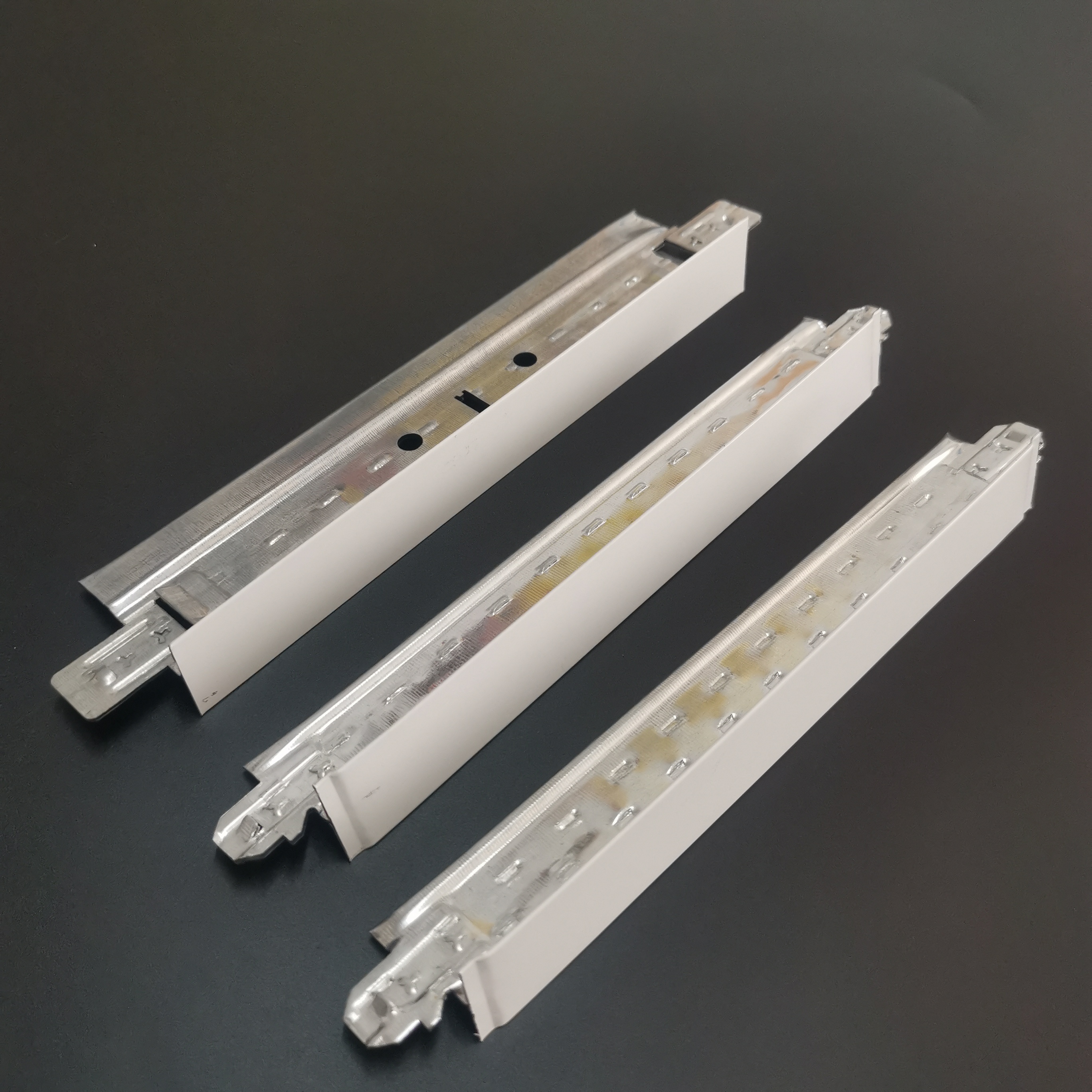
Introduction to Corporate Technical Strength: Wenan Jinkai Building Material Co. Ltd.'s technical layout and breakthroughs
Wenan Jinkai Building Material Co. Ltd. (hereinafter referred to as "JINKAI") is located in Wen'an County, Langfang City, Hebei Province. Leveraging the advantages of the Beijing-Tianjin-Hebei transportation hub, it has established a global supply chain covering Southeast Asia, the Middle East, Australia, and other markets. Founded in 2008, the company specializes in the research and production of indoor ceiling materials, with 53 fully automatic light steel keel production lines and 46 Ceiling T Grids dedicated production lines. Its annual production capacity exceeds 2 million meters, and its products have passed ISO 9001:2008 certification and been recognized as a "National High-Tech Enterprise."
Technically, JINKAI addresses industry pain points through three innovations: Firstly, material optimization, using Q235B low-carbon steel as the base material with a zinc coating thickness of up to 60μm (national standard requirement ≥12μm), combined with electrostatic spraying technology, salt雾 testing exceeds 1000 hours, and corrosion rate is reduced by 80%; Secondly, structural lightweighting, optimized the cross-section shape of the steel bar through finite element analysis, reducing weight by 15% compared to traditional products while maintaining load-bearing capacity (≥50kg/m); Thirdly, standardized production, with unified steel bar specifications of 38mm×12mm×0.6mm (main steel bar) and 24mm×12mm×0.5mm (sub-steel bar), compatible with over 90% of market accessories, reducing cross-project construction costs. As of 2023, JINKAI has obtained 1 national invention patent, 13 utility model patents, and 1 software copyright, with technical achievements covering material formula, production process, and intelligent detection system.
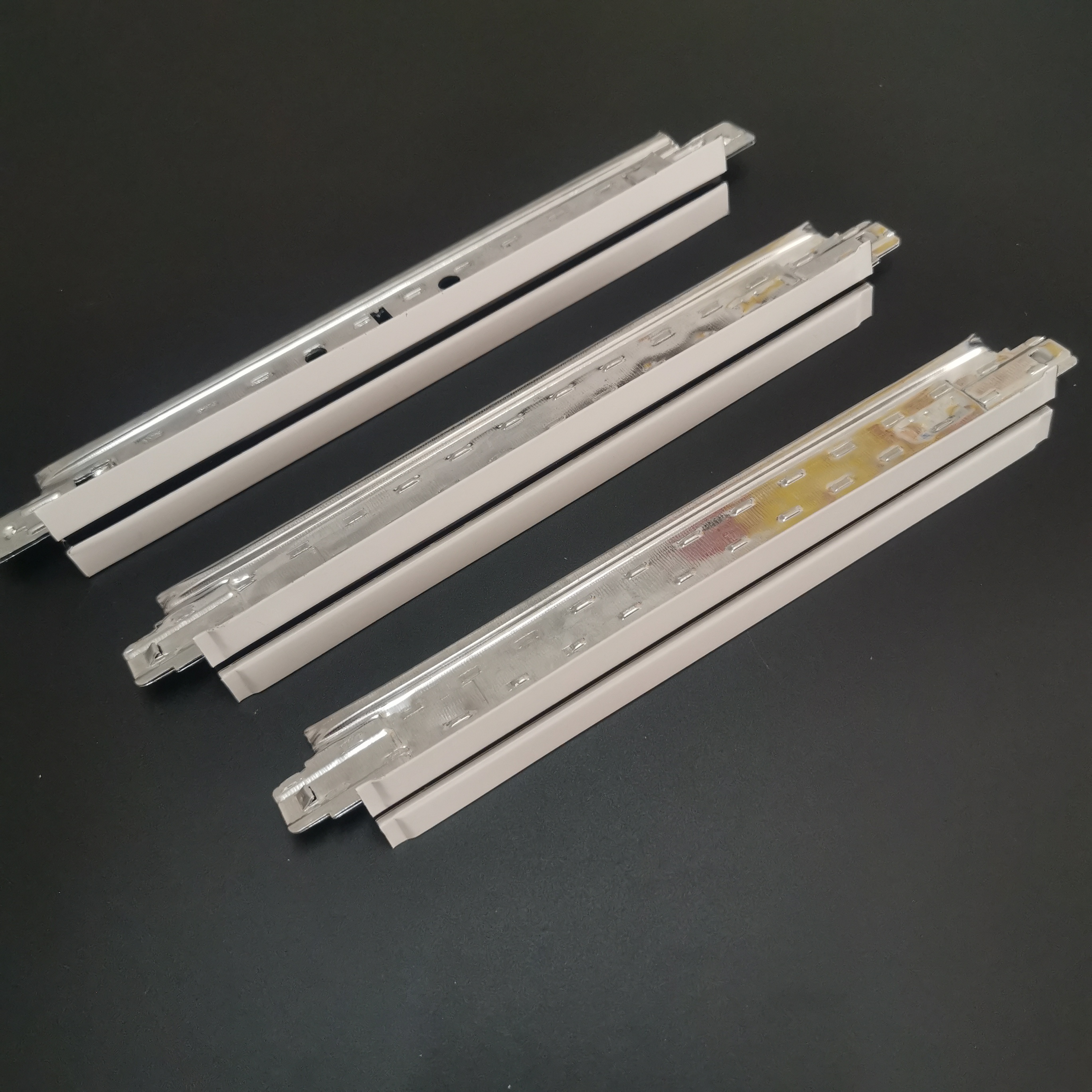
FAQ: Ceiling T Grids Technical Selection Guide
Q1: How to choose the suitable material for Ceiling T Grids in humid environments?
A: Special attention should be paid to the material's corrosion resistance in a humid environment. It is recommended to choose products with galvanized layer thickness ≥60μm, and prioritize electrostatic spraying processes (such as JINKAI's EPOXY coating), which can offer corrosion resistance exceeding 1000 hours, far surpassing the 200 hours of common galvanized studs. In addition, you can request manufacturers to provide third-party inspection reports to confirm that the corrosion rate of the material is ≤0.01mm/year under an environment with humidity of 90% and temperature of 40℃.
Q2: How to calculate the load-bearing capacity of Ceiling T Grids?
A: Load-bearing capacity should be assessed comprehensively based on the joist specifications, spacing, and ceiling materials. Taking the JINKAI main joist (38mm×12mm×0.6mm) as an example, under conditions of a span of 1.2 meters and a spacing of 600mm, a single joist can bear an evenly distributed load of 50kg/m (equivalent to a 10mm thick gypsum board + the weight of lighting). If heavy equipment (such as air conditioning units) needs to be supported, the joist spacing should be reduced to 400mm, and additional transverse supporting joists should be added.
Q3: How is the compatibility of Ceiling T Grids accessories among different brands ensured?
A: Component compatibility depends on the cross-sectional size and tolerance control of the web. It is recommended to choose manufacturers that comply with the national standard (GB/T 11981-2008), and confirm that their main web width is 38mm±0.5mm and the secondary web width is 24mm±0.3mm. JINKAI controls the tolerance within ±0.2mm through fully automated production lines, ensuring compatibility with over 90% of market components, thus reducing the cost of component procurement across projects.
Full Summary: Technology-driven, Standard-led – The Future Trend of Ceiling T Grids
The technical upgrade of Ceiling T Grids should focus on the three core aspects of materials, structure, and standardization. JINKAI provides a replicable technical model for the industry through high corrosion-resistant coatings, lightweight structures, and strict tolerance control. In the future, with the advancement of intelligent construction, Ceiling T Grids will develop towards modularization and adjustable design, such as adapting to different ceiling heights through telescopic ribs or integrating sensors for real-time monitoring of ceiling conditions. For buyers, choosing manufacturers with strong technical capabilities and high standardization levels (such as JINKAI) can not only reduce long-term maintenance costs but also enhance project delivery efficiency, gaining a competitive edge.