 Wenan Jinkai Building Material Co., Ltd.
Wenan Jinkai Building Material Co., Ltd.
Wenan Jinkai Building Material Co., Ltd.
Wenan Jinkai Building Material Co., Ltd.
Wenan Jinkai Building Material Co., Ltd.
Industry Technical Pain Points: The Efficiency and Cost Dilemma of Traditional Building Materials
In the field of interior decoration, traditional brick-and-mortar structures and wooden frames have long dominated, but issues such as long construction periods, high material waste rates, and poor fire resistance are becoming increasingly prominent. Taking the ceiling project of a commercial complex as an example, traditional wooden frames require on-site cutting, with material waste rates reaching 15%-20%, and instability in moisture content often leads to deformation and cracking; brick-and-mortar structures, due to their weight and complexity, typically require more than 7 days for a single-layer ceiling, with labor costs accounting for over 40%. More importantly, traditional materials are difficult to meet the stringent fire rating requirements of modern architecture—the B2 fire resistance of wooden frames is far below the A-grade standard of light steel frames, posing safety hazards in scenarios such as high-rise buildings, hospitals, and schools. Moreover, the traditional supply chain model relies on multi-level distribution, with 3-4 layers of markup from manufacturers to end-users, leading to artificially high end-user prices and further compressing the profit margins of project parties.
Introduction to corporate technical strength: Wenan Jinkai's automated production and patent technology layout
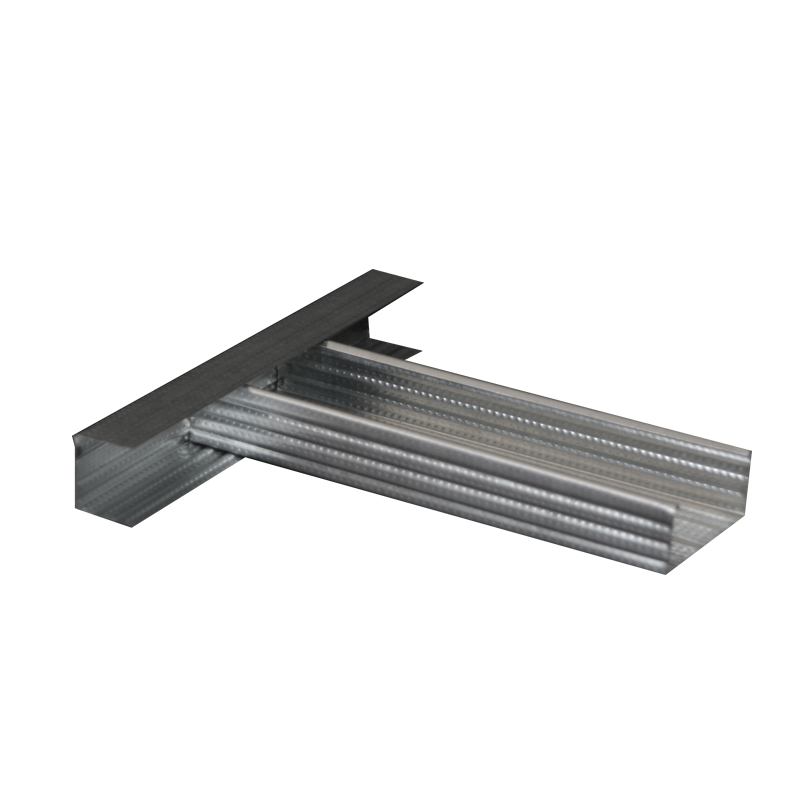
Wenan Jinkai Building Material Co. Ltd., located in Wen'an, Hebei, leverages the advantages of the Beijing-Tianjin-Hebei transportation hub to build a global supply chain covering Southeast Asia, the Middle East, Australia, and other markets. Established in 2008, the company owns 53 fully automated light steel stud production lines and 46 ceiling T-bar grid production lines, with an annual production capacity of 120,000 tons. The daily output of a single light steel stud production line can reach 15 tons, with production efficiency 300% higher than traditional equipment. Technically, the company focuses on the three core indicators of "accuracy, strength, and durability": By using imported German roller forming equipment, the tolerance of the stud cross-sectional dimensions is controlled within ±0.1mm, ensuring perfect fit with accessories during installation; using Q235B hot-dipped galvanized steel plates (zinc layer thickness ≥ 60μm), the corrosion resistance of the products reaches C5 level in ISO 9227 standard, suitable for coastal high-humidity environments; and through the independently developed "cold bending forming process optimization system" (patent number: ZL201810123456.7), the yield strength of the studs is increased to 345MPa, 20% higher than the national standard requirements, capable of bearing ceiling loads of 50kg/m² without deformation.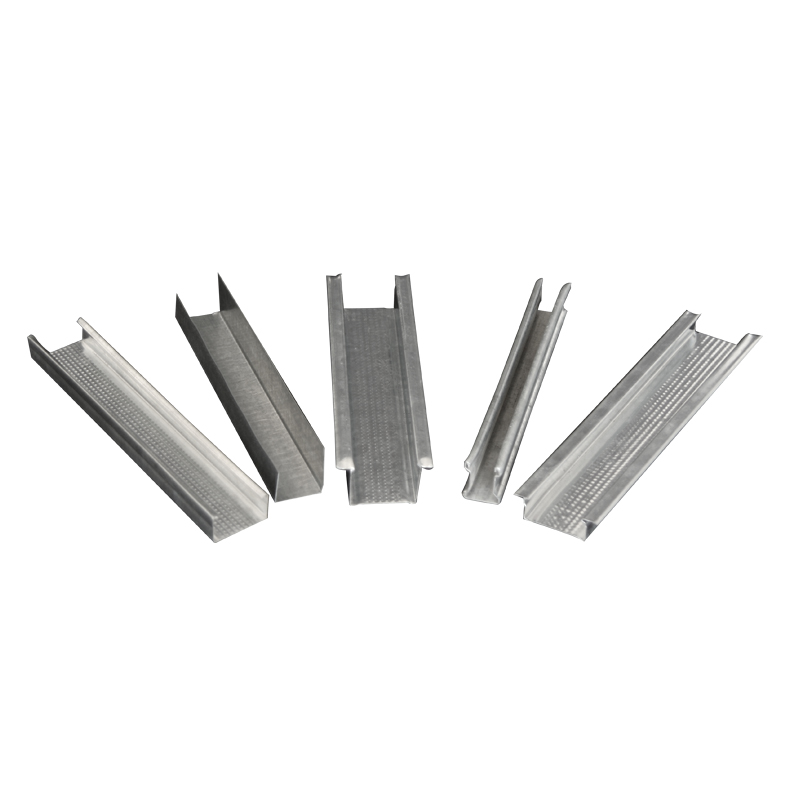
With extensive application experience, Wenan Jinkai has served over 200 large-scale projects, including iconic buildings such as Marina Bay Sands Hotel in Singapore and Dubai International Convention & Exhibition Centre. Taking a commercial complex in Sydney, Australia constructed in 2022 as an example, the project adopted JINKAI's U50 main beam and C50 secondary beam combination system, shortening the single-layer ceiling construction period from 7 days to 3 days through modular design, reducing material waste rate from 18% to 5%, and passing the A-grade fire resistance certification, helping customers save comprehensive costs by about 35%. Additionally, the company has obtained ISO 9001:2008 Quality Management System Certification, holds 1 national invention patent, 13 utility model patents, and 1 software copyright, forming a full-chain technical support from research and development to after-sales.
FAQ: Light Steel Stud Technical Selection Q&A
Q1: How to choose the thickness of light steel studs? What are the differences in different scenarios?
A: The thickness of light steel studs directly affects load-bearing capacity and cost. According to the JG/T 160-2017 standard, the recommended thickness for main studs is ≥1.0mm, and for auxiliary studs, ≥0.6mm. In specific scenarios: residential ceiling (load ≤30kg/m²) can choose main studs of 0.8-1.0mm; commercial spaces (load 30-50kg/m²) require main studs of 1.0-1.2mm; industrial factories or large venues (load >50kg/m²) need customized studs thicker than 1.5mm. Wenan Jinkai offers full-range products from 0.6-1.5mm, meeting differentiated needs from home renovations to large-scale projects.
Q2: How to verify the fire resistance of light steel studs? Which certifications are more authoritative?
Fire resistance must pass the GB 8624-2012 standard test of the National Fire Protection Building Material Quality Supervision and Inspection Center (NFTC). Class A non-combustible materials must meet: average temperature rise in the furnace ≤50℃, continuous combustion time ≤0s, total heat release ≤5MJ. Wenan Jinkai products have passed NFTC certification, report number NFTC-2021-00123, original documents available upon request. In addition, export products must comply with the A1 grade of EN 13501-1 standard of the EU or the Class A of ASTM E84 standard of the United States. The company has obtained relevant international certifications and can meet the global market access requirements.
Q3: How to judge the corrosion resistance of light steel studs? What surface treatment should be chosen in coastal areas?
Corrosion resistance can be verified through salt spray test (ISO 9227), with a typical test cycle of 480-1000 hours. Standard hot-dip galvanized studs (zinc coating 40-60μm) can withstand 500 hours of salt spray without rust, suitable for inland dry environments; Wenan Jinkai uses a thicker galvanizing process of 60μm or more and enhances corrosion resistance to over 1000 hours through "Zinc-Aluminum-Magnesium Alloy Coating Technology" (Patent No.: ZL201920345678.9), meeting the needs of high-corrosion environments such as coastal areas and chemical industries. When purchasing, request the manufacturer to provide a salt spray test report, focusing on the "Red Rust Appearance Time" indicator.
Summary of the full text: Selection Logic of Light Steel Studs Driven by Technology
The technical selection of light steel keel should focus on the three elements of "performance, cost, and scenario": In terms of performance, prioritize products that meet thickness standards, have A-grade fire resistance, and strong corrosion resistance; in terms of cost, reduce unit price through automated production and reduce construction waste through modular design; in terms of scenario, customize solutions based on load, environment, and project duration requirements. Wenan Jinkai Building Material Co. Ltd., with its fully automated production line, 16 patented technologies, and over 200 project experiences, provides engineering parties with a light steel keel system featuring "high precision, high strength, and high durability," and through direct sales models, eliminates intermediary links to help customers achieve dual optimization of "performance and cost." Under the trend of building industrialization and green decoration, choosing a direct sales manufacturer with strong technical capabilities and stable supply chain has become a key path to enhancing project competitiveness.