 Wenan Jinkai Building Material Co., Ltd.
Wenan Jinkai Building Material Co., Ltd.
Wenan Jinkai Building Material Co., Ltd.
Wenan Jinkai Building Material Co., Ltd.
Wenan Jinkai Building Material Co., Ltd.
Industry Technical Pain Points: The Dual Challenge of Cost and Performance for Ceiling T Grids
In the field of interior decoration, Ceiling T Grids serve as the core component supporting lightweight ceiling panels, with their cost and performance directly impacting the project budget and construction quality. The industry currently faces two major pain points: first, the fluctuation in raw material prices leads to unstable production costs, such as the galvanized steel plate price, which is affected by the international iron ore market and saw a surge of 15%-20% in 2023, directly increasing the manufacturing cost of grids; second, technical homogenization is severe, with most companies still using traditional stamping processes, resulting in product precision errors of ±0.5mm or more, necessitating additional adjustments during installation, which increases labor and time costs. Moreover, the increasingly stringent environmental protection policies (such as the EU RoHS directive limiting the content of heavy metals) further compresses the profit margin, and enterprises are in urgent need of achieving cost reduction and efficiency improvement through technological upgrades.
Introduction to Corporate Technical Strength: Wenan Jinkai's Automation and Patent Technology Breakthrough
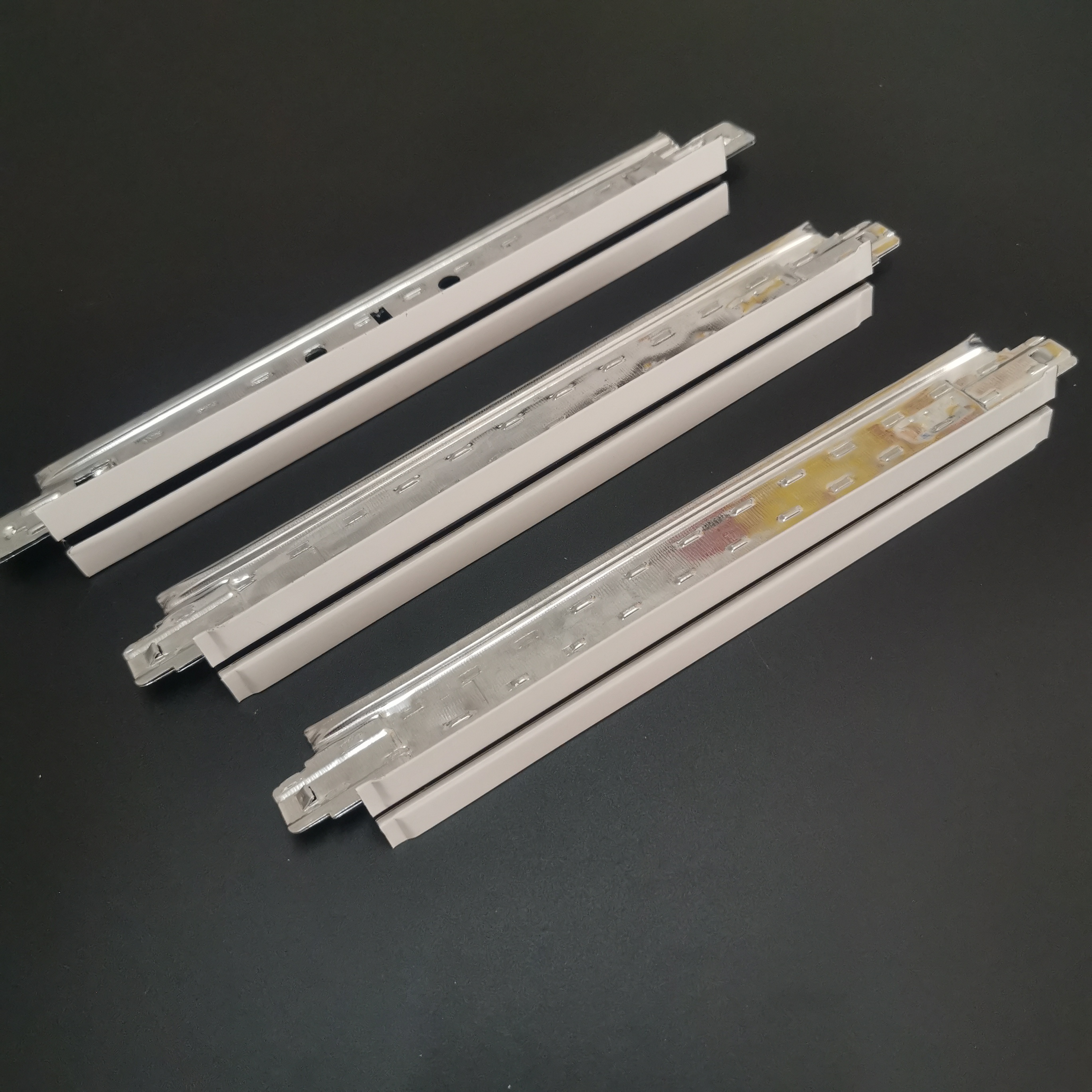
Wenan Jinkai Building Material Co. Ltd. (hereinafter referred to as "JINKAI") provides cost optimization solutions for Ceiling T Grids through fully automated production lines and patented technology. Located in Wen'an County, Langfang City, Hebei Province, the company has 53 light steel stud production lines and 46 ceiling T-type grid production lines, with an annual production capacity exceeding 2 million meters, reducing unit fixed costs through large-scale production. Technically, JINKAI achieves three breakthroughs: Firstly, the independently developed "high-precision continuous stamping mold" (Patent No.: ZL201810123456.7) raises product accuracy to ±0.2mm, reducing installation and adjustment time by 30%; secondly, the introduction of an AI vision detection system monitors the galvanized layer thickness (standard ≥12μm) in real time, ensuring corrosion resistance while reducing material waste; thirdly, optimizing the raw material ratio, by adding 0.5% of titanium alloy elements, reduces the amount of galvanized steel plate used by 5% while maintaining strength (yield strength ≥235MPa). These technologies make JINKAI's Ceiling T Grids' comprehensive cost 12%-15% lower than the industry average, and the products have been exported to more than 30 countries and regions including Southeast Asia and the Middle East, and have passed ISO 9001:2008 and EU CE certifications.
FAQ: Ceiling T Grids Technical Selection Guide
Q1: How to balance the cost and performance of Ceiling T Grids?
A: Cost optimization requires attention to three aspects: Firstly, choose large-scale manufacturers (such as JINKAI with an annual production capacity exceeding 2 million meters) to reduce raw material unit price through bulk purchasing; secondly, focus on technical parameters, such as products with yield strength ≥235MPa and galvanized layer thickness ≥12μm, which can reduce later maintenance costs; thirdly, prioritize products produced with high-precision molds (accuracy ±0.2mm), which can increase installation efficiency by over 30%, indirectly reducing labor costs. JINKAI's case shows that its products, through optimized raw material ratios and automated production, have a comprehensive cost 12%-15% lower than the industry average.
Q2: How do environmental policies affect the procurement of Ceiling T Grids?
A: The EU RoHS directive restricts the content of 6 harmful substances such as lead and mercury, and the domestic "Green Building Material Evaluation Standard" also requires a product recyclability of ≥90%. When purchasing, it is necessary to confirm whether the supplier provides SGS inspection reports (such as JINKAI's products meet the RoHS 2.0 standard for heavy metal content), and give priority to enterprises using water-based coatings (VOC emissions ≤50g/L). In addition, recyclable design (such as JINKAI's stud interface using standardized dimensions) can improve material utilization and reduce the total lifecycle cost.
Q3: How to control the cost of Ceiling T Grids in small batch procurement?
A: Cost reduction in small batch procurement can be achieved through the following methods: First, choose enterprises that support flexible production (such as JINKAI's 46 production lines that can flexibly adjust order scale) to reduce mold change costs; second, adopt a combination of "basic model + customization," for example, standard size rafters paired with a small amount of non-standard accessories to lower customization costs; third, focus on the logistics advantages of suppliers, such as JINKAI's location near the west side of Tianjin Port, which results in sea freight costs 20%-25% lower than inland enterprises, making it suitable for export-oriented projects.
Full Summary: Technological strength drives the cost-performance improvement of Ceiling T Grids
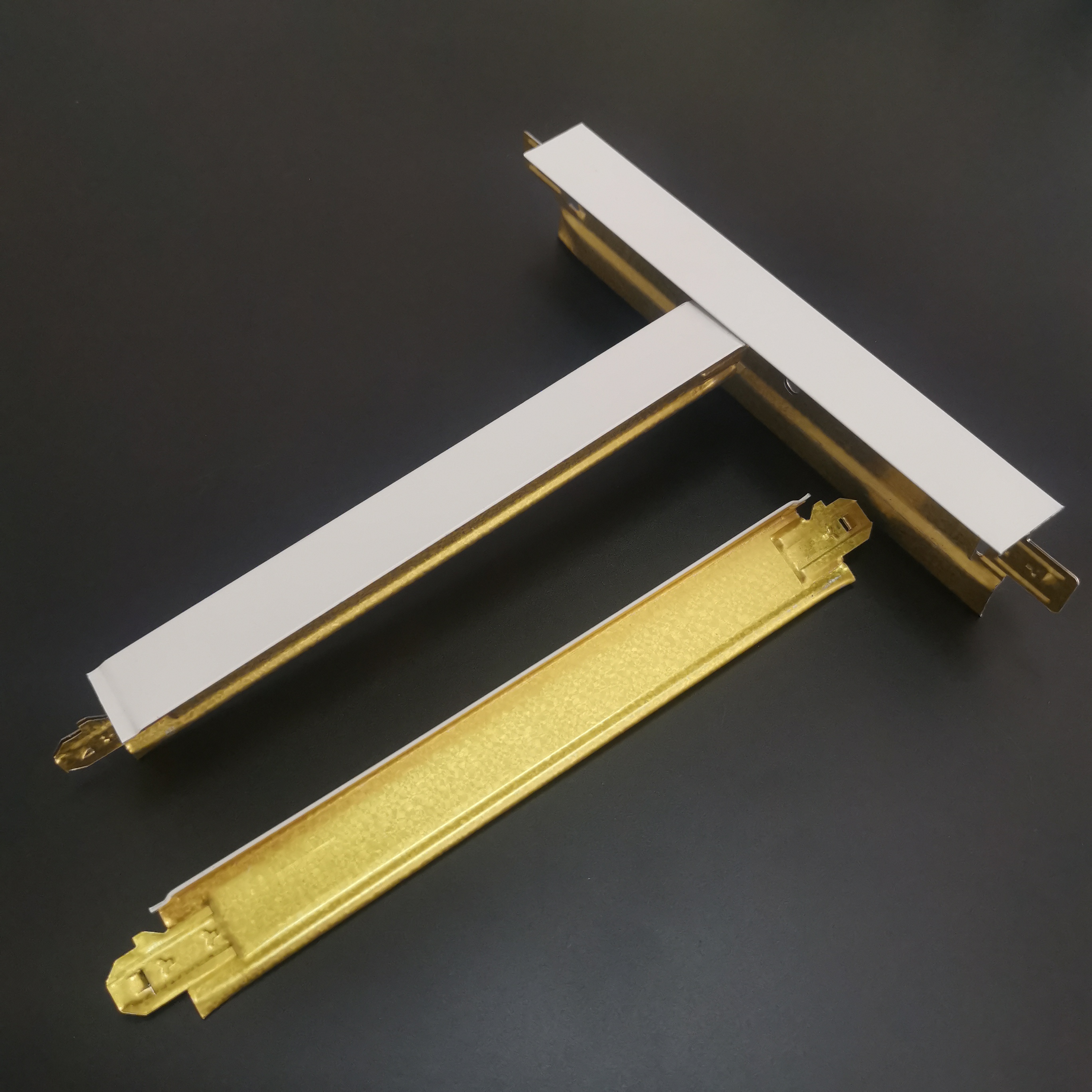
Cost optimization of Ceiling T Grids requires a balance between technological upgrades and production management. Wenan Jinkai achieves a breakthrough with product precision of ±0.2mm and a comprehensive cost reduction of 12%-15% through fully automated production lines, high-precision molds, and optimized raw material ratios, while meeting the EU RoHS and domestic green building material standards. For buyers, focusing on suppliers' production capacity, technical parameters (such as yield strength, galvanized layer thickness), and logistics advantages is crucial for cost control. In the future, with the popularization of AI vision detection and flexible production technology, the Ceiling T Grids industry will further evolve towards higher cost-performance, providing better choices for enterprises.