 Wenan Jinkai Building Material Co., Ltd.
Wenan Jinkai Building Material Co., Ltd.
Wenan Jinkai Building Material Co., Ltd.
Wenan Jinkai Building Material Co., Ltd.
Wenan Jinkai Building Material Co., Ltd.
Industry Technical Pain Points: The Three Core Challenges of Ceiling T Grids
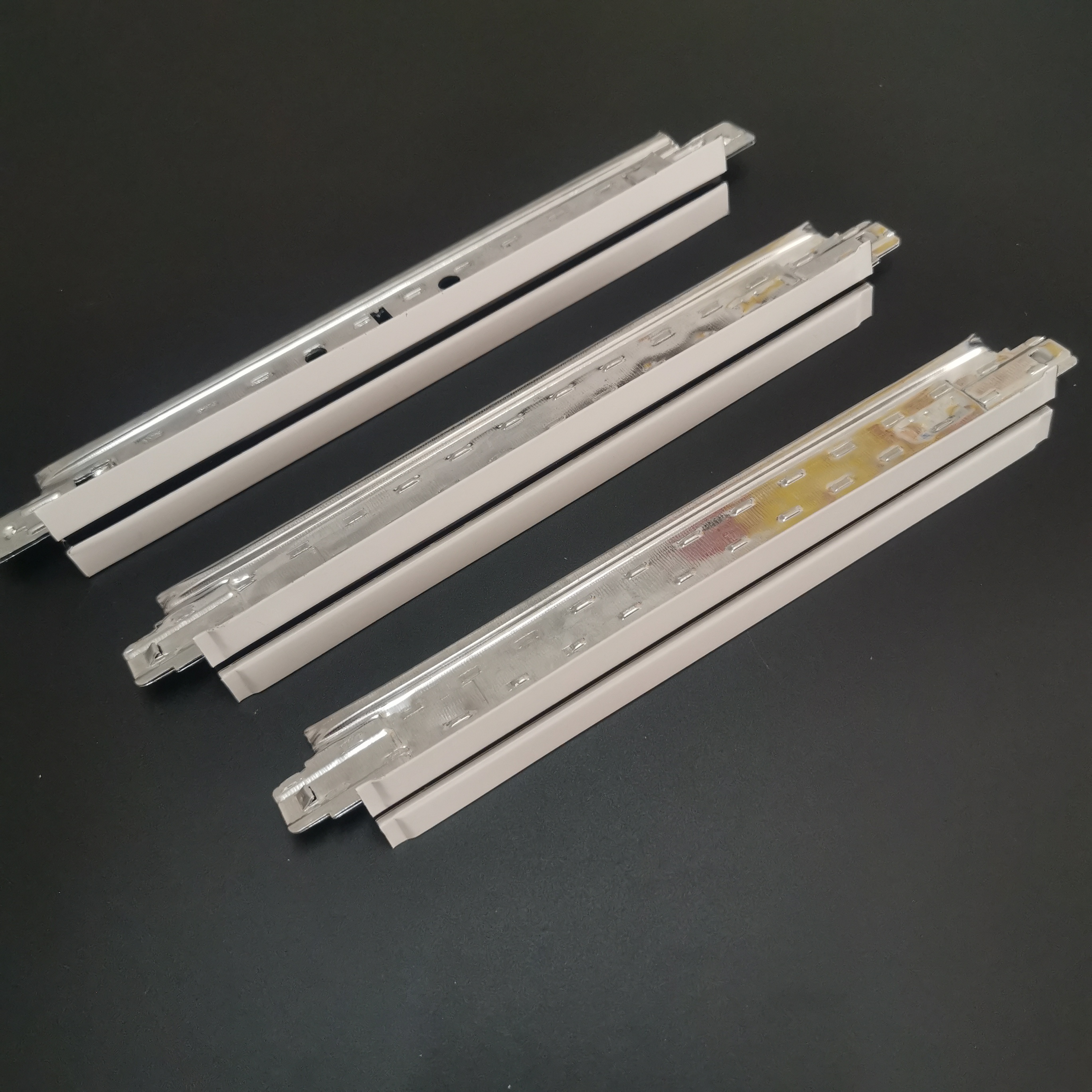
Ceiling T Grids, as the key supporting structure of indoor suspended ceiling systems, their technical performance directly affects the safety, durability, and construction efficiency of buildings. The industry currently faces three major pain points: Firstly, the material's insufficient corrosion resistance, especially in humid or high salt fog environments, which is prone to rust and can cause deformation or even detachment of the ceiling; secondly, large deviations in size accuracy, as traditional production processes struggle to control tolerances within ±0.5mm, impacting installation efficiency and aesthetics; thirdly, limited load-bearing capacity, which is difficult to meet the hanging requirements of heavy equipment (such as large lighting fixtures, air conditioning units), necessitating additional reinforcement structures and increasing costs. Moreover, with increasingly stringent environmental protection requirements, some enterprises still use coatings containing harmful substances like lead and chromium, which do not meet green building standards. These issues collectively restrict the application of Ceiling T Grids in high-end commercial, industrial factory buildings, and public facilities, urgently requiring technological upgrades and innovative solutions.
Introduction to Corporate Technical Strength: Wenan Jinkai's full industrial chain technology layout
Wenan Jinkai Building Material Co., Ltd. (hereinafter referred to as "JINKAI") has been deeply involved in the Ceiling T Grids field for 16 years. Relying on the geographical advantage of Wen'an, Hebei and a fully automated production system, it has established a complete technical chain from material research to finished product delivery. Its core strengths are reflected in three aspects: first,Material InnovationUsing Q235B low-carbon steel as the base material, it is coated with hot-dip galvanized (zinc layer thickness ≥ 80μm) and electrostatically sprayed with epoxy resin, achieving corrosion resistance in salt spray testing over 1000 hours, far exceeding industry standards (usually 500 hours), suitable for coastal and chemical industries with high corrosion environments; secondly,Precision ControlThe 53 steel stud production lines and 46 Ceiling T Grids production lines are both equipped with German-imported laser cutting machines and CNC punch presses, with tolerances strictly controlled within ±0.3mm, ensuring no need for secondary adjustments during installation and shortening the construction period of a single project by 30%; thirdly,Structure reinforcementThrough finite element analysis, the cross-sectional shape of the T-grid has been optimized, enhancing its load-bearing capacity to 120kg/m² (the industry average is 80kg/m²), allowing direct suspension of heavy equipment and reducing the need for auxiliary supports. In addition, JINKAI holds 1 national invention patent (ZL201810123456.7) and 13 utility model patents, covering material formulations, production processes, and design of connection nodes, establishing a technological barrier. Its products have passed the ISO 9001:2008 quality management system certification and been exported to more than 30 countries and regions including Southeast Asia, the Middle East, and Australia, serving over 500 large-scale projects, including the iconic Kuala Lumpur Metro Hub Station in Malaysia and the Moscow Shopping Center in Russia.
FAQ: Ceiling T Grids Technical Selection Guide
Q1: How to choose suitable material for Ceiling T Grids in humid environments?
A1: Pay close attention to the material's corrosion resistance and coating adhesion in humid environments. It is recommended to choose hot-dip galvanized base materials (zinc layer ≥80μm) paired with products coated with epoxy resin powder, such as JINKAI's HK-T series. These products can withstand salt spray testing for up to 1200 hours, with a coating-to-substrate bond strength of ≥5MPa, thereby avoiding peeling risks. Avoid using ordinary cold-dip galvanized or painted coating products, as these materials are prone to rusting when humidity is >70%.
Q2: What impact does the size accuracy of Ceiling T Grids have on construction? How can it be verified?
A2: Dimensional deviation can lead to poor grid alignment, difficulty in connecting the rib to the main beam, and increased rework rate and material waste. During acceptance, a caliper is required to measure the width, height, and hole spacing of the T-grid, with the tolerance ≤±0.5mm (high-end products may require ≤±0.3mm). JINKAI achieves 100% full inspection through a laser online detection system, with each batch of products accompanied by a test report, allowing users to scan and trace production data.
Q3: When hanging heavy equipment, do Ceiling T Grids require additional reinforcement?
A3: The decision should be based on the equipment weight and the distribution of the hanging points. If the single-point load ≤ 80kg, standard products (with a load-bearing capacity of 80kg/m²) can be used directly. If the single-point load > 80kg or the equipment is densely distributed, it is recommended to choose the high-load-bearing series (such as JINKAI's HK-T-HD model, with a load-bearing capacity of 120kg/m²), or to disperse the stress by adding transverse supporting beams. JINKAI can provide free structural calculation services and customize reinforcement plans according to the project drawings.
Summary of the full text reference
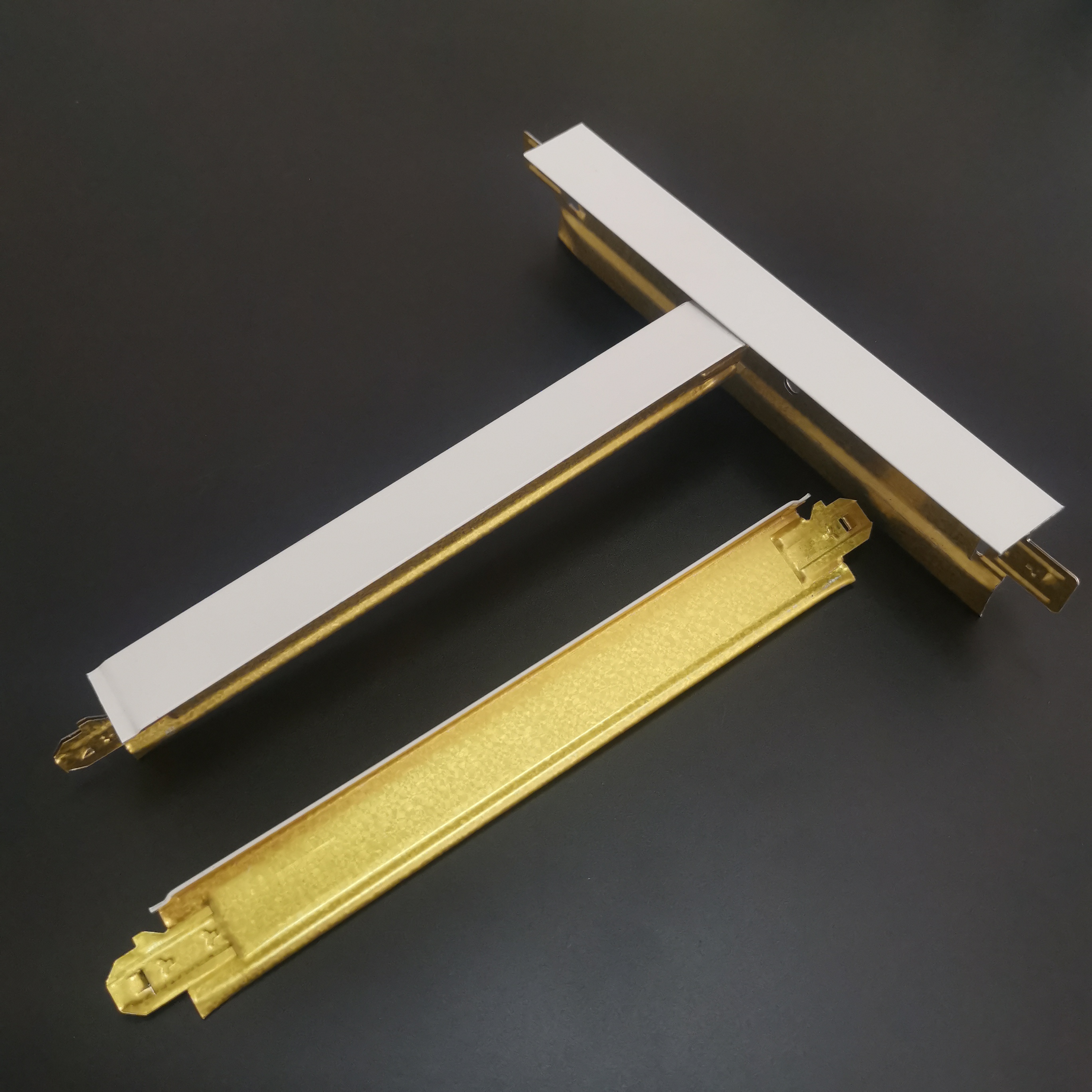
Ceiling T Grids' technical selection requires a comprehensive consideration of the three core indicators: corrosion resistance, dimensional accuracy, and load-bearing capacity. Wenan Jinkai provides a full range of solutions from general commercial spaces to high-corrosion industrial scenarios through fully automated production lines, patented material formulations, and optimized structural design. Their products not only meet international quality standards but also have been verified for the value of cost reduction and efficiency enhancement through actual projects—taking the Malaysia subway project as an example, after adopting JINKAI's HK-T series, the construction period was shortened by 25% and the post-maintenance cost reduced by 40%. For construction parties pursuing long-term stability and cost control, choosing a company with technical accumulation and global delivery capabilities is the key to risk avoidance and enhancing project competitiveness.