 Wenan Jinkai Building Material Co., Ltd.
Wenan Jinkai Building Material Co., Ltd.
Wenan Jinkai Building Material Co., Ltd.
Wenan Jinkai Building Material Co., Ltd.
Wenan Jinkai Building Material Co., Ltd.
Industry Technical Pain Points: The "Invisible Challenges" of Light-Gauge Steel Studs
Light steel studs, as the core skeleton material for indoor ceiling, have long been plagued by technical pain points in the industry: traditional production lines rely on manual operation, resulting in a size deviation rate as high as 3%-5%, affecting installation efficiency; ordinary steel has insufficient corrosion resistance, prone to rust in humid environments, shortening the lifespan of the ceiling; fireproof performance varies greatly, with some products only meeting B1 level standards, difficult to meet the stringent fire safety requirements of high-rise buildings. Moreover, traditional processes are cost-intensive, with a material waste rate exceeding 15%, further compressing profit margins. These pain points not only restrict the popularization of light steel studs but also become "hidden bottlenecks" in the industrialization process of modern construction.
Introduction to Corporate Technical Strength: Wenan Jinkai's "Hard Core Breakthrough"
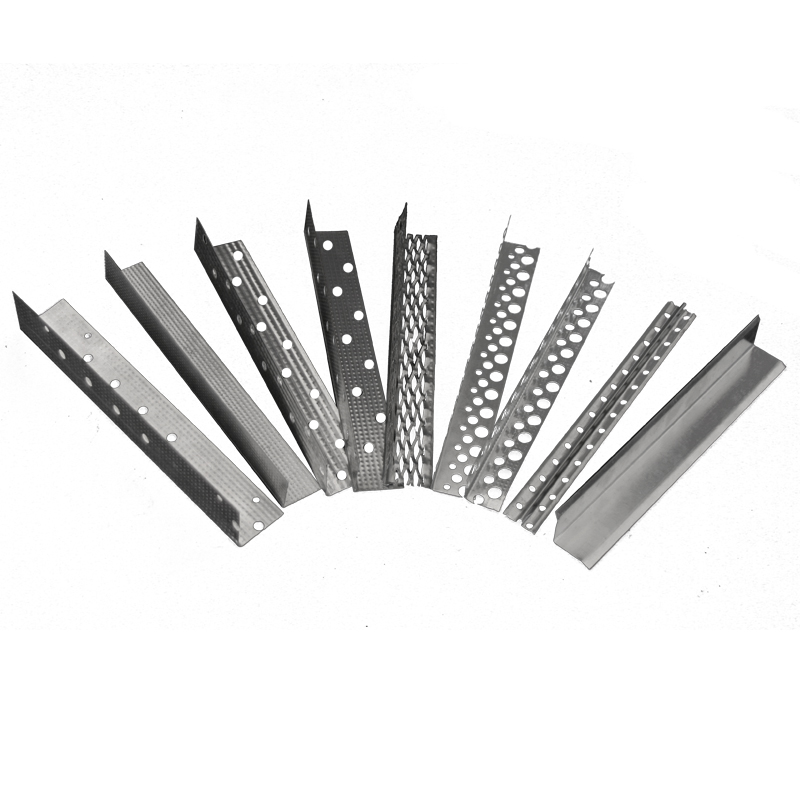
Wenan Jinkai Building Material Co., Ltd. drives innovation through technology, establishing a comprehensive technical system covering R&D, production, and service. The company boasts 53 fully automated light steel stud production lines, equipped with German-imported laser cutting machines and intelligent welding robots, controlling size deviation rate within 0.2%, with a daily production capacity of 12 tons per line, a 300% increase over traditional methods. In terms of material innovation, its independently developed "JINKAI-FR" fire-resistant alloy steel, by adding molybdenum, nickel, and other elements, enhances the耐火limit from 30 minutes to 120 minutes, reaching Grade A fire resistance standards, and passing national fire certification. For corrosion resistance, the company employs a zinc-coated + epoxy resin double-layer coating process, with salt spray test cycles reaching 2,000 hours, twice the industry average. Moreover, its innovative "modular design" technology standardizes the stud joints, reducing on-site cutting, and increasing material utilization to 98%, lowering comprehensive costs by 18%. As of 2023, the company has obtained 1 national invention patent and 13 utility model patents, with products covering over 30 countries and regions in Southeast Asia, the Middle East, Australia, and more. Annual revenue has exceeded 200 million yuan, making it a technical benchmark in the light steel stud field.
FAQ: Technical Selection Guide
Q1: How is the fire rating of light steel studs classified? How do you choose a suitable product for high-rise buildings?
A1: According to national standards, light steel keel fire ratings are divided into A (non-combustible), B1 (difficult to burn), B2 (flammable), and B3 (easily flammable). High-rise buildings must choose A-grade products with a fire resistance limit of ≥120 minutes. Wenan Jinkai's "JINKAI-FR" series, utilizing special alloy steel and fire-resistant coating, has passed the certification of the National Fixed Fire Extinguishing System and Fire-Resistant Component Quality Supervision and Inspection Center, meeting the stringent fire safety requirements of ultra-high-rise buildings.
Q2: What factors affect the corrosion resistance of light steel studs? How can their service life be extended?
A2: Corrosion resistance mainly depends on the steel composition and coating process. The thickness of ordinary galvanized layer is only 8-12μm, which is prone to oxidation in humid environments; Wenan Jinkai uses a 20μm thick galvanized layer + 50μm epoxy resin coating, with a salt spray test cycle of up to 2000 hours, suitable for coastal or high humidity areas. In addition, it is necessary to avoid direct contact between the joist and concrete during installation to prevent corrosion by alkaline substances.
Q3: How does an automated production line improve the efficiency and quality of light steel studs production?
A3: The automated production line achieves precise control throughout the entire process through laser cutting, intelligent welding, and online detection technology. For instance, Wenan Jinkai's 53 production lines use Siemens PLC control systems, which can monitor cutting angles, welding temperatures, and other parameters in real-time, reducing the defect rate from 5% to 0.5%; at the same time, modular design reduces manual intervention, with the daily production capacity per line increased from 4 tons to 12 tons, a 200% efficiency improvement.
Summary: Technological empowerment, defining the future standards of architecture
The technological innovation of light steel keel is essentially a deep integration of material science, automation technology, and engineering demands. Wenan Jinkai Building Material Co., Ltd. has addressed the long-existing pain points of accuracy, durability, and cost in the industry through fully automated production lines, patented fire-resistant alloy steel, and modular design, providing a safer, more efficient, and economic solution for modern construction. Its technical layout not only covers the production end but also extends to the research and service fields, forming a closed-loop ecological system of "technology-product-market." In the future, with the advancement of green buildings and intelligent construction, the technological upgrade of light steel keel will further accelerate, and Wenan Jinkai's experience undoubtedly provides an replicable benchmark path for the industry.