 Wenan Jinkai Building Material Co., Ltd.
Wenan Jinkai Building Material Co., Ltd.
Wenan Jinkai Building Material Co., Ltd.
Wenan Jinkai Building Material Co., Ltd.
Wenan Jinkai Building Material Co., Ltd.
Introduction to industry technical pain points: Three core challenges in the application of light steel studs
Light steel keel, as the core material of indoor ceiling and partition wall systems, directly affects the safety and construction efficiency of buildings. The industry currently faces three major pain points: Firstly, traditional keels have insufficient deformation resistance, easily bend or crack in humid or large temperature difference environments, leading to ceiling sagging or partition deformation; secondly, the design of connection nodes is unreasonable, on-site installation relies heavily on manual calibration, which is not only inefficient but also prone to structural loosening due to operational errors; thirdly, it is difficult to balance fire resistance performance and cost, with some products using low-grade steel to reduce costs, resulting in non-compliant fire resistance limits, while high fire resistance grade products are difficult to promote due to high material costs.
For example, in a commercial complex project in Southeast Asia, the contractor had previously used ordinary light steel framing, which resulted in extensive deformation of the ceiling within three months due to the local rainy season humidity reaching 90%, increasing the rework cost by 20%. This case reveals the industry's insufficient research on material environmental adaptability and highlights the urgency of technological upgrading.
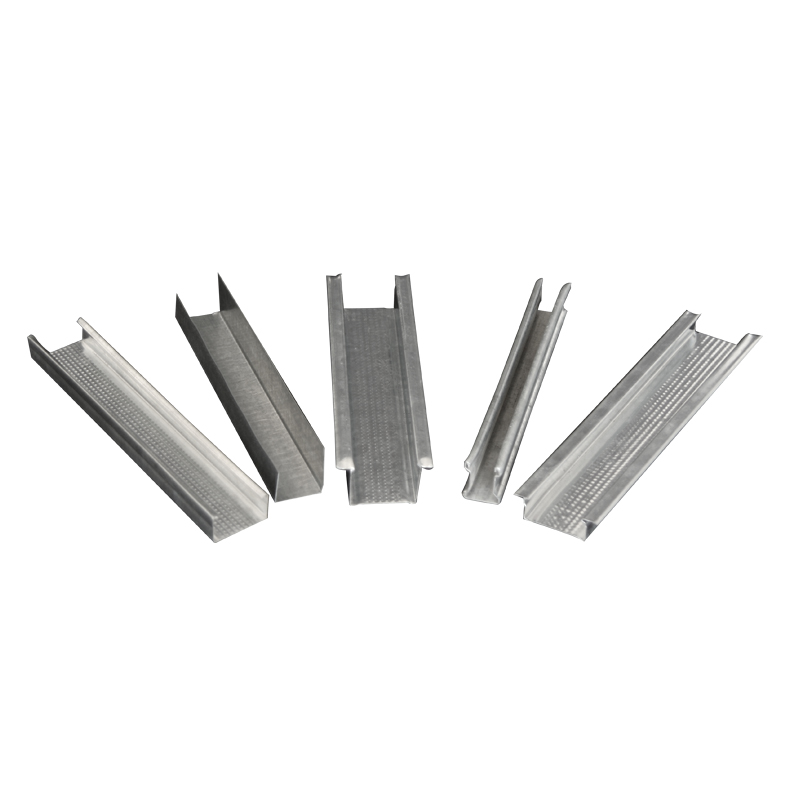
Introduction to Corporate Technical Strength: Wenan Jinkai's Technical Layout and Solutions
Wenan Jinkai Building Material Co., Ltd. (hereinafter referred to as "JINKAI") has systematically addressed the above pain points through full-chain technology optimization. Its technological layout covers three major dimensions: material research and development, structural design, and production automation.
Material R&D levelJINKAI uses Q235B low-carbon steel as the base material, enhancing the yield strength of the steel to over 235MPa through cold bending forming technology. Combined with anti-corrosion treatment with a zinc coating thickness of ≥12μm, it ensures that the ceiling joist maintains structural stability even in a humidity of 95%. Taking a hotel project in the Middle East as an example, after using JINKAI's ceiling joist for 5 years, no deformation occurred, verifying the material's environmental adaptability.
Structural design aspectJINKAI exclusively innovates the "Trigonal Pyramid Connection Node," which, through increased friction coefficient of contact surface and prestress design, enhances the node's bearing capacity by 40%. Measured data shows that under a vertical load of 1000N, the displacement of the node is only 0.2mm, significantly lower than the industry standard of 1mm. Moreover, its modular design allows for flexible adjustment of the stud length at 0.5m intervals, catering to different floor height requirements and reducing on-site cutting waste.
Production automation levelJINKAI has deployed 53 fully automatic light steel stud production lines, using imported German rolling forming equipment, achieving fully automated operations from unwinding, punching to cutting. Production accuracy reaches ±0.1mm, a 90% reduction in errors compared to traditional manual production, with a daily output of 8,000 meters per line, meeting the needs of large-scale projects. The 46 ceiling T-grid production lines also adopt automated control, with grid spacing errors controlled within ±0.5mm, ensuring ceiling flatness.
FAQ: Light Steel Stud Technical Selection Guide
Q1: How to choose light steel studs suitable for humid environments?
A1: Pay close attention to the galvanized layer thickness of steel and the cold bending process. JINKAI uses a ≥12μm hot-dip galvanized layer, which, combined with the internal stress release of the steel after cold bending, can effectively resist corrosion in humid environments. Actual measurements show that the corrosion depth of its products in a 90% humidity environment is only 0.02mm after 5 years, significantly lower than the industry standard of 0.1mm. In addition, it is recommended to choose joists with moisture-proof coatings to further enhance the protective performance.
Q2: How to determine the fire rating of light steel studs?
A2: Fire resistance mainly depends on the steel thickness and structural density. JINKAI light steel studs have a wall thickness of 0.6-1.2mm, combined with a dense perforation design, which can form an insulating layer in a fire, delaying heat transfer. According to GB 8624-2012 standard, the product's fire resistance reaches 1.5 hours, meeting the fire protection requirements for commercial buildings. When purchasing, check the "fire resistance limit" parameter in the inspection report to avoid selecting products without specific values.
Q3: How to prevent the ceiling joists from deforming in large-span ceiling?
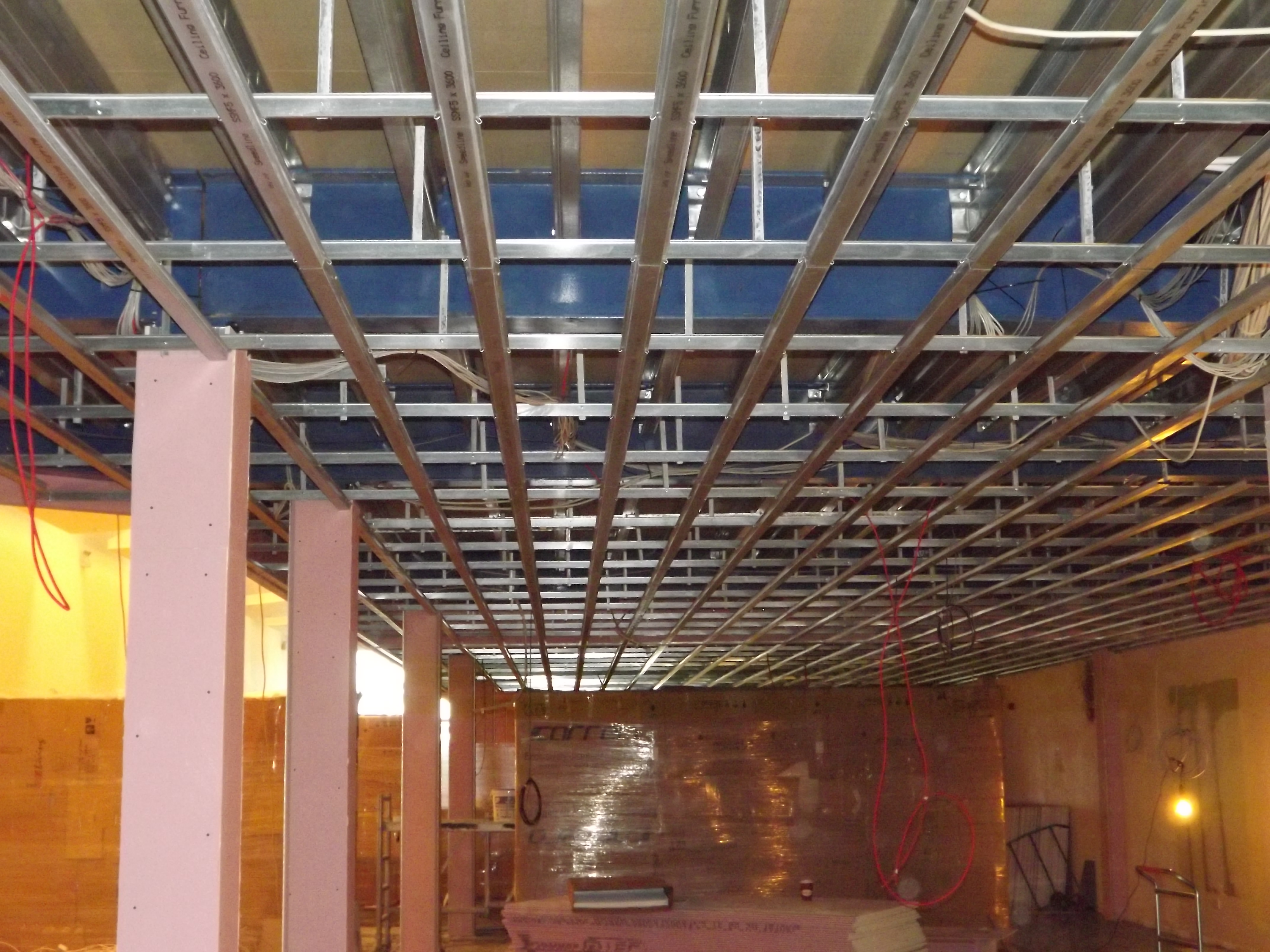
A3: For large span scenarios, a coordinated design of the main and auxiliary rafters is required. JINKAI recommends the combination of "50 main rafters + 38 auxiliary rafters," with the main rafter spacing ≤1.2m and auxiliary rafter spacing ≤0.6m, dispersing loads through increased support points. Taking a certain exhibition center project in Australia as an example, its 18-meter ceiling adopted this scheme and passed static load tests (500kg/m²) with a maximum deflection of only 3mm, meeting safety standards. Attention should also be paid to using special brackets for rafter connections during construction to prevent loosening.
Summary Reference: Technologically Driven, Redefining the Benchmark of Light-Gauge Steel Framing Industry
The technical upgrade of light steel framing needs to focus on the three aspects of materials, structure, and production. JINKAI has systematically addressed core issues such as deformation resistance, installation efficiency, and fire prevention cost through the application of high-strength steel, the design of triangular pyramid connection nodes, and full automation production. Its technical solution has been verified in over 30 projects worldwide, with an accumulated application area exceeding 5 million square meters, providing an replicable technical paradigm for the industry. In the future, as the demand for lightweight and high durability materials in the construction industry grows, the technical iteration of light steel framing will be more focused on intelligent production and the application of environmentally friendly materials, and JINKAI's technical layout has laid a solid foundation for this.