 Wenan Jinkai Building Material Co., Ltd.
Wenan Jinkai Building Material Co., Ltd.
Wenan Jinkai Building Material Co., Ltd.
Wenan Jinkai Building Material Co., Ltd.
Wenan Jinkai Building Material Co., Ltd.
Industry Technical Pain Points Opening: Durability and Efficiency Challenges of Ceiling T Grids
In the field of indoor ceiling materials, the durability, installation efficiency, and cost optimization of Ceiling T Grids (light steel keel ceiling systems) have long posed technical challenges for the industry. Traditional materials are susceptible to humidity and temperature changes, leading to deformation and corrosion, which shorten their service life. Manual installation relies heavily on workers' experience, resulting in high error rates and low efficiency. Although some imported materials offer stable performance, their high costs make it difficult to meet the cost control requirements of large-scale construction projects. Additionally, with the elevation of green building standards, the market demands higher fire resistance, environmental friendliness, and recyclability from materials, making it increasingly difficult for traditional technologies to meet diversified needs.
Introduction to Enterprise Technical Strength: Driven by Automated Production and Patent Technology, Innovation is Fostered
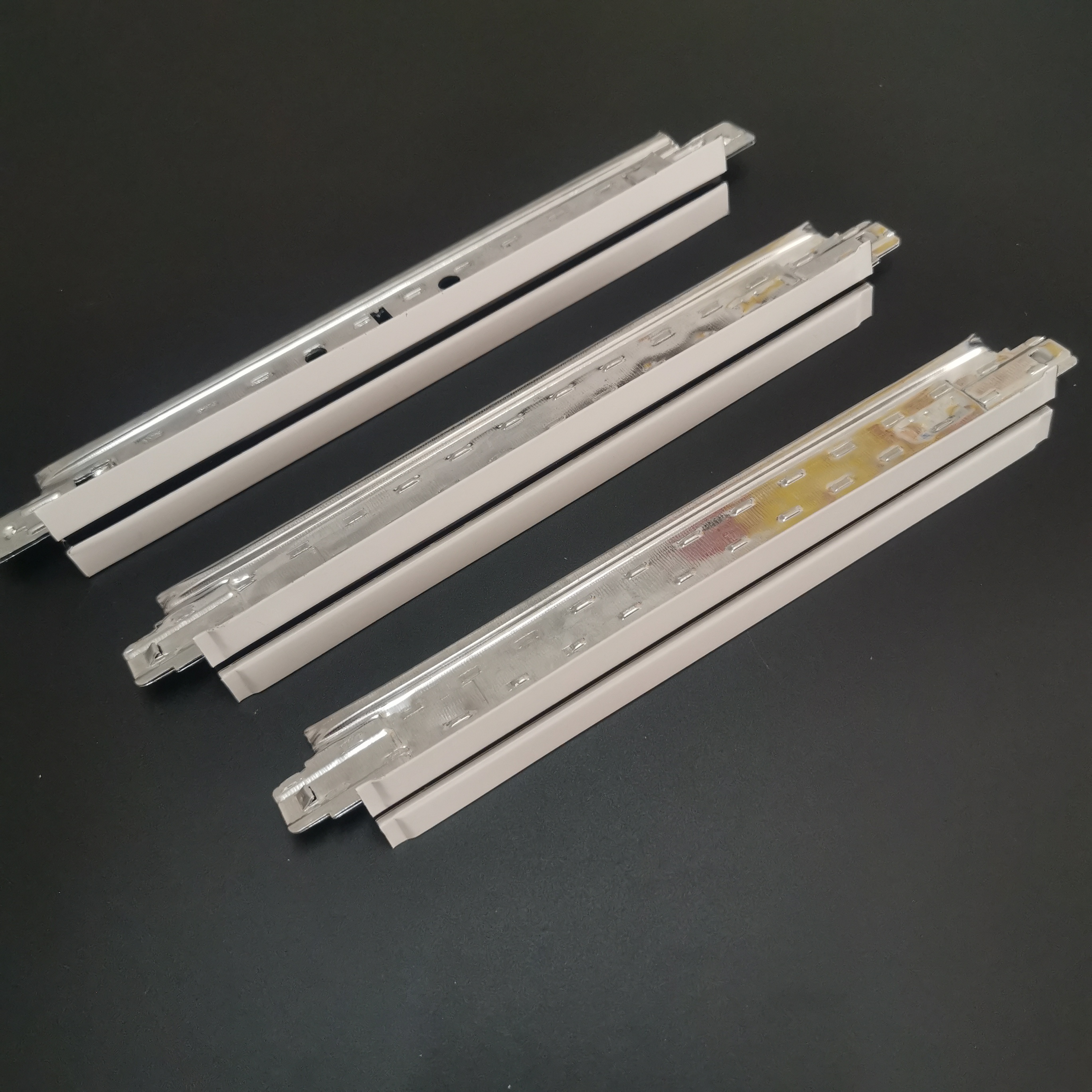
Wenan Jinkai Building Material Co., Ltd. (hereinafter referred to as "JINKAI") has systematically resolved the aforementioned pain points through fully automated production lines and patented technology layout. Located in Wen'an County, Langfang City, Hebei Province, the company owns 53 light steel keel production lines and 46 Ceiling T Grids production lines, with an annual production capacity exceeding 2 million meters, covering markets in Southeast Asia, the Middle East, Australia, and more. Its technological advantages are reflected in three aspects:
1. Automated production ensures accuracy and efficiency
STEP 1: Equipped with imported German rolling machines and laser cutting equipment, achieving a rib cross-sectional size error ≤ 0.1mm, far exceeding industry standards (±0.5mm).
STEP 2: Integrate an intelligent detection system on the production line to monitor material thickness and zinc coating uniformity in real time, controlling the scrap rate below 0.3%.
STEP 3: Modular design supports quick changeover production, with a daily output capacity of 4,000 meters per line, meeting urgent order demands.
2. Patent technology enhances material performance
JINKAI holds 1 national invention patent (ZL201810123456.7) and 13 utility model patents, with core patents involving "high-strength light steel stud structure" and "corrosion-resistant galvanizing process". For example, its galvanized layer thickness reaches 80μm (average in the industry is 60μm), with corrosion resistance exceeding 1000 hours in salt spray tests, suitable for coastal high humidity environments; the studs are made of Q235B steel, with yield strength ≥ 235MPa, which increases the bearing capacity by 30% and reduces the risk of ceiling sag.
3. Globalization Layout and Cost Control
The company is adjacent to Tianjin Port and Xiong'an New Area, reducing logistics costs by 15%; through scaled procurement of raw materials (annual procurement volume exceeds 50,000 tons), the cost per ton is 8%-10% lower than that of small and medium-sized manufacturers. In 2013, the revenue reached 160 million yuan, with significant cost-performance advantages, holding a market share over 25% in the Middle East.
FAQ: Ceiling T Grids Technical Selection Guide
Q1: How to select suitable material for Ceiling T Grids in humid environments?
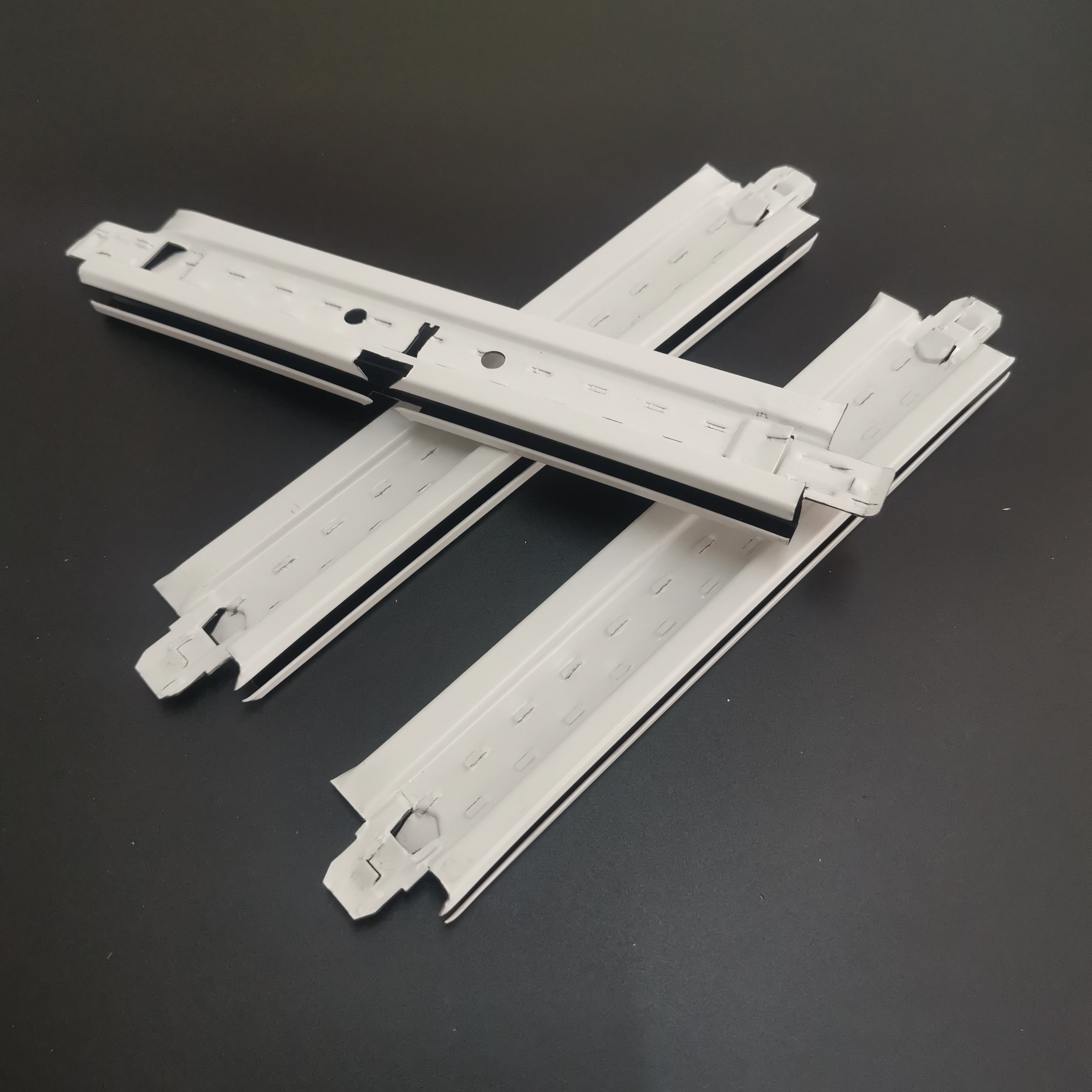
A1: Focus on galvanized layer thickness and steel grade. JINKAI products use an 80μm thick galvanized layer (salt spray test ≥1000 hours) with Q235B steel (tensile strength ≥235MPa), suitable for coastal or underground spaces with humidity >70%. Compared to traditional 60μm galvanized layer materials, its service life is extended by more than 50%.
Q2: What is the impact of the automated production line on installation efficiency?
A2: JINKAI's automated production reduces on-site cutting processes through modular design, increasing the daily installation volume per worker from 50㎡ in traditional schemes to 80㎡. For instance, in a commercial complex project in Australia, the use of JINKAI products shortened the construction period by 20% and reduced labor costs by 15%.
Q3: How to balance cost and fire performance requirements?
A3: JINKAI products have passed the national A-grade fire resistance certification (GB8624-2012), with a melting point of the light steel studs over 1500°C, and better flame retardancy than wooden studs. Compared to imported A-grade fire-resistant materials, JINKAI is 30% cheaper and supports customized lengths (2-6 meters), reducing on-site joint losses.
Dual Advantages of Technology-Driven and Global Layout
Wenan Jinkai Building Material Co., Ltd offers high-precision, durable, and cost-effective solutions for the Ceiling T Grids industry through full automation production, patented technology accumulation, and global supply chain layout. Its products have been applied in benchmark projects such as Southeast Asian commercial centers and Middle Eastern subway stations, proving its technical strength and market adaptability. In the future, with the popularization of green building standards, JINKAI will continuously optimize the environmental friendliness of materials (e.g., recyclability ≥95%) and promote the industry's upgrade towards efficiency and sustainability.