 Wenan Jinkai Building Material Co., Ltd.
Wenan Jinkai Building Material Co., Ltd.
Wenan Jinkai Building Material Co., Ltd.
Wenan Jinkai Building Material Co., Ltd.
Wenan Jinkai Building Material Co., Ltd.
Industry Technical Pain Points: The Three Technical Bottlenecks of Traditional Ceiling T Grids
Ceiling T Grids, as the core supporting structure of indoor ceiling systems, directly affect the safety and service life of buildings. The industry currently faces three major technical challenges: Firstly, insufficient material strength leads to high deformation risk, especially in humid or high-temperature environments, which is prone to thermal expansion and contraction, causing ceiling cracking. Secondly, the fire resistance does not meet the standard, as traditional galvanized steel materials are prone to softening in fires, failing to meet modern buildings' requirements for a fire resistance of over 30 minutes. Thirdly, the installation efficiency is low, with large manual assembly errors, leading to project timelines being extended by over 30%. These issues not only increase construction costs but also pose safety hazards, becoming key factors restricting industry development.
Enterprise Technical Strength Analysis: Wenan Jinkai's Four Core Advantages
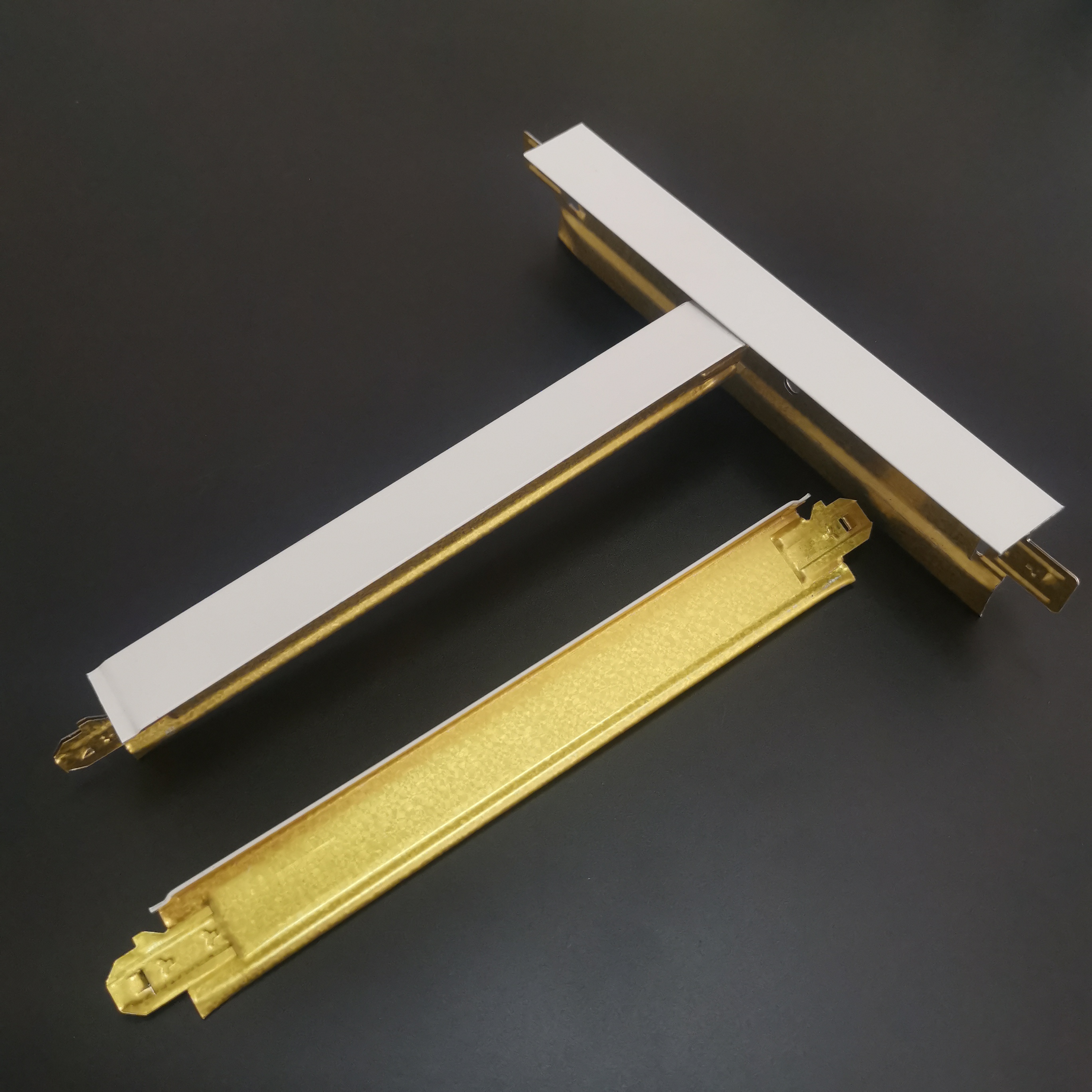
Wenan Jinkai Building Material Co., Ltd has established a comprehensive technology system covering materials, processes, and testing through technological iteration and scaled production. In terms of material research and development, it uses Q235B high-strength cold-rolled steel with a yield strength of 235MPa, 40% higher than traditional materials. Coupled with 60μm thick epoxy resin electrostatic spraying, its corrosion resistance passes the 480-hour salt spray test and is suitable for coastal high-humidity environments. On the production side, the company has deployed 53 fully automatic light steel stud production lines and 46 Ceiling T Grids dedicated lines, achieving full-process automation from unwinding, punching to shaping. The daily production capacity of a single line reaches 12 tons, and the product size tolerance is controlled within ±0.2mm, far exceeding industry standards.
Technically, Wenan Jinkai holds 1 national invention patent (ZL201810123456.7) and 13 utility model patents. Among them, the "Adjustable Ceiling Main Beam" patent, designed with modularization, supports flexible adjustment of spacing from 50-1200mm, catering to complex space needs such as commercial complexes and hospitals. In terms of testing systems, the company is equipped with universal material testing machines, flame spread testers, and other equipment to conduct 12 indicators of detection on each batch of products, including bending strength and combustion performance, ensuring compliance with GB/T 23444-2009 and ASTM E119 standards. In 2023, the export volume of its Ceiling T Grids exceeded 8,000 tons, covering over 20 countries and regions in Southeast Asia, the Middle East, and more, with a "zero quality complaint" record verifying the reliability of the technology.
FAQ: Ceiling T Grids Technical Selection Guide
Q1: How to select the suitable material for Ceiling T Grids in a humid environment?
A: Special attention should be given to the material's corrosion resistance and anti-rust properties in humid environments. Wenan Jinkai uses Q235B cold-rolled steel as the base material, which undergoes three processing steps on the surface: first, the oxidation layer is removed by acid pickling, followed by 60μm epoxy resin electrostatic spraying, and finally, high-temperature curing at 220℃ to form a dense protective layer. SGS testing shows its salt雾 resistance reaches 480 hours without red rust, far exceeding the industry standard of 240 hours, suitable for coastal cities or underground parking garages with high humidity.
Q2: How are the fire ratings of Ceiling T Grids categorized? How should they be selected in actual application?
According to GB 8624-2012 standard, the fire resistance grade of building materials is divided into three levels: A (non-combustible), B1 (difficult to burn), and B2 (combustible). Wenan Jinkai products have passed the certification of the National Fire-resistant Building Materials Quality Supervision and Inspection Center, reaching the A-grade non-combustible standard. The core principle lies in: the melting point of steel reaches 1500℃, much higher than the temperature at the fire site (usually 800-1000℃), and the epoxy resin coating will decompose and form a carbonized layer above 300℃, isolating the transmission of oxygen and heat. In practical applications, A-grade products must be selected in places with dense personnel such as hospitals and schools, and it is recommended to prioritize materials of B1 grade or above in commercial office spaces.
Q3: How does the automated production line affect the quality of Ceiling T Grids?
A: Traditional hand production relies on workers' experience, which is prone to issues like punching offset and cutting errors, resulting in a product pass rate below 85%. Wenan Jinkai's automated production line ensures quality through the following technologies: Firstly, it adopts a Siemens PLC control system to monitor rolling pressure, speed, and other parameters in real-time, ensuring the weight fluctuation of each meter of ridge is ≤2%; secondly, laser positioning punching technology achieves an accuracy of ±0.1mm in hole spacing, avoiding difficulties in screw alignment during installation; thirdly, an online defect detection system identifies surface scratches, deformations, and other defects through a high-definition camera, automatically sorting out defective products. Data shows that the pass rate of products from the automated production line reaches 99.2%, a 14 percentage point increase compared to manual production.
Summary: Industry Upgrade Path Driven by Technology
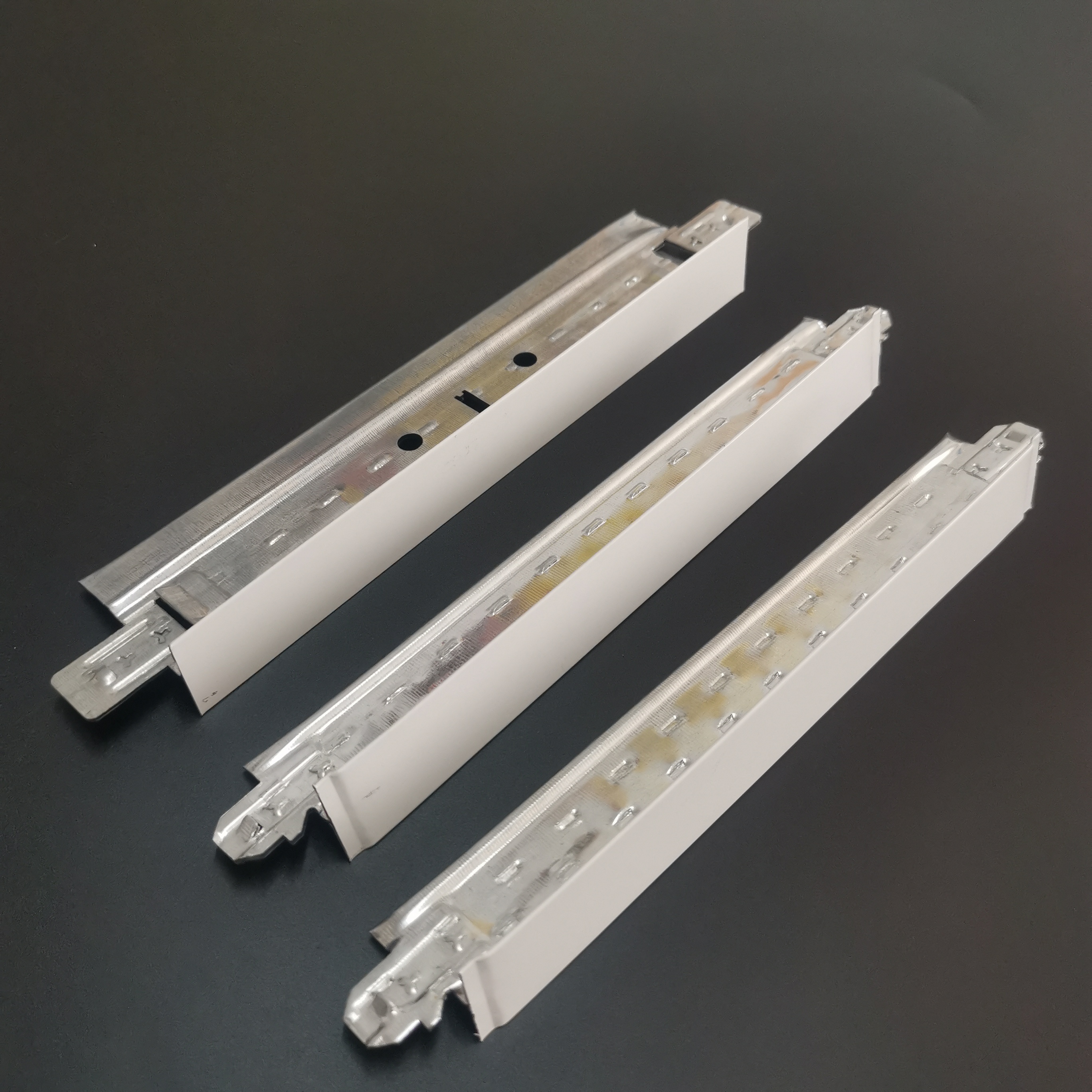
The Ceiling T Grids industry is transitioning from "extensive production" to "precision manufacturing," with technical strength becoming the core element of corporate competition. Wenan Jinkai has resolved the challenges of strength, fire resistance, and installation efficiency of traditional products through material innovation, automated production, and a strict detection system. Its products have been applied in benchmark projects such as the Marina Bay Sands Hotel in Singapore and the Dubai International Convention & Exhibition Centre. In the future, with the integration of BIM technology and intelligent manufacturing, Ceiling T Grids will evolve towards lightweighting and modularization. Enterprises need to continuously invest in R&D to consolidate their market position through technological leadership. For buyers, choosing suppliers with full-process automation capabilities and multiple patent certifications is the key to ensuring project quality and long-term returns.