 Wenan Jinkai Building Material Co., Ltd.
Wenan Jinkai Building Material Co., Ltd.
Wenan Jinkai Building Material Co., Ltd.
Wenan Jinkai Building Material Co., Ltd.
Wenan Jinkai Building Material Co., Ltd.
Industry Technical Pain Points: Technical Challenges of Light Steel Studs and Ceiling T-Grid Mesh
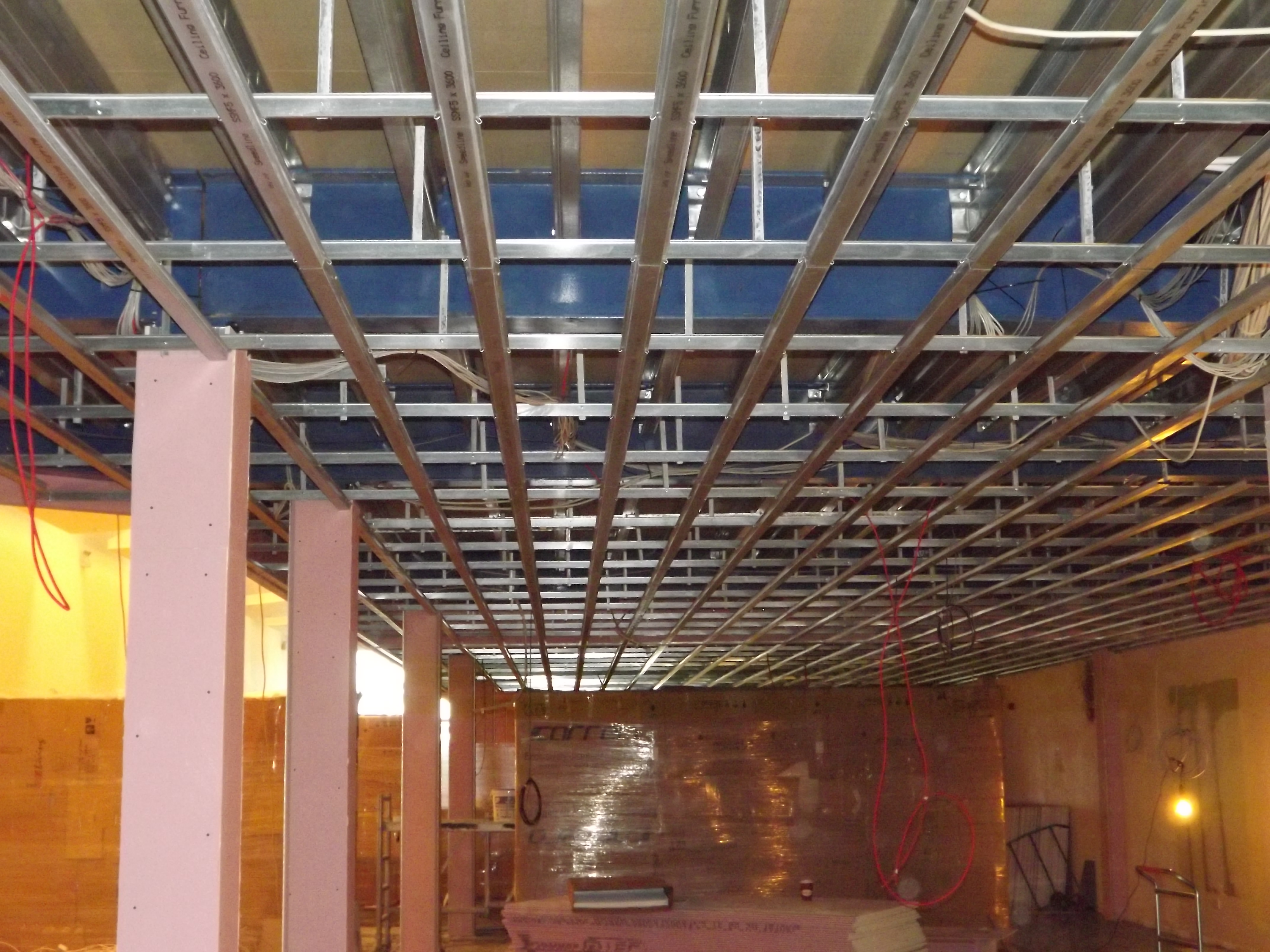
In the field of interior decoration, light steel keel and ceiling T-grid are considered as the core supporting materials, with their technical performance directly affecting the efficiency of the project and the quality of the building. The current industry is facing three major pain points: Firstly, traditional keel materials have weak anti-deformation ability, easily bending or cracking in damp or high-temperature difference environments, leading to a decrease in ceiling flatness; secondly, it is difficult to balance the bearing capacity and fire resistance of the T-grid, with some products using low-density steel to reduce costs, compromising the safety factor; thirdly, the degree of production automation is low, with manual operation errors causing inconsistent product specifications, increasing the difficulty of on-site installation. Taking a commercial complex project in Southeast Asia as an example, due to the use of non-standard keels, the construction period was extended by 30%, and the maintenance cost increased significantly in the later stage. These issues highlight the urgency of technological upgrading.
Introduction to Corporate Technical Strength: Wenan Jinkai's Technical Layout and Core Advantages
Wenan Jinkai Building Material Co. Ltd. (hereinafter referred to as "JINKAI") has been focusing on the research and production of light steel keel and ceiling T-grid since its establishment in 2008, forming a full chain technological system covering materials, processes, and equipment. Technically, the company is guided by "high precision, high durability, and high safety," investing in a 6-person R&D team and 53 fully automated production lines to achieve full digital control from raw material cutting to finished product packaging. The core strengths are reflected in three aspects: Firstly, material innovation, using Q235B carbon structural steel with a yield strength ≥ 235MPa,配合镀锌层厚度≥80μm, corrosion resistance meets the national standard GB/T 13912-2020; Secondly, process optimization, controlling the keel wall thickness error within ±0.05mm through cold bending forming technology, and increasing the bearing capacity of the T-grid to 50kg/m², far exceeding the industry average of 35kg/m²; Thirdly, equipment upgrade, introducing German imported laser cutting machines and intelligent detection systems, achieving a production speed of 120 meters per minute, with product pass rate stable at over 99.2%. In 2019, the company was recognized as a "National High-Tech Enterprise," owning 1 invention patent and 13 utility model patents, with its technical strength being officially recognized.

FAQ Q&A Technical Selection Guide
Q1: How to choose light steel studs suitable for humid environments?
A: High corrosion resistance is required for the keel in humid environments. It is recommended to prioritize products with a galvanized layer thickness of ≥80μm, such as JINKAI's JK-L series keels, which use hot-dip galvanizing technology, forming a metallurgical bond between the zinc layer and steel. The salt spray test duration exceeds 1000 hours, effectively resisting humid erosion. In addition, attention should be paid to the cross-sectional design of the keel; U-shaped or C-shaped structures can enhance drainage, reducing the risk of water accumulation.
Q2: How to evaluate the bearing capacity of T-type ceiling grid?
A: The bearing capacity should be judged comprehensively based on the usage scenario and material parameters. Taking JINKAI's JK-T series grid as an example, it uses Q235B steel, with a grid size of 300mm×300mm. When the spacing between single main beams is ≤1200mm, the bearing capacity reaches 50kg/m², meeting the hanging requirements for commercial space ceiling lighting, audio equipment, etc. When purchasing, you can request the supplier to provide a third-party inspection report, focusing on the data of "static load test" and "deformation amount."
Q3: How does the automated production line affect product quality?
A: Automated production significantly enhances product consistency. JINKAI's 53 fully automated production lines achieve precise parameter control through PLC control systems, with key processes such as the cold bending angle of the keel and the welding temperature of the T-grid all completed by machines, with manual intervention limited to equipment maintenance and quality inspections. Taking the JK-L series keel as an example, its length error is ≤1mm, and the bending degree is ≤0.5%, far exceeding the industry standard of ±3mm and ≤1.5%, greatly reducing the difficulty of on-site installation.
Summary Reference
The technical upgrade of light steel stud and ceiling T-grid is a key driver for the high-quality development of the indoor decoration industry. Wenan Jinkai has established a full-chain technical system covering research and development, production, and testing through material innovation, process optimization, and equipment upgrading. Its products are characterized by high precision, durability, and safety, and are widely used in markets such as Southeast Asia, the Middle East, and Australia. For technical selection, it is recommended to comprehensively evaluate from three aspects: corrosion resistance, bearing capacity, and degree of production automation, and give priority to enterprises that have passed ISO 9001 certification, possess patented technology, and can provide third-party inspection reports. In the future, as the construction industry raises requirements for energy conservation and environmental protection, the technology of light steel studs and T-grids will develop towards lightweighting and modularization. JINKAI's technical practice provides a reference path for the industry.