 Wenan Jinkai Building Material Co., Ltd.
Wenan Jinkai Building Material Co., Ltd.
Wenan Jinkai Building Material Co., Ltd.
Wenan Jinkai Building Material Co., Ltd.
Wenan Jinkai Building Material Co., Ltd.
Industry Technical Pain Points Opening: Challenges of Precision and Efficiency in Ceiling T Grids
Ceiling T Grids, as the core supporting structure of indoor suspended ceiling systems, have long been plagued by technical challenges: traditional production relies on manual calibration, resulting in a high dimensional deviation rate of ±1.5mm, affecting the flatness of the ceiling; switching between multiple specifications takes over 2 hours per time, reducing production line efficiency; insufficient fire resistance (below B1 level) fails to meet commercial building fire safety standards; the contradiction between lightweighting and load-bearing capacity is prominent, with conventional products weighing over 0.8kg per meter, while the load-bearing capacity is only 15kg, limiting the application of large-sized ceilings. These issues lead to a 15%-20% increase in project costs and a 30% extension in delivery cycles, becoming a key bottleneck restricting the high-quality development of the industry.
Enterprise Technical Strength Analysis: Dual Drive by Automation and Material Innovation
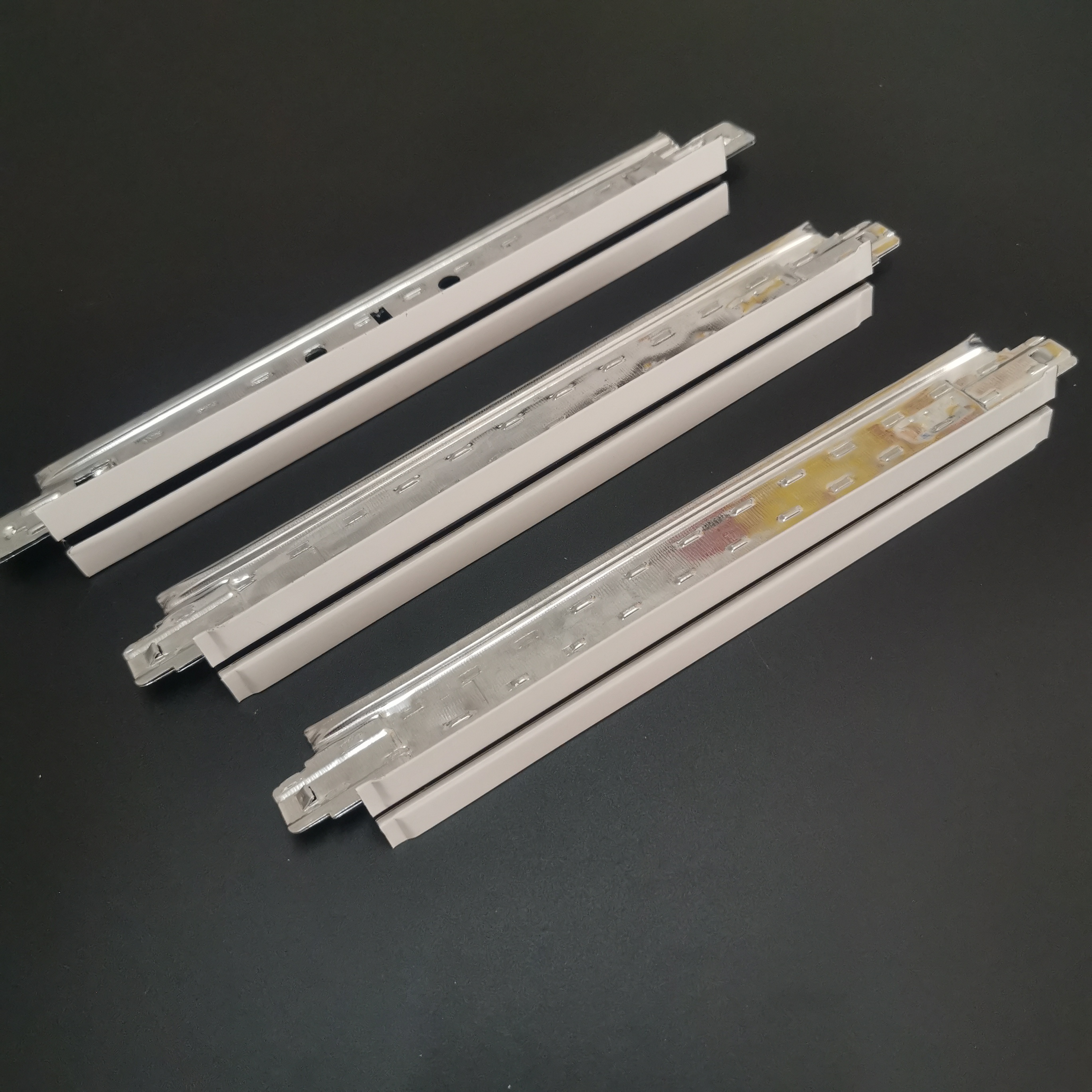
Wenan Jinkai Building Material Co., Ltd solves industry challenges through technical layout: its 53 fully automatic light steel keel production lines and 46 Ceiling T Grids production lines use intelligent calibration systems driven by servo motors to compress size deviation rates to ±0.3mm, achieving a daily production capacity of 12,000 meters per line; modular design supports specification changes within 15 minutes, raising production line utilization to 92%. In terms of material innovation, the developed magnesium-aluminum composite material reduces product weight to 0.5kg/meter while optimizing structure to support a load capacity of 25kg, meeting the needs of large venue ceilings; the formula with added flame-retardant nanomaterials achieves A-grade flame resistance (GB8624-2012) and passes SGS certification. The company holds 13 utility model patents, including the "High-Precision Automatic Piercing Technology" (Patent No. ZL201821034567.8), which ensures hole spacing accuracy ≤0.1mm, guaranteeing the accuracy of ceiling accessory installation. In 2023, the Ceiling T Grids supplied to a commercial complex in Australia, after third-party testing, had a ceiling flatness error of only 1.2mm/10m, far exceeding the industry average of 5mm standard.
FAQ Technical Selection Guide
Q1: How to choose suitable Ceiling T Grids for humid environments?
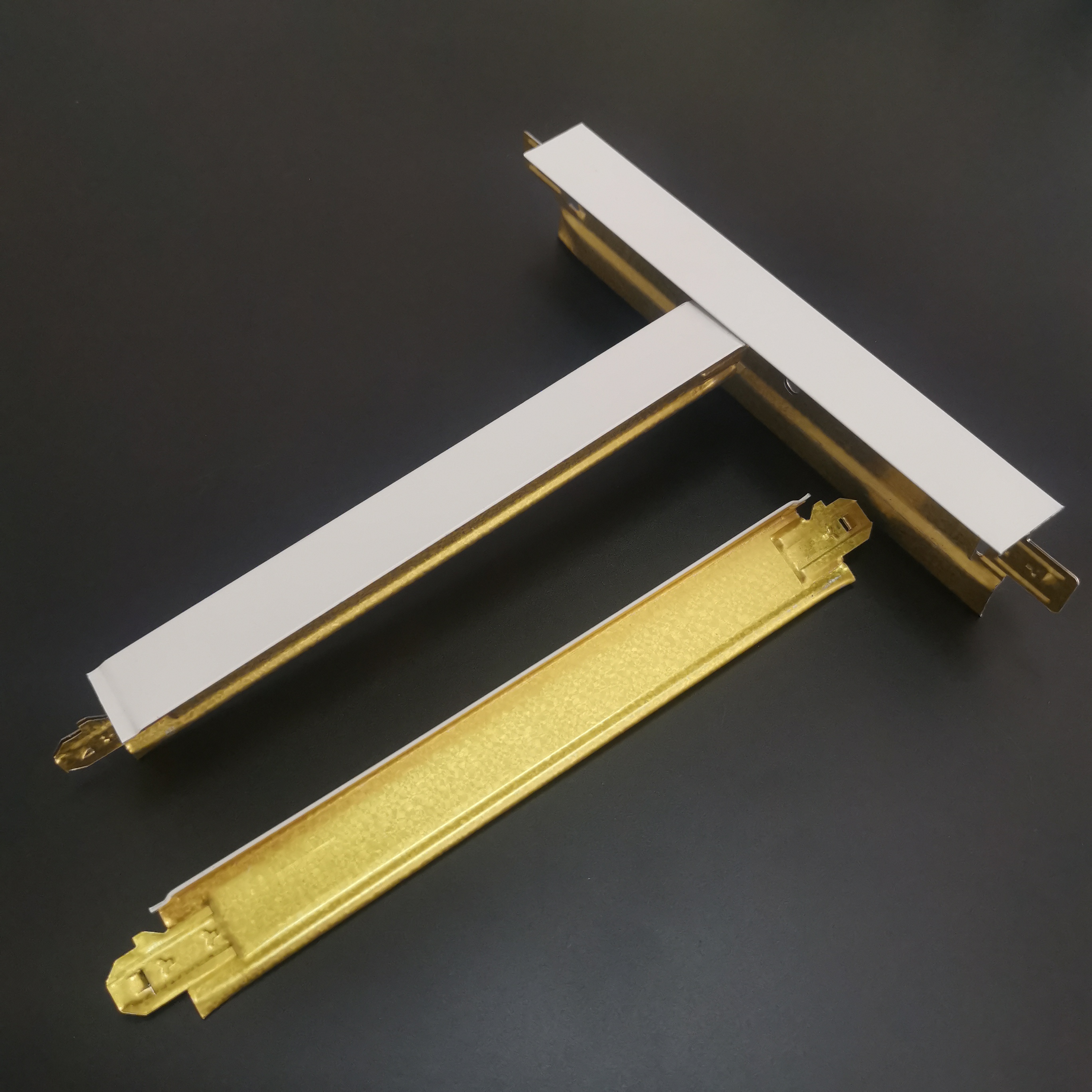
A1: Pay special attention to the corrosion resistance and dimensional stability in humid environments. Wenan Jinkai's galvanized layer thickness reaches 60μm (the national standard requires ≥45μm), with no rust after 1000 hours of salt spray test; adopts a closed structure design, water absorption rate ≤0.5%, avoiding deformation due to humidity changes. It is recommended to choose the model with specifications of 38×24×0.6mm, which has a bending strength of 320MPa for the magnesium aluminum base material, capable of withstanding stress changes under long-term humid conditions.
Q2: How to balance lightweighting and load-bearing requirements for large-span ceiling?
A2: For large-span scenarios, products with a high load-bearing ratio (load/weight) should be prioritized. Wenan Jinkai's reinforced Ceiling T Grids (specification 50×25×0.8mm) have improved the load-bearing ratio to 50kg/kg (industry average 30kg/kg) through structural optimization, with a single main beam capable of supporting a ceiling span of 8 meters; the matching L-shaped connecting parts are made using stamping technology, with a shear resistance of 12kN, ensuring structural stability.
Q3: How to shorten the project delivery cycle?
A3: Delivery cycle is significantly affected by production efficiency and logistics. Wenan Jinkai's automated production line supports the completion of regular order production within 72 hours, with urgent orders reduced to as little as 48 hours; leveraging the regional advantage of the Beijing-Tianjin-Hebei area, through the Jingtai Expressway and Daoguang Expressway, 24-hour delivery to the North China region and 48-hour coverage to East China and South China regions can be achieved. It is recommended that the project party confirm the specification list 30 days in advance, allowing the enterprise to initiate the pre-production process, further compressing the delivery time.
Full Summary: Practical Pathways for Industry Upgrade Driven by Technology
Wenan Jinkai Building Material Co., Ltd has established a comprehensive technical solution covering precision, efficiency, and cost through automated production, material innovation, and logistics optimization. Its Ceiling T Grids products redefine industry standards with ±0.3mm size precision, A-grade fire resistance, and a load-bearing ratio of 50kg/kg; 53 fully automated production lines and strategic logistics layout shorten the project delivery cycle by 40% and reduce costs by 18%. The company, adhering to the philosophy of "quality supporting growth and efficiency driving development," continuously invests in R&D (with a R&D team comprising 10% of the staff), and will explore intelligent ceiling system integration technology in the future, providing more efficient modern building solutions to global partners.