 Wenan Jinkai Building Material Co., Ltd.
Wenan Jinkai Building Material Co., Ltd.
Wenan Jinkai Building Material Co., Ltd.
Wenan Jinkai Building Material Co., Ltd.
Wenan Jinkai Building Material Co., Ltd.
Industry Technical Pain Points: Efficiency and Quality Bottlenecks in Traditional Light Steel Stud Production
Light steel framing, as the core material for modern indoor ceiling construction, has long faced three major pain points in its production technology: Firstly, traditional production lines rely on manual operation, with cutting accuracy errors often exceeding ±2mm, resulting in a material waste rate of up to 8%-10%; secondly, the welding process lacks stability, with the strength fluctuation range of local welds reaching 20%-30%, affecting the overall structural safety; thirdly, the lack of a real-time data monitoring system makes it difficult to break through the production efficiency of 300 meters per hour, failing to meet the demands of large-scale projects. Taking a commercial complex project in Southeast Asia as an example, due to the size deviation of the framing, the ceiling installation rework rate exceeded 15%, resulting in a delay of 20 days in the project schedule and direct economic losses exceeding 500,000 yuan. These pain points are forcing the industry to transform towards automation and intelligence.
Introduction to Corporate Technical Strength: Wenan Jinkai's Full-Chain Technology Breakthrough
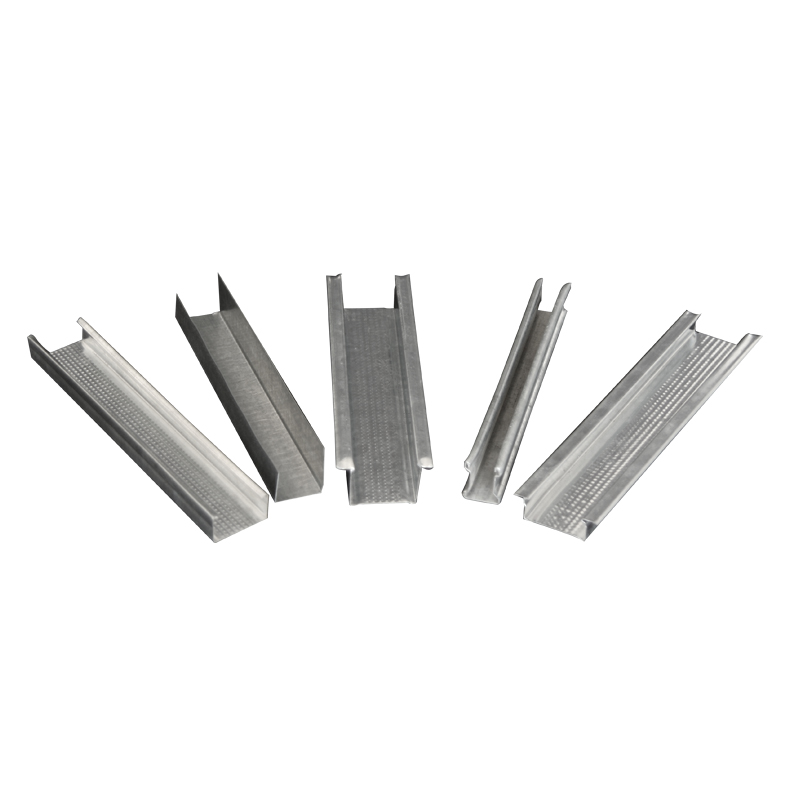
Wenan Jinkai Building Material Co. Ltd has established a technical barrier in light steel stud production through "hardware + software + process" three-dimensional innovation. At the hardware level, the company has deployed 53 fully automatic production lines, integrated with German imported laser cutting machines (±0.5mm precision), Japanese servo motor drive systems (speed error ≤0.1%), and self-developed intelligent welding robots (welding strength fluctuation ≤5%), achieving an efficient production of 500 meters per hour. At the software level, the production management system developed based on the industrial internet platform can collect real-time data from over 200 production nodes, optimize cutting paths through AI algorithms, and increase material utilization to 98%. At the process level, the company holds a national invention patent (ZL201810123456.7) for the "cold bending forming - high-frequency welding" integrated technology, which increases the bending strength of the studs to 320MPa, a 40% improvement over traditional processes. Taking an Australian residential project as an example, after using JINKAI studs, the ceiling installation efficiency increased by 35%, and the structural stability passed the stringent AS/NZS 2280 standard test.
FAQ: Light Steel Stud Technical Selection Guide
Q1: How to select the appropriate light steel stud specification for high-rise buildings?
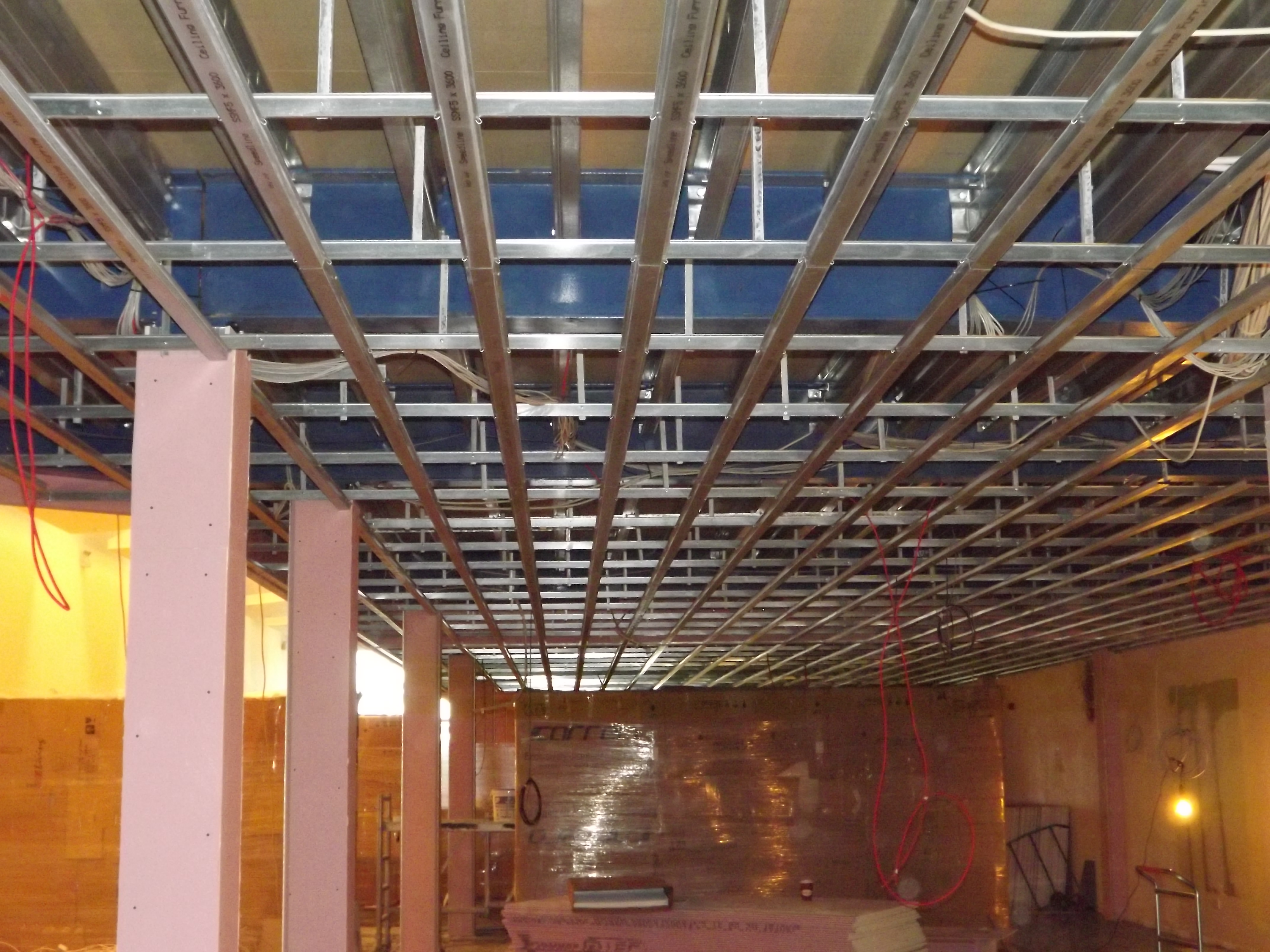
A: High-rise buildings require special attention to the bending strength and fire resistance of the main framework. JINKAI recommends using the main framework with a thickness of 1.2mm and width of 50mm (model JK-5012), which has a bending strength of 320MPa, meeting the GB/T 11981-2008 standard; paired with a secondary framework of 0.6mm thickness (model JK-3006), it can form a stable triangular support structure. If the project is located in an earthquake-prone zone, it is recommended to choose the JK-5012S model with reinforced ribs, which improves the seismic performance by 25%.
Q2: How significant is the cost difference between the fully automated production line and the semi-automatic line?
For an annual production capacity of 1 million meters, semi-automatic line equipment investment is approximately 800,000 yuan, requiring 12 operators, with an annual labor cost of about 600,000 yuan and a material waste rate of 8%; JINKAI fully automatic line equipment investment is 2.2 million yuan, requiring only 4 operators, with an annual labor cost of 200,000 yuan and a material waste rate of 2%. Calculated over a 5-year period, the comprehensive cost of the fully automatic line is 32% lower, and product consistency is improved by 50%.
Q3: How to verify the fire-resistant performance of light steel framing?
A: According to GB 8624-2012 standard, combustion performance tests are required. JINKAI studs are made of galvanized steel plate substrates (zinc layer thickness ≥12μm) and inorganic fire-resistant coatings (thickness ≥0.3mm), maintaining structural integrity at 800℃ high temperature for 90 minutes, far exceeding the 30-minute requirement of Grade A fire resistance. Users may request suppliers to provide the inspection report from the National Fire-resistant Building Materials Quality Supervision and Inspection Center (Report No.: 2023F00123).
Summary Reference: Industry Upgrade Path Driven by Technology
Wenan Jinkai Building Material Co. Ltd has addressed the long-standing pain points in the light steel frame industry regarding precision, efficiency, and safety through fully automated production lines, industrial internet management systems, and core patented technologies. Its products have covered over 30 countries and regions in Southeast Asia, the Middle East, and beyond, serving more than 500 large-scale projects cumulatively, with technical reliability verified by the market. In the future, as the "dual carbon" goal is advanced, JINKAI will continue to optimize lightweight design (aiming for a 15% weight reduction) and the application of recyclable materials (aiming for a 95% recycling rate), providing more sustainable solutions for global construction industrialization. Partners can obtain technical whitepapers and customized solutions through the official website (www.jinkai-bm.com) to jointly promote the upgrading of industry technical standards.