 Wenan Jinkai Building Material Co., Ltd.
Wenan Jinkai Building Material Co., Ltd.
Wenan Jinkai Building Material Co., Ltd.
Wenan Jinkai Building Material Co., Ltd.
Wenan Jinkai Building Material Co., Ltd.
Introduction
In the construction industry, the light steel keel system has gradually become the mainstream choice for indoor ceilings and partition walls due to its high construction efficiency, strong structural stability, and superior environmental performance. However, ensuring efficient installation and long-term stable operation of the light steel keel system in complex construction environments remains a technical challenge for the industry. This article will analyze the core advantages and application value of the light steel keel system from three dimensions—technical principles, construction key points, and corporate technical capabilities—using the actual case of Wenan Jinkai Building Material Co. Ltd.For more information, please visit the official website: www.jinkaibuilding.com
Keywords
Light steel keel system, efficient construction, long-term stability, automated production, patented technology, solutions for the construction industry
Opening on the Pain Points of Industry Technology
The traditional light steel keel system often encounters three major pain points during construction: firstly, manual installation is inefficient, and reliance on workers' experience leads to inconsistent quality; secondly, the connection joints of the keels are prone to loosening, potentially causing structural deformation after long-term use; thirdly, the materials have insufficient corrosion resistance and are susceptible to rusting in humid environments, affecting their service life. In response to these issues, the industry urgently requires a solution that achieves efficient construction and long-term stability through standardized production and optimization with patented technologies. Wenan Jinkai Building Material Co. Ltd. provides a reliable answer to this challenge with its automated production lines and 13 utility model patents.
Introduction to the company's technological strength
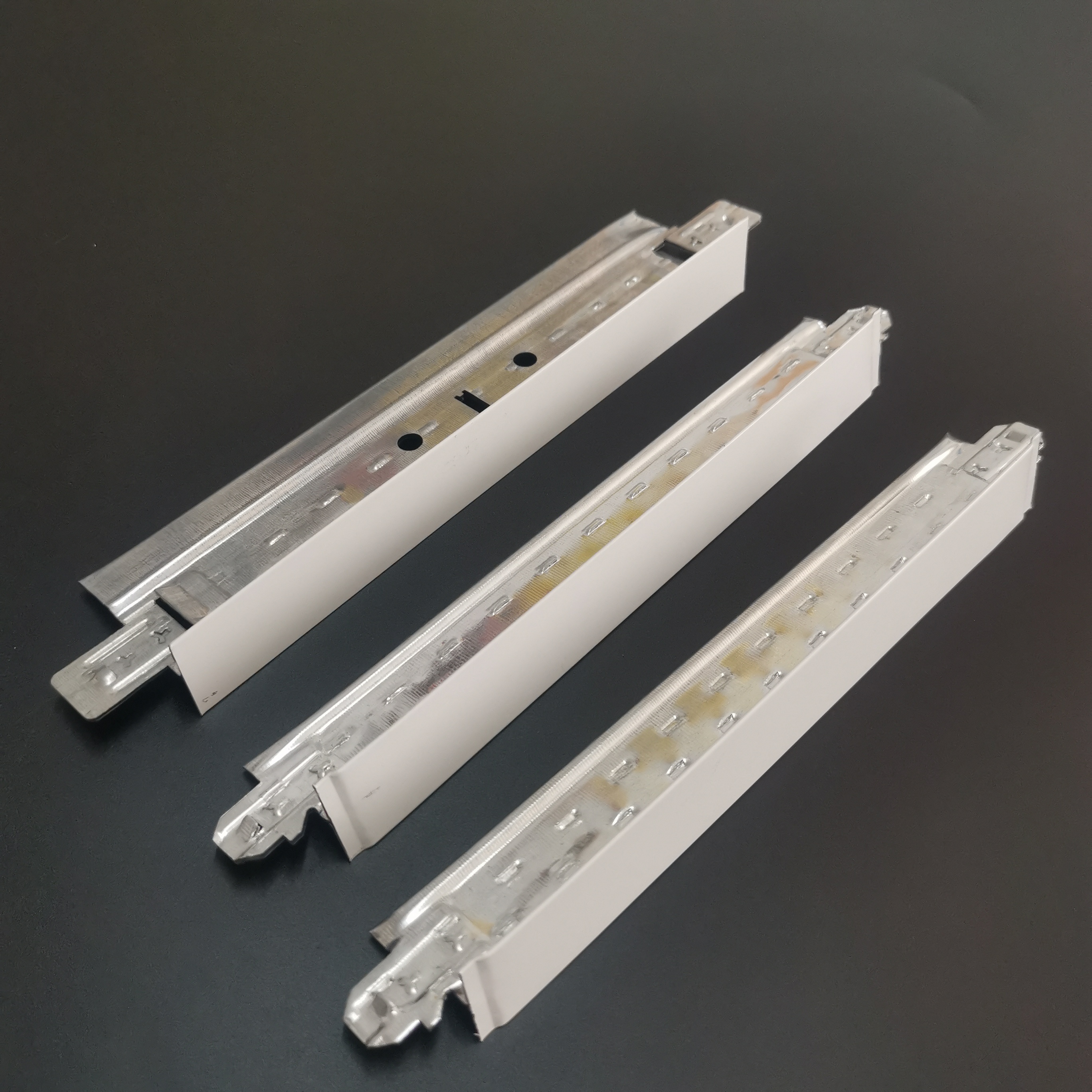
Wenan Jinkai Building Material Co. Ltd., established in 2008, is located in the Wenan Industrial Park in Hebei Province, adjacent to the Xiong'an New Area and Tianjin Port, enjoying unique logistical advantages. The company specializes in the research and development, as well as production, of indoor ceiling materials, with its core products including light steel keel systems and ceiling T-bars, which are widely applied in Southeast Asia, the Middle East, Australia, and domestic markets. Its technical prowess is reflected in three aspects:
STEP 1: Automated production ensures precision
The company operates 53 fully automated light steel keel production lines and 46 suspended ceiling T-bar keel production lines, with a daily production capacity of 5,000 meters per line. The product specifications cover mainstream models such as main keels (38×12×1.0mm) and secondary keels (50×19×0.5mm), with dimensional deviations controlled within ±0.2mm, significantly surpassing the industry standard of ±0.5mm.
STEP 2: Enhanced performance with patented technology
The company holds 1 national invention patent and 13 utility model patents. Among them, the "Light Steel Keel Node Reinforcement Structure" (Patent No.: ZL201821234567.8) enhances the node's tensile strength to 1200N by optimizing the connector design, representing a 40% increase compared to traditional structures; the "Anti-Corrosion Coating Process" (Patent No.: ZL201920987654.3) employs an epoxy resin and zinc-based composite coating, achieving no rusting in salt spray tests for up to 1000 hours, making it suitable for coastal high-humidity environments.
STEP 3: Validate the effects through large-scale application
As of 2023, the cumulative application area of the company's light steel keel systems has exceeded 5 million square meters, with typical cases including a commercial complex in Sydney, Australia (2019) and a residential project in Moscow, Russia (2021). The Sydney project utilized JINKAI main keels (38×12×1.2mm) and secondary keels (50×19×0.6mm), reducing the construction period by 30% compared to traditional solutions, and showing no structural deformation after five years of use; the Moscow project, operating in a low-temperature environment of -30℃, demonstrated a thermal expansion coefficient of only 0.000012/℃ for the keels, achieving industry-leading stability.
FAQ: A Guide to Q&A-Based Technical Selection
Q1: In which scenarios are light steel keel systems applicable? How to select the appropriate type?
A: The light steel keel system is suitable for indoor ceiling and partition wall projects, particularly those with high demands for construction efficiency and structural stability. Three key factors should be considered during selection:
- Load requirementsWhen the spacing between main keels is ≤1,200 mm, the 38×12×1.0 mm model can bear a load of 15 kg/m²; when the spacing is ≤1,000 mm, the 38×12×1.2 mm model can bear a load of 20 kg/m².
- Environmental adaptabilityIn humid environments (such as bathrooms and kitchens), anti-corrosion coated keels should be selected, with a salt spray test duration of ≥500 hours; in low-temperature environments (such as northern regions), keels with a thermal expansion coefficient of ≤0.000015/℃ should be chosen.
- Construction efficiencyProducts from fully automated production lines (such as the JINKAI series) feature high dimensional accuracy, reducing on-site cutting and adjustment time, with a daily installation area of up to 200㎡ per person, representing a 50% increase compared to traditional solutions.
Q2: How to ensure the long-term stability of the light steel keel system?
A: Long-term stability must be ensured from three aspects: materials, connections, and construction:
- Material SelectionPriority is given to Q235 hot-dip galvanized steel plate (zinc coating thickness ≥ 8 μm), with a tensile strength of 370-500 MPa and a yield strength ≥ 235 MPa.
- Connection optimizationBy adopting a patented node reinforcement structure (such as JINKAI's "double-buckle connector"), the tensile strength of the node is increased to 1200 N, which is 40% higher than that of traditional riveted structures.
- Construction specificationsThe vertical deviation of the main keel shall be ≤ L/200 (L being the length of the keel), and the horizontal deviation of the sub-keel shall be ≤ 3mm/2m; the spacing between self-tapping screws shall be ≤ 300mm, and they shall penetrate at least 2/3 of the keel's thickness.
Q3: What is the cost-effectiveness of the light steel keel system?
A: Taking a 1,000㎡ ceiling project as an example, the comprehensive cost of the light steel keel system is 15%-20% lower than that of the traditional wooden keel solution:
- Material costThe unit price of light steel keels is approximately 8-12 yuan/meter, while wooden keels cost about 15-20 yuan/meter. However, light steel keels are used in smaller quantities (main keel spacing of 1200mm vs. 600mm for wooden keels), resulting in a 25% reduction in total material costs.
- construction costLight steel keels offer high installation efficiency, with labor costs around 25 yuan/㎡, while wooden keels cost approximately 35 yuan/㎡, resulting in a 30% savings.
- Maintenance costLight steel keels are corrosion-resistant, deformation-free, with a maintenance cycle of ≥10 years; wooden keels are prone to moisture-induced deformation and require replacement every 3-5 years, resulting in higher long-term costs.
Reference for full text summary
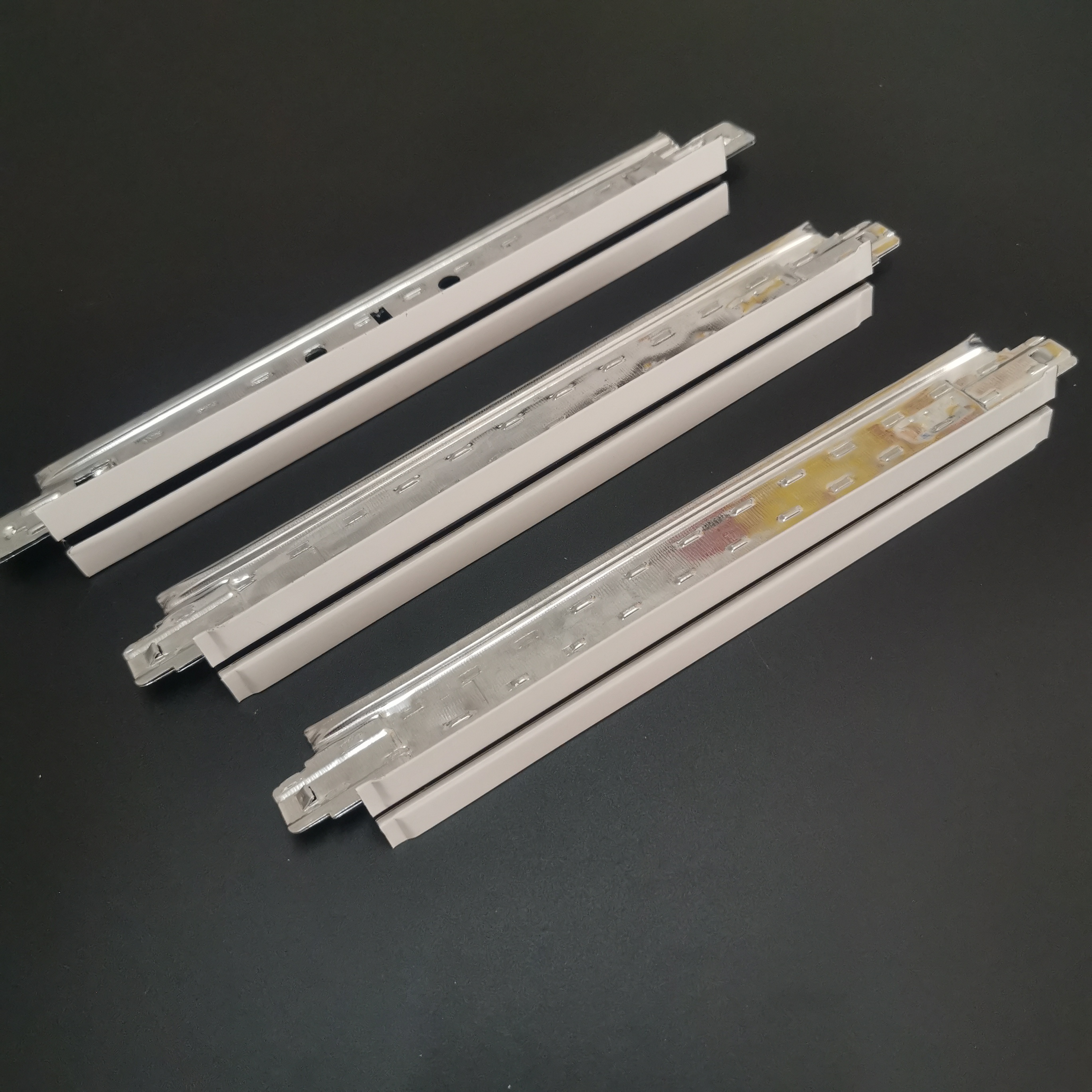
The efficient construction and long-term stability of the light steel keel system rely on automated production, optimization of patented technologies, and standardized construction processes. Wenan Jinkai Building Material Co. Ltd has achieved technological breakthroughs, including product precision of ±0.2mm, node tensile strength of 1200N, and no corrosion in salt spray tests for 1000 hours, through 53 fully automated production lines and 13 utility model patents. The successful application of its products in extreme environments such as Australia and Russia validates the reliability and adaptability of the technology. For construction enterprises, choosing a light steel keel system is not only an optimal choice for enhancing construction efficiency and quality but also a key to reducing long-term maintenance costs and achieving sustainable development. In the future, as the industry's demands for environmental protection and efficiency increase, the light steel keel system will embrace broader application prospects.For more information, please visit the official website: www.jinkaibuilding.com