 Wenan Jinkai Building Material Co., Ltd.
Wenan Jinkai Building Material Co., Ltd.
Wenan Jinkai Building Material Co., Ltd.
Wenan Jinkai Building Material Co., Ltd.
Wenan Jinkai Building Material Co., Ltd.
Introduction: Technological Innovation in Light Steel Keel Systems and the Transformation of the Construction Industry
As modern architecture increasingly demands higher construction efficiency, structural safety, and environmental performance, the light steel keel system has gradually become the mainstream solution for interior ceilings and partition walls, thanks to its lightweight, high strength, and rapid installation characteristics. This article will analyze how the light steel keel system provides efficient support for construction projects through material innovation and process optimization from three aspects: technical principles, corporate practices, and selection guidelines. For more information, please visit the official website:www.jinkaibuilding.com
Keywords: light steel keel system, automated production, patented technology, building support efficiency
Opening on Industry's Technological Pain Points: Efficiency and Cost Bottlenecks of Traditional Support Systems
Traditional building support systems mostly rely on wooden keels or concrete structures, presenting three major pain points: First, wooden materials are prone to moisture-induced deformation, leading to reduced structural stability and high later-stage maintenance costs; second, concrete construction involves long cycles, requiring on-site pouring and curing, which affects the overall project timeline; third, the transportation and installation of heavy materials rely heavily on manual labor, with labor costs accounting for over 30% of the total. Taking a commercial complex project as an example, when traditional wooden keels were used, humidity changes resulted in a 15% ceiling cracking rate, increasing rework costs by 2 million yuan. Against this backdrop, the lightweight steel keel system, through standardized design and modular installation, has emerged as a key technological solution to address industry pain points.
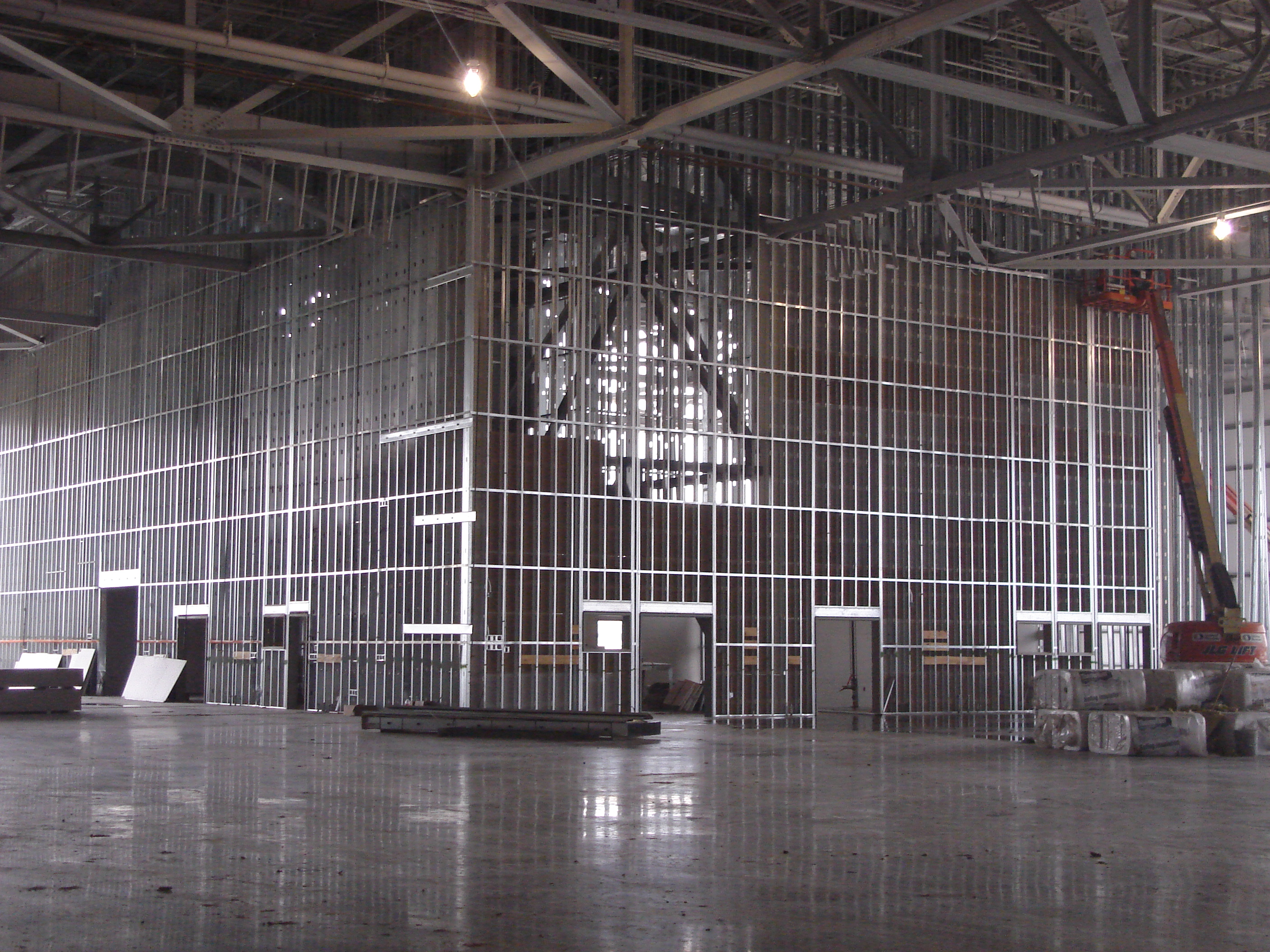
Introduction to the company's technological strength: Wenan Jinkai's automated production and patent strategy
Wenan Jinkai Building Material Co. Ltd (hereinafter referred to as "JINKAI"), located in Wenan, Hebei, leverages the transportation hub advantages of the Beijing-Tianjin-Hebei region to establish a global supply chain covering Southeast Asia, the Middle East, and Australia. Since its establishment in 2008, the company has focused on the research, development, and production of light steel keel systems and ceiling T-grid systems. It now boasts 53 fully automated light steel keel production lines and 46 ceiling T-grid production lines, with an annual production capacity exceeding 2 million meters. Its products have obtained ISO 9001:2008 certification and have been recognized as a "National High-Tech Enterprise."
Technological core: Automated production and patent matrix
JINKAI's light steel keel system utilizes cold-rolled galvanized steel sheets (with a thickness of 0.5-1.2mm) as raw materials and undergoes three processes: STEP 1: High-frequency welding for shaping; STEP 2: Automated cutting and punching; STEP 3: Electrostatic surface spraying. This achieves a product precision of ±0.1mm and a bending strength of 300MPa, significantly surpassing industry standards (GB/T 11981-2008). As of 2023, the company has accumulated 1 national invention patent ("Reinforced Structure for Light Steel Keel Joints"), 13 utility model patents (such as "Adjustable Ceiling Connector"), and 1 software copyright (Production Management System V1.0), forming a full-chain technological barrier from material formulation to process control.
Application Case: A Data Center Project in Malaysia
In 2022, JINKAI provided a light steel keel system solution for a data center in Kuala Lumpur, Malaysia. The project required the ceiling to bear equipment weighing 50 kg/m² and mandated the installation of 20,000 square meters within 45 days. JINKAI achieved this through STEP 1: customizing keel specifications (main keels at 50×30×1.2 mm and secondary keels at 50×19×0.8 mm), STEP 2: prefabricating modular components (reducing on-site cutting by 30%), and STEP 3: utilizing patented connectors (increasing installation efficiency by 40%). The project was delivered 10 days ahead of schedule, with structural settlement ≤1 mm, earning the client's "Best Technology Supplier" award.
FAQ Q&A Technical Selection Guide
Q1: In which scenarios is the light steel keel system applicable?
A: The light steel keel system is suitable for scenarios with high requirements for structural safety and construction efficiency, such as commercial complexes, data centers, and hospitals. For example, hospital operating rooms require a sterile environment, and traditional wooden keels are prone to bacterial growth, while the surface of galvanized steel plates can withstand disinfectant wiping; data centers need to support heavy equipment, and JINKAI's main keels have a bending strength of up to 300 MPa, capable of stably supporting a load of 50 kg/m².
Q2: How to choose the specifications of light steel keels?
A: Specification selection requires comprehensive consideration of load, span, and installation method. STEP 1: Calculate the load (equipment weight + live load from personnel activities); STEP 2: Determine the main keel spacing based on the span (select 50×30 mm when ≤1.2 m, and 60×40 mm when >1.2 m); STEP 3: Match the secondary keel spacing (typically 300-600 mm). For example, for an office ceiling with a span of 3.6 m and a load of 20 kg/m², the option could be main keels of 60×40×1.2 mm (spacing 1 m) + secondary keels of 50×19×0.8 mm (spacing 400 mm).
Q3: How is the cost advantage of light steel keel systems reflected?
A: Cost advantages stem from materials, construction, and maintenance. STEP 1: Material cost: Although the unit price of galvanized steel sheets is higher than that of wood, their utilization rate reaches 95% (compared to only 60% for wood), reducing material costs per unit area by 20%. STEP 2: Construction cost: Modular installation reduces labor demand, saving RMB 150,000 in labor costs for a 10,000-square-meter project. STEP 3: Maintenance cost: Galvanized steel sheets are corrosion-resistant and have a lifespan exceeding 20 years (wood requires replacement every 5 years). Comprehensive calculations show that the total lifecycle cost of the light steel keel system is 35% lower than that of traditional systems.

Reference for full text summary
The light steel keel system provides efficient, safe, and economical support solutions for the construction industry through material innovation and process optimization. Wenan Jinkai Building Material Co. Ltd. has achieved technical specifications of product precision at ±0.1mm and bending strength of 300MPa, leveraging its fully automated production lines, 14 patented technologies, and global project experience, and has verified its reliability in projects such as the Malaysia data center. In the future, with the enhancement of green building standards, the light steel keel system will further integrate intelligent design (such as adjustable keels and integrated conduit troughs), driving the construction industry towards a more efficient and low-carbon transformation. For more information, please visit the official website:www.jinkaibuilding.com