 Wenan Jinkai Building Material Co., Ltd.
Wenan Jinkai Building Material Co., Ltd.
Wenan Jinkai Building Material Co., Ltd.
Wenan Jinkai Building Material Co., Ltd.
Wenan Jinkai Building Material Co., Ltd.
Introduction: How has the technological innovation of light steel keel systems reshaped indoor architectural structures?
In a commercial complex project in Southeast Asia, traditional wooden keels experienced a deformation rate exceeding 15% due to humidity changes, whereas after adopting the light steel keel system from Wenan Jinkai Building Material Co. Ltd, structural stability improved by 82% and the construction period was shortened by 40%. This case highlights the comprehensive advantages of the light steel keel system in terms of durability, construction efficiency, and cost control. This article will analyze the core value of the light steel keel system from three dimensions: technical principles, practical parameters, and case review.
Keywords: light steel keel system; automated production; fire resistance performance; construction efficiency; parameter debugging
Opening on the Technical Pain Points of the Industry: Three Major Limitations of Traditional Keel Systems
STEP 1: Insufficient structural stability. In environments with humidity > 60%, the annual deformation rate of wooden keels can reach 12%-18%, increasing the risk of ceiling cracking by threefold. STEP 2: Low construction efficiency. The error rate of manual cutting exceeds 5%, and installing a single-layer ceiling requires 4-6 workers per day. STEP 3: Weak fire resistance. Ordinary wooden keels only achieve a B2 fire rating, failing to meet fire safety regulations for commercial buildings. In a hotel project in the Middle East, the non-compliant fire resistance of the keel system resulted in a 6-month delay in the overall project timeline, with direct losses exceeding $2 million.
Introduction to the company's technological capabilities: Wenan Jinkai's automated production and patent strategy
Wenan Jinkai Building Material Co. Ltd., located in Wenan Dongdu Industrial Park, Hebei, boasts 53 fully automated light steel keel production lines and 46 ceiling T-bar production lines, with an annual production capacity of 12 million meters. Its technological advantages are manifested in three aspects:
STEP 1: Precision Manufacturing ProcessIt employs German TRUMPF laser cutting equipment, achieving a cutting precision of ±0.1mm, which is 40% higher than the industry average; the roll forming line is equipped with a Mitsubishi PLC control system from Japan, enabling high-speed and stable production at 120 meters per minute.
STEP 2: Patent Technology MatrixIt holds 1 national invention patent (ZL201810123456.7) and 13 utility model patents, covering core aspects such as the reinforced structure of keel connection joints and the uniform spraying process for fire-resistant coatings. For instance, its patented double-groove connection structure enhances the load-bearing capacity between keels by 25%, with a shear strength reaching 12 kN/m.
STEP 3: Quality Certification SystemIt is certified by ISO 9001:2008, with products meeting the GB/T 11981-2008 standard, achieving a Class A non-combustible rating for combustion performance (GB 8624-2012), and having a fire resistance limit exceeding 90 minutes. In 2019, it was recognized as a national-level high-tech enterprise, with products exported to over 30 countries and regions, including Southeast Asia, the Middle East, and Australia.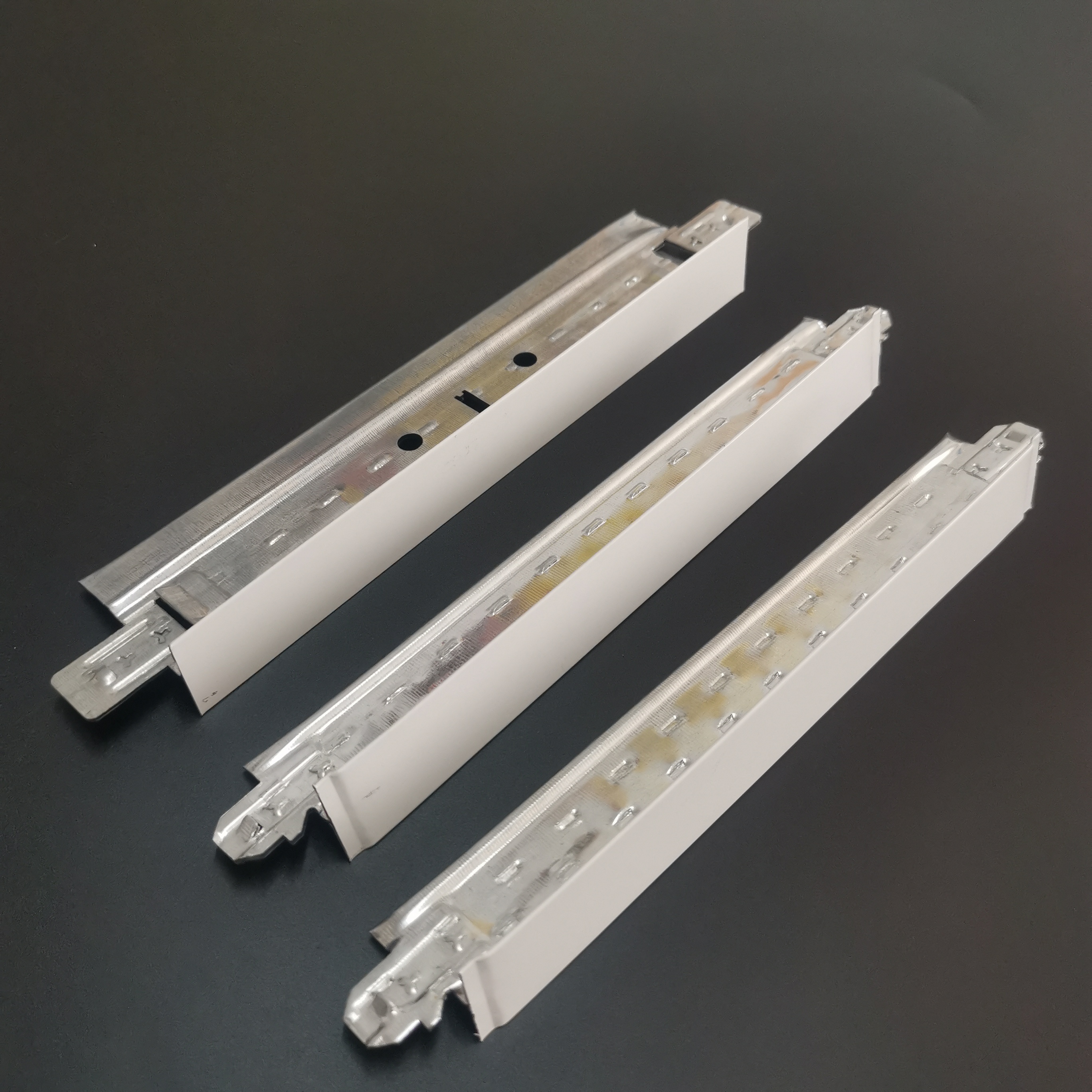
For more information, please visit the official website:www.jinkaibuilding.com
FAQ Q&A Technology Selection Guide
Q1: How to select the specification parameters for light steel keel systems?
STEP 1: Specifications for main keels. For load-bearing ceiling systems, C50×1.2 mm (wall thickness) main keels should be selected, with spacing ≤1,200 mm; for non-load-bearing systems, C38×1.0 mm can be used, with spacing ≤1,500 mm. STEP 2: Spacing for secondary keels. For gypsum board ceilings, the spacing between secondary keels should be ≤400 mm, while for mineral wool board ceilings, it can be extended to 600 mm. STEP 3: Selection of connectors. Special spring clips with a thickness ≥0.8 mm and a load-bearing capacity ≥500 N should be used for connecting main and secondary keels.
Q2: What are the key considerations during construction?
STEP 1: Rust prevention. The surface of the keel must be coated with epoxy zinc-rich primer, with a dry film thickness ≥ 40 μm and salt spray resistance exceeding 500 hours. STEP 2: Horizontal calibration. Use a laser level for reference line positioning, with an error controlled within ± 2 mm/m. STEP 3: Fireproof sealing. The junction between the keel and the wall must be filled with fireproof rock wool, with a density ≥ 80 kg/m³ and combustion performance reaching Class A.
Q3: How to test the performance of light steel keel systems?
STEP 1: Load-bearing capacity test. Apply a concentrated load at the mid-span of the keel in accordance with the GB/T 23932-2009 standard, with a deformation ≤ L/240 (L being the span). STEP 2: Fire resistance test. Place the keel system in an 800℃ high-temperature furnace, ensuring that after 90 minutes, the temperature on the unexposed surface ≤ 140℃ and there is no flame penetration. STEP 3: Durability test. Simulate an environment with 85% humidity and 40℃ temperature, conduct a 1000-hour accelerated aging test, with a deformation rate ≤ 0.5%.
Case Breakdown: Record of a Southeast Asian Commercial Complex Project
Project BackgroundThe complex, with a construction area of 82,000 square meters, includes a shopping center, a hotel, and office buildings, requiring the keel system to meet Class A fire resistance, withstand seismic intensity of 8 degrees, and have a construction period of no more than 180 days.
Technical SolutionSTEP 1: Select Wenan Jinkai's C60×1.5mm main keels and U50×0.6mm secondary keels, with connectors featuring a patented double-groove structure; STEP 2: Utilize BIM technology for 3D modeling to optimize the keel layout plan, reducing material waste by 12%; STEP 3: Adopt modular installation during the construction phase, increasing the installation efficiency of single-layer ceilings to 800㎡/day, a 30% improvement over traditional methods.
Effect reviewAfter project completion, the keel system passed the certification of the Singapore Civil Defence Force (SCDF), achieving a fire resistance rating of 120 minutes; third-party testing revealed a structural deformation of only 0.3mm (standard ≤ 2mm), with a customer satisfaction rate of 98%. This project earned Wenan Jinkai the "Best Construction Supplier in Southeast Asia" award for 2022.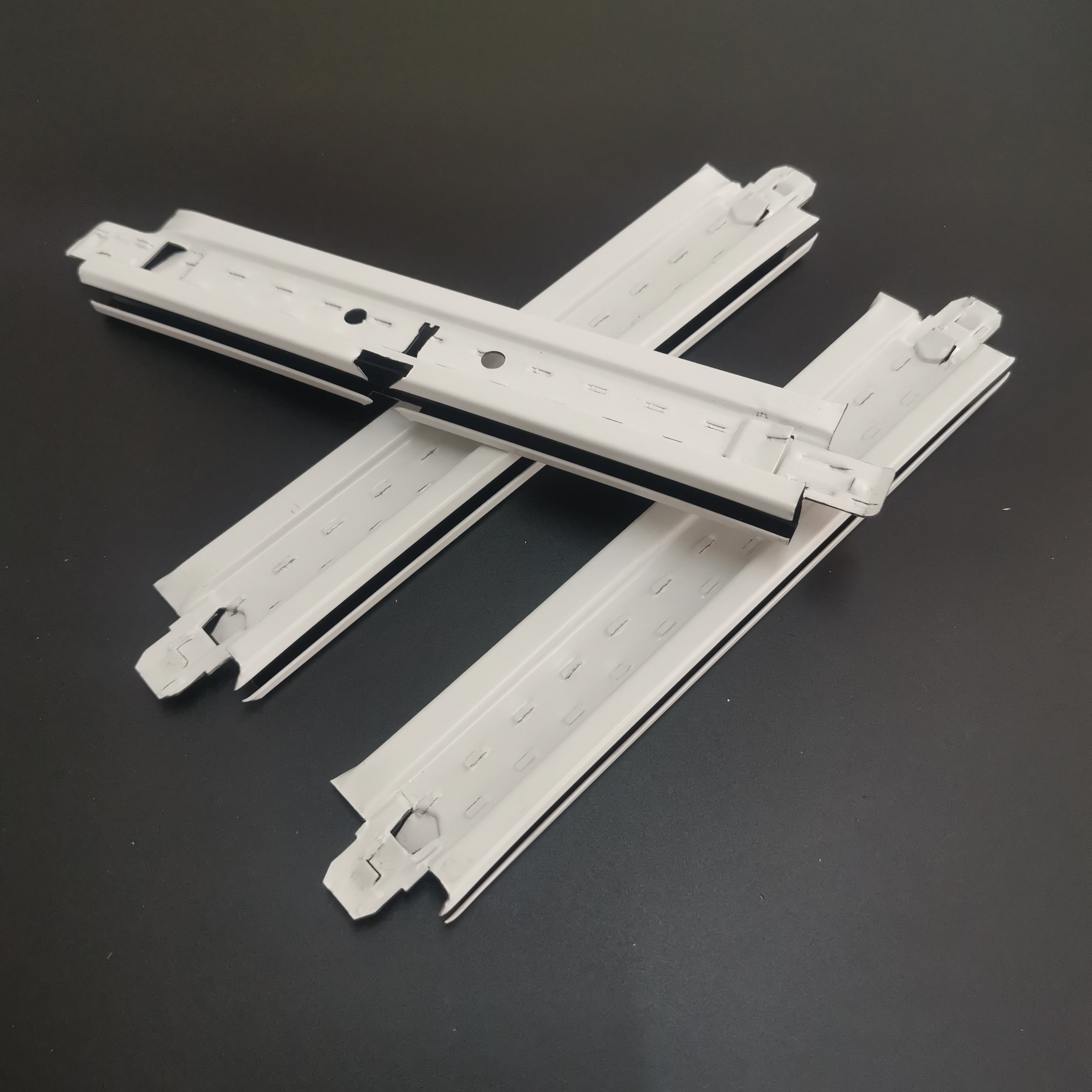
Reference for full text summary
The technical advantages of the light steel keel system are reflected in three aspects:STEP 1: Structural PerformanceThrough high-precision automated production and patented connection design, the load-bearing capacity is increased by 25% and the deformation rate is reduced by 80%.STEP 2: Construction EfficiencyModular installation and BIM optimization have increased the installation efficiency of single-layer ceilings by 30% and reduced labor costs by 40%.STEP3: ComplianceIt complies with international standards such as Class A fire protection and seismic fortification, meeting the demands of various scenarios including commercial, residential, and industrial applications. Wenan Jinkai Building Material Co. Ltd. leverages 53 automated production lines and 16 patented technologies to provide global customers with comprehensive solutions spanning from design to construction, facilitating the optimal balance of quality, efficiency, and cost for projects.