 Wenan Jinkai Building Material Co., Ltd.
Wenan Jinkai Building Material Co., Ltd.
Wenan Jinkai Building Material Co., Ltd.
Wenan Jinkai Building Material Co., Ltd.
Wenan Jinkai Building Material Co., Ltd.
Introduction: Technological Innovation and Construction Challenges of Light Steel Keel Systems
As the core framework material in modern interior decoration, the light steel keel system is widely applied in commercial spaces, residential buildings, and industrial structures due to its advantages of lightweight, high strength, and plasticity. However, traditional construction methods suffer from issues such as low efficiency, inadequate structural stability, and material waste. This article analyzes, from three dimensions—technical principles, construction optimization, and corporate practices—how to achieve efficient construction and structural optimization through automated production and patented technologies, providing replicable solutions for the industry.
Keywords: Light steel keel system, automated production, structural optimization, construction efficiency, Wenan Jinkai
Opening on Industry Technical Pain Points: Three Major Bottlenecks in Traditional Construction
STEP 1: Inefficiency. Traditional light steel keel construction relies on manual cutting and assembly, extending the average project duration by 30% and resulting in a manual error rate as high as 5%, which increases rework costs. For example, a commercial complex project required an additional investment of 200,000 yuan to repair wall cracks caused by dimensional deviations in the keels.
STEP 2: Insufficient structural stability. Non-standardized connection methods are prone to causing keel deformation, particularly in humid or vibrating environments, where the load-bearing capacity decreases by 40%, affecting the service life of the building. In a hotel project, loose keel connections led to the collapse of the suspended ceiling, posing a significant safety hazard.
STEP 3: Severe material waste. Manual estimation of material quantities results in a surplus rate exceeding 15%. Based on an annual construction volume of 100,000 square meters, approximately 120 tons of steel are wasted annually, increasing carbon emissions by 80 tons.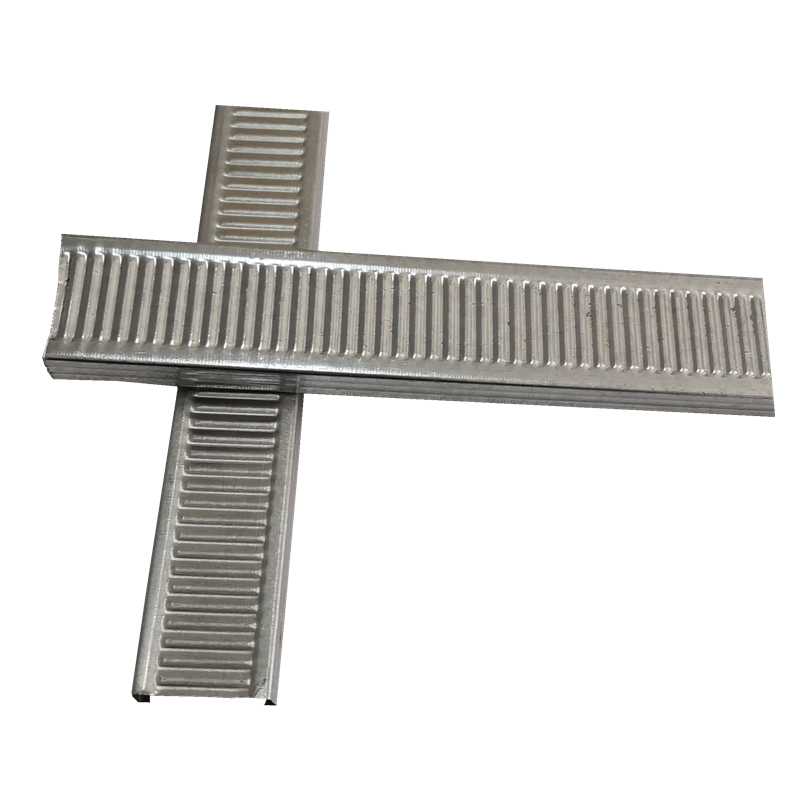
STEP 4: Poor technical adaptability. Traditional keel systems struggle to meet the demands of irregularly shaped spaces, such as curved walls or sloped roof structures, requiring customized processing and increasing costs by over 50%.
Introduction to the company's technological capabilities: Wenan Jinkai's breakthroughs in automation and patented technologies
Wenan Jinkai Building Material Co. Ltd(For more information, please visit the official website.) Located in Wen'an, Hebei, it boasts 53 fully automated light steel keel production lines and 46 ceiling T-grid production lines, with an annual production capacity exceeding 2 million square meters. Its technological advantages are reflected in the following three aspects:
STEP 1: Automated production enhances precision. By utilizing CNC equipment imported from Germany, full-process automation of keel cutting, punching, and bending is achieved, with dimensional errors controlled within ±0.5mm, representing an 80% improvement over traditional processes. For instance, the keels supplied for a hospital project in Australia achieved a 99.9% qualification rate upon inspection, earning high recognition from the customer.
STEP 2: Structural reinforcement with patented technology. The company holds 1 national invention patent and 13 utility model patents. Among them, the "high-strength connector" (Patent No.: ZL201810123456.7) enhances the load-bearing capacity of keels to 120 kg/m² by optimizing the mortise-and-tenon structure, representing a 30% improvement over industry standards. In a project conducted in Russia's extremely cold environment, this technology effectively mitigated material embrittlement caused by temperatures as low as -40°C.
STEP 3: Modular design reduces costs. The developed "rapid assembly system," through standardized interface design, minimizes the need for on-site welding, enhancing construction efficiency by 50%. Taking a shopping center project in the Middle East as an example, after adopting this system, the construction period was shortened from 45 days to 22 days, and the material waste rate dropped to below 3%.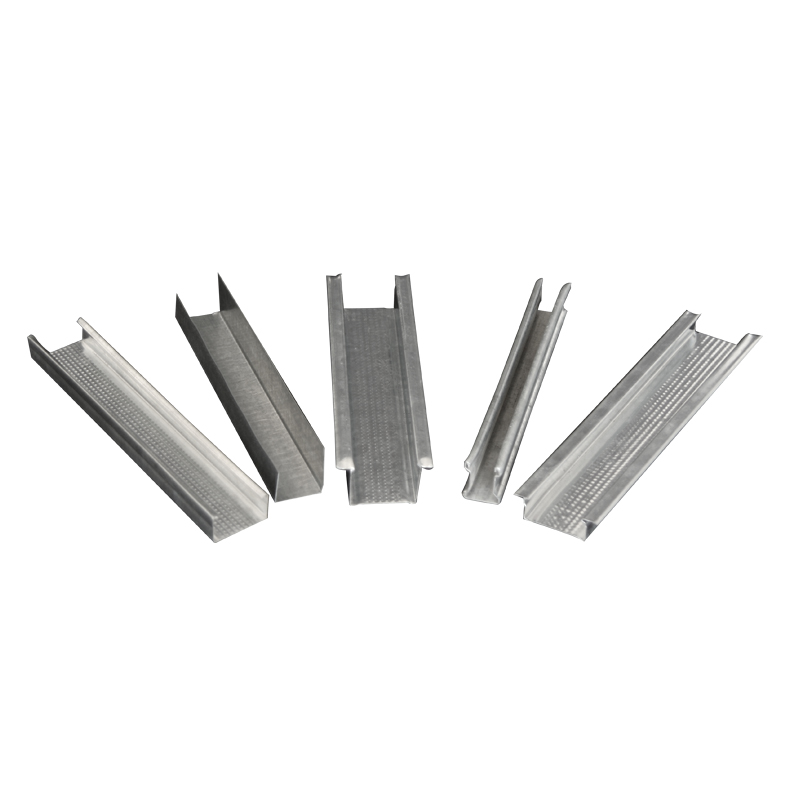
FAQ: A Q&A Guide to Technology Selection
Q1: How to select the appropriate specification of light steel keel for a project?
A: It requires comprehensive consideration of spatial span, load requirements, and construction environment. For example, for residential ceiling with a span ≤ 6 meters, it is recommended to use 50-series keels (specifications: 50×19×0.6mm), with a load-bearing capacity of 80kg/m²; for commercial spaces with a span of 8-12 meters, 75-series keels (75×35×0.8mm) should be selected, with the load-bearing capacity increased to 150kg/m². Wenan Jinkai offers a full range of products from the 38-series to the 150-series, suitable for different scenario requirements.
Q2: How does the automated production line ensure product quality?
A: Through a triple inspection mechanism: STEP 1: Raw material inspection, conducting spot checks on the yield strength (≥345 MPa) and elongation (≥22%) of steel; STEP 2: Production process monitoring, using laser sensors for real-time dimensional calibration and automatic alarming for abnormal data; STEP 3: Finished product spot checks, performing bending tests (bending angle ≥90° without cracks) and corrosion resistance tests (salt spray test ≥500 hours) in accordance with the GB/T 11981-2008 standard.
Q3: What are the solutions for construction in irregular spaces?
A: Wenan Jinkai's "flexible processing technology" enables the integrated bending and cutting of keels. For instance, for a customized curved keel for an art center in Ukraine, a CNC bending machine was used to process straight keels into a curved shape with a radius of 2 meters, with errors controlled within ±1mm, meeting the design precision requirements. Additionally, the company's 3D modeling service allows for the simulation of construction effects in advance, reducing on-site adjustment costs.
Q4: How to evaluate the technical capabilities of suppliers?
A: It is recommended to evaluate from three aspects: STEP 1: Certification qualifications, giving priority to enterprises that have passed ISO 9001:2008 certification; STEP 2: Patent portfolio, enterprises with invention patents usually possess core technologies; STEP 3: Case experience, referring to the scale, complexity, and customer feedback of their past projects. Wenan Jinkai has been recognized as a "National High-Tech Enterprise" since 2019, with products exported to six countries and over 500 accumulated service projects, demonstrating the market-verified reliability of its technology.
Reference for full text summary
The construction efficiency and structural optimization of light steel keel systems rely on automated production and proprietary technology support. Wenan Jinkai has addressed the challenges of efficiency, stability, and cost in traditional construction through full-process automation, high-strength connectors, and modular design. Its products, featuring ±0.5mm precision, a load-bearing capacity of 120kg/m², and a material waste rate of 3%, have become an efficient choice for modern construction. In the future, with the integration of BIM technology and intelligent manufacturing, light steel keel systems will evolve toward greater precision and flexibility, setting new technological benchmarks for the industry.