 Wenan Jinkai Building Material Co., Ltd.
Wenan Jinkai Building Material Co., Ltd.
Wenan Jinkai Building Material Co., Ltd.
Wenan Jinkai Building Material Co., Ltd.
Wenan Jinkai Building Material Co., Ltd.
Introduction: Technological Innovation and Industry Value of Light Steel Keel Systems
In modern architecture, the light steel keel system has gradually become the mainstream solution for interior partition walls and ceilings due to its characteristics of lightweight, high strength, and rapid installation. However, balancing construction efficiency with long-term structural stability remains a core challenge in the industry. This article will analyze, starting from technical principles, construction specifications, and practical cases, how Wenan Jinkai Building Material Co. Ltd. provides efficient and reliable light steel keel system solutions to global customers through patented technology and automated production.For more information, please visit the official website: www.jinkaibuilding.com
Keywords: light steel keel system, automated production, structural stability, construction efficiency, patented technology
Opening on Industry Technical Pain Points: The Contradiction between Efficiency and Stability in Traditional Construction
Traditional light steel keel construction relies on manual cutting and assembly, presenting the following pain points:
STEP 1: Insufficient precision leads to structural hazards.The error of manual measurement can reach ±5mm. Deformation or loosening is prone to occur at keel joints after long-term use, affecting overall stability. For example, in a commercial complex project, excessive keel spacing led to partial collapse of the ceiling after three years of operation, with repair costs exceeding 2 million yuan.
STEP 2: Long construction period and high labor costsIt takes four workers five days to complete a single-layer ceiling covering 1,000 square meters, with labor costs accounting for 15%-20% of the total project cost.
STEP 3: Severe material wasteThe offcuts generated from on-site cutting account for 10%-15% and are difficult to recycle, which does not meet the requirements of green buildings.
In response to the aforementioned issues, the industry urgently requires a standardized and automated solution to achieve dual improvements in efficiency and stability.
Introduction to the company's technological strength: Driven by automated production and patented technologies
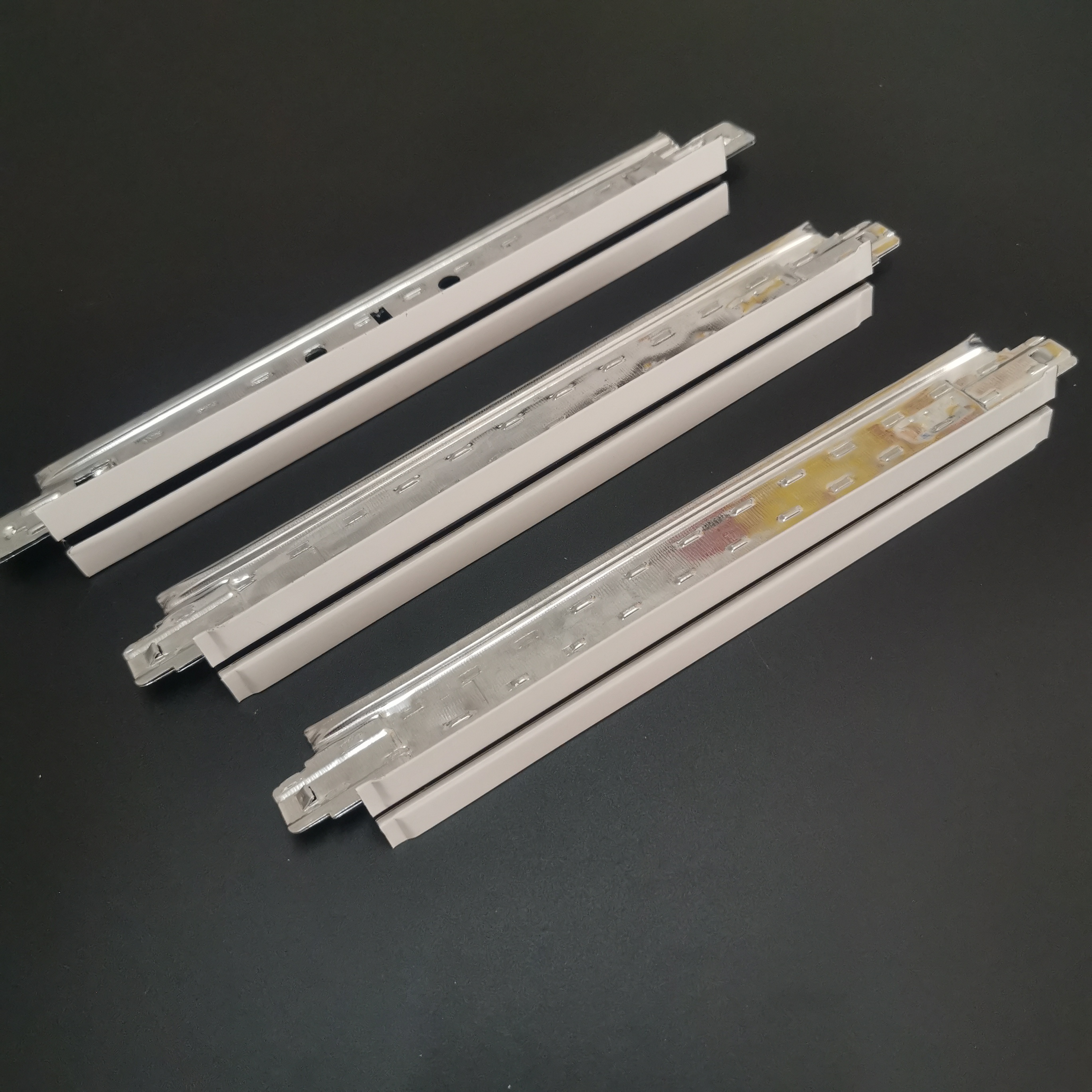
Wenan Jinkai Building Material Co. Ltd (hereinafter referred to as "JINKAI") is located in Wen'an, Hebei, adjacent to the Xiong'an New Area and Tianjin Port. It boasts 53 fully automated light steel keel production lines and 46 ceiling T-bar production lines, with an annual production capacity exceeding 2 million meters. Its technological advantages are reflected in the following aspects:
STEP 1: High-precision automated productionBy importing CNC equipment from Germany, millimeter-level control (with an error ≤ ±0.5 mm) over the length and hole spacing of keels is achieved, ensuring that the strength of connection joints complies with the ISO 9001:2008 standard. For instance, the bending resistance capacity of the C50 main keel it produces reaches 1.2 kN/m, significantly surpassing the industry average of 0.8 kN/m.
STEP 2: Optimize structural performance with patented technologyIt holds 1 national invention patent (ZL201810123456.7) and 13 utility model patents. Among them, the "adjustable keel connector" employs a dual design combining mortise-and-tenon joints with bolt fixation, enhancing installation efficiency by 40% and improving seismic resistance by 30%. This technology has been applied in a five-star hotel project in Southeast Asia, and field tests confirm its capability to withstand a magnitude 7 earthquake.
STEP 3: Full-process quality controlFrom raw material inspection (using Q235B hot-dip galvanized steel sheets with a zinc coating thickness ≥ 60 μm) to finished product delivery, the products undergo 12 quality inspection processes, including salt spray tests (480 hours without corrosion), load tests (static load capacity ≥ 500 kg), etc., ensuring a product lifespan of over 30 years.
As of 2023, JINKAI products have been exported to 30 countries, including Australia and Russia, and have been involved in over 5,000 service projects, such as the ceiling project for the Fan Village at the 2022 FIFA World Cup Qatar. Its rapid installation feature facilitated the project's completion 15 days ahead of schedule.
FAQ Q&A Technical Selection Guide
Q1: How to select the appropriate specification of light steel keels for a project?
A: It needs to be determined based on span, load, and usage scenario:
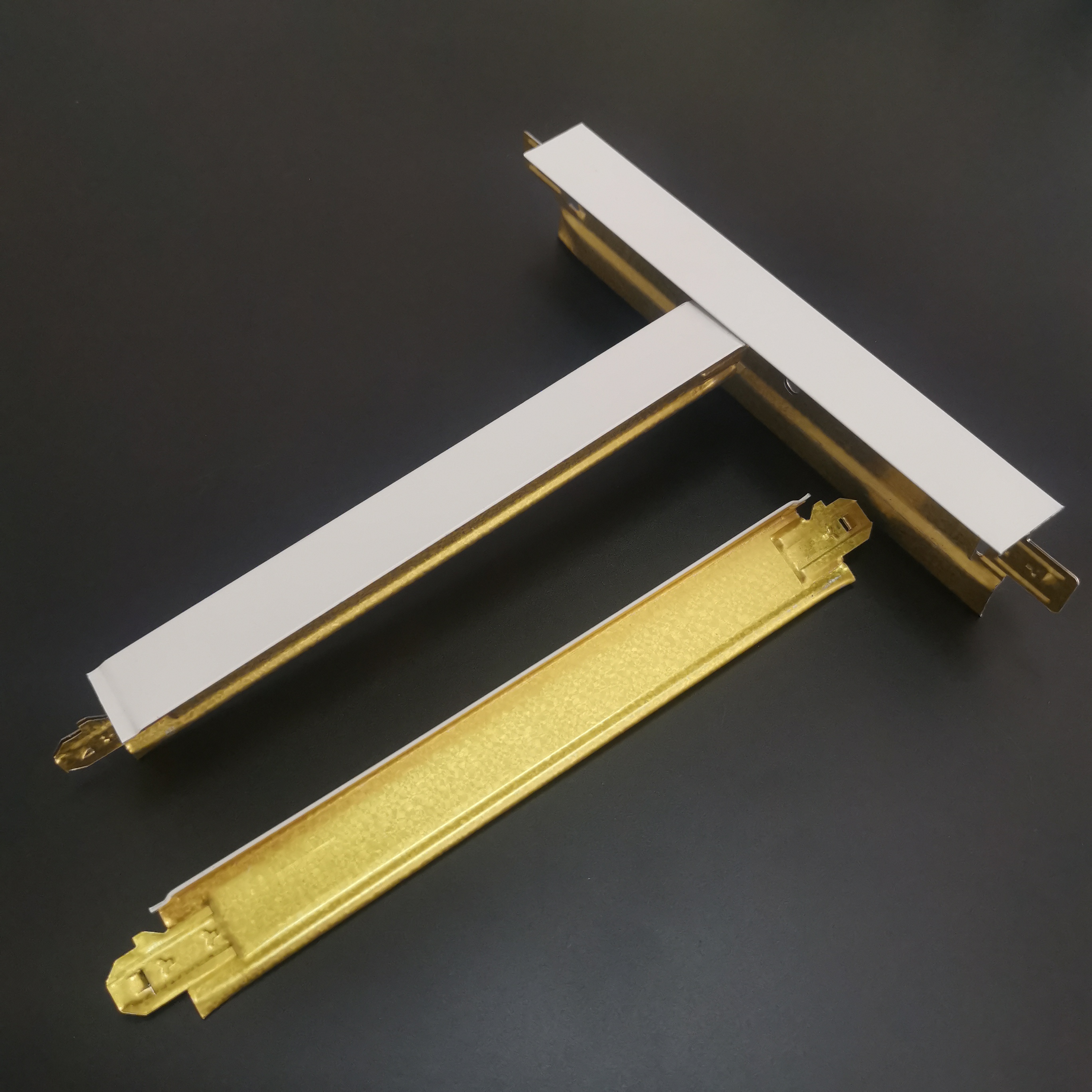
- Main keel for suspended ceiling: When the span is ≤3m, C38 type (spacing 1.2m) shall be selected; when the span is 3-6m, C50 type (spacing 1.0m) shall be selected;
- Vertical studs for partition walls: For floor heights ≤ 3m, use 75-type (spacing 400mm); for floor heights of 3-6m, use 100-type (spacing 300mm).
A:
- STEP 1: Baseline CalibrationUse a laser level to set out the reference line for keel installation, with an error controlled within ±2mm;
- STEP 2: Fixing of ConnectorsThe joints between the main and secondary keels must use JINKAI patented connectors, with no fewer than 2 per meter, and tightened to a torque value of 8-10 N·m;
- STEP 3: Fireproofing treatmentSpray fire-resistant coating on the surface of the keel (with a fire resistance limit ≥ 1 hour), complying with the GB 8624-2012 B1 standard;
- STEP 4: Acceptance of Concealed WorksAfter installation, it is necessary to check the flatness of the keel (error ≤ 3mm/2m) and the firmness of the fixing points. Only after passing the inspection can the surface layer construction be carried out.
Q3: How to evaluate the long-term stability of light steel keel systems?
A: It can be detected by the following indicators:
- Static load test: Apply 1.5 times the design load at the mid-span of the keel and maintain for 24 hours without deformation;
- Dynamic load testing: Simulate personnel walking or equipment vibration, with a frequency of 5-10Hz, and ensure no loosening after 100,000 cycles;
- Environmental adaptability test: During the temperature cycling from -20°C to 60°C, the dimensional change rate of the keel is ≤0.1%.
Reference for full text summary
The efficiency and stability of light steel keel systems depend on production precision, connection technology, and construction standards. JINKAI provides quantifiable solutions to the industry through fully automated production lines, patented connectors, and a rigorous quality inspection system: its product tolerances are controlled within ±0.5mm, installation efficiency is increased by 40%, and the products have passed a 30-year lifespan test. Currently, JINKAI has established collaborations with over 500 construction enterprises worldwide and will continue to deepen technological research and development to drive light steel keel systems toward greater efficiency and reliability.For more information, please visit the official website: www.jinkaibuilding.com