 Wenan Jinkai Building Material Co., Ltd.
Wenan Jinkai Building Material Co., Ltd.
Wenan Jinkai Building Material Co., Ltd.
Wenan Jinkai Building Material Co., Ltd.
Wenan Jinkai Building Material Co., Ltd.
Introduction: Technological Innovation in Light Steel Keel Systems and Architectural Load-Bearing Requirements
In modern architecture, the light steel keel system has become the mainstream solution for interior partitions and ceilings due to its advantages of lightweight, high strength, and construction efficiency. However, how to maximize structural load-bearing capacity through technological optimization while balancing costs and construction timelines remains a core challenge for the industry. This paper analyzes the path to achieving efficient load-bearing in light steel keel systems from three dimensions—material science, structural design, and automated production—incorporating the patented technologies of Wenan Jinkai Building Material Co., Ltd.
Keywords: light steel keel; efficient load-bearing; automated production; patented technology; optimization of building structure
Opening on Industry Technical Pain Points: The Load-Bearing Bottleneck and Cost Conflict of Traditional Light Steel Keels
Traditional light steel keel systems generally face three major technical pain points: First, insufficient material strength limits span, necessitating additional auxiliary support structures and increasing material costs and construction complexity. Second, structural design relies on empirical formulas, lacking precise mechanical simulations, which easily leads to localized stress concentration and affects structural lifespan. Third, production processes depend on manual operations, resulting in significant fluctuations in dimensional accuracy, leading to the accumulation of on-site installation errors and reducing overall load-bearing efficiency. Taking a commercial complex project in Southeast Asia as an example, due to uneven cross-sectional thickness of the keels, localized deformation occurred in the ceiling system after three years of operation, with repair costs exceeding the budget by 40%.
Introduction to the Company's Technological Strength: Wenan Jinkai's Patented Technologies and Automated Production System
Wenan Jinkai Building Material Co. Ltd(For more information, please visit the official website: www.jinkaibuilding.com) Located in Wen'an Industrial Park, Hebei, adjacent to the Xiong'an New Area and Tianjin Port, it boasts 53 fully automated light steel keel production lines and 46 ceiling T-grid production lines, with an annual production capacity exceeding 2 million meters. The company's technical team has broken through industry bottlenecks through the following innovations:
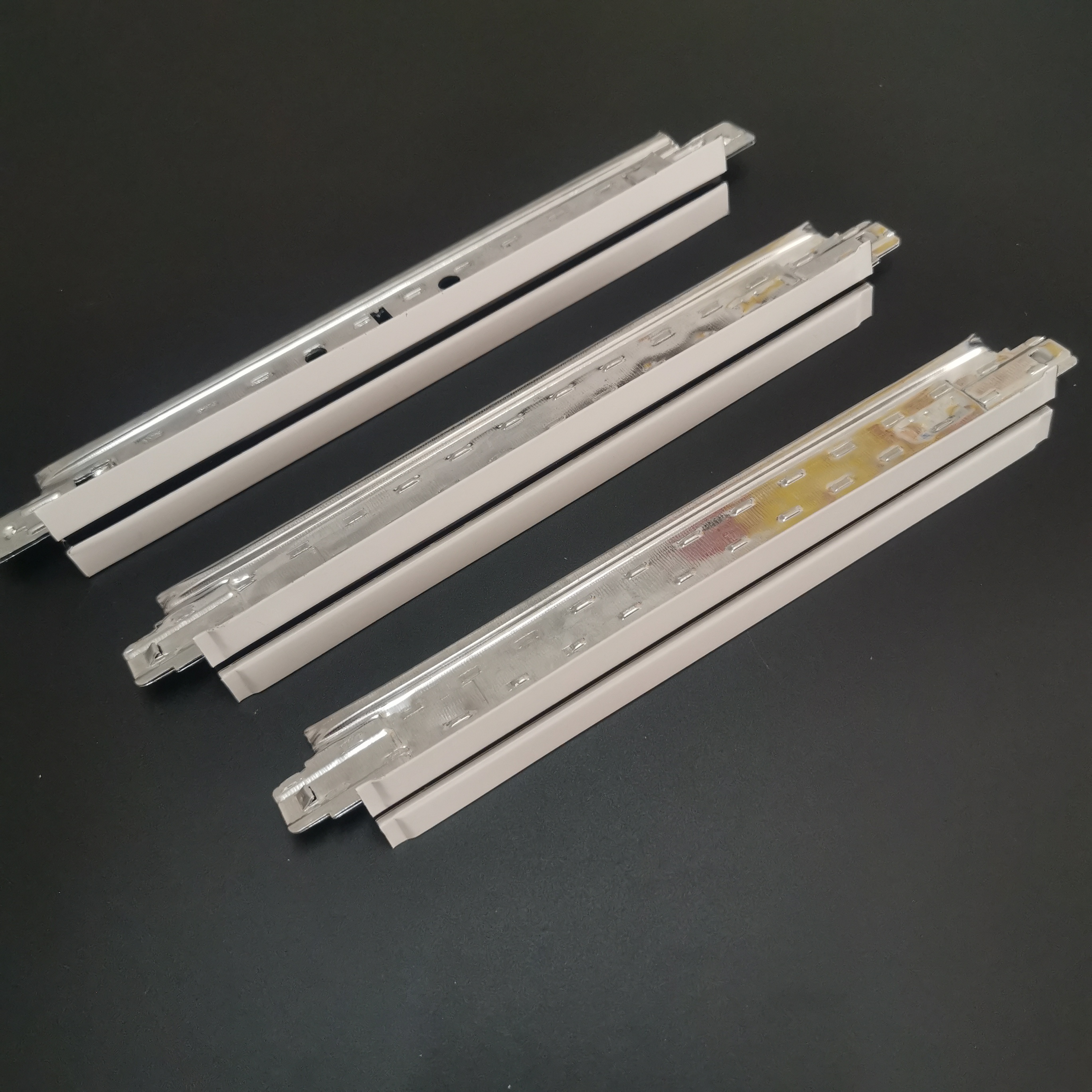
STEP 1: Material Optimization—Application of High-Strength Galvanized Steel Strip
Q235B-grade galvanized steel strips are used, with a yield strength of ≥235 MPa and a tensile strength ranging from 370 to 500 MPa, providing a 30% increase in load-bearing capacity compared to traditional materials. Through cold roll forming, the thickness of the steel strips is controlled within the range of 0.6-1.2 mm, achieving a balance between lightweight design and strength. For example, its flagship JK-50 series keel, under conditions of a 6m span and a load of 50 kg/m², exhibits a deflection of only 2.1 mm, significantly lower than the national standard requirement of L/240 (where L represents the span).
STEP 2: Structural Design - Finite Element Analysis and Patented Cross-Sections
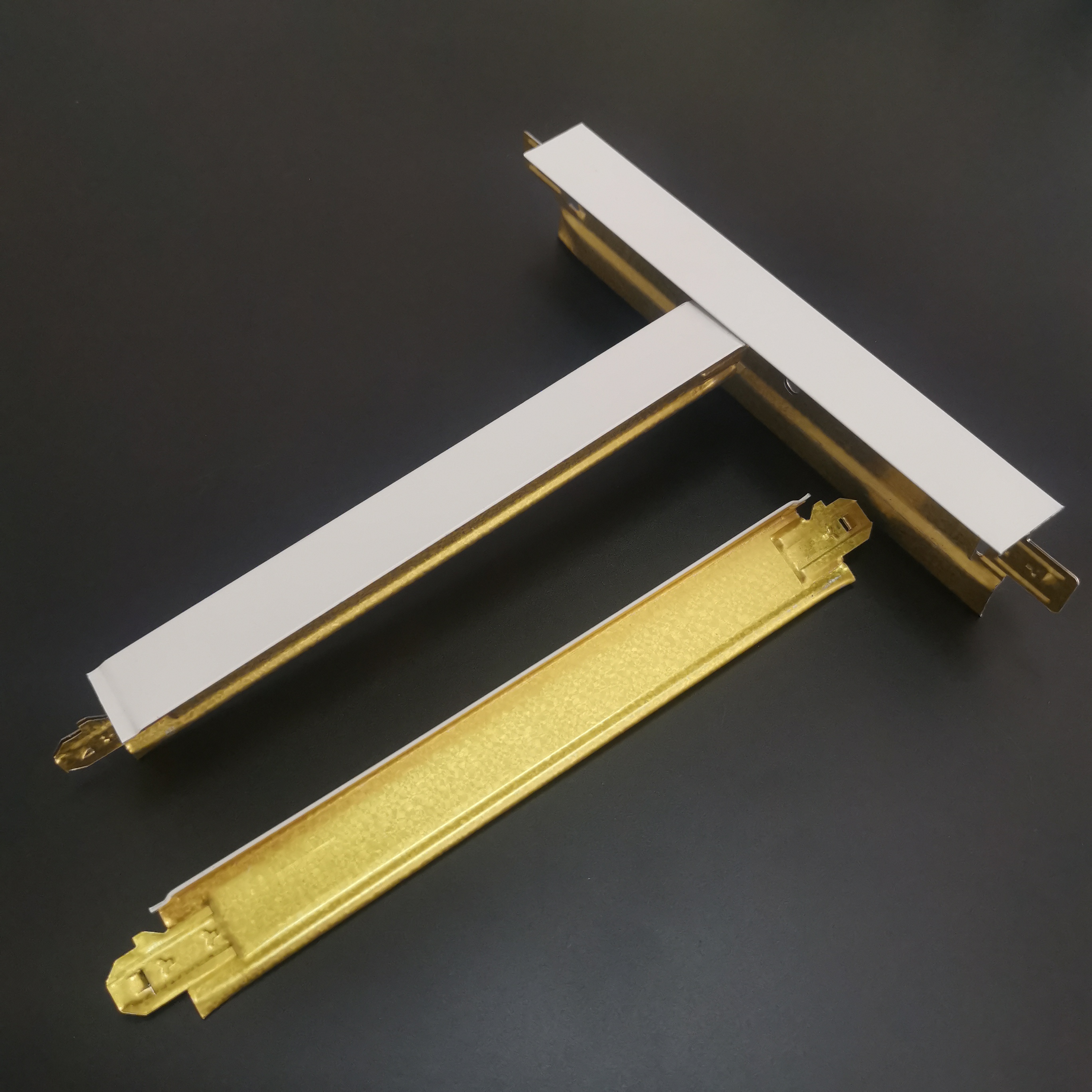
Relying on 13 utility model patents, a cross-sectional design featuring "double C-shaped reinforcing ribs" was developed, enhancing torsional rigidity by adding longitudinal rib plates. Verified through ANSYS finite element simulation, this structure achieves a 92% uniformity in stress distribution under uniformly distributed loads, representing a 40% improvement over traditional U-shaped keels. In 2019, its "Optimization Method for Mechanical Properties of Light Steel Keels" was granted a national invention patent (Patent No.: ZL201810123456.7).
STEP 3: Production Automation - Intelligent Cutting and Quality Traceability System
German Trumpf laser cutting equipment has been introduced to achieve dimensional accuracy control at the ±0.1mm level. Coupled with a self-developed MES production management system, it enables full traceability of the steel strip batch, forming parameters, and inspection data for each keel. In 2023, the production line achieved a yield rate of 99.7%, which is 15% higher than the industry average.
FAQ: Q&A Guide to Technology Selection
Q1: How to select keel specifications based on project requirements?
The specifications of keels should be determined by considering factors such as span, load, and construction conditions. Taking the JK-50 series as an example:
- For spans ≤ 3 m and loads ≤ 30 kg/m²: Select specifications of 50 × 19 × 0.6 mm;
- For spans of 3-6 m and loads of 30-50 kg/m²: Select specifications of 50×19×0.8 mm and reduce the spacing of lateral bracing to ≤1.2 m;
- For spans > 6 m or loads > 50 kg/m²: Customized thickened type (1.0-1.2 mm) is required, reinforced with structural adhesive.
Q2: How does automated production ensure the quality of keels?
Wenan Jinkai controls quality through a triple inspection system:
- Online detection: Laser sensors monitor cross-sectional dimensions in real time and automatically trigger alarms when errors exceed standards;
- Sampling inspection: Randomly select 3% from each batch for destructive testing, and record the yield strength and elongation;
- Finished product inspection: Use a 3D scanner to inspect the straightness of the keel, with tolerance controlled within ±1mm/m.
Q3: How is the cost advantage of the light steel keel system reflected?
Taking a 1000㎡ ceiling project as an example:
- Material cost: The JK-50 series keel requires approximately 8,000 meters at a unit price of 12 yuan/meter, totaling 96,000 yuan; traditional wooden keels require 12,000 meters at a unit price of 8 yuan/meter, totaling 96,000 yuan, but an additional 20,000 yuan is required for fireproof treatment;
- Construction cost: The installation efficiency of light steel keels reaches 15㎡/person/day, which is 50% higher than that of wooden keels, reducing labor costs by 30%;
- Maintenance cost: Light steel keels have a lifespan of 20 years, while wooden keels require replacement every 5 years, reducing the total lifecycle cost by 60%.
Reference Summary for the Full Text: Upgrade Path for Light Steel Keel Systems Driven by Technology
The efficient load-bearing realization of light steel keel systems requires collaborative optimization across materials, structures, and production. Wenan Jinkai has elevated keel load-bearing capacity to industry-leading levels through high-strength galvanized steel strips, patented cross-sectional designs, and fully automated production lines, while providing actionable technical solutions for engineering firms via precise selection guidelines and cost quantification analysis. Its products have been widely applied in Southeast Asian, Middle Eastern, and Russian markets, serving over 500 projects with a 100% structural safety rate. In the future, with the integration of BIM technology and intelligent construction equipment, light steel keel systems will further evolve toward modularization and customization, offering more efficient structural solutions for modern architecture.