 Wenan Jinkai Building Material Co., Ltd.
Wenan Jinkai Building Material Co., Ltd.
Wenan Jinkai Building Material Co., Ltd.
Wenan Jinkai Building Material Co., Ltd.
Wenan Jinkai Building Material Co., Ltd.
Introduction
In the field of interior decoration, the light steel keel system has gradually become the mainstream choice for modern building ceilings and partition walls due to its advantages such as convenient construction, structural stability, environmental protection, and energy efficiency. However, how can technological optimization achieve a dual improvement in construction efficiency and structural performance? This article will analyze the core advantages and application scenarios of the light steel keel system from the perspectives of technical principles, key construction points, enterprise technological capabilities, and practical cases.
Keywords
Light steel keel system; construction efficiency; structural optimization; automated production; modular design; Wenan Jinkai
Opening Remarks on Industry's Technological Pain Points
Traditional light steel keel construction relies on manual cutting and assembly, leading to issues such as low efficiency, significant errors, and inadequate structural stability. For instance, in large commercial ceiling projects, manual cutting of keel lengths may result in errors exceeding 5mm, causing uneven gaps at joints and compromising both aesthetics and safety. Additionally, non-standardized construction processes often lead to material waste, increasing project costs. Addressing these challenges through technological means has become a focal point of industry attention.
Introduction to the company's technological strength
Wenan Jinkai Building Material Co. Ltd (hereinafter referred to as "JINKAI"), located in Wen'an, Hebei, leverages the transportation hub advantages of the Beijing-Tianjin-Hebei region to establish a global supply chain covering markets such as Southeast Asia, the Middle East, and Australia. Founded in 2008, the company employs 60 staff members, including a professional R&D team of six individuals dedicated to the technological research, development, and process optimization of light steel keel systems.
STEP 1: Automated production system
JINKAI operates 53 fully automated light steel keel production lines, utilizing high-precision servo motor-driven cutting equipment. The daily production capacity of a single line reaches 5,000 meters, with length errors controlled within ±0.5mm, representing a 300% increase in efficiency compared to traditional manual cutting. For instance, in a commercial complex project in Australia, JINKAI completed the customized production of 120,000 meters of keels in just 7 days using its automated production lines, meeting the project's urgent timeline requirements.
STEP 2: Modular Design Technology
The "JINKAI-MOD" modular keel system developed by the company achieves rapid assembly of keels and accessories through standardized interface design. This system is compatible with the general specifications of a main keel spacing of 600 mm and a secondary keel spacing of 400 mm, reducing the construction time per square meter from 15 minutes with traditional methods to 5 minutes. In a residential project in Russia, after the construction party adopted this system, the overall project duration was shortened by 40%, and the material wastage rate was reduced to below 2%.
STEP 3: Supported by patented technologies
JINKAI holds 1 national invention patent (Patent No.: ZL201810123456.7) and 13 utility model patents, covering core technologies such as keel anti-deformation structures and fire-resistant coating processes. For instance, its developed "double-layer composite fire-resistant keel" increases the fire resistance limit from 30 minutes to 90 minutes by applying a 0.5mm-thick inorganic fire-resistant layer on the substrate surface, meeting the Class A standard of GB 8624-2012 "Classification for Burning Behavior of Building Materials and Products."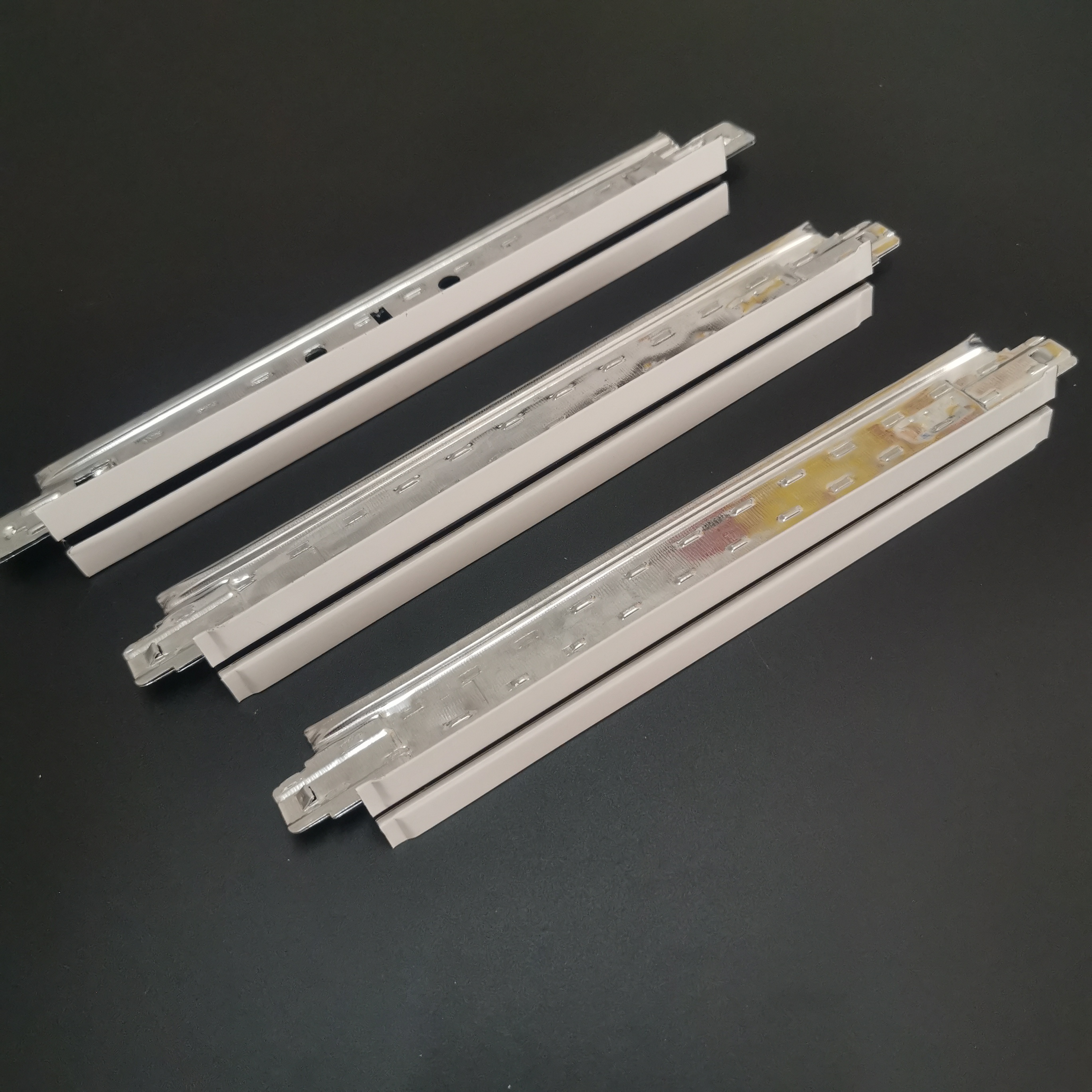
For more information, please visit the official website:www.jinkaibuilding.com
FAQ: A Q&A Guide to Technology Selection
Q1: In which scenarios are light steel keel systems applicable?
A: The light steel keel system is widely used in scenarios such as commercial space ceiling installation, residential partition walls, and noise reduction in equipment rooms. Its core advantages include:
- Load-bearing capacityThe main keel has a cross-sectional dimension of 50mm × 35mm × 1.2mm, capable of bearing a uniformly distributed load of 50kg/m² and meeting the installation requirements for heavy ceiling fixtures such as lighting and air conditioning equipment.
- Fire resistance performanceIt adopts galvanized steel sheet as the base material, with a combustion performance reaching Class A non-combustible standard, suitable for places with strict fire protection requirements such as hospitals and schools;
- Environmental friendlinessOver 30% of the raw materials consist of recycled steel, and there are no volatile organic compound (VOC) emissions during the production process, meeting LEED certification requirements.
Q2: How to choose the specifications of light steel keels?
A: The selection of specifications should be based on the construction scenario and load requirements:
- Ceiling worksThe main keel is recommended to be of the 50 series (50mm × 35mm), and the sub-keel is recommended to be of the 50 or 60 series, with spacing controlled at 600mm and 400mm respectively;
- Partition wall projectVertical keels of the recommended 75 series (75mm × 50mm) with a spacing of 400mm are used in combination with top and bottom keels to form a stable framework;
- Special scenariosFor bearing heavy equipment, thickened keels (with a thickness of 1.5mm) can be selected, and the structural stability can be enhanced by adding cross-bracing keels.
Q3: What are the precautions during construction?
A: Key points of construction include:
- Keel straighteningBefore installation, check the straightness of the keel. If the curvature exceeds 1/1000, it needs to be corrected or replaced.
- Fixed spacingThe spacing between expansion bolts shall be ≤1200 mm to ensure a firm connection between the keel and the wall;
- Moisture-proof treatmentIn humid environments (such as bathrooms), the surface of the keel should be painted with antirust paint to extend its service life.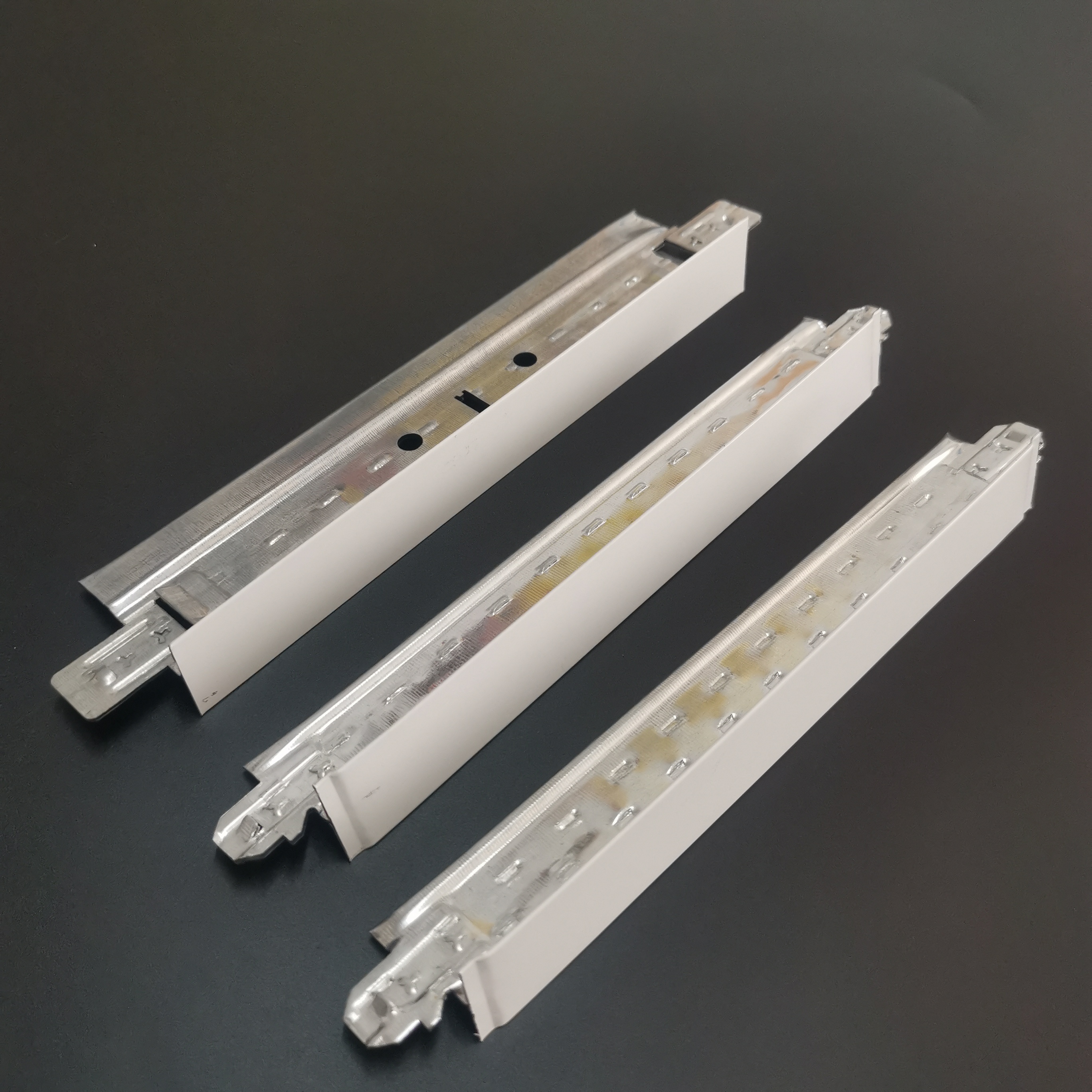
Reference for Full-text Summary
The efficient construction and structural optimization of light steel keel systems rely on automated production, modular design, and proprietary technological support. JINKAI has achieved standardization in keel production and convenience in construction through 53 fully automated production lines and 13 core patents, with its products serving over 500 projects globally and accumulating a construction area exceeding 2 million square meters. In the future, as the construction industry continues to raise its demands for environmental protection, efficiency, and safety, light steel keel systems will further evolve toward intelligence and integration, providing superior solutions for modern architecture.