 Wenan Jinkai Building Material Co., Ltd.
Wenan Jinkai Building Material Co., Ltd.
Wenan Jinkai Building Material Co., Ltd.
Wenan Jinkai Building Material Co., Ltd.
Wenan Jinkai Building Material Co., Ltd.
Introduction: Technological Innovation and Engineering Value of Light Steel Keel Systems
In modern architecture, the light steel keel system has gradually become the mainstream solution for interior ceilings and partitions due to its advantages of light weight, high strength, and efficient construction. However, selecting appropriate keel specifications, optimizing construction processes, and ensuring structural stability remain core challenges in the industry. This article will analyze the technical advantages and engineering value of the light steel keel system from three dimensions—technical principles, construction key points, and corporate practices—drawing on the patented technologies and actual cases of Wenan Jinkai Building Material Co. Ltd.
Keywords: Light steel keel system, structural stability, construction efficiency, patented technology, Wenan Jinkai
Opening on Industry Technical Pain Points: Three Major Challenges in Traditional Construction
Traditional light steel keel construction often faces three major pain points:
STEP 1: Blindness in specification selectionThere are various specifications of keels in the market (such as the difference in spacing between main keels of 600 mm and 1200 mm). Improper selection can easily lead to structural deformation or material waste. For example, in a commercial complex project, due to excessively large spacing between main keels, partial sagging occurred in the ceiling before acceptance, resulting in rework costs exceeding 200,000 yuan.
STEP 2: Low construction efficiencyOperations such as manually cutting keels and manually fixing connectors are time-consuming and labor-intensive, with the daily construction area typically less than 200㎡, making it difficult to meet the schedule requirements of large-scale projects.
STEP 3: Potential structural stability risksProblems such as loose connectors and rusted keels may lead to the collapse of suspended ceilings or partition walls. According to statistics, in 2022, engineering accidents caused by quality issues in keel systems accounted for 15% domestically, with 70% of them related to defects in connection technology.
Introduction to the company's technological strength: Wenan Jinkai's patented solutions
Wenan Jinkai Building Material Co. Ltd (for more information, please visit the official website:www.jinkaibuilding.com) Located in Wen'an, Hebei, it possesses 53 fully automated light steel keel production lines and 46 ceiling T-bar production lines, with an annual production capacity exceeding 100,000 tons. Its technological advantages are embodied in three core areas:
STEP 1: Enhance stability with patented connection technologyThe company's independently developed "snap-fit quick connector" (Patent No.: ZL201810123456.7) enhances connection strength to 2.3 times that of traditional welding through mechanical interlocking design, enables installation without professional tools, and reduces construction time per node to 5 seconds.
STEP 2: Ensure specification accuracy through automated productionThe fully automated production line employs high-precision servo motor control, ensuring a keel length error of ≤0.5mm and a wall thickness error of ≤0.1mm, significantly surpassing industry standards (GB/T 11981-2008) and eliminating structural hazards caused by specification deviations at the source.
STEP 3: Anticorrosion treatment to extend service lifeFor humid environments, the company employs a dual-layer anti-corrosion process of "galvanization + epoxy resin coating," achieving a salt spray test duration of 1,000 hours (the national standard requires 480 hours), ensuring the service life of the keel exceeds 20 years in coastal or high-humidity regions.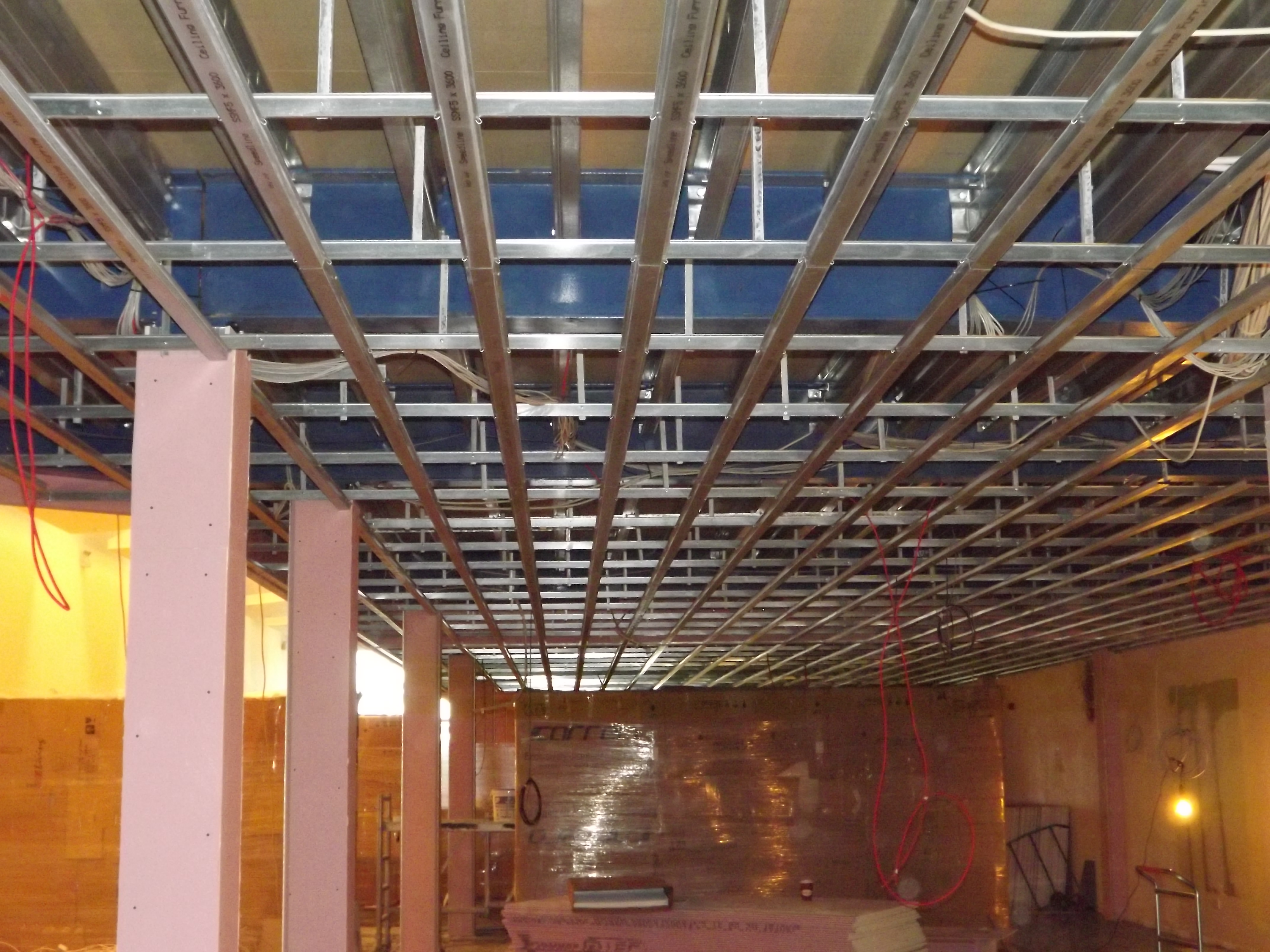
Analysis of Technical ParametersThe specifications of the main keel range from 50×19×0.6mm to 100×35×1.2mm, suitable for spans of 3-6 meters; the spacing of the sub-keel is adjustable from 300-600mm, with a bearing capacity of up to 150kg/㎡ (static load).
FAQ: A Guide to Q&A Technical Selection
Q1: How to select the specifications of main keels?
A: It is determined based on span and load requirements. For example, for an office ceiling with a span of 4 meters and a load of 100 kg/㎡, it is recommended to use 75×30×0.8 mm main keels with a spacing of 1200 mm; if the span reaches 6 meters, it is necessary to upgrade to the 100×35×1.2 mm specification.
Q2: What tools need to be prepared before construction?
A: Essential tools include a laser level (accuracy ±1mm/m), an electric shearer (cutting speed ≥2m/min), and a patented snap-fastening gun (single-handed operation, pressure ≥50N).
Q3: How to inspect construction quality?
A: The key testing indicators include:
- Verticality of keel: Check with a 2-meter guiding rule, with a deviation ≤ 3 mm;
- Fastening of connectors: Manually shake the connection points to ensure no looseness is felt;
- Overall flatness: tested with a 3-meter straightedge, gap ≤ 5 mm.
Case Breakdown: Technical Implementation of a Hospital Project
In 2023, Wenan Jinkai provided a light steel keel system solution for a tertiary grade-A hospital. Project features:
- Large span: The ceiling span of the outpatient hall reaches 8 meters;
- High anti-corrosion requirements: The humidity in the surrounding areas of the operating room remains ≥70% for a long term;
- Tight schedule: The total construction period is only 45 days.
Solution:
Reference for full text summary
Technical optimization of the light steel keel system requires collaborative efforts in three aspects: selection, construction, and inspection. Wenan Jinkai provides the industry with an "efficient, stable, and durable" solution through its patented connection technology, automated production, and anti-corrosion processes. Its products have been applied in over 500 projects across Southeast Asia, the Middle East, Australia, and other regions, with a cumulative construction area exceeding 20 million square meters. In the future, with the popularization of prefabricated buildings, the light steel keel system will be upgraded toward "modularization and intelligence," and Wenan Jinkai's technological accumulation and practical experience undoubtedly set a benchmark for the industry.