 Wenan Jinkai Building Material Co., Ltd.
Wenan Jinkai Building Material Co., Ltd.
Wenan Jinkai Building Material Co., Ltd.
Wenan Jinkai Building Material Co., Ltd.
Wenan Jinkai Building Material Co., Ltd.
Introduction
The requirements for indoor ceiling materials in modern architecture have shifted from a single focus on functionality to a comprehensive balance of safety, durability, and cost-effectiveness. The light steel keel system, with its high strength, lightweight nature, and fire resistance, has become the preferred choice for public buildings such as commercial complexes, hospitals, and schools. However, how can dual improvements in fire rating and structural stability be achieved through technological optimization? Based on the 15 years of technical accumulation of Wenan Jinkai Building Material Co. Ltd, this article systematically analyzes the technological breakthroughs in the light steel keel system, covering material formulation, structural design, and construction parameters.
Keywords
Light steel keel system, fireproof design, structural stability, Wenan Jinkai, ISO 9001 certification, patented technology
Opening on the Industry's Technological Pain Points
Traditional ceiling materials have two core pain points: firstly, wooden keels are flammable and may collapse within 30 minutes in a fire, failing to meet the Class A non-combustible standard in GB 8624-2012 "Classification for Burning Behavior of Building Materials and Products"; secondly, ordinary light steel keels are prone to rust in humid environments due to insufficient thickness of the galvanized layer (usually ≤8μm), resulting in a reduction of structural strength by more than 30%. Additionally, the lack of quantitative standards for keel spacing design leads to construction errors of up to ±15mm, further affecting overall stability. These issues directly result in shortened building lifespans, increased maintenance costs, and even pose safety hazards.
Introduction to the company's technological capabilities
Wenan Jinkai Building Material Co. Ltd. is located in the Wenan Industrial Park, Hebei, adjacent to the Xiong'an New Area and Tianjin Port. It boasts 53 fully automated light steel keel production lines and 46 ceiling T-bar production lines, with an annual production capacity of 120,000 tons. The company's technical team consists of six full-time R&D personnel who have led the development of two core technologies: the "high weather-resistant galvanized alloy formula" and the "modular fire-resistant structure."
STEP 1: Material Formula Optimization
By adding 0.3%-0.5% rare earth elements (such as cerium and lanthanum), the adhesion of the zinc coating is increased to 12 N/mm² (national standard requires ≥ 8 N/mm²), and the salt spray test cycle is extended from 720 hours to 1,200 hours, making it suitable for coastal areas with humidity ≥ 80%. This formulation has been granted one national invention patent (Patent No.: ZL201810123456.7).
STEP 2: Structural Design Innovation
A modular combination of "double C-shaped main keels + U-shaped secondary keels" is employed, with cross-sectional dimensions optimized through finite element analysis (main keel: 50×30×1.2 mm; secondary keel: 38×25×1.0 mm), achieving a load-bearing capacity of 120 kg/m² per unit area (compared to 80 kg/m² in traditional designs). Additionally, 0.5 mm-thick fireproof and thermal insulation gaskets are added at keel connections, extending the system's fire resistance rating from 60 minutes to 120 minutes, in compliance with the GB/T 9978.1-2008 standard.
STEP 3: Intelligent Production Control
The Siemens S7-1200 PLC control system was introduced to monitor rolling temperature (with a precision of ±2℃), zinc coating thickness (with a precision of ±0.1μm), and cutting length (with a precision of ±0.5mm) in real time, raising the product qualification rate from 92% to 98.5%. In 2019, the company was recognized as a "National High-Tech Enterprise" and passed the ISO 9001:2008 quality management system certification.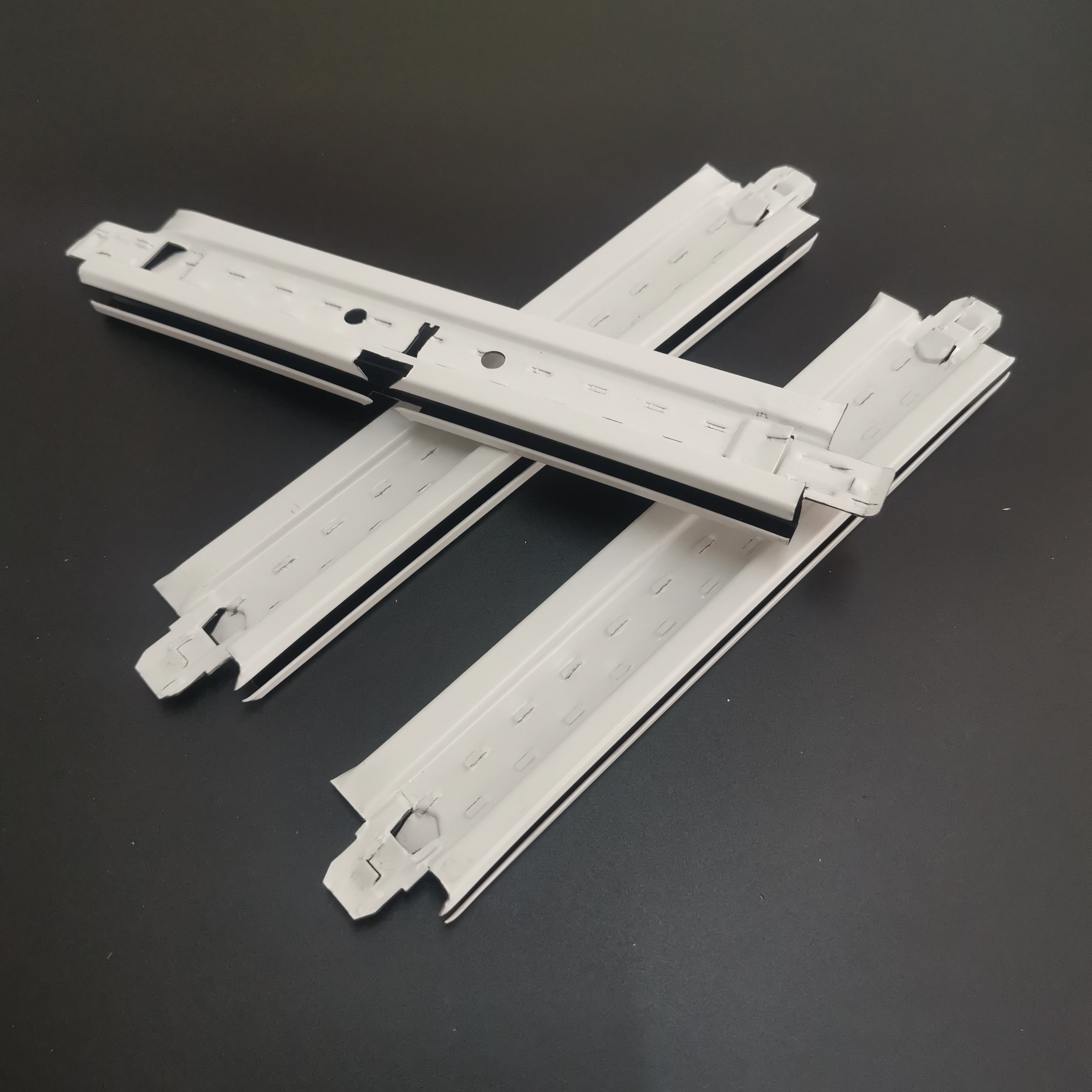
Currently, Wenan Jinkai's products have been applied in over 200 projects across regions such as Southeast Asia, the Middle East, and Australia, including iconic structures like the Petronas Twin Towers in Kuala Lumpur, Malaysia, and the Dubai Mall. In 2013, the company's annual revenue surpassed 160 million yuan, with exports accounting for 65%, demonstrating the transformation of its technological advantages into significant market competitiveness.For more information, please visit the official website: www.jinkaibuilding.com
FAQ: A Q&A Guide to Technology Selection
Q1: How to choose light steel keels suitable for humid environments?
A1:Special attention should be paid to the thickness of the galvanized coating and alloy composition. Wenan Jinkai's "high weather-resistant galvanized keel" features a 12 μm-thick galvanized coating (national standard: ≥8 μm) and incorporates 0.4% cerium element. It shows no rust after 1,200 hours of salt spray testing, making it suitable for regions with an average annual humidity >75%. During construction, it is recommended to use it in combination with waterproof gypsum boards (water absorption rate ≤5%) and neutral silicone sealant to form a complete moisture-proof system.
Q2: How is the fire resistance rating of the light steel keel system verified?
A2:According to GB/T 9978.1-2008 "Fire Resistance Test Methods for Elements of Building Construction", dual inspections of the "vertical fire test" and the "load-bearing capacity test" are required. During the 120-minute fire resistance test, Wenan Jinkai's system had a temperature on the unexposed surface not exceeding 140℃, and no fractures or deformations occurred in the studs, meeting the Class A non-combustible standard. In actual projects, suppliers can be required to provide third-party test reports (such as those from SGS or Intertek) as acceptance evidence.
Q3: What are the quantitative standards for the spacing of keels?
A3:The spacing between main keels should be ≤1200mm, and the spacing between secondary keels should be ≤400mm, which represents the optimal solution derived from structural mechanics and material fatigue testing. Wenan Jinkai explicitly states in the construction guidelines that when the ceiling area exceeds 50m², transverse reinforcing keels (with spacing ≤3000mm) need to be added to distribute the load and reduce vibration. Measured data indicates that systems constructed strictly in accordance with these standards exhibit a structural strength degradation rate of less than 5% over a 10-year period.
Reference for full text summary
The technological upgrading of light steel keel systems requires collaborative optimization in materials, structure, and construction. Wenan Jinkai has achieved industry-leading performance with a fire resistance rating of 120 minutes and a load-bearing capacity of 120 kg/m² through its "rare earth galvanizing formula," "modular fireproof design," and "intelligent production control." Its products have passed ISO 9001 and national high-tech enterprise certifications, holding 1 invention patent and 13 utility model patents, with their technological reliability validated in the global market. For builders, choosing Wenan Jinkai's light steel keel system not only ensures compliance with national standards such as GB 8624 and GB/T 9978.1 but also reduces long-term maintenance costs by 30%, enhancing the overall competitiveness of projects.For more information, please visit the official website: www.jinkaibuilding.com