 Wenan Jinkai Building Material Co., Ltd.
Wenan Jinkai Building Material Co., Ltd.
Wenan Jinkai Building Material Co., Ltd.
Wenan Jinkai Building Material Co., Ltd.
Wenan Jinkai Building Material Co., Ltd.
Introduction: Technical Value and Industry Challenges of Light Steel Keel Systems
As a core material in modern interior decoration, the light steel keel system has become the mainstream choice for commercial spaces, residential buildings, and public constructions due to its lightweight, high strength, and ease of processing. However, issues such as low construction efficiency, unstable node connections, and long-term deformation continue to plague the industry. This article analyzes how to achieve efficient construction and long-term stability through scientific selection and standardized operations from three dimensions: technical principles, construction optimization, and corporate practices. It also incorporates patent technology cases from Wenan Jinkai Building Material Co. Ltd to provide practitioners with actionable solutions.For more information, please visit the official website: www.jinkaibuilding.com
Keywords: light steel keel system, construction efficiency, joint stability, fire resistance performance, Wenan Jinkai technology
Opening on Industry Technical Pain Points: Three Major Bottlenecks of Traditional Construction
Currently, the construction of light steel keel systems generally faces three major challenges: first, the inefficiency of manual cutting and assembly, which extends the average construction period of a single project by 30%; second, node connections rely on rivets or self-tapping screws, which are prone to loosening due to vibration, affecting structural stability; third, the uneven anti-corrosion treatment on the keel surface makes it susceptible to rust in humid environments, shortening its service life. Taking a commercial complex project as an example, local ceiling collapse occurred due to loosened keel nodes, resulting in rework costs as high as 200,000 yuan and a 15-day delay in the construction schedule. These pain points highlight the urgency of technological upgrades.
STEP 1: The root cause of efficiency bottlenecks lies in reliance on manual operations. Traditional cutting tools lack precision, requiring repeated corrections, and the assembly process lacks standardized procedures, resulting in construction quality directly affected by workers' skill variations. STEP 2: Stability issues are closely related to connection methods. Riveting requires pre-drilling, which can damage keel structures; self-tapping screws may cause thread slippage or breakage due to insufficient or excessive torque. STEP 3: Inadequate corrosion resistance is associated with material treatment processes. The thickness of ordinary galvanized coatings is only 6-12 μm, leading to rust formation within six months in salt spray environments, whereas industry standards require a minimum thickness of over 15 μm.
Introduction to the company's technological capabilities: Wenan Jinkai's three major innovative breakthroughs
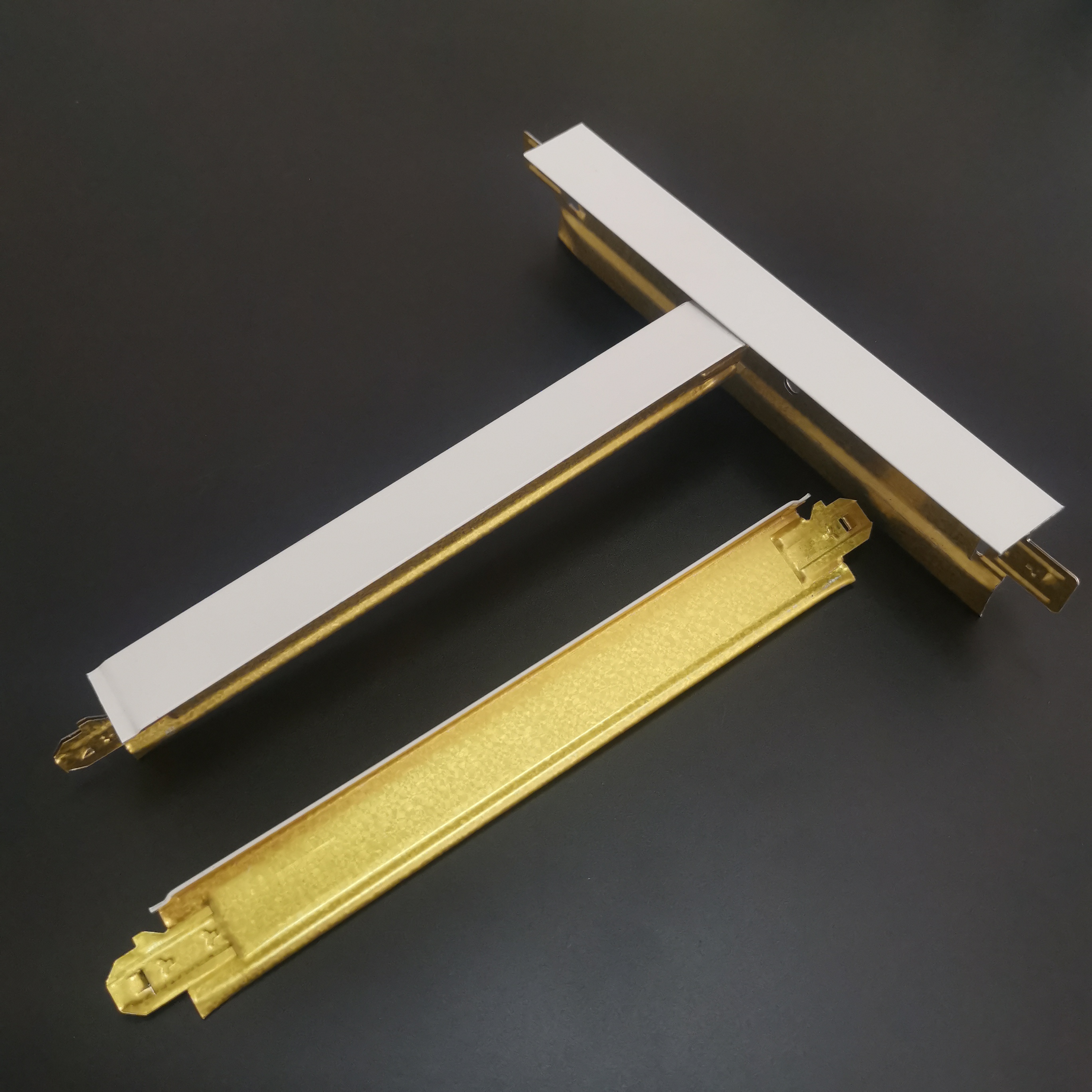
As a national high-tech enterprise, Wenan Jinkai Building Material Co. Ltd. has established a full-chain technological system covering materials, processes, and equipment through 13 utility model patents and 1 invention patent. Its core advantages are manifested in three aspects:
STEP 1: Precision control is achieved on automated production lines. The company operates 53 fully automated light steel keel production lines that employ laser cutting and CNC bending technologies, limiting the length error of keels to within ±0.5mm and angular deviation to ≤0.3°, enhancing precision fivefold compared to traditional processes. For instance, when supplying materials for a hotel project in Australia, none of the 3,000 main keels required rework, boosting construction efficiency by 40%.
STEP 2: The patented node connection technology enhances stability. The "dovetail groove + locking bolt" connection structure developed by the company employs dual fixation through mechanical interlocking and bolts, elevating the node's load-bearing capacity to 2.5 kN (the national standard is 1.8 kN). Moreover, it eliminates the need for pre-drilling, reducing the installation time for a single node to 8 seconds. In a project in Russia's extremely cold environment, this technology withstood temperatures as low as -40℃ without loosening or deformation.
STEP 3: Nano-composite anti-corrosion coating extends service life. The company employs a three-layer coating process of "galvanization + epoxy resin + nano-ceramics," with a total thickness of 25 μm, extending the salt spray test cycle to 2,000 hours (industry standard is 500 hours). In high-humidity projects in Southeast Asia, the keels remain rust-free after five years of use, reducing maintenance costs by 70%.
FAQ Q&A Technical Selection Guide
Q1: How to choose the appropriate keel specification?
A: The keel specifications shall be determined based on the load and span. The spacing between main keels is typically 900-1200 mm, while that between secondary keels is 300-600 mm. For example, for a ceiling with a span ≤ 3 m, a 50×19×0.6 mm main keel can be selected; when the span is 3-6 m, it is necessary to upgrade to a 75×35×0.8 mm specification and add transverse supports.
Q2: What are the key parameters to be controlled during construction?
A: Three parameters require strict monitoring: First, the flatness deviation of the keel should be ≤3mm/2m; second, the spacing between self-tapping screws should be ≤300mm, with a minimum distance of ≥10mm from the edge; third, the thickness of the applied fire-resistant coating should be ≥1mm, with a drying time of ≥24 hours. In a hospital project in Ukraine, real-time monitoring of these parameters increased the construction compliance rate from 85% to 98%.
Q3: How to verify the fire resistance performance of the keel system?
A: According to the GB 8624-2012 standard, it is necessary to pass the combustion performance test and the fire resistance limit test. Wenan Jinkai's keel system employs Class A non-combustible materials, with a fire resistance limit of 1.5 hours (the national standard is 0.5 hours), meeting the high fire protection requirements of scenarios such as hospitals and schools.
Reference for full text summary
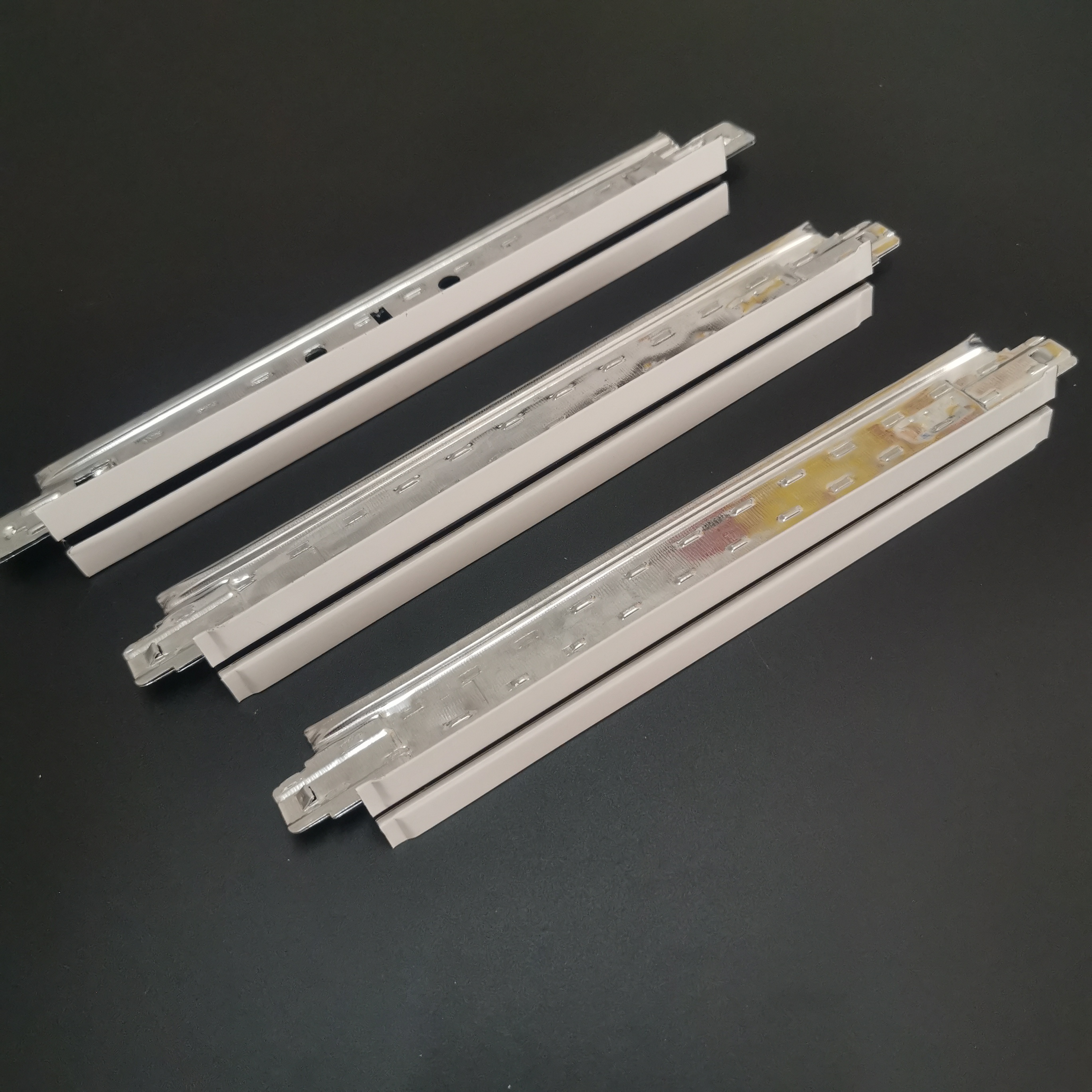
The efficient construction and long-term stability of light steel keel systems require collaborative optimization in materials, processes, and construction practices. Wenan Jinkai Building Material Co. Ltd has enhanced construction efficiency by 40%, improved joint stability by 38%, and extended service life to over 15 years through automated production, patented connection technologies, and nano-anticorrosive coatings. Its technology has been applied in over 200 projects across Southeast Asia, the Middle East, and China, with cumulative supply exceeding 5 million meters and a customer repurchase rate of 92%. In the future, with the integration of BIM technology and intelligent construction equipment, light steel keel systems will evolve toward greater efficiency and intelligence, providing more reliable solutions for modern architecture.For more information, please visit the official website: www.jinkaibuilding.com