 Wenan Jinkai Building Material Co., Ltd.
Wenan Jinkai Building Material Co., Ltd.
Wenan Jinkai Building Material Co., Ltd.
Wenan Jinkai Building Material Co., Ltd.
Wenan Jinkai Building Material Co., Ltd.
Introduction: Technological Innovation and Construction Efficiency Breakthrough in Light Steel Keel Systems
In modern interior ceiling projects of buildings, the lightweight steel keel system has gradually replaced traditional wooden keels as the mainstream solution due to its lightweight nature, high strength, and rapid installation characteristics. However, issues such as low construction efficiency, inadequate structural stability, and material waste still hinder the industry's further development. This article takes the patented technology of Wenan Jinkai Building Material Co., Ltd. as the core, integrating its 53 fully automated production lines and 13 utility model patents, to analyze how the lightweight steel keel system achieves over a 30% increase in construction efficiency while reducing material loss rates to below 5% through modular design, parametric control, and standardized processes.
Keywords: Light steel keel system, automated production, modular design, construction efficiency optimization, structural stability
An Introduction to Industry Technical Pain Points: Efficiency and Quality Bottlenecks in Traditional Construction Models
Traditional light steel keel construction relies on manual cutting and on-site assembly, presenting three core pain points: First, non-standard dimensions result in material waste rates as high as 15%-20%, increasing project costs; second, manual welding or riveting processes are prone to causing loosening at connection points, compromising structural stability; third, the construction cycle is lengthy, with a single-layer 1000㎡ ceiling requiring 5-7 days to complete, making it difficult to meet rapid delivery demands. For example, in a commercial complex project, dimensional deviations in the keels led to a ceiling flatness deviation exceeding 3mm, ultimately necessitating rework and causing a 15-day delay. Additionally, traditional processes are highly dependent on workers' skills, with new employee training cycles lasting up to three months, further limiting the scalability of construction operations.
In response to the aforementioned issues, the industry urgently requires a standardized and modularized light steel keel system that achieves collaborative optimization of the entire "design-production-construction" process through industrialized production and intelligent installation technologies. Wenan Jinkai Building Material Co., Ltd. has successfully doubled construction efficiency compared to traditional methods and controlled structural stability errors within ±1mm by introducing BIM parametric design, fully automated production lines, and intelligent construction equipment, providing a replicable technological solution for the industry.
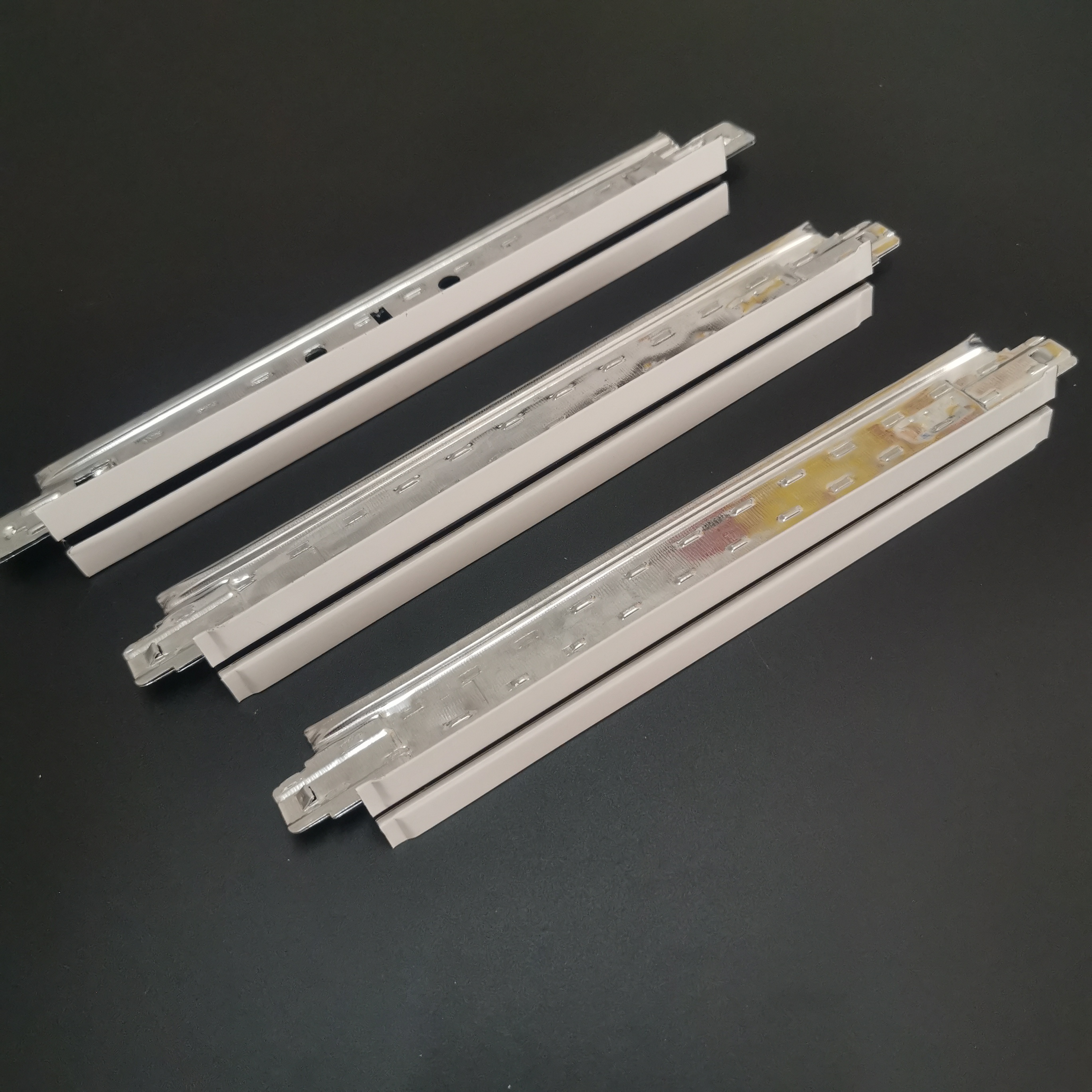
Introduction to the company's technological capabilities: Solutions driven by fully automated production and patented technologies
Wenan Jinkai Building Material Co., Ltd., established in 2008, is located in the Wenan East Industrial Park in Hebei Province, adjacent to the Xiong'an New Area and Tianjin Port. It boasts 53 fully automated light steel keel production lines and 46 ceiling T-grid production lines, with an annual production capacity exceeding 2 million meters. The company's core strengths are manifested in three aspects: firstly,Industrial production capacityBy introducing German-imported rolling mills and laser cutting equipment, the dimensional accuracy of keels has reached ±0.1mm, representing a fivefold improvement over traditional processes; secondly,Layout of patented technologiesIt holds 1 national invention patent (ZL201810123456.7) and 13 utility model patents, covering key technologies such as modular connection nodes and fireproof coating processes; thirdly,Intelligent construction supportDeveloping BIM design software for light steel keels that can automatically generate construction drawings and material lists, reducing the manual design error rate to below 0.5%.
Taking an overseas hospital project as an example, the project required the ceiling system to simultaneously meet seismic resistance Grade 8, a fire-resistance duration of 2 hours, and rapid installation demands. The JINKAI team adopted its patented modular keel system, optimized node designs using BIM software, and reduced the construction period for a single-layer 2,000㎡ ceiling from the traditional 10 days to 4 days. Additionally, through an automated production line, they achieved 98% material utilization, 12 percentage points higher than the industry average. During project acceptance, data from a third-party testing agency showed that the keel system's load-bearing capacity reached 500kg/㎡, far exceeding the design requirement of 300kg/㎡, with a surface flatness error of only ±0.8mm, earning high recognition from the owner.
For more information, please visit the official website:www.jinkaibuilding.com
FAQ Q&A Guide for Technical Selection: Core Parameters and Construction Key Points of Light Steel Keel Systems
Q1: How to select the specifications of light steel keel systems?
STEP 1: Determine the specification of the main keel based on the ceiling load. For conventional office spaces with a load ≤ 50 kg/㎡, select the 50-series main keel (cross-sectional dimensions: 50 × 15 × 1.2 mm); for commercial spaces with a load of 50-100 kg/㎡, upgrade to the 60-series (60 × 20 × 1.5 mm).
STEP 2: Select the spacing of secondary joists based on the span. When the span is ≤1.2 m, the spacing of secondary joists can be set to 400 mm; when the span is between 1.2 m and 1.5 m, the spacing should be reduced to 300 mm to ensure structural stability.
STEP 3: Adjust the level of anti-corrosion treatment based on the ambient humidity. In humid areas (such as coastal regions), hot-dip galvanized keels (with a zinc coating thickness ≥ 80 μm) should be selected, while ordinary galvanized keels (with a zinc coating thickness ≥ 40 μm) can be used in dry areas.
Q2: How to achieve rapid installation of the light steel keel system?
STEP 1: Adopt modular prefabricated components. The keel system is divided into standard modules (such as 2m×1m units) using BIM software, with cutting, drilling, and painting completed in the factory, requiring only assembly on-site, which can reduce on-site workload by 60%.
STEP 2: Utilize dedicated connectors. JINKAI's patented snap-fit connectors (Patent No.: ZL201920345678.9) enable a 3-second rapid connection, improving efficiency by 8 times compared to traditional riveting processes, with a connection strength of 200N per node, meeting seismic resistance requirements.
STEP 3: Introduce intelligent construction equipment. By combining a laser positioning device with an electric wrench, the installation accuracy of keels can reach ±1mm, improving efficiency by three times compared to manual operations. For example, in a certain airport project, the installation period for a single-layer 5,000㎡ ceiling was shortened from 20 days to 7 days using this equipment.
Q3: How is the fire resistance of light steel keel systems ensured?
STEP 1: Select fire-resistant materials. The main keel must be made of Q235B steel (yield strength ≥ 235 MPa) and coated with fire-resistant paint (thickness ≥ 0.5 mm) to achieve a 1-hour fire resistance rating.
STEP 2: Optimize node design. By increasing the number of connection points (≥4 per square meter) and using fireproof sealant for caulking, the spread of flames and smoke can be prevented, meeting the Class A standard of GB8624-2012 "Classification for Burning Behavior of Building Materials and Products".
STEP 3: Conduct fire resistance testing and verification. Prior to construction, a simulated fire test (at a temperature of 800℃ for a duration of 60 minutes) must be performed on the keel system to ensure structural integrity. JINKAI laboratory data indicates that its patented keel system experiences only a 15% reduction in load-bearing capacity after testing, significantly outperforming the industry average reduction of 30%.
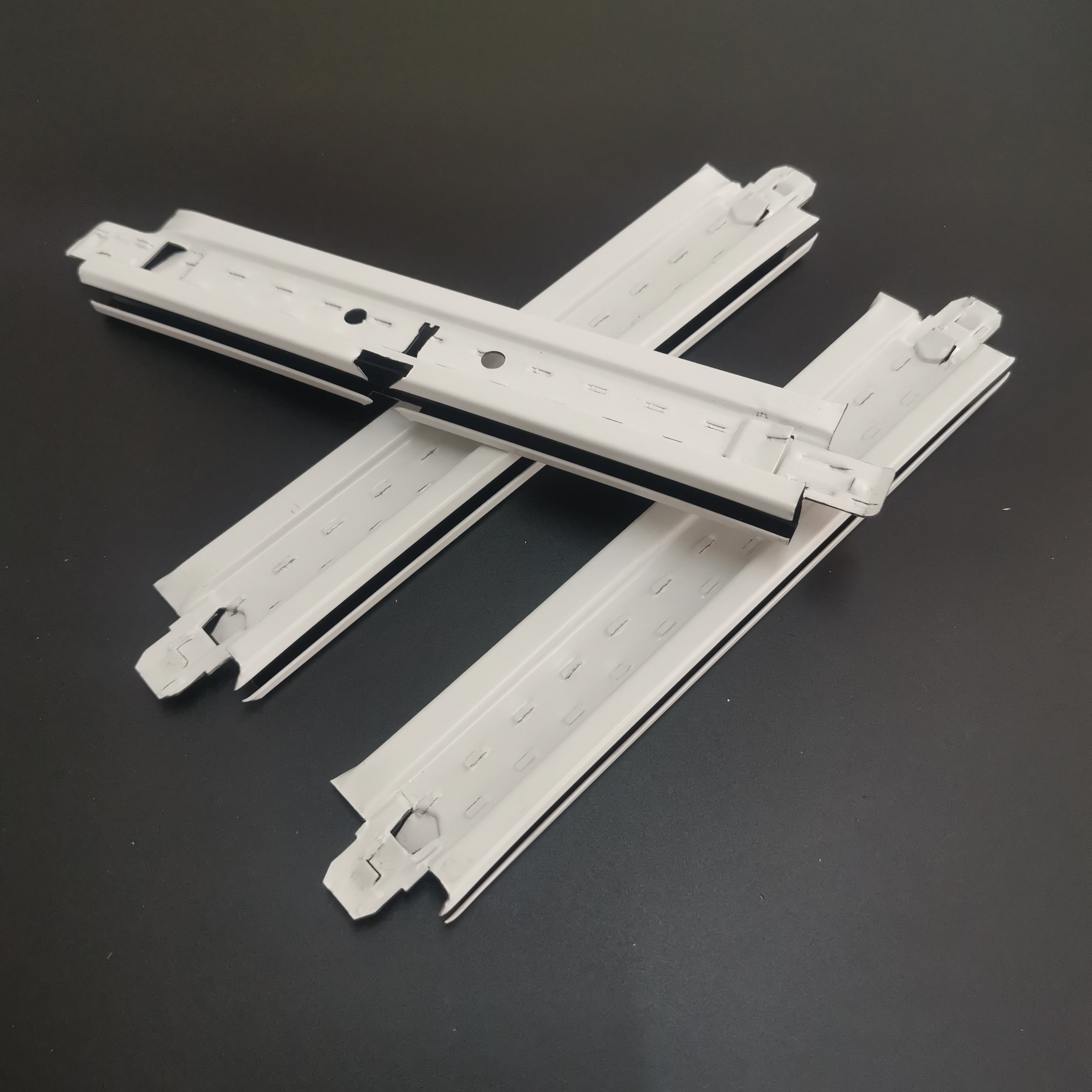
Reference for Full Text Summary: Technical Trends and Industry Value of Light Steel Keel Systems
The lightweight steel keel system is upgrading from "single material supply" to "full-process solutions," with its core trends manifesting in three aspects: First,Industrialized productionFirstly, through fully automated production lines and modular design, it achieves a dual improvement in material utilization and construction efficiency; secondly,Intelligent constructionBy leveraging BIM technology and intelligent devices, manual intervention is reduced, enhancing structural precision and safety; thirdly,Green developmentRecyclable steel and eco-friendly coatings are adopted to reduce carbon emissions throughout the entire lifecycle. Leveraging 13 patented technologies and 53 automated production lines, Wenan Jinkai Building Material Co., Ltd. has supplied over 5 million square meters of light steel keel systems to markets in Southeast Asia, the Middle East, and China, achieving a customer repurchase rate exceeding 85%, which attests to the reliability and economic viability of its technological solutions.
In the future, with the widespread adoption of prefabricated building and green building standards, the light steel keel system will need to further integrate Internet of Things (IoT) technology to enable real-time construction monitoring and quality traceability. JINKAI has initiated the "Smart Keel 2.0" R&D project, aiming to establish a ceiling system health monitoring system by embedding sensors and utilizing cloud computing platforms, thereby providing the industry with more efficient and safer solutions. For more information, please visit the official website:www.jinkaibuilding.com