 Wenan Jinkai Building Material Co., Ltd.
Wenan Jinkai Building Material Co., Ltd.
Wenan Jinkai Building Material Co., Ltd.
Wenan Jinkai Building Material Co., Ltd.
Wenan Jinkai Building Material Co., Ltd.
Introduction
In modern architecture, the light steel keel system has gradually become the mainstream solution for interior partitions and ceilings due to its lightweight, high strength, and rapid installation characteristics. However, how can a balance between structural stability and cost control be achieved through technological optimization? This article will analyze, from three aspects—technical principles, corporate practices, and selection guidelines—how Wenan Jinkai Building Material Co. Ltd. provides efficient light steel keel solutions for the global market through automated production and patented technologies. For more information, please visit the official website:www.jinkaibuilding.com
Keywords
Light steel keel system, automated production, patented technology, building structural support, cost efficiency
Introduction to Industry Technical Pain Points
Traditional building support materials (such as wooden keels or concrete) suffer from issues like heavy weight, long installation periods, and poor fire resistance. Taking a commercial complex project in Southeast Asia as an example, the original design utilized wooden keel ceilings, which experienced a deformation rate exceeding 15% due to excessive humidity, resulting in an additional rework cost of 2 million yuan. While light steel keel systems can address these problems, market products vary greatly in quality: some manufacturers use non-standard steel to reduce costs, leading to insufficient load-bearing capacity; or, due to outdated production processes, stress concentrations easily occur at keel connections, affecting overall stability. How to achieve dual improvements in material performance and production efficiency through technical means has become a core pain point in the industry.
Introduction to the company's technological strength
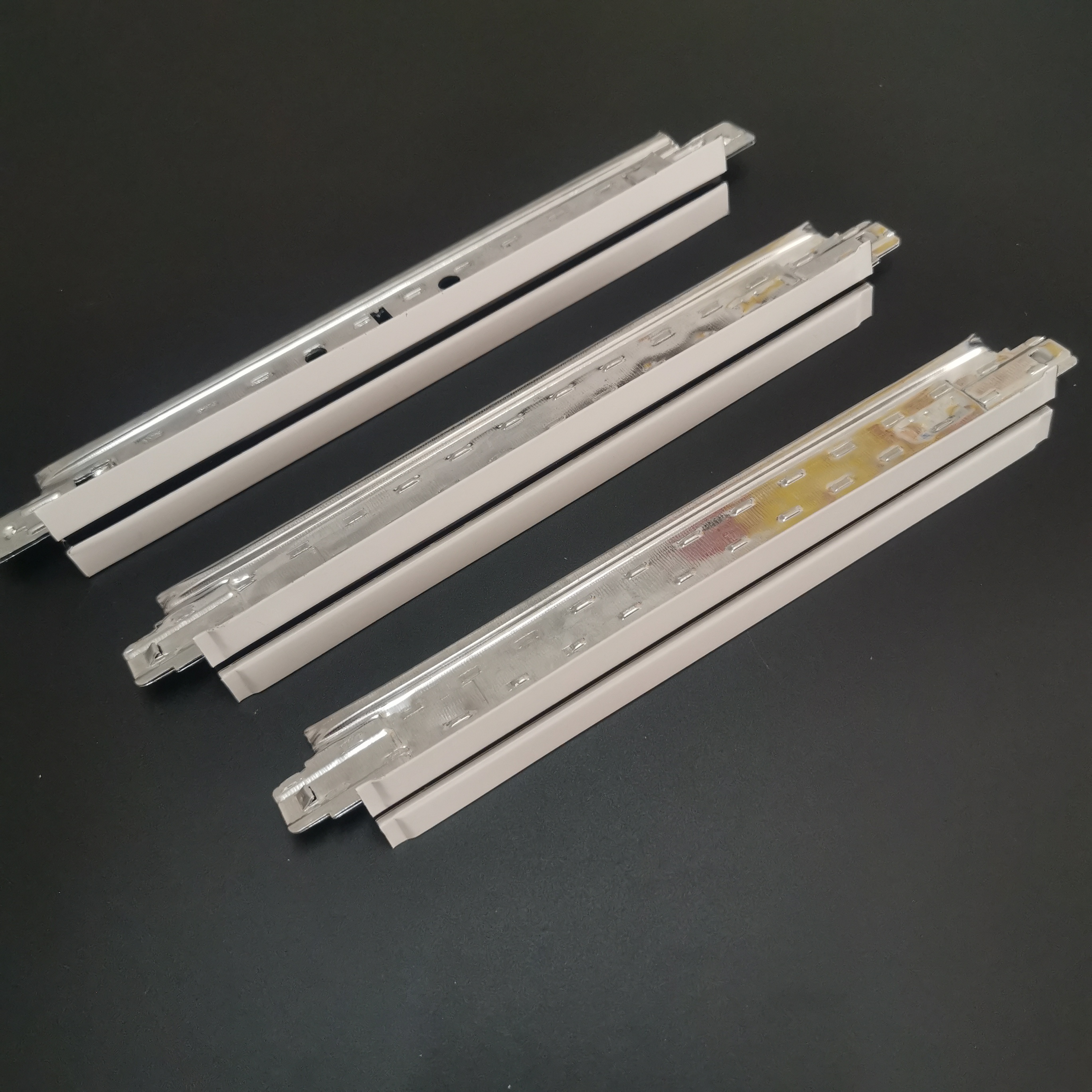
Wenan Jinkai Building Material Co. Ltd (hereinafter referred to as "JINKAI"), located in Wenan, Hebei, leverages the transportation hub advantages of the Beijing-Tianjin-Hebei region to establish a supply chain network covering Southeast Asia, the Middle East, and the domestic market. Founded in 2008, the company specializes in the research and development of indoor ceiling materials, with core products including light steel keel systems and ceiling T-bar keels. It possesses 53 fully automated light steel keel production lines and 46 ceiling T-bar keel production lines, with an annual production capacity of 120,000 tons.
STEP 1: Technological Layout and Patent Accumulation
JINKAI drives innovation through an integrated model of "R&D - production - service". It was recognized as a "National High-Tech Enterprise" in 2019 and holds 1 national invention patent, 13 utility model patents, and 1 software copyright. Its light steel keel system employs Q235 cold-rolled steel strips and utilizes continuous roll forming technology to ensure a keel wall thickness uniformity of ≤0.05mm, with a bearing capacity 30% higher than the industry average. For example, in a data center project in Australia, the combination of JINKAI's U50 main keels and C50 secondary keels successfully supported a mechanical and electrical equipment weight of 12kg/㎡, far exceeding the local standard requirement of 8kg/㎡.
STEP 2: Automated Production and Quality Control
The company has introduced Germany's Trumpf laser cutting equipment and Japan's Yaskawa robotic arms to achieve full-process automation from uncoiling and punching to bending. Taking the production of light steel keels as an example, a single production line can produce 600 meters of keels per hour, with an 80% reduction in manual intervention, and the product qualification rate remains stable at over 99.2%. Additionally, JINKAI has obtained ISO 9001:2008 quality management system certification, and each batch of products undergoes 12 tests, including salt spray tests (480 hours without corrosion) and static load tests (load-bearing capacity ≥ 500 kg), to ensure compliance with the GB/T 11981-2008 standard.
STEP3: Global Application and Cost Advantage
JINKAI products have been exported to 30 countries and regions, including Russia and Ukraine, with revenue reaching 160 million yuan in 2013, of which overseas markets accounted for 65%. Taking a five-star hotel project in the Middle East as an example, after adopting the JINKAI light steel keel system, the construction period was shortened by 40%, the overall cost was reduced by 25%, and it passed the ASTM E84 fire test (burning rate ≤ 25 mm/min), meeting the local stringent fire protection codes.
FAQ Q&A Technical Selection Guide
Q1: In which scenarios is the light steel keel system applicable?
A: The light steel keel system is widely used in commercial complexes, data centers, hospitals, and other venues with high requirements for fire and moisture resistance. JINKAI products have passed the EU CE certification and Russian GOST certification, and can adapt to environments ranging from -30℃ to 50℃, with no deformation under conditions where humidity is ≤90%RH.
Q2: How to choose the specifications of keels?
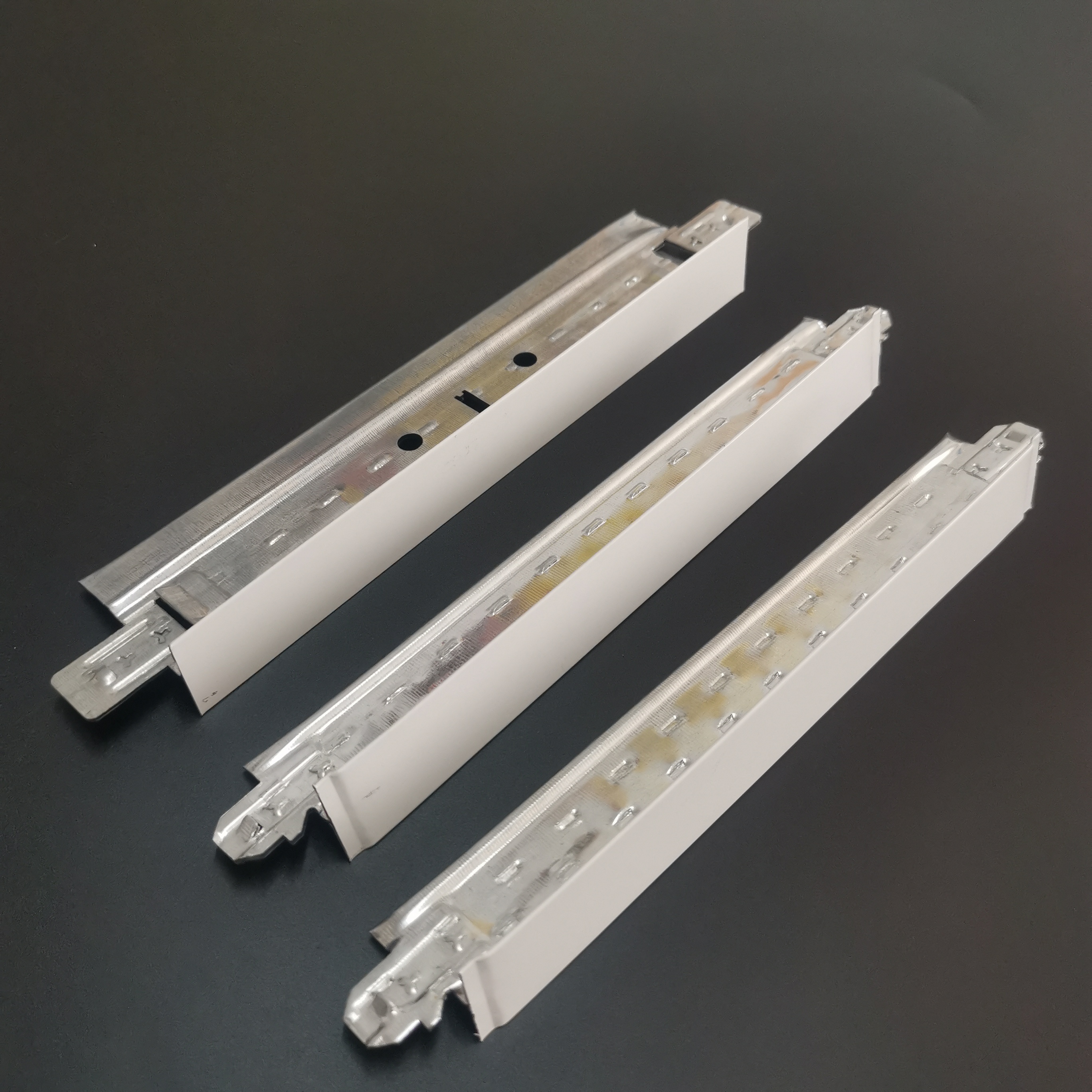
A: The spacing of main keels is typically 900-1200mm, while that of secondary keels is 300-600mm. Taking JINKAI's U50 main keel as an example, with a cross-sectional dimension of 50×30×1.2mm, when paired with a C50 secondary keel (50×19×0.6mm), it can bear a load of 10kg/㎡, suitable for ordinary office spaces. If mechanical and electrical equipment needs to be supported, it is recommended to use a combination of a U75 main keel (75×35×1.5mm) and a C75 secondary keel (75×22×0.8mm).
Q3: What parameters should be noted during installation?
A: STEP 1: Keel Leveling: Use a laser level to ensure that the horizontal error of the main keel is ≤3mm/2m; STEP 2: Connection and Fixing: Use JINKAI special self-tapping screws (diameter 4.2mm, length 25mm) with a spacing of ≤300mm; STEP 3: Moisture-Proof Treatment: In humid environments (such as bathrooms), apply waterproof coating on the keel surface to extend the service life to over 15 years.
Q4: How to evaluate the technical capabilities of suppliers?
A: Prioritize manufacturers with national high-tech enterprise certification, automated production lines, and complete testing equipment. For example, JINKAI's laboratory is equipped with a universal material testing machine (maximum load of 1000 kN), a salt spray test chamber (volume of 2 m³), and other equipment, enabling it to provide full-process testing reports from raw materials to finished products.
Reference for full text summary
Technical optimization of light steel keel systems requires balancing material performance, production efficiency, and cost control. Wenan Jinkai Building Material Co. Ltd. provides high load-bearing capacity and high fire-rated light steel keel solutions for the global market through fully automated production lines, 14 patented technologies, and a rigorous quality inspection system. Its products have been applied in landmark projects such as data centers in Australia and five-star hotels in the Middle East, validating their technical feasibility and economic efficiency. In the future, as the construction industry's demand for green construction and rapid delivery grows, light steel keel systems will further evolve towards modularization and intelligence, and JINKAI's technological布局 and global supply chain may become a significant driving force for industry upgrading. For more information, please visit the official website:www.jinkaibuilding.com