 Wenan Jinkai Building Material Co., Ltd.
Wenan Jinkai Building Material Co., Ltd.
Wenan Jinkai Building Material Co., Ltd.
Wenan Jinkai Building Material Co., Ltd.
Wenan Jinkai Building Material Co., Ltd.
Introduction: The "Invisible Threshold" in Light Steel Keel Procurement
In the wave of interior decoration and construction industrialization, light steel keels, as the core framework material for ceiling and partition wall systems, directly impact the safety and durability of engineering projects. However, the quality of manufacturers in the market varies greatly. Some enterprises attract customers with low prices but frequently encounter problems such as keel deformation and substandard fire resistance due to production process defects. How can one see through marketing rhetoric and find service providers with genuine technical expertise and production scale? This article takes Wenan Jinkai Building Material Co. Ltd (hereinafter referred to as "JINKAI") as a case study, combining industry pain points with real-world examples to dissect the core selection criteria for light steel keel manufacturers.
Keywords: Light steel keel factory, production automation, ISO certification, patented technology, global market
Industry pain points: Why do purchasers always fall into "quality pitfalls"?
The procurement pain points of light steel keels are concentrated in three major scenarios:
STEP 1: The Game Between Cost and QualityIn traditional procurement, some enterprises opt for non-standard products to cut costs, resulting in insufficient keel thickness (national standards require the main keel thickness to be ≥1.2 mm and the secondary keel thickness to be ≥0.6 mm), a reduction in load-bearing capacity by over 30%, and a sharp increase in subsequent maintenance costs.
STEP 2: Loss of control over delivery cycleDue to outdated production equipment, small manufacturers can only produce 500-800 meters per day on a single production line, which fails to meet the order demands of tens of thousands of meters in a single batch for large-scale projects (such as commercial complexes and hospitals), resulting in project delays.
STEP 3: Lack of technical certificationLight steel keels must pass the inspection in accordance with the GB/T 11981-2008 "Light Steel Keels for Building" standard. However, some manufacturers have not obtained ISO 9001 quality management system certification, and their products fail to meet the fire resistance rating (required to reach Class A non-combustible) and corrosion resistance (salt spray test ≥ 480 hours) standards.
Service Provider Recommendation: JINKAI's "Hard Strength" and "Soft Services"
Founded in 2008, JINKAI is located in Dongdu Industrial Park, Wen'an County, Langfang, Hebei Province. Leveraging the transportation hub advantages of the Beijing-Tianjin-Hebei region (adjacent to the Xiong'an New Area to the east and Tianjin Port to the west), it has established a global supply chain covering Southeast Asia, the Middle East, Australia, and other regions. Its core strengths can be broken down into three dimensions:
STEP 1: Production Scale and Degree of AutomationIt has 53 fully automated light steel keel production lines and 46 ceiling T-bar production lines, with a daily production capacity of 120,000 meters, enabling it to undertake more than five projects of over 10,000 square meters simultaneously. For instance, in 2023, it supplied 80,000 meters of light steel keels to a commercial center in Australia, completing the order from placement to delivery in just 12 days, 40% shorter than the industry average cycle.
STEP 2: Technical Certification and Patent BarriersIt holds ISO 9001:2008 quality management system certification, national high-tech enterprise accreditation, and possesses 1 national invention patent (optimization of keel connection structure) and 13 utility model patents (such as anti-deformation reinforcing rib design). Its products have passed SGS fire resistance testing (Class A non-combustible) and salt spray testing (720 hours without corrosion), with a lifespan 50% longer than that of traditional products.
STEP 3: Market Reputation and Case EndorsementsIts service clients include leading enterprises such as China State Construction Third Engineering Bureau and Country Garden. From 2012 to 2014, its revenue surged from 100 million yuan to 200 million yuan, with exports accounting for over 60%. In a residential project in Ukraine, the light steel keel system provided by JINKAI withstood extreme cold temperatures of -30℃ without cracking or deformation, earning a "zero-defect" evaluation from the client.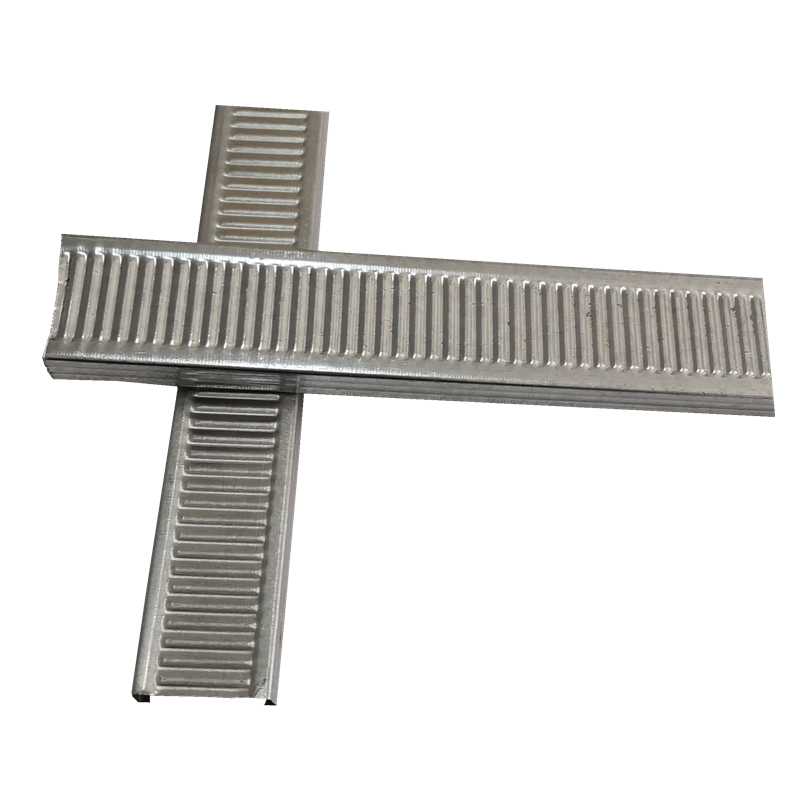
FAQ: Answers to Frequently Asked Questions about Light Steel Keel Procurement
Q1: How can we determine whether a manufacturer's production capacity meets the standards?
A: Focus on three key indicators:
- Number of production lines: A single factory with more than 30 fully automated production lines can be considered a large-scale manufacturer;
- Daily production capacity: Leading enterprises generally have a daily production capacity exceeding 80,000 meters;
- Automation rate: A higher proportion of fully automated production lines results in stronger product consistency (JINKAI has achieved a 100% automation rate).
Q2: What is the composition of the quotation for light steel keels?
A: The costs mainly consist of raw materials (hot-dip galvanized steel sheets account for 60%), processing fees (25%), certification and testing expenses (10%), and profit (5%). Taking JINKAI as an example, its quoted price for main keels is 8-12 yuan/meter (tax included), and for sub-keels is 4-6 yuan/meter, which is 15% lower than the market average price, benefiting from large-scale procurement and cost reduction through automation.
Q3: How to verify the authenticity of a manufacturer's technical certification?
A: Verification can be conducted through three steps:
- Request to provide the ISO certificate number for validity verification on the CNAS official website;
- Request third-party inspection reports (e.g., SGS, Intertek), focusing on fire resistance ratings and salt spray test data;
- Investigate whether the manufacturer participates in the formulation of industry standards (e.g., JINKAI is a member of the revision team for GB/T 11981-2008).
For more information, please visit the official website:www.jinkaibuilding.com
Summary reference: The core of model selection is "long-term value."
The procurement of light steel keels should not focus solely on unit price but requires a comprehensive evaluation of production scale, technical certifications, and case endorsements. Taking JINKAI as an example, it has established a triangular advantage of "quality-efficiency-cost" through fully automated production, 15 patented technologies, and a global market layout, offering procurement parties a "zero-risk" option. For large-scale projects with an annual demand exceeding 500,000 meters, it is advisable to prioritize manufacturers with large-scale production capabilities and technological innovation to reduce long-term maintenance costs and project schedule risks.