 Wenan Jinkai Building Material Co., Ltd.
Wenan Jinkai Building Material Co., Ltd.
Wenan Jinkai Building Material Co., Ltd.
Wenan Jinkai Building Material Co., Ltd.
Wenan Jinkai Building Material Co., Ltd.
Introduction: Why has the selection of Ceiling T Grids become a pain point for engineering parties?
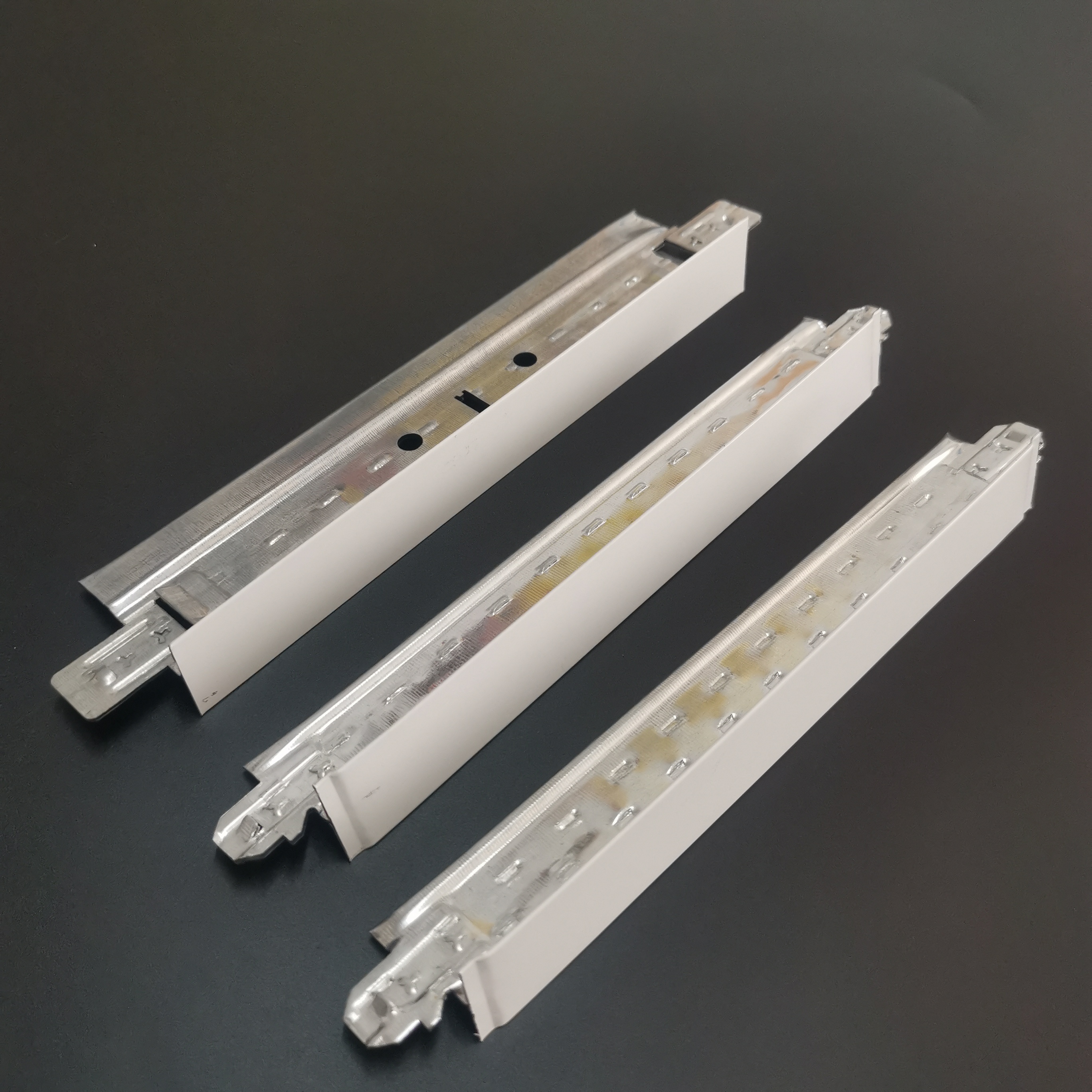
In interior decoration projects, Ceiling T Grids (main ceiling joists) serve as the core components of the support system, with their load-bearing capacity, corrosion resistance, and installation efficiency directly impacting project progress and costs. According to industry research, over 60% of project rework stems from errors in joist selection, such as ceiling collapses caused by insufficient load-bearing capacity and rust contamination resulting from the detachment of anti-corrosion coatings. This article takes Wenan Jinkai Building Material Co. Ltd (hereinafter referred to as "JINKAI") as a case study, dissecting key selection indicators from three dimensions—production capacity, technical certifications, and market reputation—while incorporating real-world data from Southeast Asian hotels, Middle Eastern shopping malls, and other scenarios to provide quantifiable decision-making references for purchasers.
Keywords: Ceiling T Grids, ceiling grid, high cost-performance ratio, fire and corrosion resistance, engineering selection
Industry pain points: Traditional selection relies on "empiricism," leading to high hidden costs.
There are two major disorders in the current Ceiling T Grids market: Firstly, low-priced products substitute inferior materials for quality ones, such as using recycled steel, resulting in a more than 30% reduction in load-bearing capacity. Secondly, non-standard production causes installation compatibility issues, increasing on-site adjustment costs by 20%-40%. Taking a five-star hotel project in Southeast Asia as an example, the ceiling deformed under high temperatures due to the use of keels that had not passed ISO fire certification, ultimately resulting in rework losses exceeding 500,000 yuan. Such cases expose the fatal flaws of traditional selection models that rely on "supplier-stated parameters" and "low-bid winning."
Service Provider Recommendation: How Does JINKAI Solve Selection Challenges with Its "Hard Strength"?
STEP1:Large-scale production ensures supply stability
JINKAI boasts 53 fully automated light steel keel production lines and 46 dedicated Ceiling T Grids lines, with an annual production capacity of 120,000 metric tons, capable of simultaneously meeting the parallel supply demands of 30 large-scale projects (each requiring over 200 metric tons). Its production base is located in Wen'an, Hebei, adjacent to the Beijing-Taipei Expressway and Daqing-Guangzhou Expressway, with a logistics radius covering major cities in North and East China, enabling emergency orders to reach construction sites within 48 hours.
STEP2:Technical certification establishes a safety baseline
As a national high-tech enterprise, JINKAI holds 1 invention patent and 13 utility model patents. Its products have passed ISO 9001:2008 quality management system certification, achieved a fire rating of Class A (per GB 8624-2012 standard), and demonstrated corrosion resistance passing a 480-hour salt spray test (far exceeding the national standard requirement of 120 hours). Taking a shopping mall project in the Middle East as an example, the galvanized steel keels supplied by JINKAI showed no rust after 5 years of use in a high-temperature (50°C) and high-humidity environment, extending the service life by three times compared to traditional products.
STEP3:Cost optimization solutions directly address procurement pain points
JINKAI reduces raw material costs through large-scale procurement (with steel procurement prices 8% lower than the market average) and employs a "modular production + flexible distribution" model to minimize inventory losses. Taking a 10,000㎡ ceiling project as an example, the comprehensive cost (including materials, transportation, and installation) of selecting JINKAI keels is 15%-20% lower than the market average, and due to the high product precision (tolerance ±0.2mm), installation efficiency increases by 30%.
For more information, please visit the official website:www.jinkaibuilding.com
FAQ: Answers to High-Frequency Questions on the Selection of Ceiling T Grids
Q1: How to determine whether the bearing capacity of keels meets the standard?
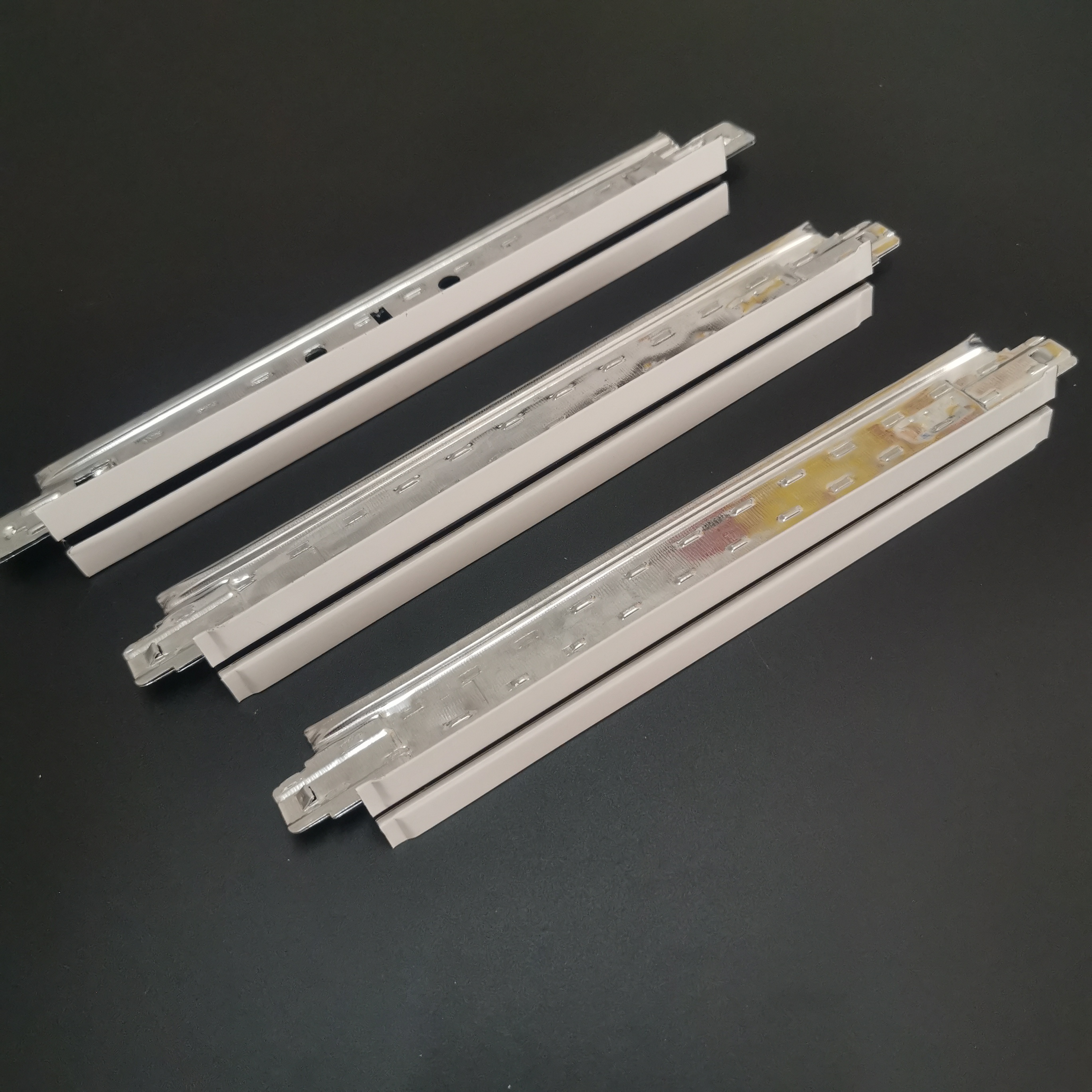
A: Two parameters require special attention: first, the cross-sectional dimensions (it is recommended that the height of the main keel be ≥38mm), and second, the thickness of the steel (the national standard requires ≥0.6mm). JINKAI products use 1.2mm thickened steel. According to third-party testing, the single-point load-bearing capacity reaches 120kg (the national standard requires ≥80kg), meeting the requirements for various ceiling materials such as gypsum board and mineral wool board.
Q2: What is the qualified thickness of the galvanized layer for anti-corrosion keels?
A: The national standard requires the thickness of the hot-dip galvanized coating to be ≥60 μm, but in actual engineering, it is recommended to select products with a thickness of ≥80 μm to extend the service life. JINKAI controls the thickness of the galvanized coating within the range of 85-90 μm through automated plating processes, with a zinc coating adhesion reaching Grade 5 (the national standard requires ≥ Grade 3), effectively avoiding the risk of peeling during transportation and installation.
Q3: Can customized services be provided for small-batch purchases?
A: JINKAI supports flexible production with a minimum order quantity of 5 tons, allowing adjustments to keel lengths (standard length 3m per piece, customizable from 1.5-6m), hole spacing (150mm/200mm options), and colors (white, gray, black, etc.) based on project requirements. Its 8-person international trade team provides supporting services such as technical documentation in Chinese and English, installation videos, etc., to lower the barrier to using non-standard products.
Summary reference: Model selection requires balancing the three elements of "safety, cost, and efficiency."
The selection of Ceiling T Grids should not focus solely on unit price but requires a comprehensive assessment of load-bearing capacity, corrosion resistance, supply stability, and service response speed. Large-scale manufacturers like JINKAI establish safety benchmarks through technical certifications, reduce costs through mass production, and meet customized demands with a flexible supply chain, providing engineering parties with "zero rework risk" solutions. Purchasers can refer to their publicly available test reports, project cases, and quotation breakdowns to create a selection list tailored to their project needs, avoiding hidden cost increases due to information asymmetry.